
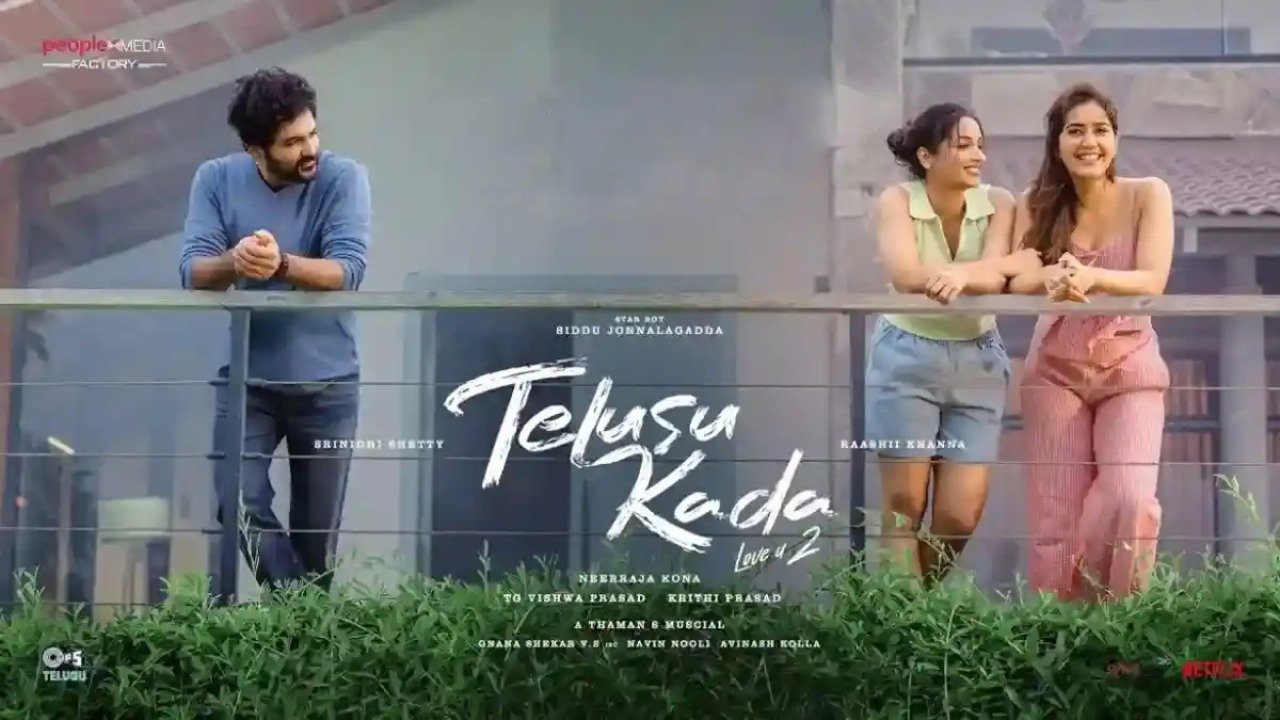
Why Telusu Kada Faced Intense Online Backlash: A New Generation Rejects Misogyny and Gaslighting in Cinema
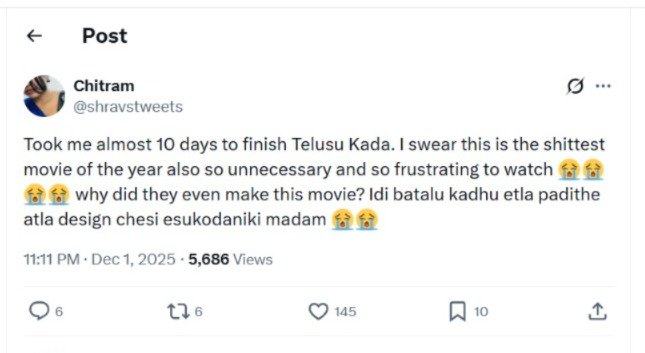
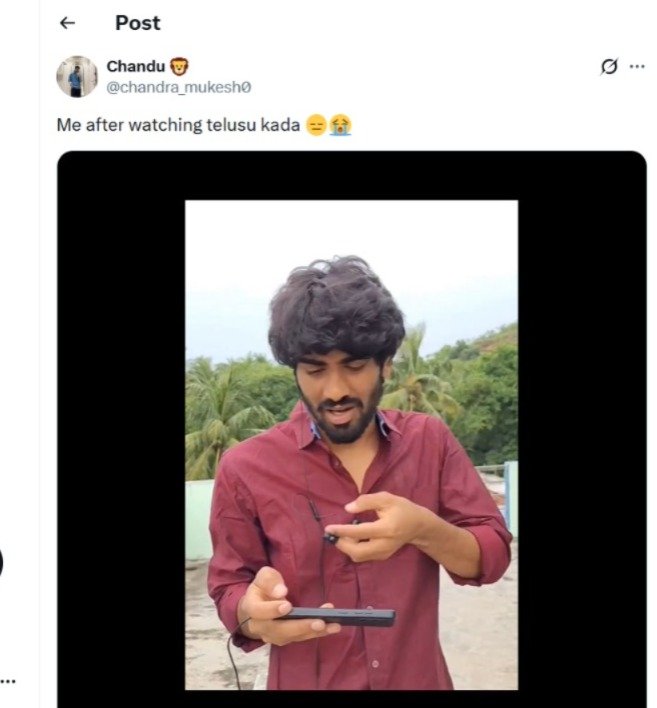
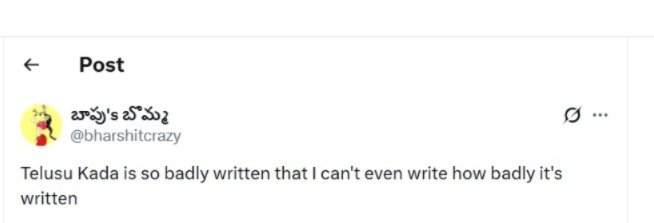
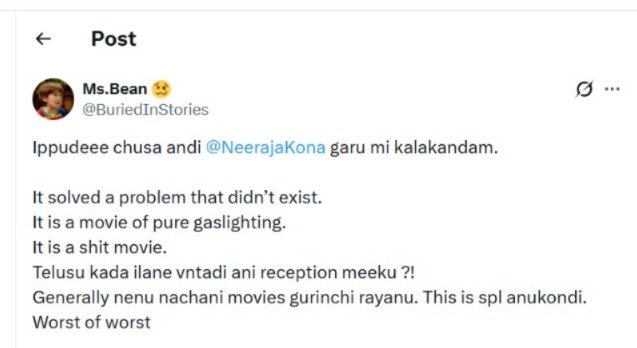
Telusu Kada may have entered theatres with modest expectations, but it is its OTT release that pushed the film into the center of a cultural storm. What began as mixed reactions soon transformed into widespread online backlash across Twitter (X), Instagram, Reddit, and film-discussion communities.
The criticism wasn’t just about cinematic choices or screenplay flaws — it was about the values the story seemed to endorse. The younger audience, shaped by shifting cultural conversations and heightened awareness of emotional health, quickly mobilized to call out the film’s misogyny, gaslighting, and romanticization of toxic male behaviour.
A Story Built on Problematic Emotional Dynamics
At its core, Telusu Kada attempts to explore a complex love triangle involving infertility, surrogacy, unhealed emotional baggage, and unresolved romance. But what viewers saw instead was:
-a male protagonist repeatedly manipulating the women in his life,
-emotional neglect being framed as sensitivity,
-infidelity and dishonesty treated as destiny,
-and women portrayed as forgiving supports for the hero’s self-discovery.
The backlash sharpened around how the film glorifies the protagonist’s behaviour rather than interrogating it. Many viewers questioned why he is treated as a tragic romantic figure when his actions reflect entitlement and emotional irresponsibility.
The controversial dialogue involving “testosterone vs estrogen” only intensified the criticism, with audiences calling it regressive and insulting in a movie claiming to be a modern relationship drama.
Why OTT Sparked a Second Wave of Outrage
While its theatrical reception was mixed, the online release is what truly ignited the conversation. OTT platforms changed the scale and nature of viewership — and therefore, criticism.
1. Wider, younger, more critical audience
The OTT crowd includes Gen Z and millennials who are far more sensitive to gender politics and emotional boundaries. They are quick to recognise gaslighting where older viewers might see drama.
2. No-hesitation viewing
People who avoided theatres out of disinterest or skepticism finally watched it at home — and reacted in real time.
3. Easy clip circulation
Problematic scenes, lines, and character moments were clipped, shared, and dissected across stories, reels, and threads. OTT turned isolated discomfort into a collective critique.
Twitter & Instagram: Instant, Unfiltered Backlash
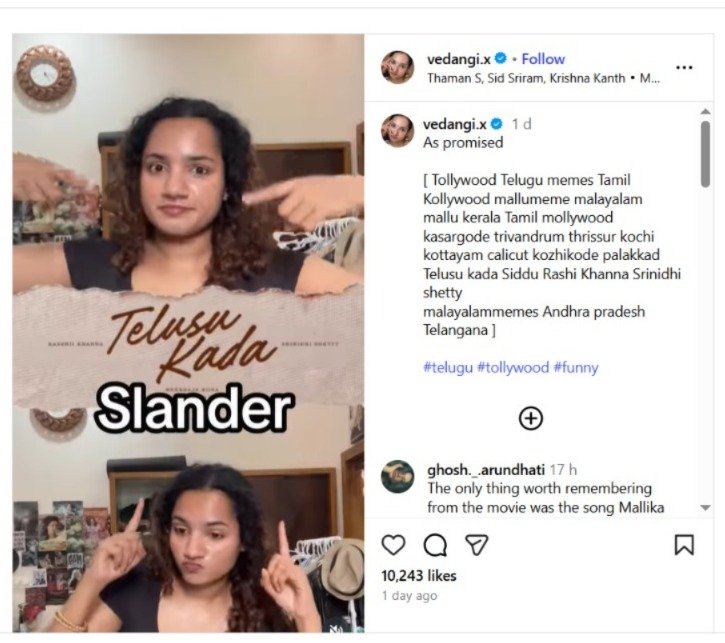
Twitter (X) became the epicenter of frustration. Users expressed shock at how the film normalizes manipulation and justifies the male lead’s emotional inconsistency.
Posts lamented how female characters were written without agency, serving mainly as emotional cushions or sacrificial presences. The irony of a woman director creating such a narrative became a repeated talking point.
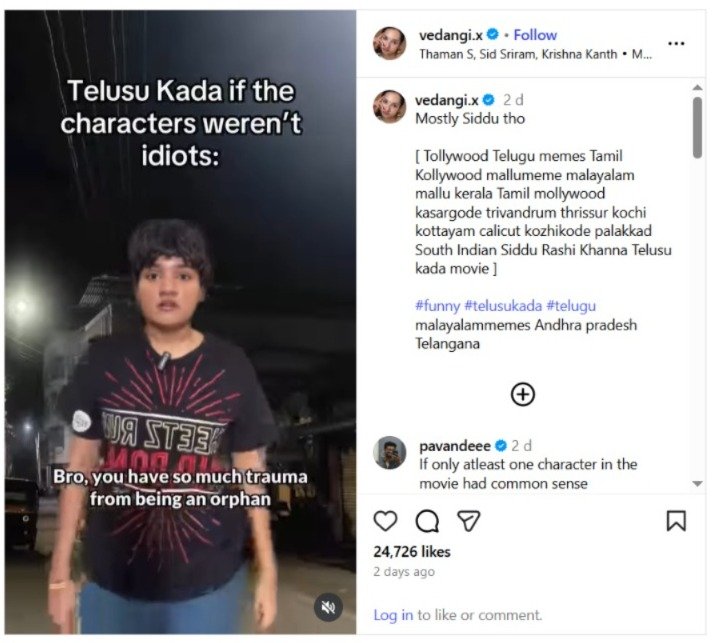
On Instagram, reels and story-rants broke down key scenes, exposing subtle (and overt) gaslighting. Content creators compared the film to evolving expectations of healthy relationships, using the movie as an example of what modern audiences reject.
Reddit: Where the Long-Form Takedown Began
While social platforms focused on rapid reactions, Reddit hosted deep-dive discussions about:
-the film’s normalization of toxic masculinity,
-its emotionally irresponsible handling of infertility and surrogacy,
-character arcs written solely to validate the hero’s turmoil,
-and how the narrative bends morality to favor male ego.
Redditors labeled the film “a toxic, misogynistic gaslighting masterclass,” summing up what many OTT viewers felt but couldn’t articulate with the same depth.
A Generation That Won’t Tolerate Outdated Gender Narratives
The most important part of this backlash is not the volume — it’s the reason.
Today’s audience is shaped by open discussions about:
emotional abuse,
-mental health,
-feminism,
-consent,
-boundaries,
-and accountability in relationships.
They’ve learned to identify manipulation, narcissism, and emotional exploitation. They no longer romanticize male characters hurting women “for love.” They question why women in films must endure pain as proof of loyalty.
This generation demands transparency, self-responsibility, and mutual respect — and expects cinema to reflect those values, not undermine them.
So when Telusu Kada attempted to wrap outdated romantic tropes in modern packaging, the disconnect was too glaring.
A Cultural Shift in Real Time
The backlash against Telusu Kada is a strong indicator of where Telugu cinema’s audience is heading.
Today’s viewers want:
-flawed characters without glorifying the flaws,
-relationship drama without emotional exploitation,
-romance without manipulation,
-and female characters written with agency and dignity.
The rejection of Telusu Kada’s narrative isn’t an isolated reaction — it is a reflection of a changing society. A generation raised on conversations around equality and mental health will not quietly accept films that perpetuate damaging emotional patterns.
Conclusion
Telusu Kada intended to be an intense emotional drama, but instead became a case study in what the modern audience actively rejects. The intense online backlash — across Twitter, Instagram, Reddit, and OTT viewer circles — is not merely “hate” but a collective assertion of new cultural standards.
The message is clear:
Cinema can no longer excuse misogyny and gaslighting under the banner of love.
And this generation will make sure that message is heard — loudly, publicly, and unmistakably.
https://x.com/KausalyaSuhari1/status/1979179718823022769?s=20