
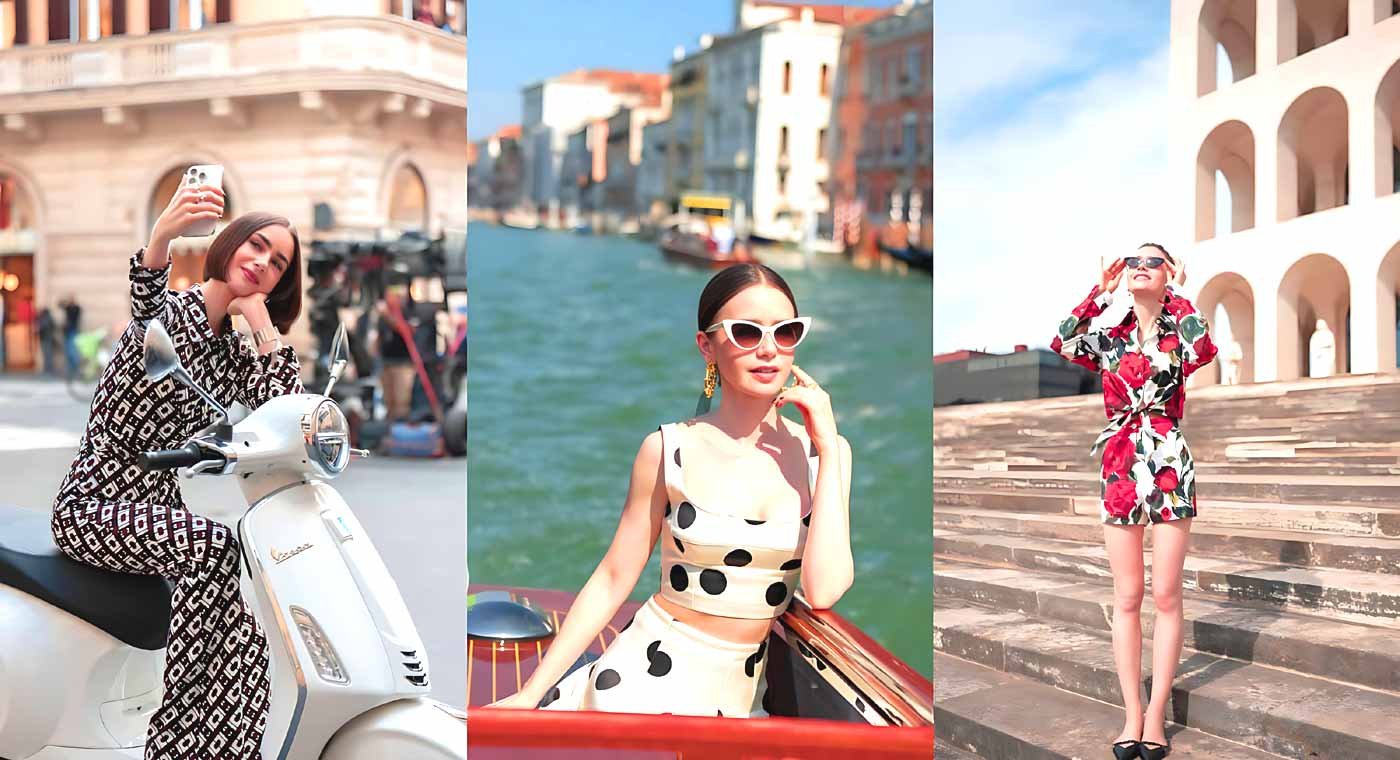
Emily in Paris has never pretended to be subtle about its love for Europe. But in its latest season, the series shifts from postcard romance to something more immersive – cities that feel heard as much as they are seen. For viewers, this season works almost like a moving travel journal, mapping emotional turns to real streets, cafés, piazzas and neighbourhood rituals. For travellers, it offers a familiar yet freshly textured way to experience Europe – through places that appear not as sightseeing stops, but as settings where life unfolds.
Paris still leads the narrative, but it’s no longer just a dream city. It’s a city of habits, corners and contradictions. And when the story opens out into Italy, the series leans fully into Europe’s contrasts—order and abandon, polish and chaos, restraint and indulgence.
Here’s how the season lets you travel Europe, scene by scene.
Paris Begins Where Emily Lives, Not Where Tourists Pose
The show once again roots itself around Place de l’Estrapade in the 5th arrondissement—Emily’s apartment neighbourhood, now instantly recognisable to fans. The square, framed by curved façades and quiet cafés, has become a pilgrimage point for viewers. In the series, it’s where mornings begin and emotional resets happen; in real life, it’s a gentle introduction to Left Bank Paris, away from crowds but close to the Panthéon and Luxembourg Gardens.
This part of Paris is about rhythm rather than spectacle. Bakeries opening early, scooters humming past, locals greeting each other by name. It’s the Paris you experience when you stay long enough to stop checking maps.
Cafés Where Conversations Matter More Than Coffee
Café culture remains central, and the series continues to reference iconic spots that double as cultural shorthand. Café de Flore and Les Deux Magots—longtime Left Bank institutions—appear not just as aesthetic backdrops but as places of negotiation, reflection and people-watching. These cafés carry literary history, once frequented by Sartre, Simone de Beauvoir and Picasso, and the show uses them to underline Paris’s enduring link between ideas, art and everyday life.
For travellers, these cafés are less about rushing through a checklist and more about sitting still long enough to absorb the room—the waiters’ choreography, the clink of cups, the mix of languages at neighbouring tables.
Bridges, Balconies and the Paris You Walk Through
Several scenes unfold during walks—across bridges like Pont Alexandre III, along the Seine, through streets in the Marais and near Palais Royal. Paris here is a city of movement. Balconies stacked with wrought iron, street musicians under bridges, fashionably late dinners spilling onto pavements.
Pont Alexandre III, with its gilded statues and sweeping views, appears not as a monument but as a passage—a place characters cross while conversations turn serious or romantic. For travellers, it’s one of Paris’s most cinematic bridges, especially at dusk, when the city softens into gold.
Fashion Inside History, History Inside Fashion
Luxury houses, galleries and ornate interiors appear frequently, but what’s striking is how often they’re housed inside historic buildings. Meetings take place under frescoed ceilings, fashion conversations happen against centuries-old stone walls. Paris’s defining quality—its refusal to separate the old from the new—becomes visually clear.
This is the Paris that rewards cultural travellers: museums like Palais Garnier not just as performance venues, but as architectural experiences; streets where a couture storefront might sit beside a medieval church.
Then the Train Rolls South, and Europe Changes Its Tone
When the narrative shifts to Italy, the sensory register changes immediately. The light grows warmer, the pace loosens, the soundscape grows louder. Rome enters not quietly, but confidently.
Rome Doesn’t Make an Entrance, It Takes Over
Rome in Emily in Paris is presented as a city that interrupts plans. Scenes set around the Spanish Steps, Piazza Navona and near the Trevi Fountain frame the city as theatrical and unapologetically alive. These landmarks appear amid movement—crowds, conversations, traffic—never frozen in time.
For tourists, this is Rome’s essential truth. The Spanish Steps are not just for photos; they’re a gathering space. Piazza Navona, built over an ancient stadium, pulses with street artists and late-night diners. The Trevi Fountain, even when briefly glimpsed, carries its ritual weight—wishes, crowds, flashes, water echoing against stone.
Trastevere: Where the Show Finally Slows Down
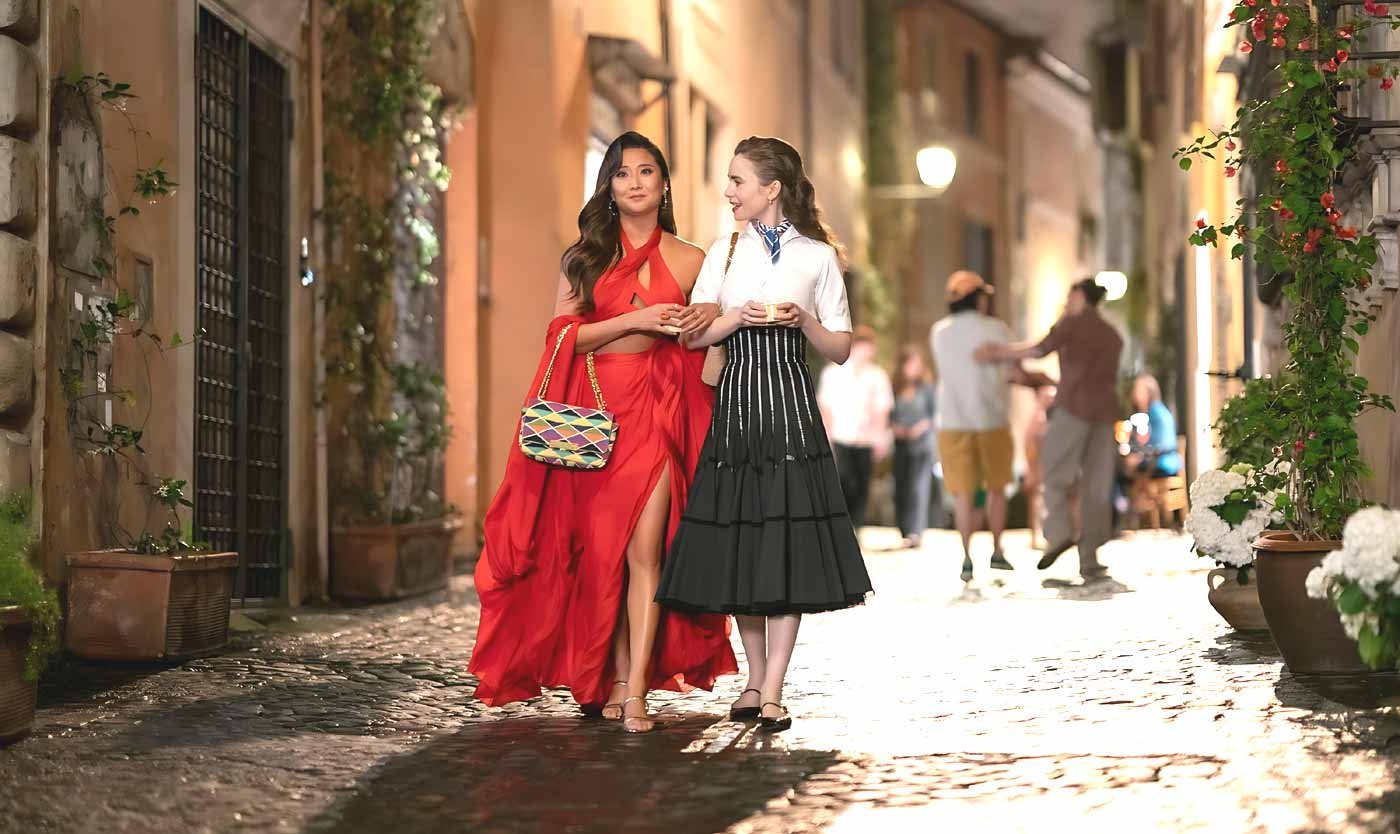
Some of the most evocative Italian moments are set in Trastevere, Rome’s bohemian neighbourhood known for ivy-covered buildings, narrow lanes and family-run trattorias. Scenes here revolve around food, conversation and long evenings.
In real life, Trastevere is where Romans eat slowly. Restaurants serve classics like cacio e pepe and carbonara, and streets stay lively well past midnight. It’s a must-visit for travellers seeking Rome beyond ruins—a neighbourhood that prioritises living over looking.
Meals That Feel Like Cultural Immersion
Food scenes in the season—whether in Parisian bistros or Roman trattorias—are never just about taste. They’re about time. Meals stretch, glasses refill, conversations wander. The show subtly highlights a European truth travellers quickly learn: eating is not an interruption to the day, it is the day.
For visitors, this translates into lingering lunches, late dinners, and learning when not to rush the bill.
The Sound of Europe Between the Scenes
What the latest season captures especially well is sound. Paris hums softly—traffic muted by stone, voices low, footsteps measured. Rome, by contrast, speaks loudly—laughter, music, scooters, overlapping conversations.
For travellers, these sounds are memory-makers. They stay long after photos fade.
Vienna: Where Europe Suddenly Straightens Its Spine
When Emily in Paris moves briefly to Vienna, the shift is immediate and deliberate. The city enters the series like a change in posture—formal, composed, and quietly imposing. Broad boulevards, imperial façades and meticulously ordered public spaces frame the scenes, evoking Vienna’s Habsburg legacy and its long association with power, protocol and classical refinement. Unlike Paris, which the show presents as walkable and conversational, Vienna feels observed rather than wandered through—a city of rules, ritual and restraint. Coffeehouses appear not as casual pit stops but as cultural institutions, echoing Vienna’s UNESCO-recognised café culture where time is meant to slow and thought is meant to deepen. Even without overt musical cues, the city’s classical heritage—of Mozart, Beethoven and Strauss—lingers in the background, shaping its atmosphere. In the series’ European arc, Vienna functions as a cultural counterweight: a place that values structure over spontaneity, tradition over impulse, reminding viewers that Europe’s diversity lies as much in temperament as in geography.
Why Emily in Paris Still Works as a Travel Fantasy
Despite its heightened tone, Emily in Paris understands something essential about European travel. Cities aren’t just collections of attractions; they are emotional landscapes. Where you walk, where you sit, where you eat—all of it shapes how you feel.
This season invites viewers not just to visit Europe, but to inhabit it. To walk instead of rush. To sit instead of scroll. To listen.
And that, perhaps, is why the show continues to inspire travel—not by telling you where to go, but by reminding you how to be there.