

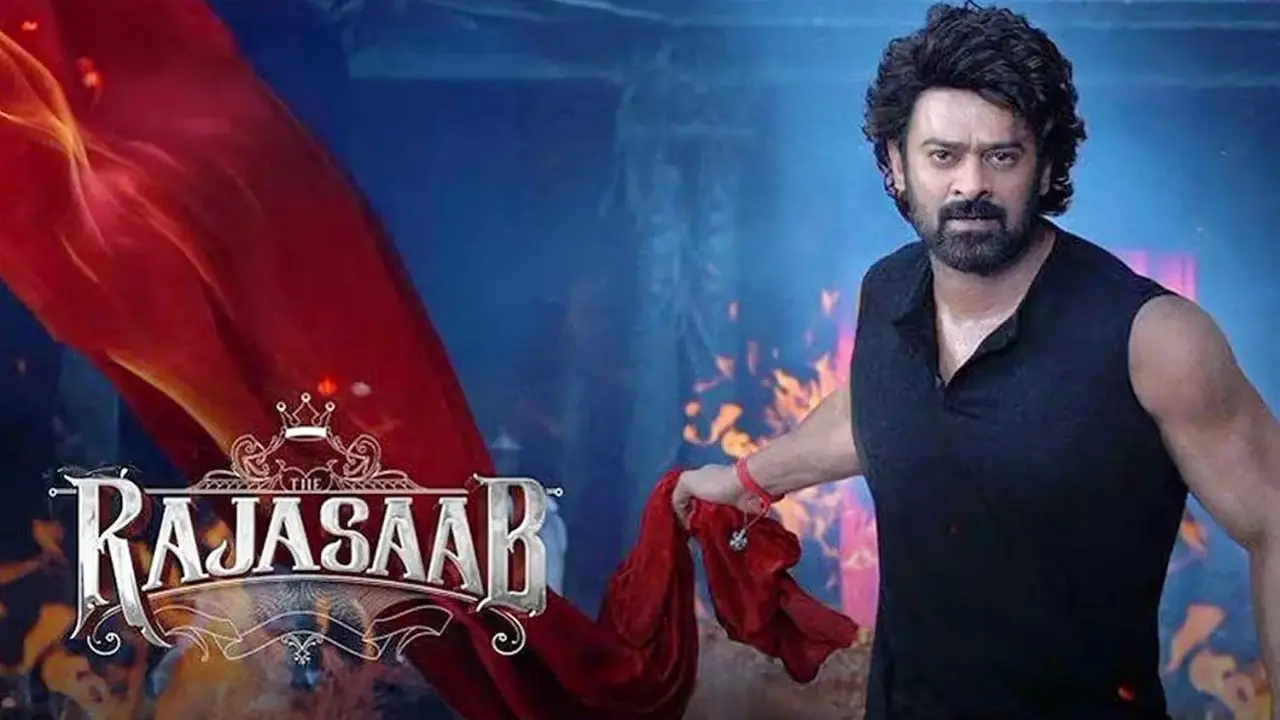
The Raja Saab review: A disappointing film undone by complacency and creative apathy
The Raja Saab review by Kausalya Rachavelpula
The Raja Saab is a film that sadly exemplifies how complacency, lack of conviction and misplaced priorities can hollow out even a potentially interesting idea. What unfolds on screen is not merely a weak film, but a deeply frustrating cinematic experience that raises uncomfortable questions about respect for cinema and for the audience itself.
The first half of The Raja Saab is particularly painful to sit through. It relies almost entirely on age-old, exhausted tropes, especially in its portrayal of female characters. The heroines exist purely as decorative elements, reduced to predictable clichés with no agency, depth or relevance to the narrative. Their characters are so poorly written that they become virtually negligible, contributing nothing of substance to the story. This is not just outdated filmmaking; it is lazy, and in today’s context, indefensible.
Ironically, it is only because the first half is so abysmal that the second half, or rather, the final half-hour, feels even remotely watchable. Towards the end, the film briefly hints at what could have been a compelling psychological drama. This aspect appears to be the actual core of the story, yet it is treated almost as an after thought. Instead of building the film around this psychological empowerment arc, the narrative meanders passively, padded with half-hearted scenes and an overall sense of creative indifference.
Had the filmmakers chosen to make the psychological drama the backbone of Raja Saab, the outcome might have been significantly better. There was genuine potential to explore themes of mental resilience and inner conflict in a meaningful way. Unfortunately, these ideas are buried beneath formulaic storytelling and a visible lack of commitment from both the writing and the performances.
What makes this even more disappointing is the evident lack of effort from the lead actor. There is a long-standing tradition in Telugu cinema of stars dedicating themselves fully to their craft. Superstar Krishna, for instance, once made nearly twenty films a year, each with a sense of energy and sincerity. In contrast, when an actor today cannot even spare time or effort for a single film, and still chooses to make one without genuine commitment, it begs the question: why make films at all?
The technical aspects further underline this disregard for quality. The action sequences, songs and even basic scenes are riddled with poor visual effects. It is painfully obvious that the hero’s face has been digitally grafted onto someone else’s body, often so badly that it becomes distracting and frankly embarrassing. In an era when some Telugu heroes perform fight sequences without body doubles, this overreliance on shoddy graphics feels both insulting and unnecessary. Is this really how visual effects are meant to be used?
Instead of squandering money on such half-hearted productions, one could argue it would be better spent travelling to another state and watching a well-made film in an IMAX theatre, at least then, the audience would receive value for their time and money.
Watching The Raja Saab makes it painfully clear how little respect certain so-called artists have for cinema and for the viewers who support it. The film also reflects a deeper malaise within Telugu cinema, where casteism, entitlement and insularity continue to stifle creativity and accountability. Anyone with even a minimal love for cinema, or at the very least, respect for their own hard-earned money, would struggle to approve of such lacklustre filmmaking.
Raja Saab review: The Raja Saab is not just a missed opportunity; it is a reminder of how damaging complacency can be to an art form meant to inspire, challenge and entertain.