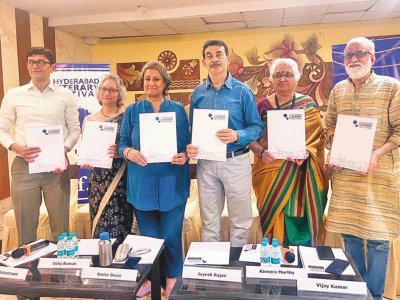

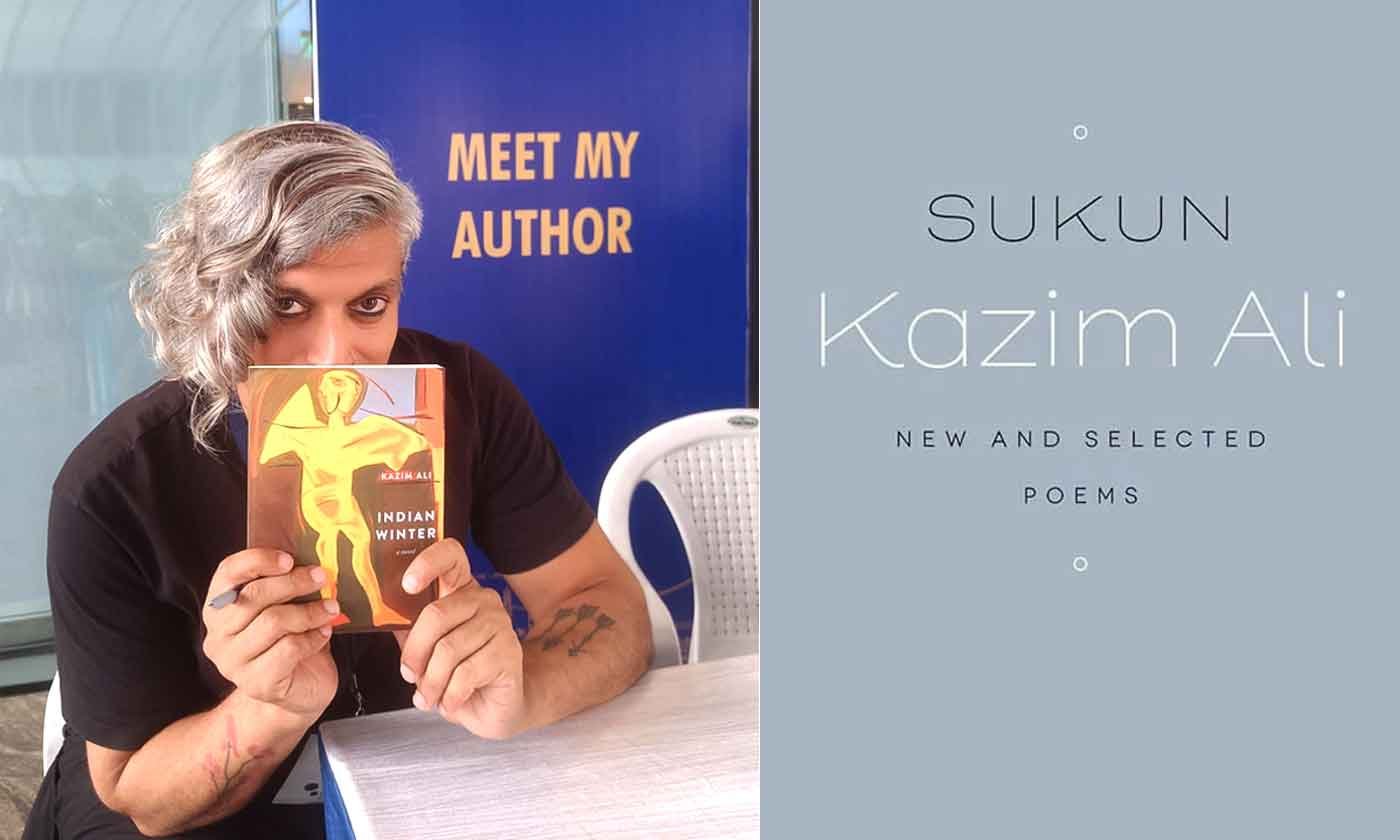
At the 16th edition of the Hyderabad Literary Festival, celebrated poet and author Kazim Ali reflected on language, sound, memory, and his enduring ties to Hyderabad—offering audiences writes Jhilam Charraraj
“Poetry lives in my body not just because there is a snake, serpent of wisdom who spilled the beans, who slithered into Adam’s mouth and slid down his throat, already sore from naming.”
— Kazim Ali, “Tree Prose,” Silver Road (2018)
On January 26, 2026, the vibrant city of Hyderabad played host to the 16th edition of the Hyderabad Literary Festival at Sattva Knowledge City. Among the many celebrated voices was Kazim Ali, a prolific poet, writer, editor, translator, and artist. Known for his striking presence—curls dangling from a styled pixie cut, kohl-rimmed eyes, and an effortlessly chic black outfit—Ali’s contagious laughter and calm demeanor drew fans of all ages.
Kazim Ali is the author of twenty-four books across poetry, fiction, memoir, and literary studies. His research and teaching focus on Creative Writing and Literary Arts, Indigenous Studies, Global Anglophone Literature, Palestine and Palestinian Diaspora Studies, as well as Translation and Translation Studies. His book Northern Light: Power, Land, and the Memory of Water received the Banff Mountain Environmental Book Award in 2021. From 2021 to 2024, he served as Chair of the Literature Department. He is also the founder of the independent press Nightboat Books.
At the festival, Kazim Ali presented two of his latest works: the novel Indian Winter (2024) and the poetry collection Sukun: New and Selected Poems (2023). In the session titled “Sufi and Sukoon,” moderated by poet Sridala Swami, Ali described himself as an “accidental Sufi” and spoke at length about poetry, performances, and his visceral relationship with sound. He explained how sound acts as a kinetic energy breathing through our bodies, connecting our language to the spirit.
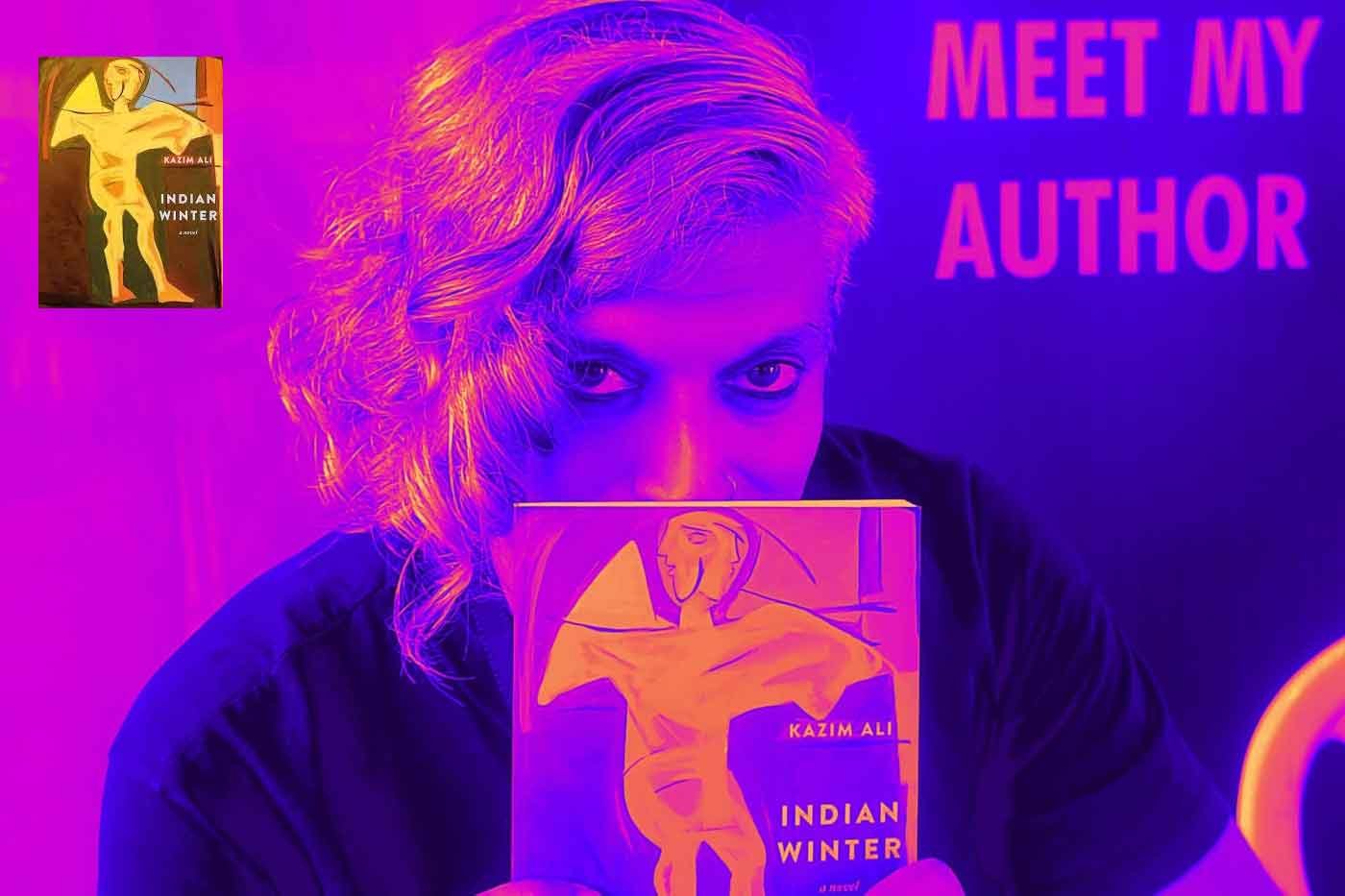
Later, in a candid conversation, Ali shared insights into his creative process and his relationship with language. “I think language is how I write, and how I experience the world,” he said. “I’m always thinking about how to describe things in words. It’s just my medium. People who dance have to dance every day to keep dancing; visual artists have to show up at the studio every day to work. Writers often wait for inspiration or a muse, but I just live in language. I don’t write poetry every day, but I write every day. That’s why I work in multiple genres—memoir, criticism, poetry. Each one is different, but they inform each other. Writing has never felt like work to me; it’s a pleasure.”
Ali’s deep ties to Hyderabad resonate through his work. He shared memories of the city’s warmth and vibrant energy, a place where history, language, and culture intertwine. “My mom was born here and grew up here,” he said. “Most of her family has lived here for a long time. Many have since immigrated to North America, but I spent a lot of my childhood here, and those experiences shaped me.”
Hyderabad holds a special place in Ali’s heart. “It’s a unique city, a crossroads of history and cultures. The Urdu and Dakhini literary traditions here are distinct from the mainstream Delhi and Pakistani Urdu traditions. Alongside Telugu as a literary language, Hyderabad is a hub of innovation and forward-looking energy, not just in the state, but in the whole country.”
Kazim Ali’s visit to the Hyderabad Literary Festival was a celebration of language, culture, and the enduring power of poetry and prose to connect us all.
Sukun
The world is wound
Around me wound
That blessing that approaches
Reproach that world that would
Wind wood wind wound
How thunder would sunder
The sound there sown there
Is shown shone sewn
To a one that wood
Remain remains still
Won in the world could
Will I one will I shunned
Son soon swoon sukun
Source: On Sukun: New and Selected Poems by Kazim Ali by Rushi Vyas, The Georgia Review
The writer of the article Jhilam Chattaraj is an academic, critic and widely published poet. She teaches at the Department of English and Foreign languages, RBVRR Women’s College, Hyderabad. She has authored the books: Sudeep Sen: Reading, Writing, Teaching, Noise Cancellation (2021), Corporate Fiction: Popular Culture and the New Writers (2018), and When Lovers Leave and Poetry Stays (2018).