

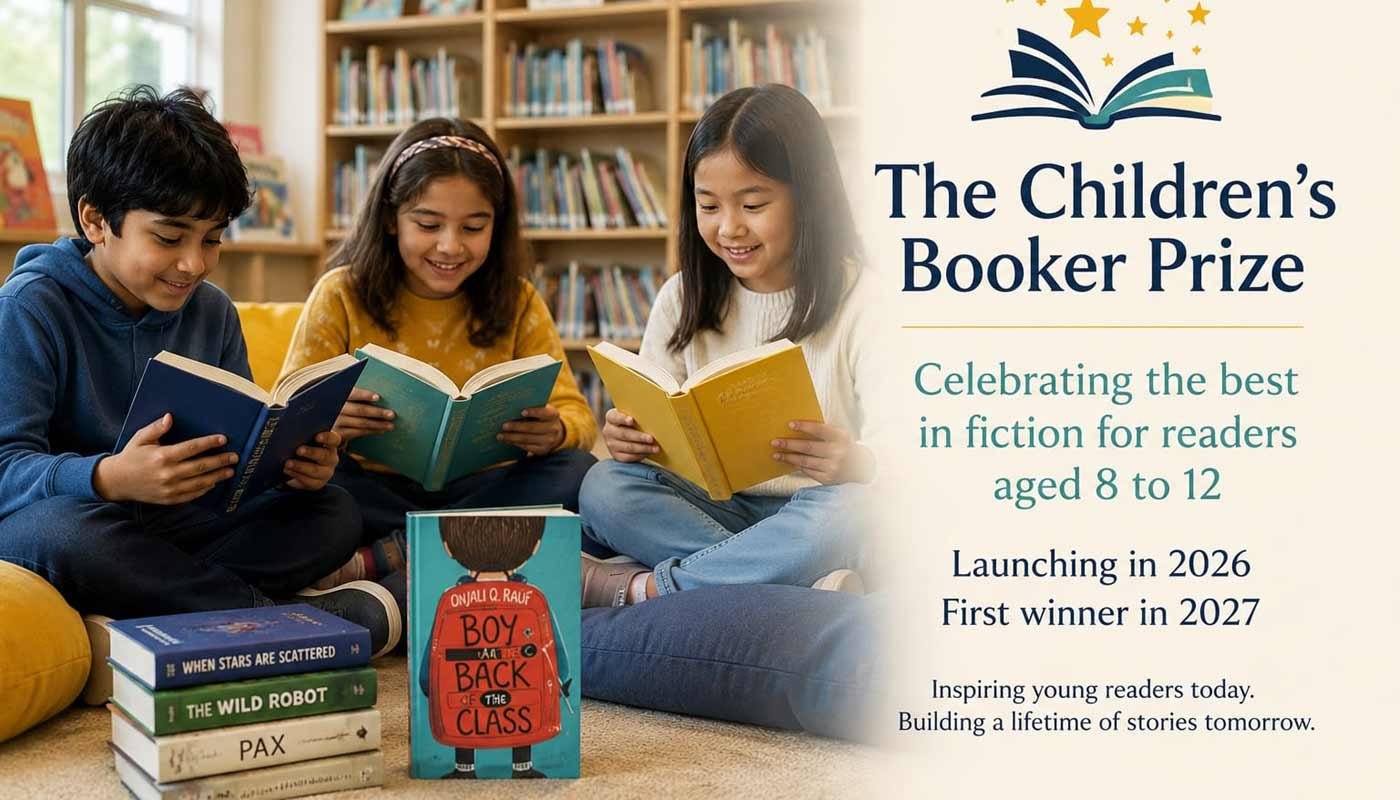
One of the world’s most influential literary institutions is turning its attention towards younger readers.
The Booker Prize Foundation has announced the Children’s Booker Prize, a new award recognising fiction written for readers between eight and twelve years of age.
The initiative reflects a growing publishing conversation around reading habits among children and the need to nurture future readers early.
Children’s publishing has emerged as one of the most dynamic spaces in the literary industry.
Books are no longer limited to conventional storytelling formats. Illustrated novels, graphic fiction and crossover titles increasingly shape reading behaviour.
Several books have already demonstrated the impact children’s literature can have.
Harry Potter and the Philosopher’s Stone transformed an entire generation of readers and remains one of publishing’s greatest success stories.
More recently, works such as Wonder and The Boy at the Back of the Class showed how children’s books can address empathy, identity and social issues while remaining accessible.
Graphic storytelling too has expanded the category.
Series such as Diary of a Wimpy Kid have attracted reluctant readers and introduced younger audiences to regular reading habits.
The Children’s Booker Prize arrives at a moment when publishers increasingly recognise that literary culture begins early.
Readers are built through stories, libraries, schools and imagination.
The future of literature may well depend on what children read today.