
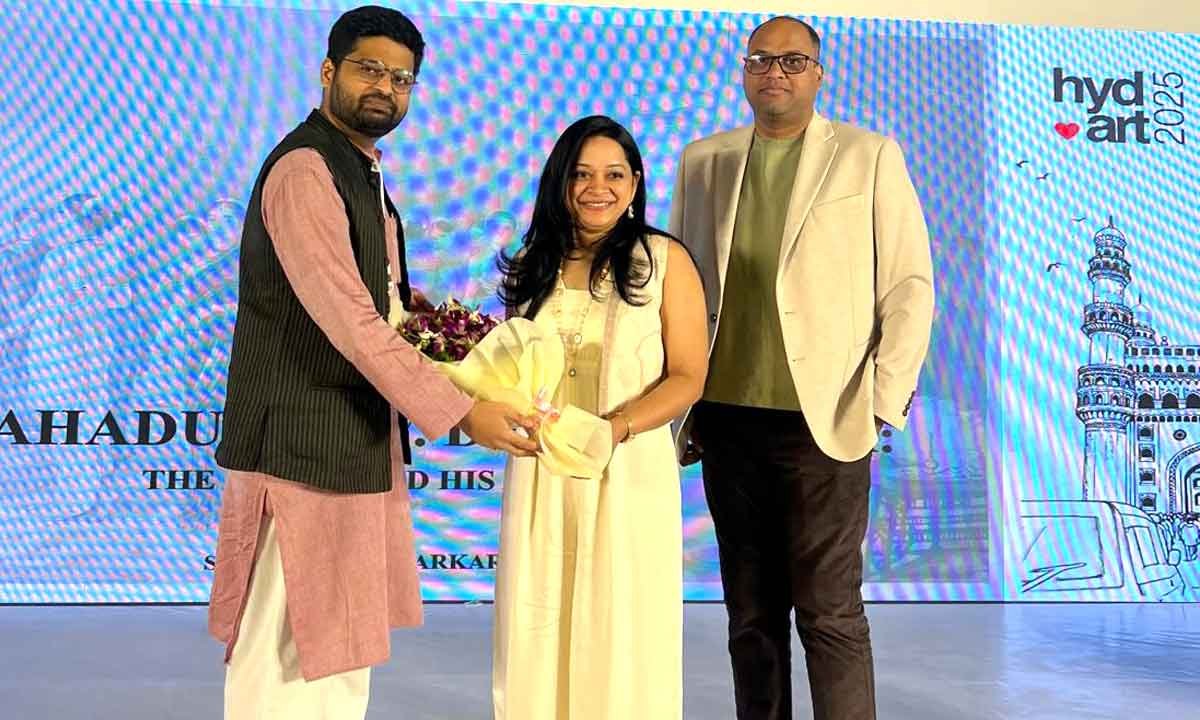
In the pulsating heart of Hyderabad’s finest District, where steel spires pierce the Deccan sky, the EON at Kokapet transformed into a sanctuary of artistic introspection during HYD ART 2025. Amidst cascading lights and whispered conversations, Sandeep Dahiskar, a luminous voice in India’s art heritage, unveiled the enigmatic journey of Murlidhar VyankateshDhurandhar (MV Dhurandhar). His talk wove a tapestry of nostalgia and revelation, inviting art aficionados to linger on brushstrokes that captured life’s fleeting rituals- births, unions, and farewells. Dahiskar’s words, delivered with the cadence of a storyteller, peeled back layers of time, revealing how Dhurandhar’s canvases from the early 1900s still ripple through contemporary studios.
Dhurandhar’s odyssey began in the colonial haze of 19th-century Bombay, where he apprenticed under Raja Ravi Varma, mastering the fusion of European realism and Indian mythology. By the 1900s, his pivotal works- lush watercolors and oils-immortalized Mumbai’s elite, blending opulent textures with poignant human narratives. Dahiskar spotlighted The Bidai, a heart-wrenching depiction of a bride’s tearful departure, her sari’s silken folds catching the golden-hour glow, eyes brimming with unspoken longing. This piece, he noted, influenced modernists like Jogen Chowdhury, who echo its emotional depth in fragmentary forms. Similarly, Dhurandhar’s wedding processions pulsed with vivacity: Hindu rites in vermillion splendor,Parsi Ceremonies with intricate lace and fire altars, and Muslim nikah veils shimmering like moonlit rivers. These triptych visions of matrimony’s three faiths underscored unity amid diversity, their jewel-toned palates inspiring today’s fusion artists to reclaim cultural syncretism.
The mural’s muse is articulated at the talk’s emotional core: Manorama, Dhurandhar’s wife, his eternal muse. Dahiskar lingered on her portraits- ethereal studies where her kohl-lined eyes held galaxies of quiet strength, her profiles framed against monsoon-drenched windows. These weren’t mere likelinesses; they were odds to feminine resilience, their subtle chiaroscuro prefiguring Amrita Sher-Gil’s bold gazes. Transitioning to the three murals, Dahiskar evoked their monumental scale: Lal (The Ruby), a crimson blaze symbolizing the fire of passion; the second, a sapphire lament for lost youth; and the third, an emerald vigil over life’s cradle-to-grave arc. Each mural, sprawling across gallery walls in Dhurandhar’s era, pulsed with symbolic heft- lotus blooms wilting into skulls, lovers dissolving into shadows.
Deathbed scenes commanded hushed reverence. Dahiskar described Dhurandhar’s raw vignettes: a patriarch’s final exhale amid flickering diyas, family silhouttes etched in grief’s half-light, another, a child’s bedside farewell, petals scattering like forgotten dreams. These works, born from personal loss, shattered Victorian restraint, birthing a visceral realism that echoes in Atul Dodiya’s mortality motifs today.
Dahiskar’s talk at HYD ART 2025 wasn’t a mere lecture; it was a portal. Dhurandhar’s legacy, forged in 1900s innovation, compels modern artists to interrogate ritual’s fragility, urging us to paint not just what we see, but the siul’s silent ache. As the applause faded in Kokapet’s neon embrace, one felt the weight of those canvases: timeless mirrors to our own veiled longings.

2. A tender portrait of Dhurandhar’s wife, his enduring muse, resting after evening chores’ quiet rhythm.
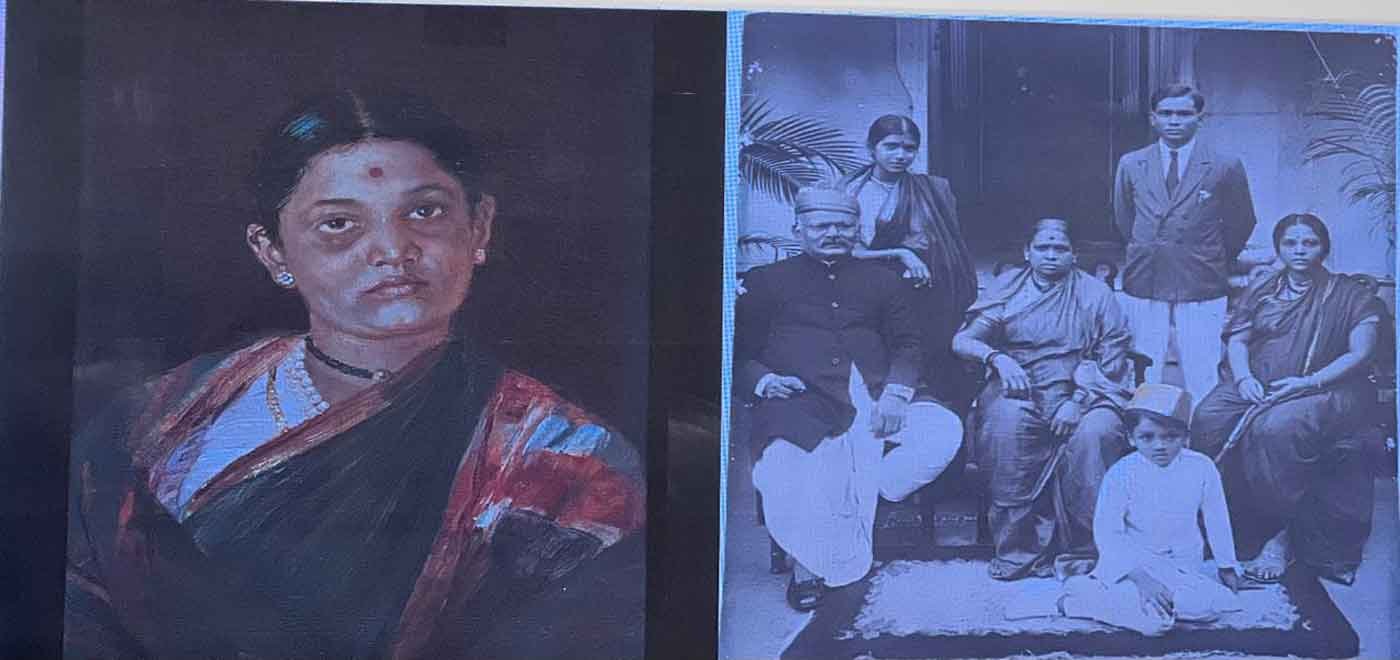
3. Dhurandhar’s intimate family tableau, capturing generational grace, quiet authority, and lives stitched together.
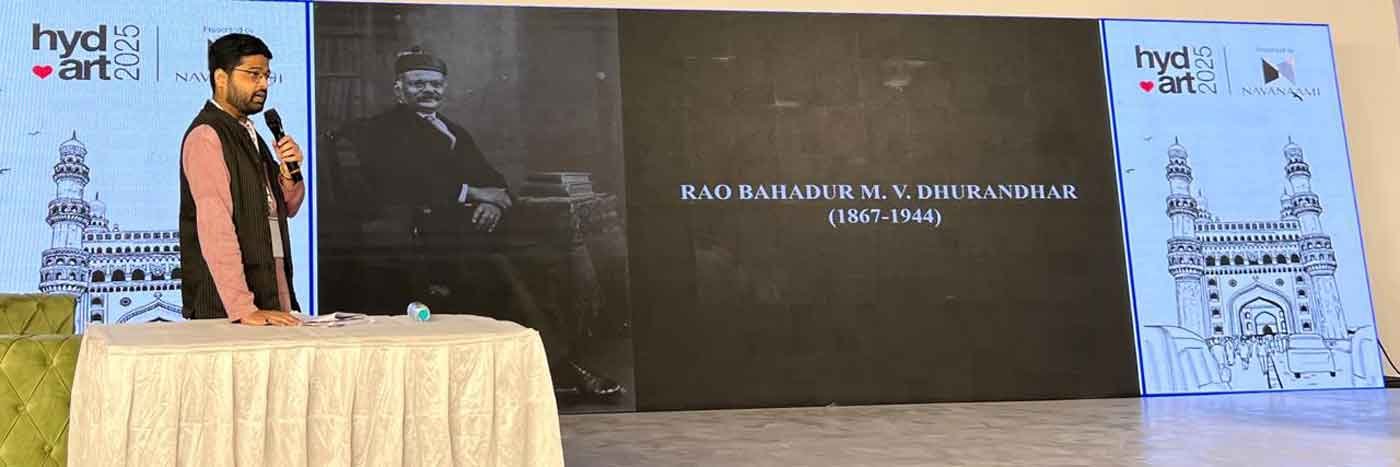
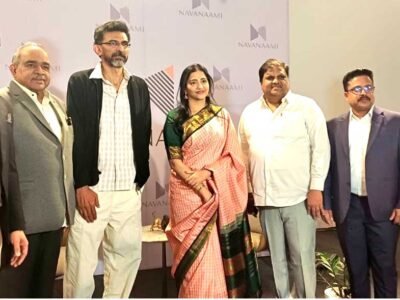
4. Sandeep Dahiskar unravels Dhurandhar’s Universe, turning archival memories into living, breathing brushstrokes.

5. In Dahiskar’s words, Dhurandhar’s portraits transcend time, revealing the emotional architecture of everyday lives.