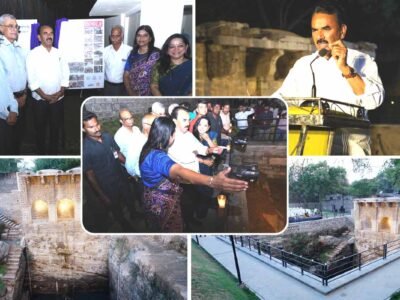

Why Bapughat Matters on Gandhi Jayanti
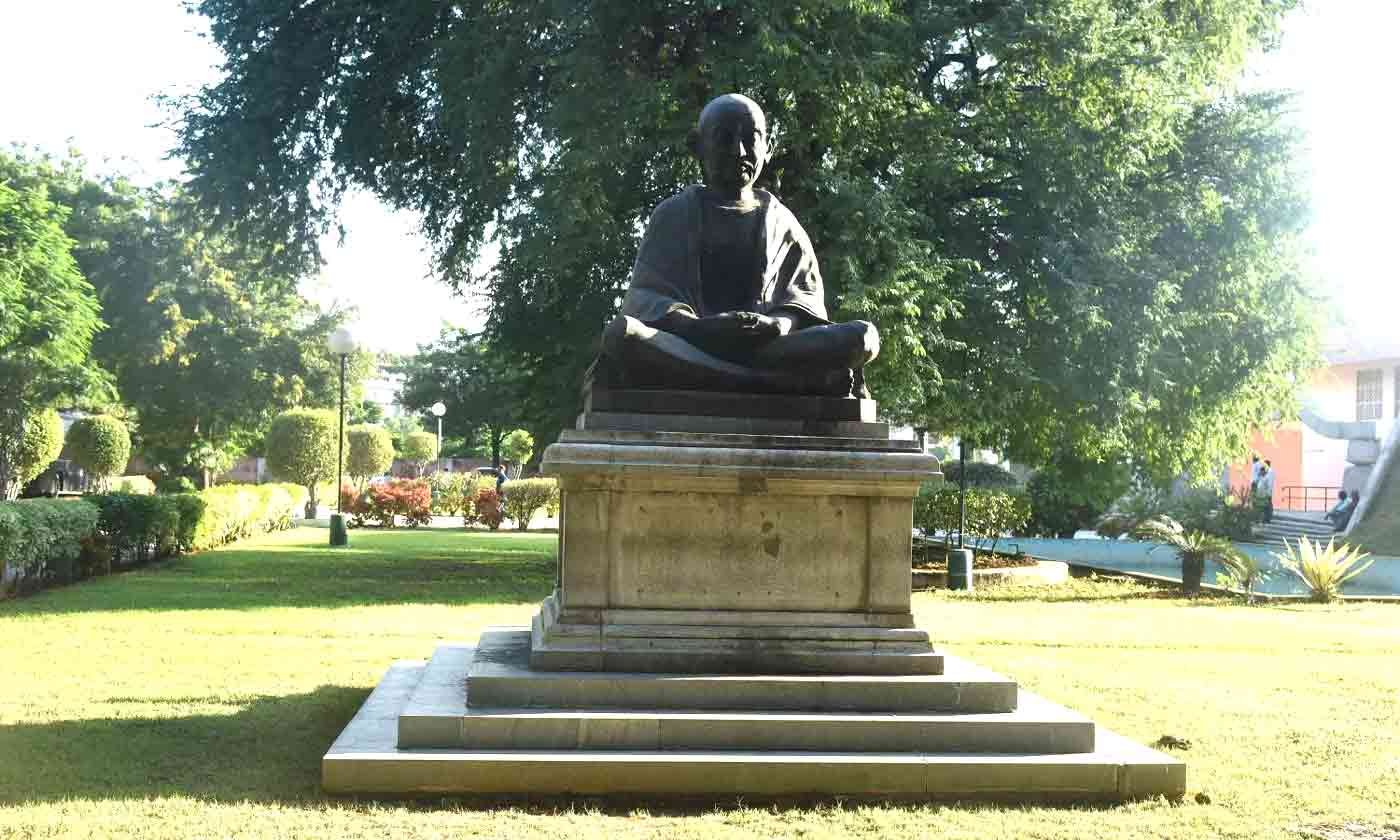
Every October 2, India observes Gandhi Jayanti to mark the birth anniversary of Mahatma Gandhi. In Hyderabad, the occasion also brings attention to Bapughat, a historic site associated with the immersion of Gandhi’s ashes in 1948.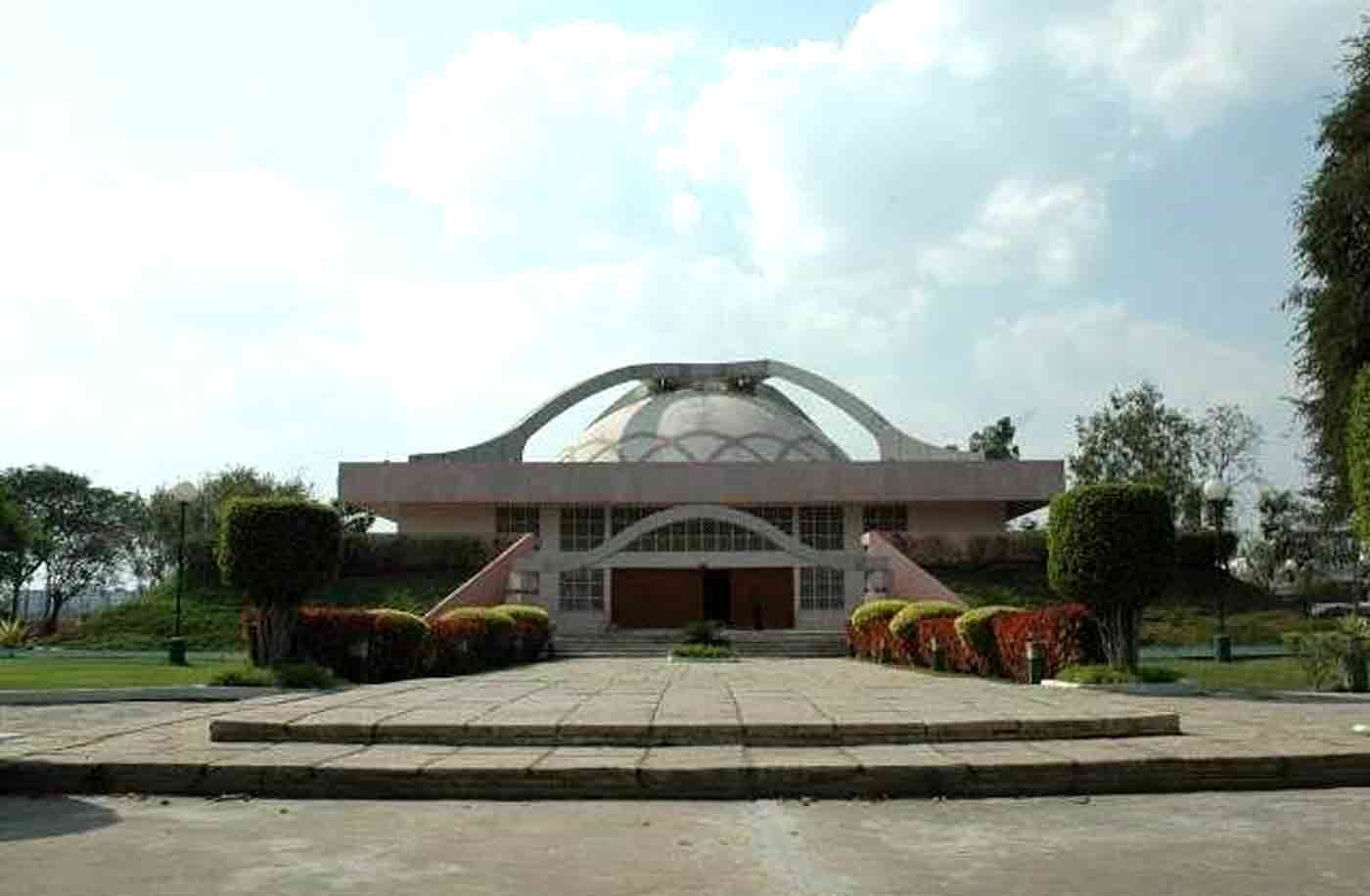
Yet Bapughat is more than a place of remembrance. It is also home to a nearly 300-year-old stepwell that has recently been restored, bringing together Gandhi’s legacy, Hyderabad’s architectural history and the urgent need for water conservation.
The site’s story is now being extended beyond the physical monument through the idea of a digital museum, an accessible platform that can help visitors, students and heritage enthusiasts understand the stepwell’s history, restoration and ecological significance.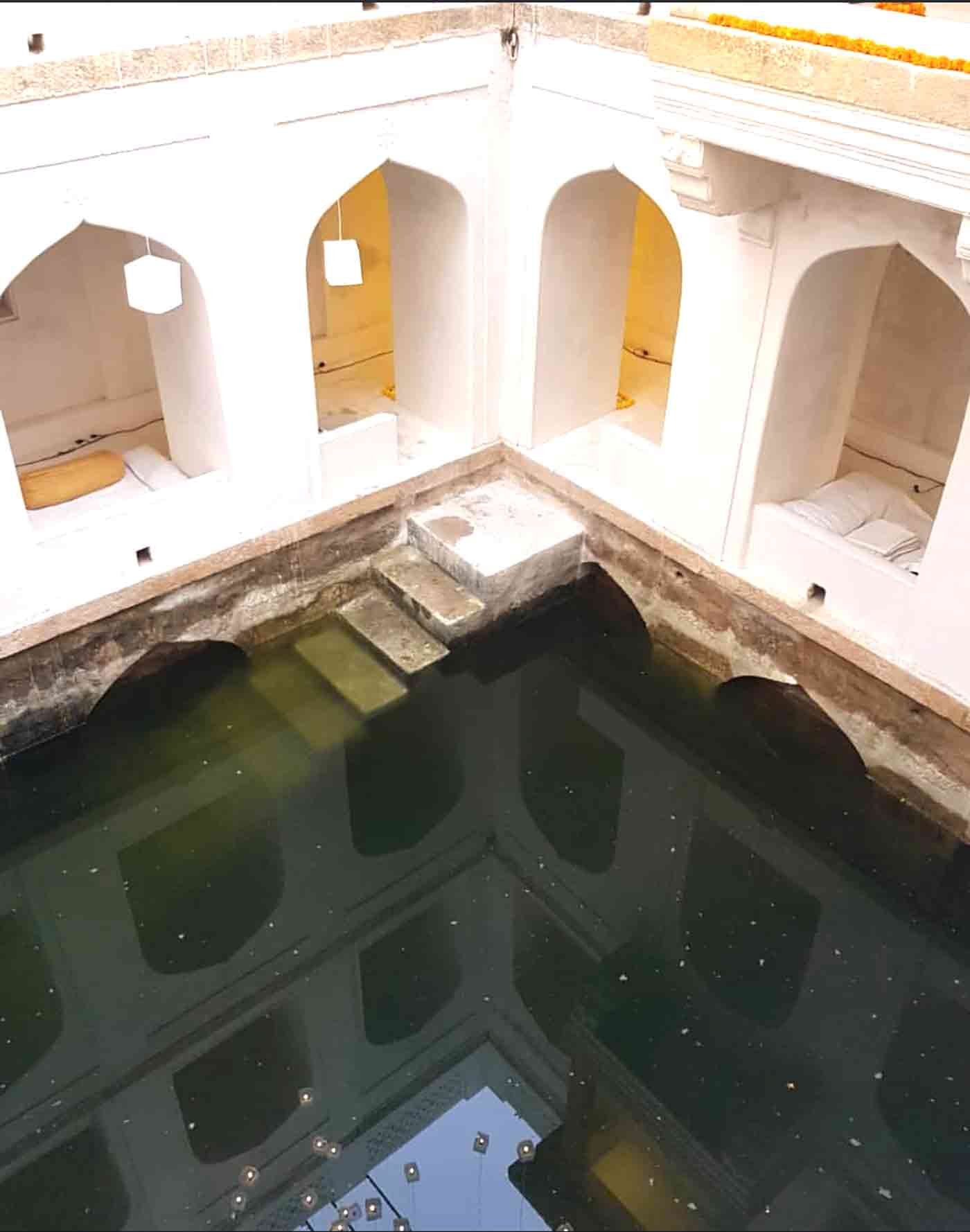
A Forgotten Water Heritage Site
Located near the confluence of the Musi and Esi rivers, the Bapughat stepwell is an important example of Hyderabad’s traditional water architecture. Its three-tiered form, stone masonry and lime-plaster construction reveal the sophistication of historic water systems.
Conservation documentation suggests that the stepwell may once have served a bagh, or pleasure garden, during the Asaf Jahi period. Its design carries architectural influences associated with both Kakatiya and Nizam-era traditions, reflecting the layered character of the Deccan.
The Hyderabad Design Forum has documented several historic stepwells across Telangana, helping bring attention to structures that were once central to community life but later became neglected.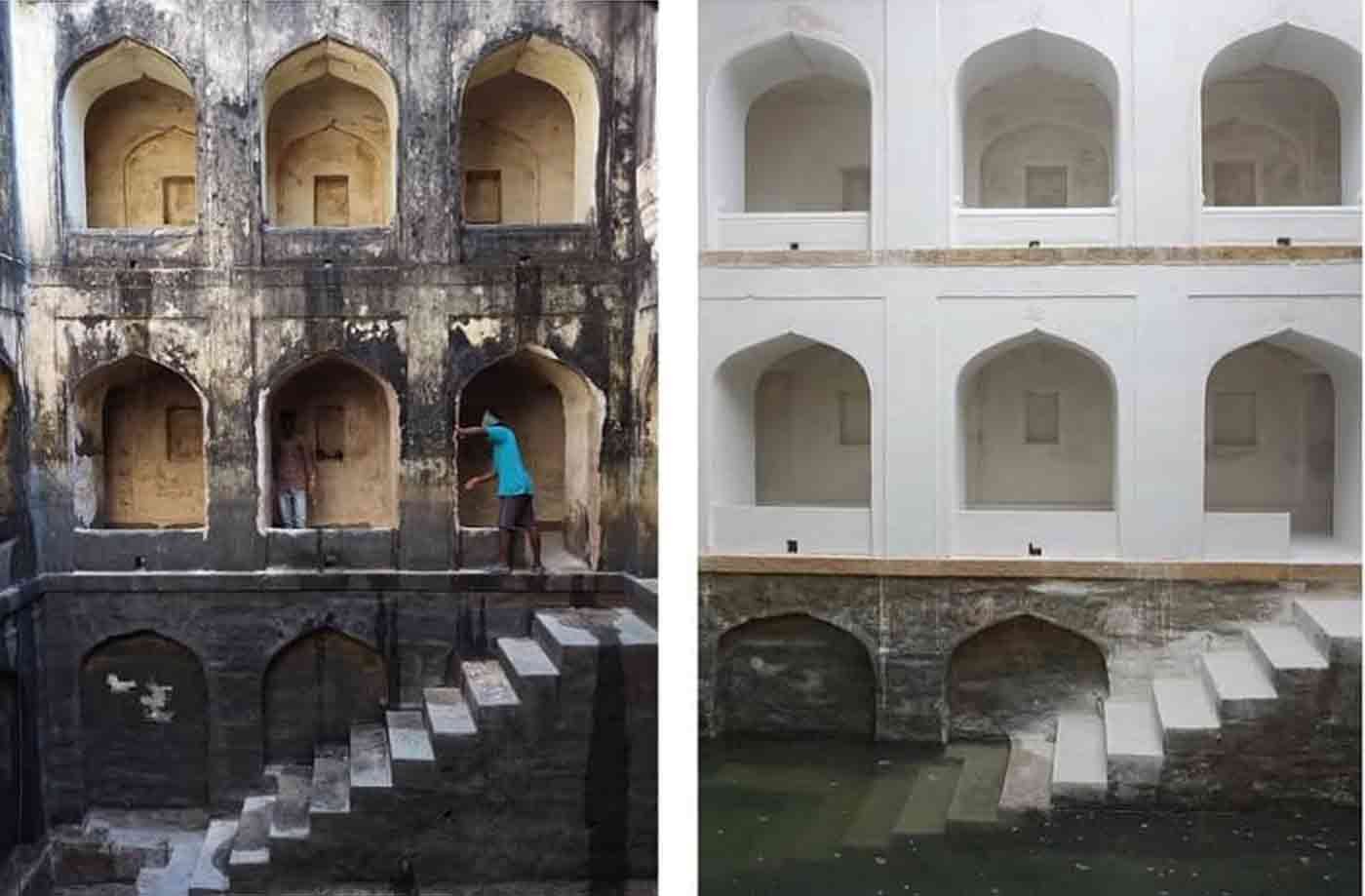
What the Restoration Revealed
Before restoration, layers of paint, loose plaster, vegetation and accumulated silt concealed many of the stepwell’s original details. Once these additions were carefully removed, the granite pillars of the jharoka were revealed.
Two gallery levels were restored and finished with lime wash prepared according to traditional methods. Subtle stucco motifs now complement the cinquefoil arches, while a third level remains submerged.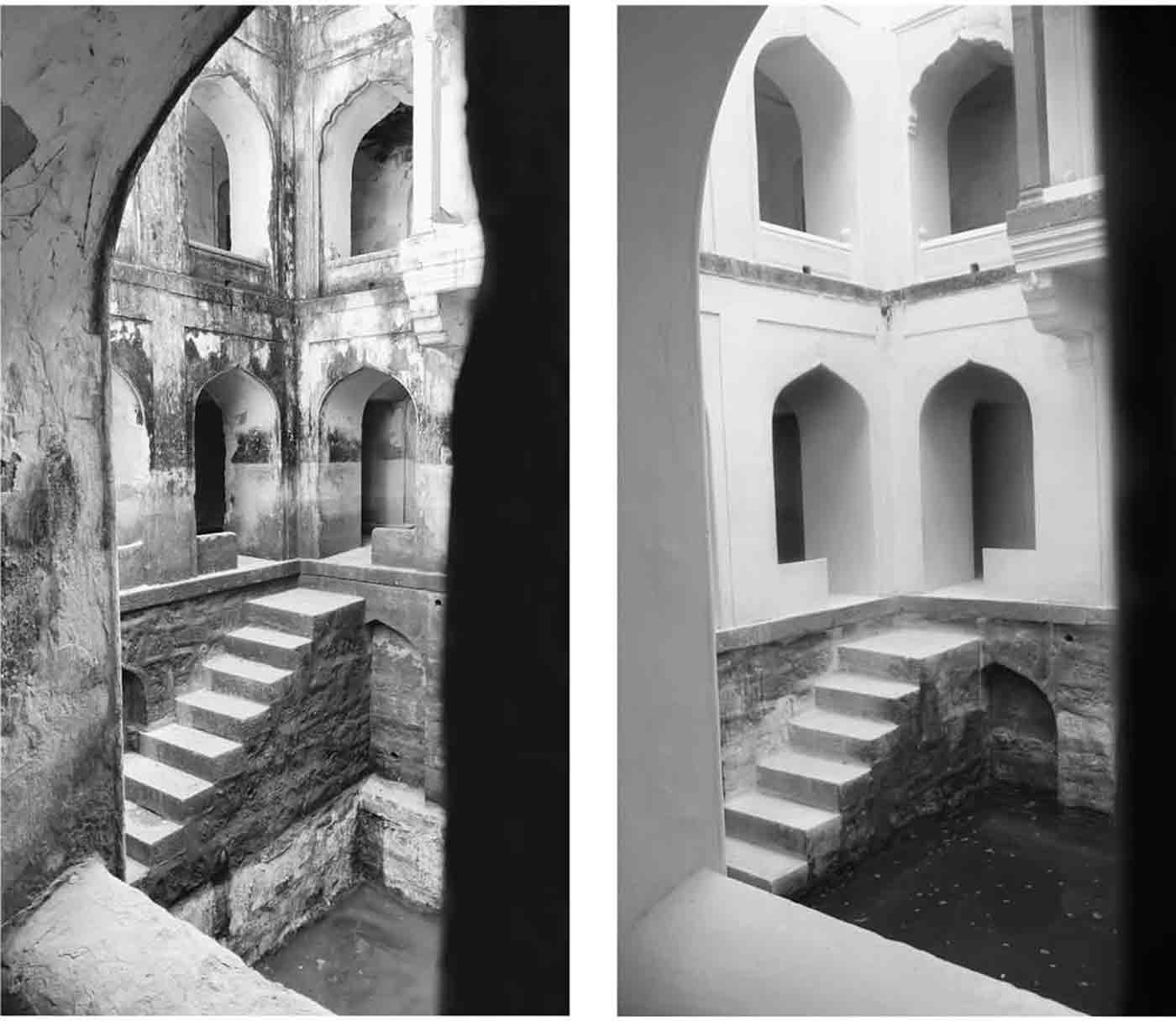
Akarmaa Designs carried out the conservation with support from the Gandipet Welfare Society. According to the project documentation, 35 workers completed the restoration in 282 days. The Rainwater Project contributed consultation and desilting support.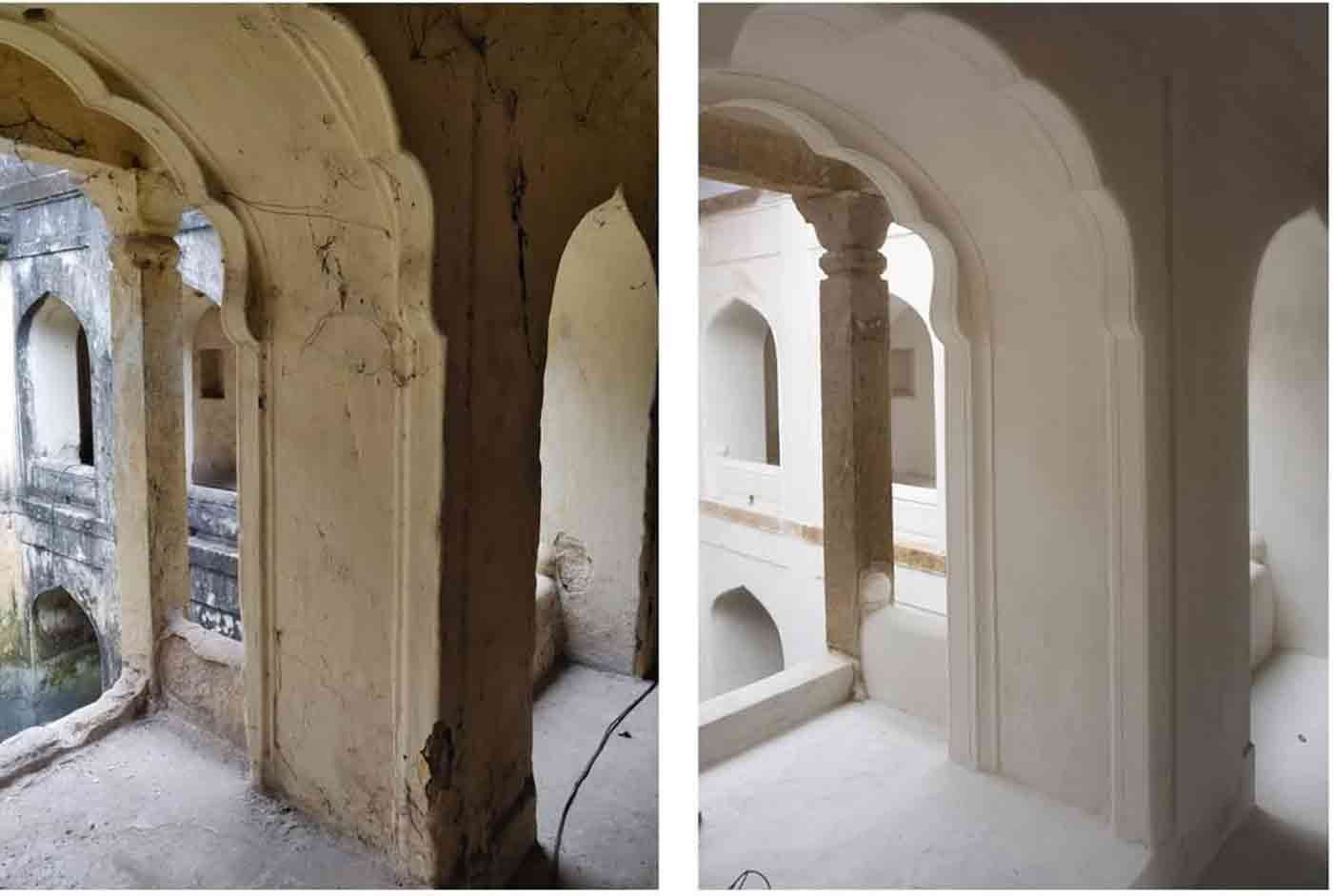
From Physical Monument to Digital Museum
(Should Add Abiran sir’s Insights too)
A digital museum can make the Bapughat stepwell’s story available even to those who cannot visit the site. Through photographs, archival material, architectural drawings, restoration records and oral histories, it can document how the stepwell changed over time and how conservation brought it back to life.
Such a platform can also explain the science behind traditional water structures in a simple, interactive manner. Visitors may be able to explore the different levels of the well, understand the use of lime and stone, view before-and-after images and learn about the desilting process.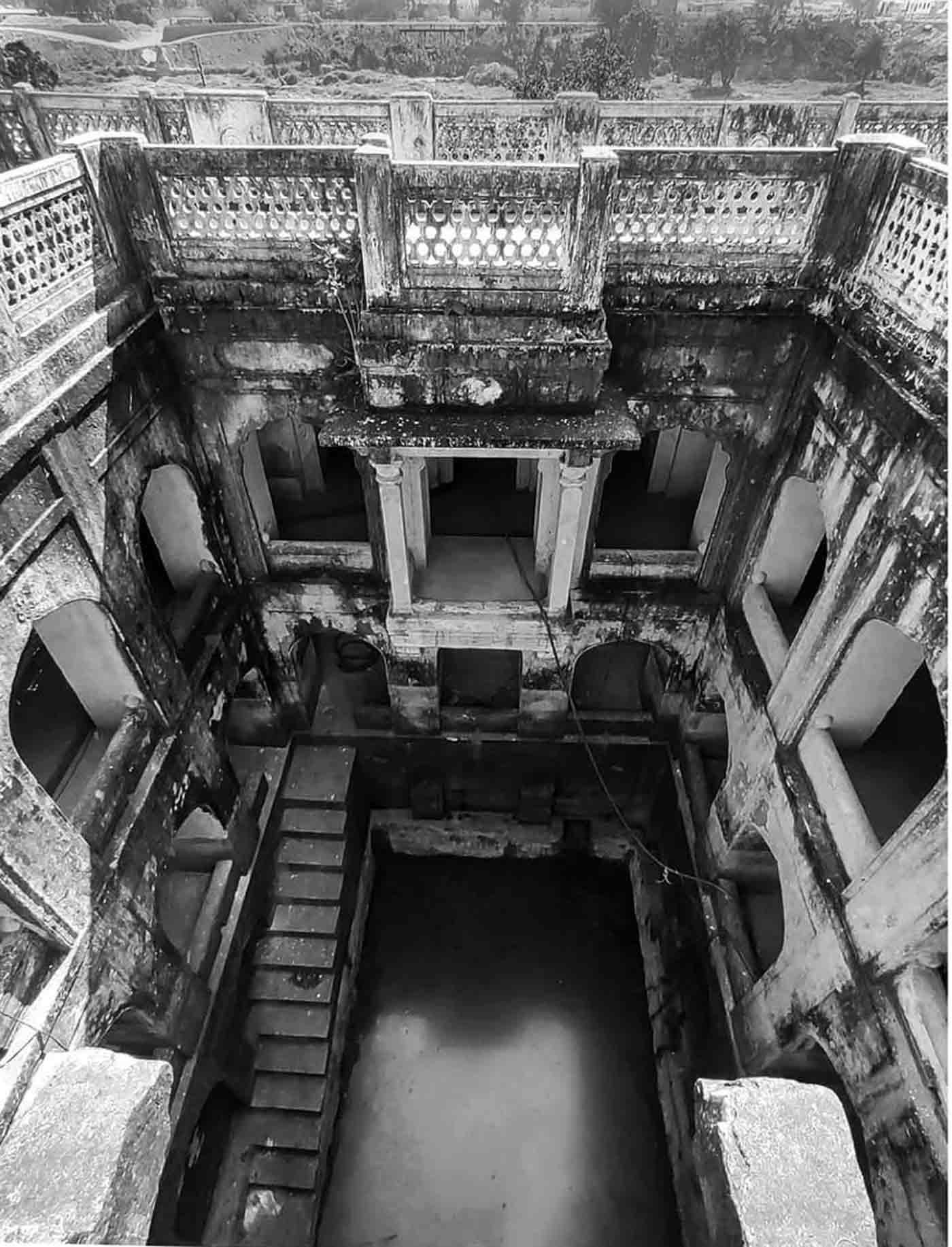
For younger audiences, the digital museum can transform heritage education into an immersive experience. Instead of seeing the stepwell as an old structure, users can understand it as a carefully designed system that connected architecture, water, community and biodiversity.
The digital record is especially valuable because the third level of the stepwell remains submerged. While the physical site preserves what can be seen, digital documentation can preserve research, interpretation and details that may not always be visible to visitors.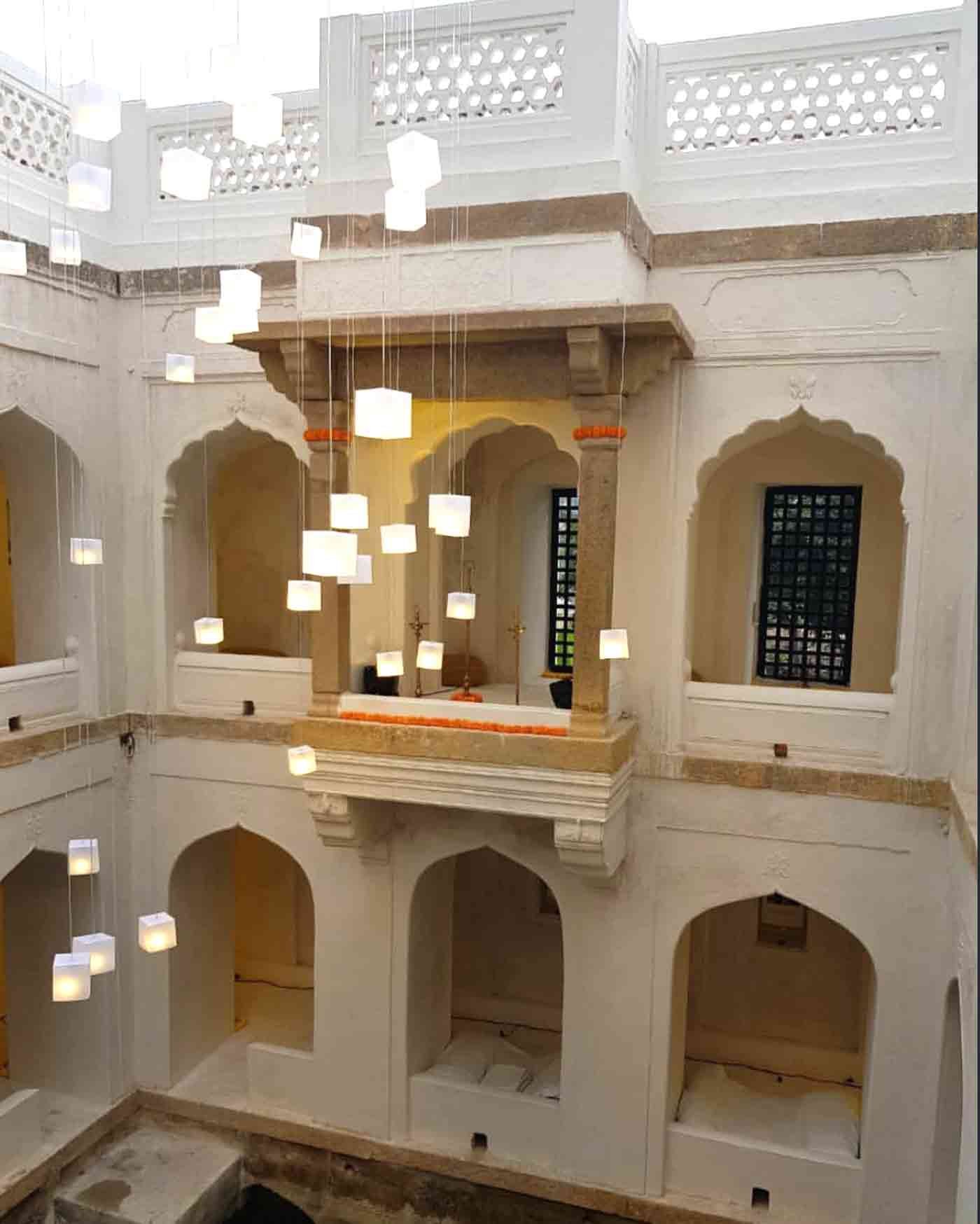
A Living Symbol of Shared Heritage
The restoration also extended to the stepwell’s natural inhabitants. Turtles found within the structure were cared for and returned to their restored habitat, highlighting the relationship between heritage conservation and ecological responsibility.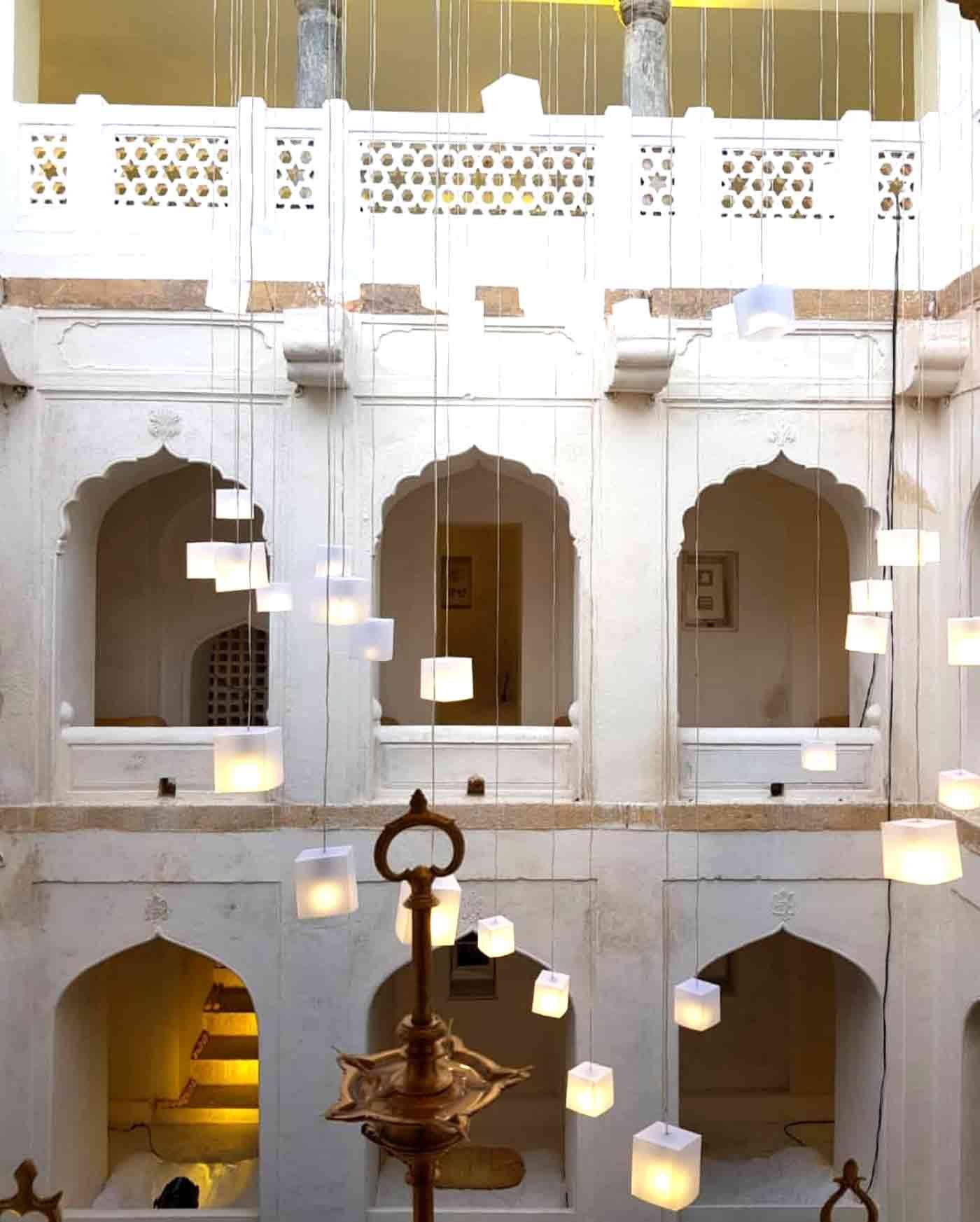
At the inauguration, the Warsi Brothers and their troupe performed qawwali in the stepwell’s intimate galleries. The music turned the restored monument into a living cultural space, bringing together architecture, performance and Hyderabad’s composite traditions.
This Gandhi Jayanti, Bapughat offers a powerful message. Its stepwell recalls the city’s historic relationship with water, while its digital museum points towards the future of heritage storytelling.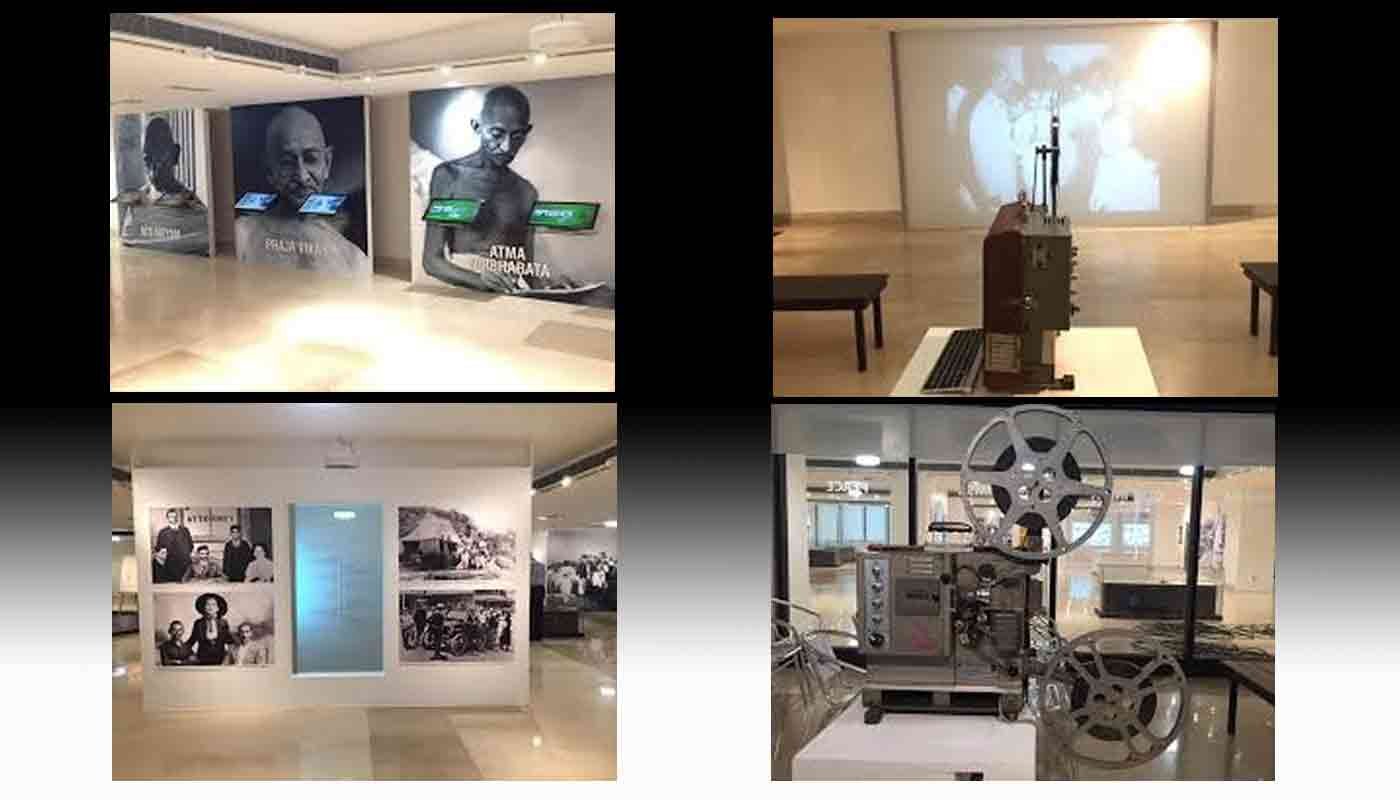
On October 2, the restored well stands not merely as a monument connected to Gandhi’s memory, but as a reminder that conservation is also an act of service. Protecting water, biodiversity, cultural memory and public knowledge is how a historic place continues to serve generations yet to come.