

From Goan Temples to Fine Dining: A 12-Root Goan Curry Savours Hyderabad’s Palate writes Vaishnavi D
In Hyderabad’s bustle, a Goan temple curry blooms — a kokum-kissed, root-laden mahaprasad that bridges coastal shrines and our Deccan feasts.
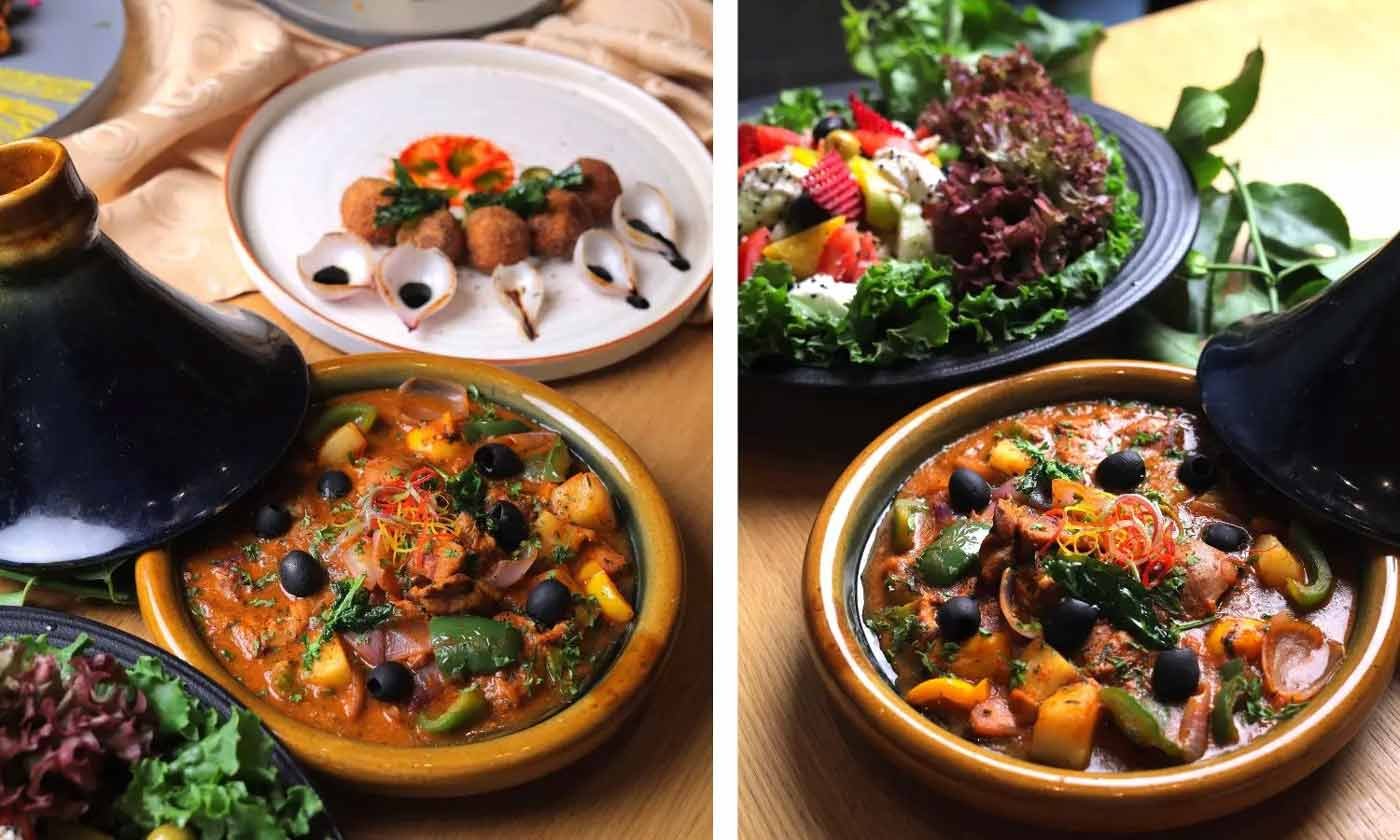
The airport rush faded as I slid into my seat at Novotel Hyderabad Airport’s Goa Food Festival last month, my eyes locked on a steaming bowl of Khatkhate. It was Goa’s whispered temple legend.
This wasn’t just any curry; it was GSB mahaprasad, crafted by third-generation chef Vibhuti Kamat and Sheena Pereira, weaving together 12–15 village roots — drumstick chunks, radish bites, red and white potatoes, carrots — into kokum-kissed coconut silk. Amid xacuti’s spice whirl, vindaloo’s tang, cafreal’s green punch, the crunch of fish fry, chana roast’s nuttiness, bebinca’s layered sweetness, and dodol’s jaggery chew, solan stole the show.
It summoned October’s festive temple rites from Goa’s 2,000 villages, where women diced vegetables at dawn and bhatajis tempered sacred masalas.
The Hyderabadi spoon trembled; with one taste, fiery worlds crumbled into meditative bliss, and even biryani seemed to bow to coastal divinity.
Coastal Curry Meets Deccan Heat: The Festival’s Goan Symphony
The festival menu struck a masterful balance — fiery non-vegetarian stars like chicken xacuti (its layered spices a swirling coastal dream), chicken vindaloo (vinegar-sharp rebellion), chicken cafreal (a coriander-green punch), and crisp traditional fish fry, all anchored by vegetarian classics: Khatkhate’s vegetable chorus, chana roast’s nutty crunch, and desserts like bebinca’s custardy layers and dodol’s jaggery-chewy embrace.
Vibhuti and Sheena didn’t just cook; they curated a narrative.
For Hyderabadis accustomed to haleem’s slow simmer and biryani’s boldness, this was revelation. Goan food’s subtlety proves that true spice whispers louder than it screams.
Vibhuti Kamat: Guardian of GSB Solan
Chef Vibhuti Kamat carries her GSB lineage with quiet pride, helming the family Bhojanalaya in Goa — a no-frills haven serving authentic solan, Khatkhate, and temple-style fare since her grandfather’s era.
“Solan is our solah-shak curry,” she explains, where “solah-shak” nods to its 12–15 hyper-local roots harvested across Goa’s villages. Traditionally, this mahaprasad graces Navratri feasts in temple mandaps, where kokum-coconut gravy cloaks humble vegetables in divine silk. No onions. No garlic. Purity reigns.
The Ritual Chop: Women, Bhatajis, and Village Rhythms
Here’s the story that moved me most: in Goan villages, women prepare the vegetables at dawn — drumsticks split, radishes diced, potatoes cradled — while Brahmin bhatajis orchestrate the masala grind and ranku, the final tempering.
It is gendered poetry, community alchemy transforming fields into prasad.
Khatkhate mirrors this tradition with its own 12–15 vegetable parade, offered as temple naivedya across Goa’s hamlets. At the family Bhojanalaya, this legacy lives daily, untouched by fusion fads. Vibhuti brought it to Hyderabad not as gimmick, but as genesis — a reminder that in a world obsessed with reinvention, authenticity remains the ultimate spice.
For Hyderabadis, this festival was not an escape — it was elevation. Goa’s temple curries teach us that flavour’s soul lies in restraint, in roots that ground us.