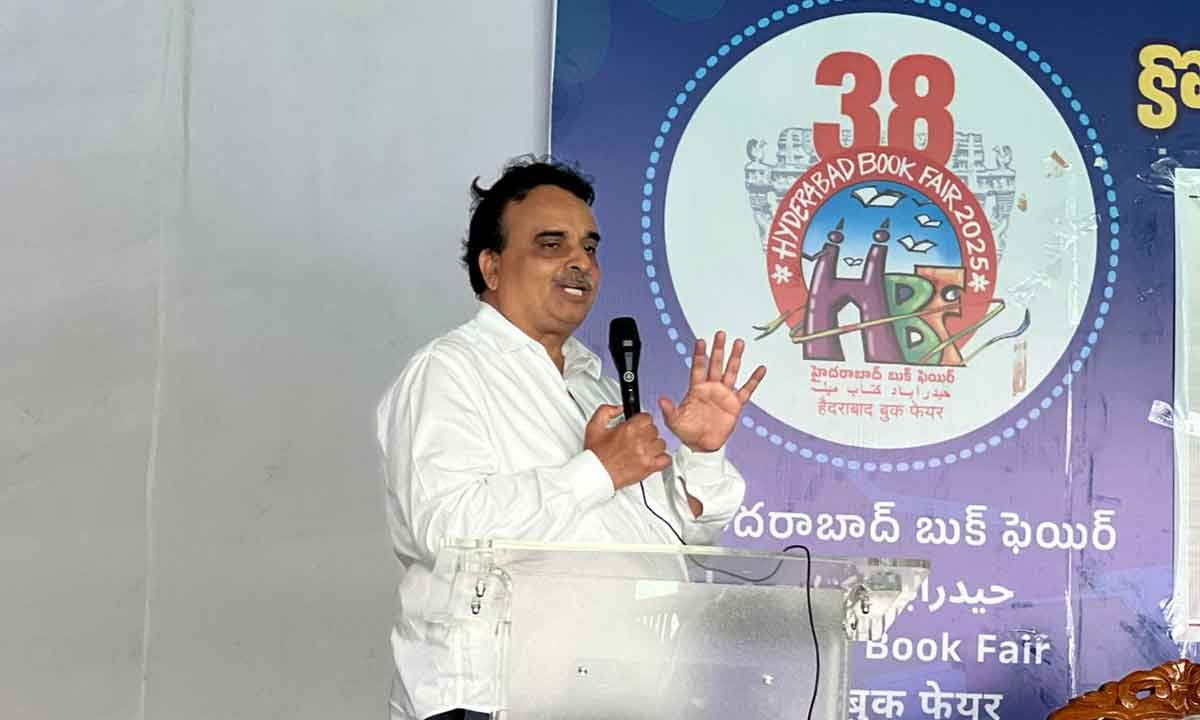


At Hyderabad International Book Fair held at NTR Stadium, Telangana Girijana Kshetralu, Jatharalu by author Dyavanapalli Satyanarayana, a detailed 350-page tome by Telangana Sahitya Akademi of the state’s pastoral tribal regions and sub-communities, complete with narratives, photos, and insights from 33 districts, was unveiled on December 26 at the Kompalli Venkat Goud Stage at 4 PM. Sidam Arju Master released the book, with Er. Vedakumar Manikonda, President of Deccan Heritage Academy Trust. Presiding amid lively interactions, discussions on the Gondwana and other tribal traditions, and signings to safeguard rural legacies from urban sprawl.
The evening opened with Vedakumar Manikumar welcoming the gathering. He introduced Dr. Dyavanapalli Satyanarayana as a historian who has consistently written on rivers, heritage landscapes, and people’s movements in Telangana. He recalled the author’s earlier work on the Krishna River, including narratives such as “Krishna Nadi Nagarika Katha”, and studies of cultural and megalithic sites that connected water, worship, and settlement patterns in the region.Also underlined that the new book extends this lifelong engagement into the world of Girijana Jatharalu, mapping shrines, routes, and rituals that rarely enter mainstream histories.
Vedakuamar highlighted how the volume traces Girijana Jatharalu and Devalaya Jatharalu from the Nizam period and the 1940s, when there was virtually no written history of many fairs, including the now-famous Medaram Sammakka- Saralamma Jathara. He noted that early records mention a modest revenue of around 1300 rupees at Medaram, in stark contrast to the millions of devotees who attend today, yet official archives stayed silent until activists like Vidama Ramu documented Adivasi struggles and rituals. Their heirs, he mentioned, have since been recognised with honours at Telugu University, symbolizing a slow institutional acknowledgement of tribal scholarship.He recalled the author’s earlier work on the Krishna River, including narratives such as “Krishna Nadi Nagarika Katha”, and studies of cultural and megalithic sites that connected water, worship, and settlement patterns in the region.Vedakumar underlined that the new book extends this lifelong engagement into the world of Girijana Jatharalu, mapping shrines, routes, and rituals that rarely enter mainstream histories.
Sri Sidam Arju Master, Vice President, All India Gondwana Mahasabha, deepened the conversation by explaining how every tribal community venerates a constellation of trees, birds, and animals, effectively transforming nature into a shared temple. He described practices such as mutti pooja, the Nagoba katha, and the way inti peru (family name), chettu (sacred tree), and pashuvulu (livestock totems) define dharma, kama, and moksha within these societies. Village decisions, he reminded the audience, are guided by panchamuti elders whose words command collective respect, making jatharas vital arenas for communication, justice, and consensus.
Returning to the podium, Vedakumar and Satyanarayana together placed the book within a broader national context, speaking about nearly 700 distinct degrees of cultural expression and ritual “elevations” across India, broadly grouped into nagarika (urban civilization) and Adivasi streams. They argued for a scientific yet empathetic framework in documenting these living traditions so that sites like Medaram and Saleeshwaramjathara can eventually stand alongside the Puri Jagannath Yatra in achieving UNESCO recognition as intangible cultural heritage. The “tree of culture”, they suggested, must show every branch- from shrine architecture to song, from pilgrimage routes to ecological practices- if it is to be visible on global platforms.
Throughout the programme, speakers repeatedly emphasised that whatever is published about Girijanulu must withstand scrutiny from the very communities it describes, because they are both the custodians and critics of their heritage. By centering Adivasi voices, the book “Telangana Girijana Kshetralau- Jatharalu” positions itself as both a scholarly resource and a collaborative archive in progress.
As the launch drew to a close, there was a shared sense that this volume marks not an end but a beginning: a call for more rigorous research, more translations of oral narratives, and more platforms where tribal scholars, activists, and institutions work together. In acknowledging the leadership of Dr. Dyavanapalli Satyanarayana and Er. Vedakumar Manikonda, the gathering affirmed a collective responsibility to safeguard Telangana’s Adivasi fairs and sacred landscapes for future generations.
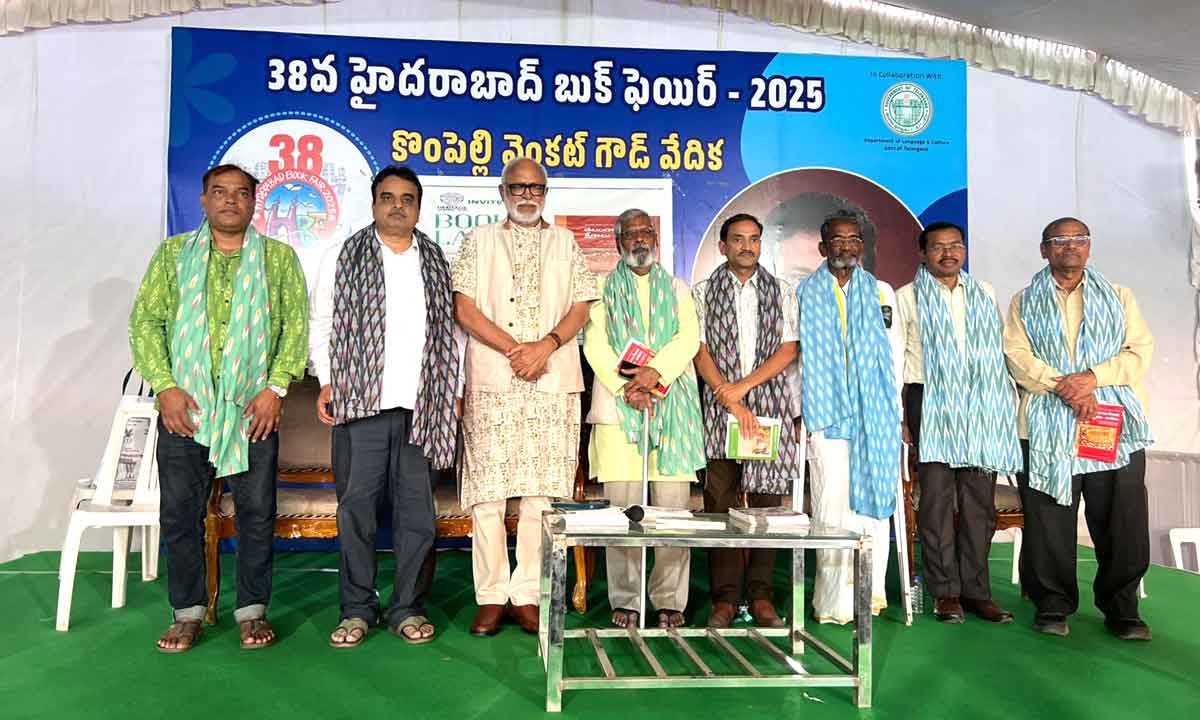
Dignitaries unveil Telangana Kshtetralau – Jataralu at the 38th Hyderabad Book Fair, Kompally Venkat Goud Vedika, with Er. Vedakumar Manikonda, Dr. Dyavanapalli Satyanarayana, Dr. Srinivasulu Dasari, Prof. Bhattu Ramesh, Dr. Apka Nageshwar Rao, and Sri Sidam Arju Master on stage.
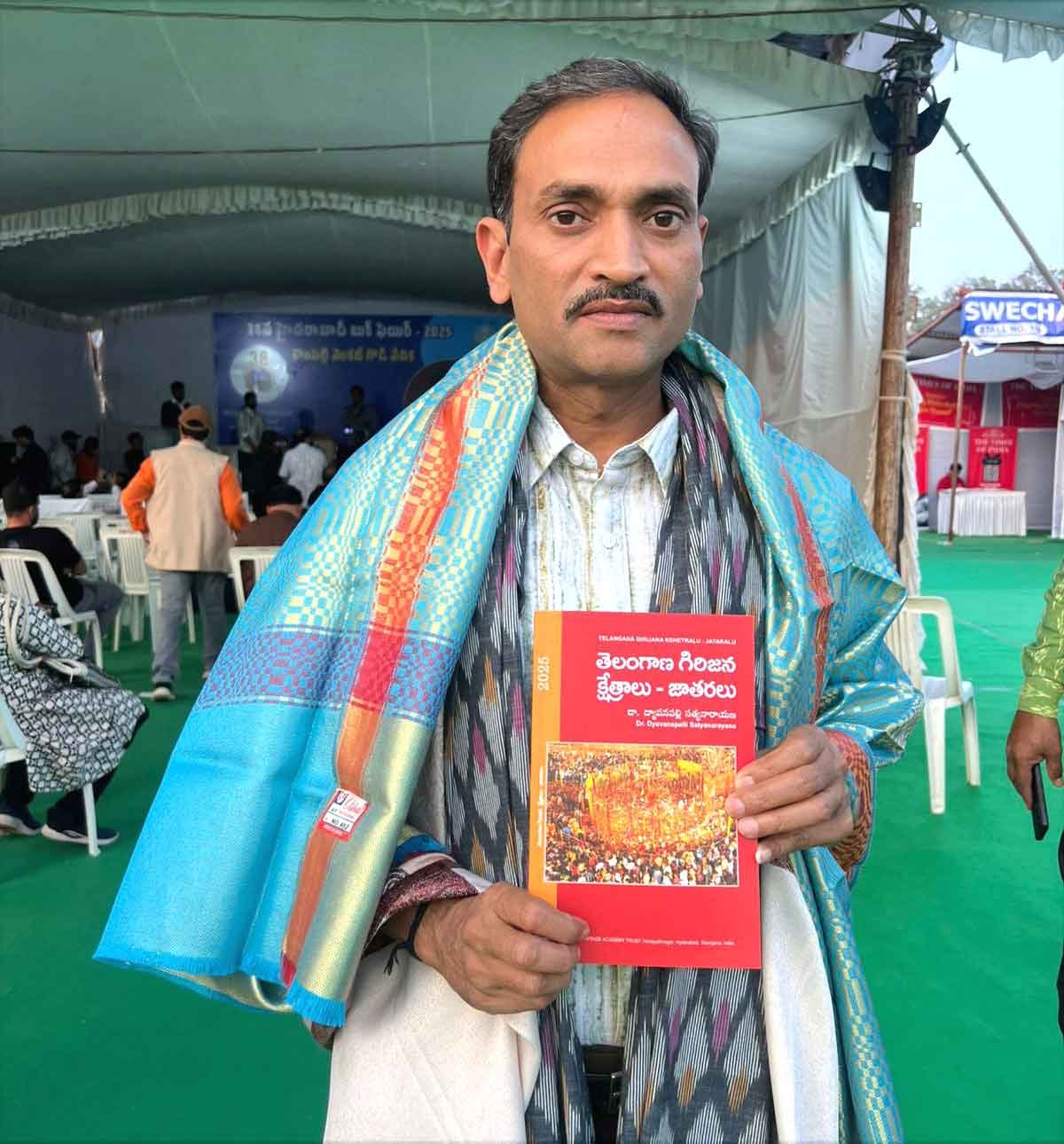
Author Dr. Dyavanapalli Satyanarayana proudly presents his new book Telangana Girijana Kshetralau- Jataralu after the formal launch at the 38th Hyderabad Book Fair.