
In Dhoolpet’s chaos, Manoj Kite Shop isn’t just a store—it’s a portal to Hyderabad’s soaring soul, where family legacy lifts kites, and kites lift spirits writes D Vaishnavi
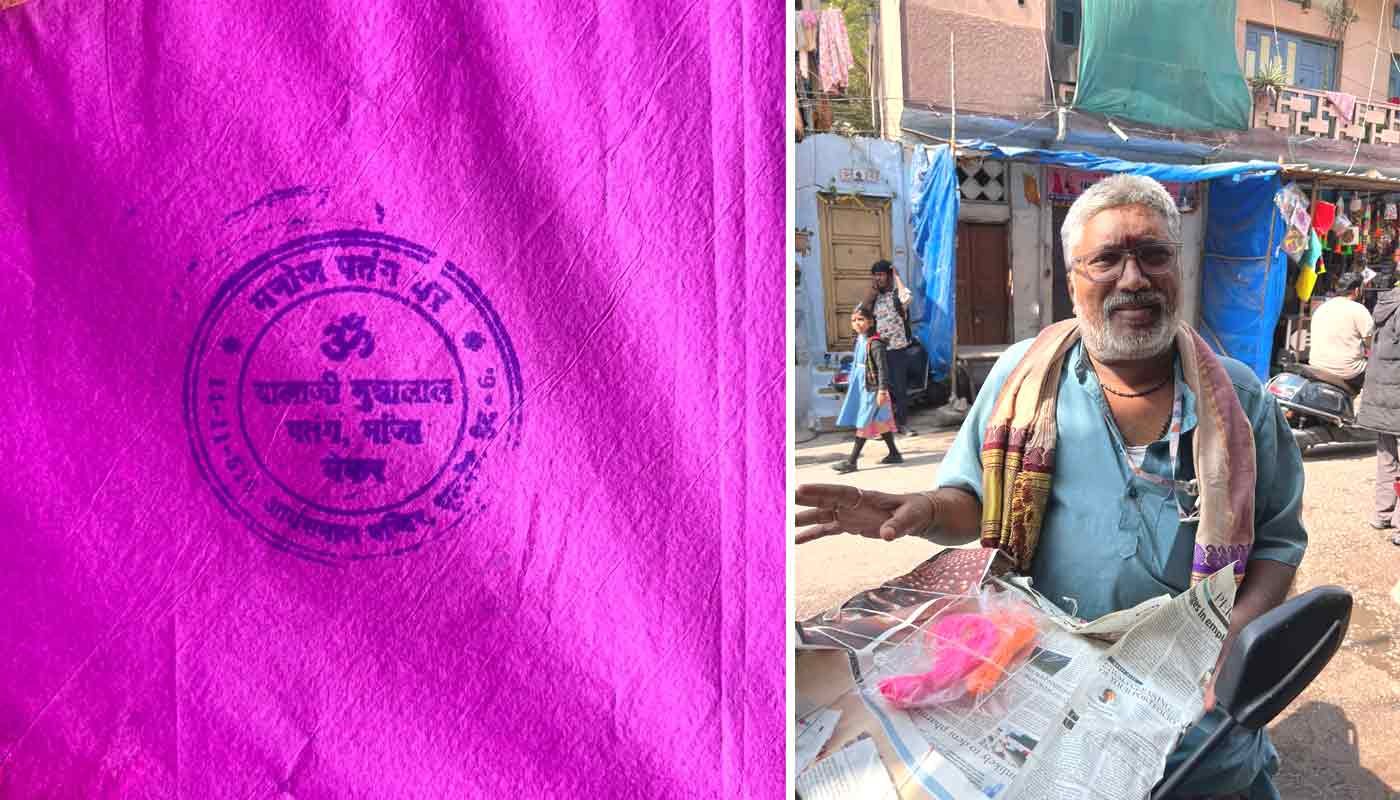
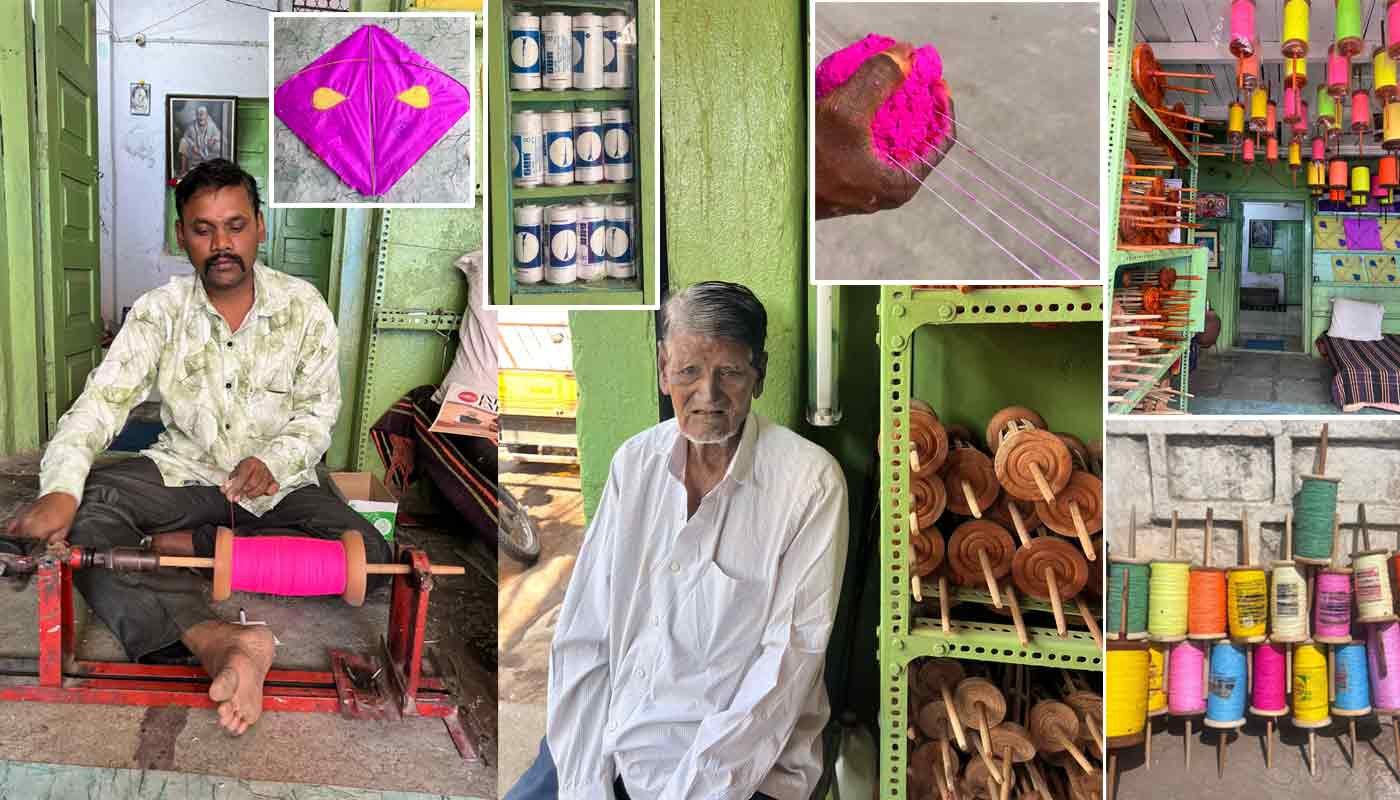
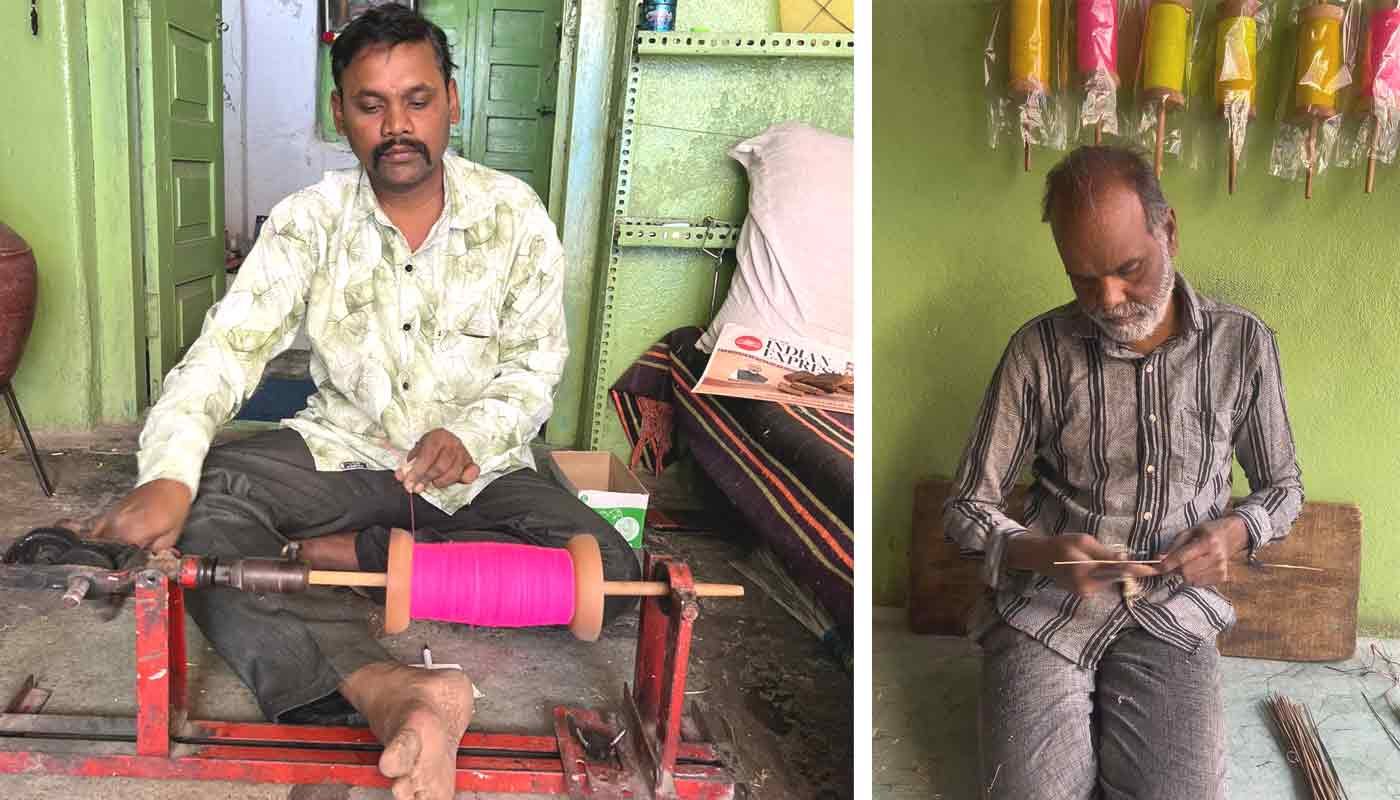
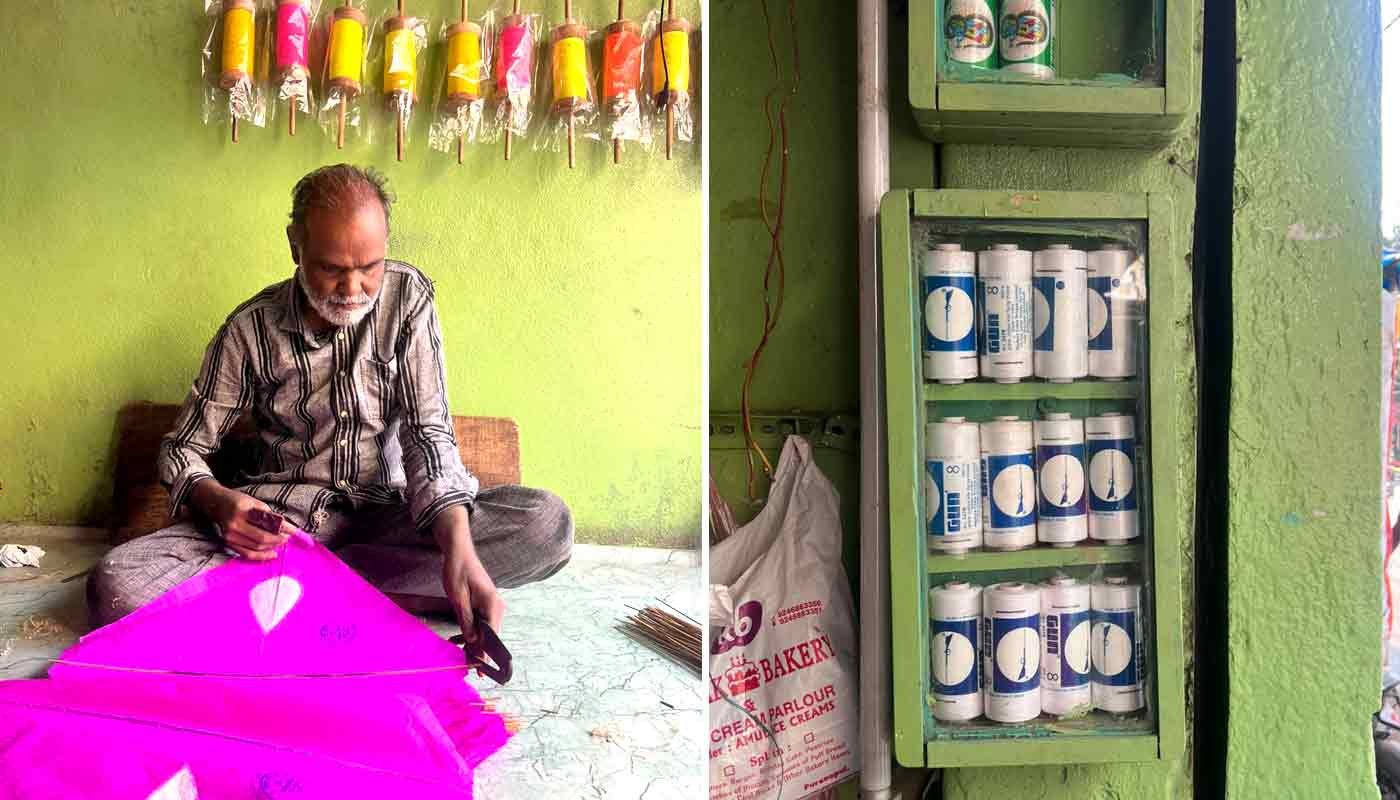
Manoj Singh expertly carves lightweight bamboo teelis using a traditional mathku tool at Manoj Kite Shop in Dhoolpet.
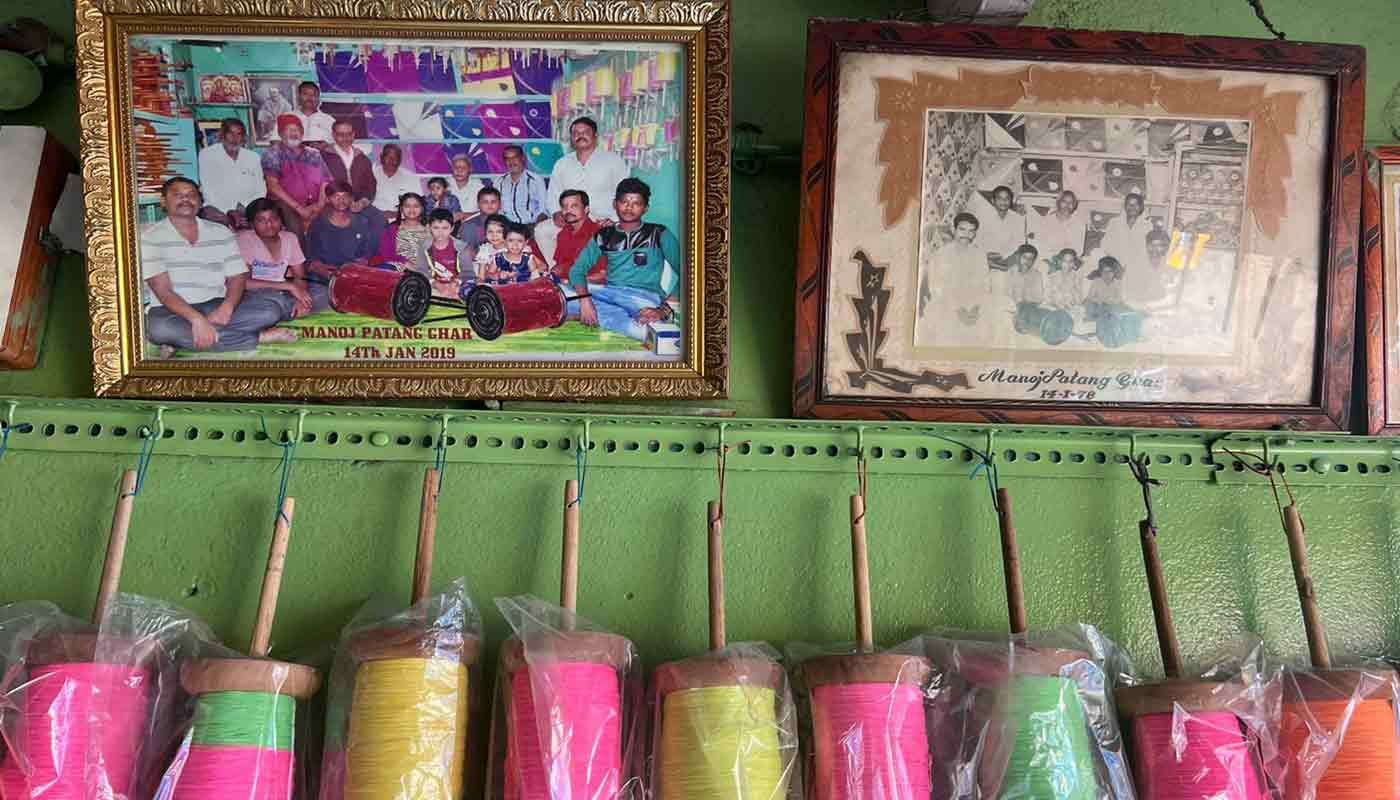
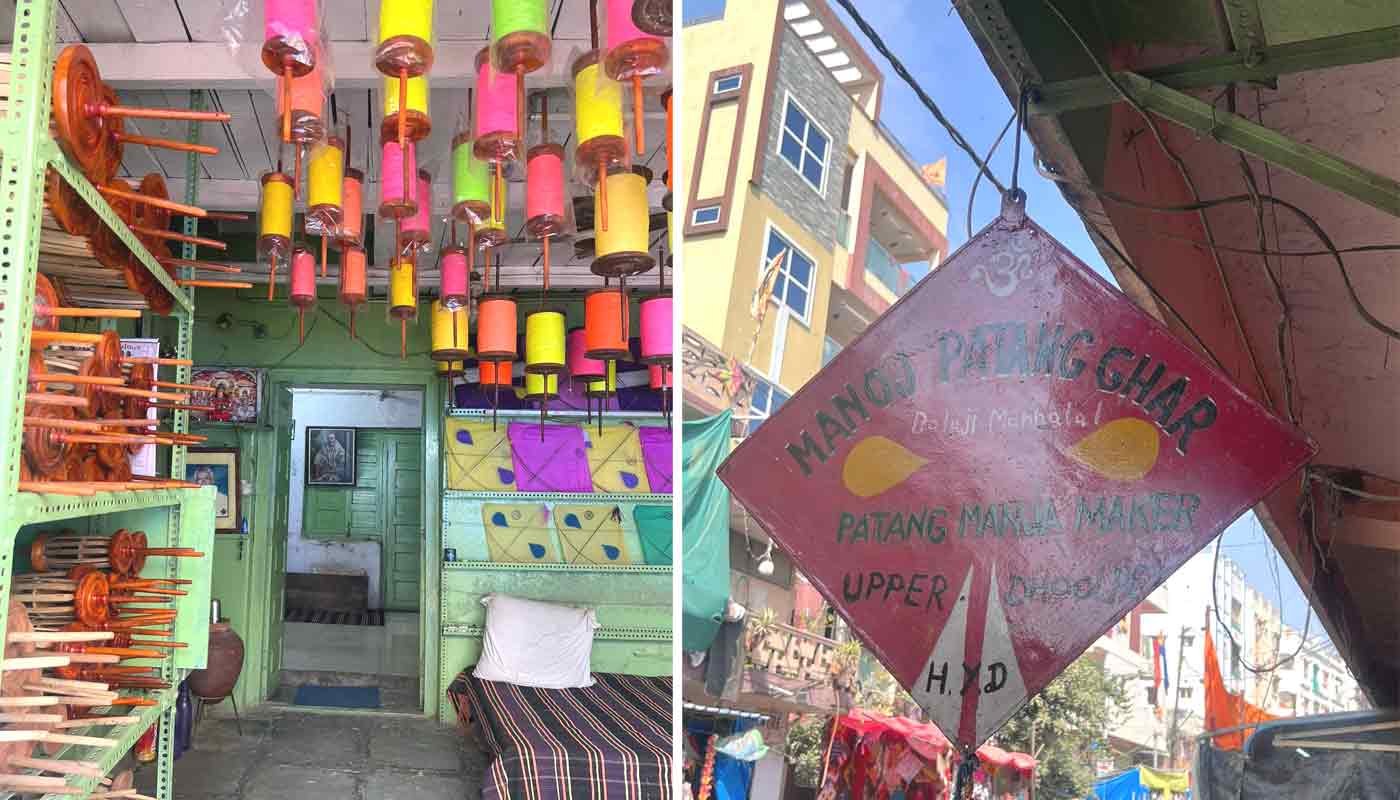
In the narrow, bustling lanes of Dhoolpet, near Manghal Ghat, where the Musi River whispers tales of bygone eras, a quiet revolution takes to the skies every Sankranti. Tucked away amid the clamor of Hyderabad’s old city, Manoj Patang Ghar, stands as a living testament to an art form that’s outlived empires. For generations, the Singh family has handcrafted kites that they say don’t just float—they dominate the heavens, defying wind and rivals with an audacious 90-degree angle. In a world of mass-produced plastics, this is where quality trumps quantity, drawing elite patrons from politicians to celebrities and kite aficionados from abroad.
Manoj Singh, continuing the family-run empire, wipes sweat from his brow as he glues a bamboo teeli (split bamboo stick) to shimmering glassine paper. At 55, with calloused hands that tell stories of decades spent perfecting the craft, Manoj embodies the unyielding spirit of Dhoolpet’s kite makers. “We’ve been here since my grandfather’s time over 80 years,” he says, his voice steady amid the rustle of paper and the sharp scent of laye, their signature adhesive. “It’s not about making thousands. It’s about kites that fly like eagles, not sparrows.”
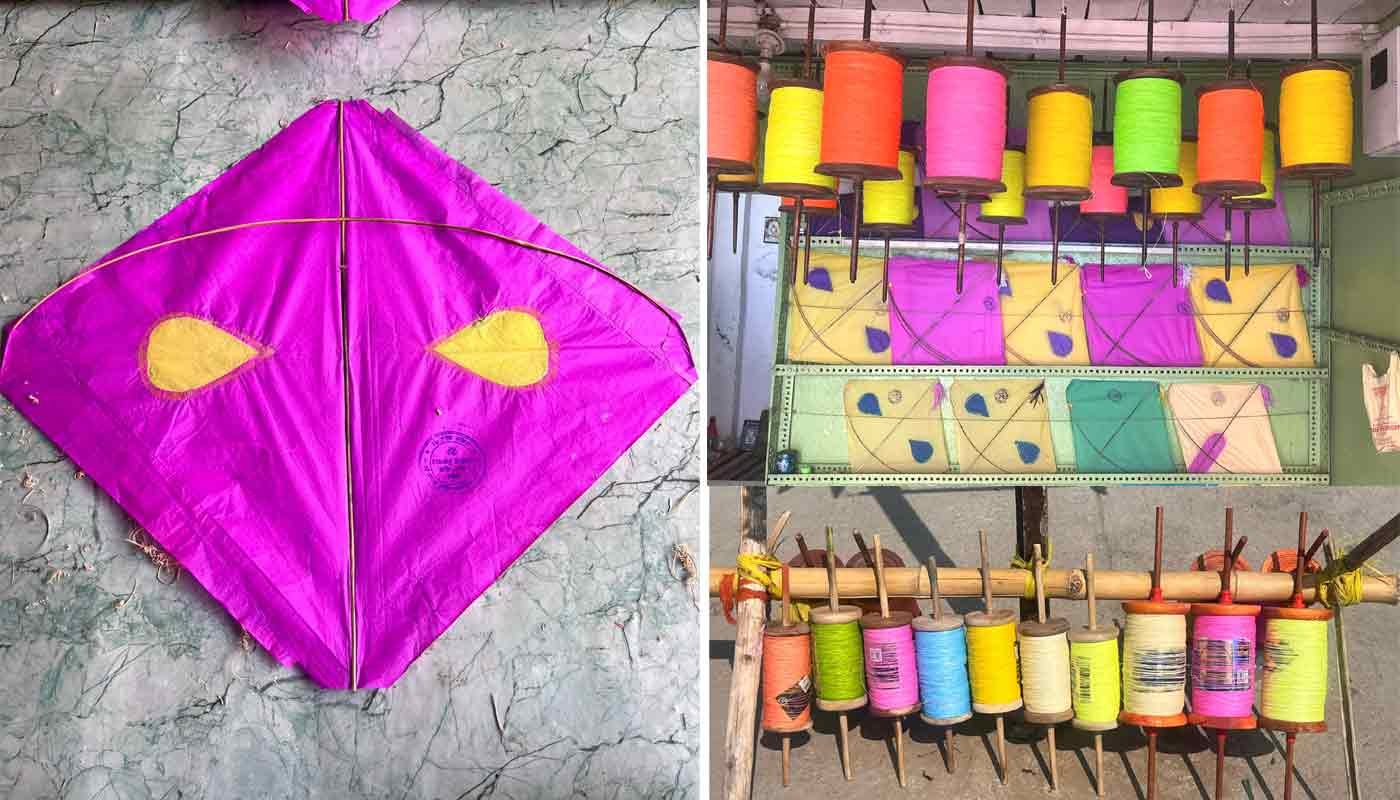
From featherlight pound (1 lb) to balanced half pound and robust panchka, handcrafted for Sankranthi battles in Hyderabad’s skies.
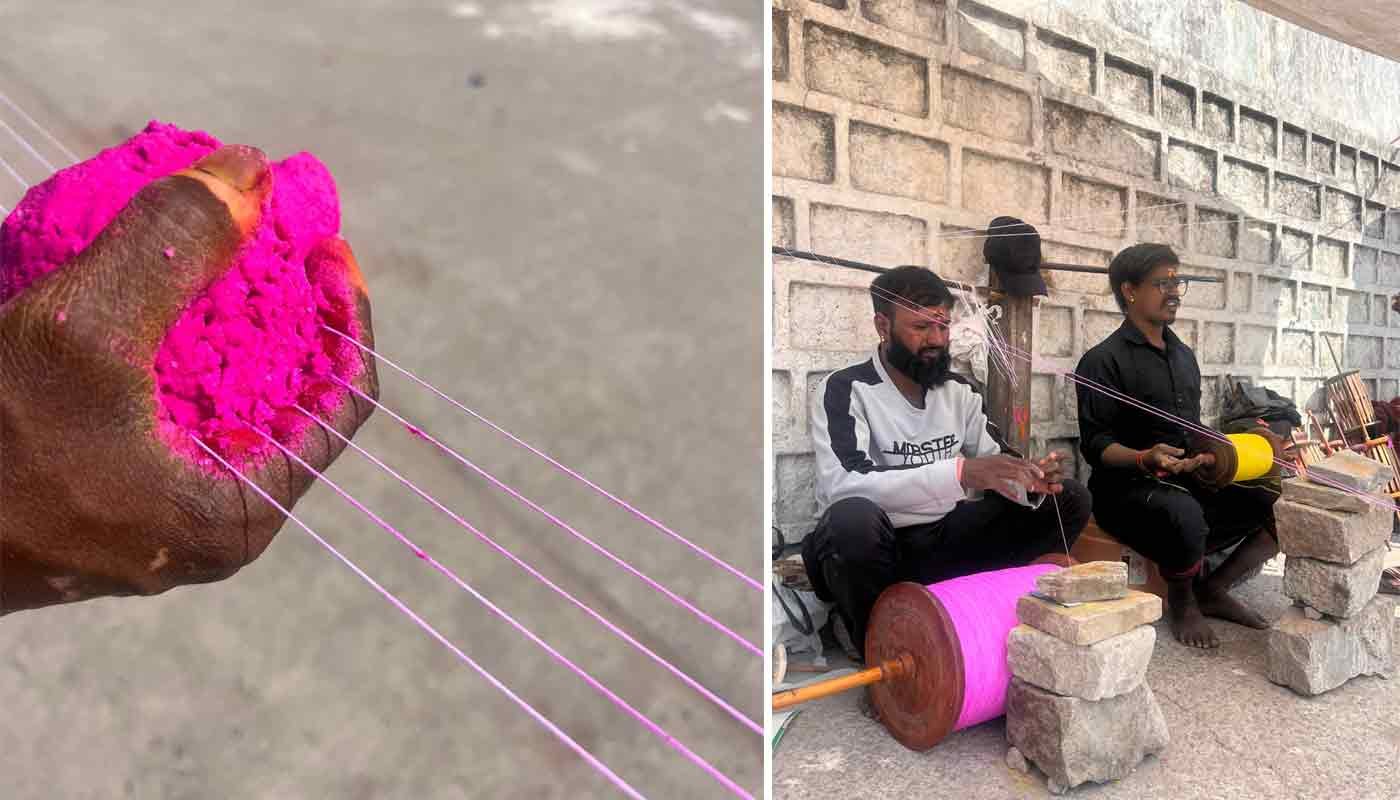
The shop, a modest 200-square-foot haven crammed with rolls of vibrant paper, bundles of manja (glass-coated kite string), and dangling doris (tails), buzzes with purpose. Brothers Ravi and Sanjay flank Manoj, each a master in their domain. Ravi handles the manja, a lethal abrasive thread that’s the soul of kite battles, while Sanjay adorns finished kites with intricate cake (decorative toppings) and flowing hangings. Their process is a symphony of tradition: bamboo teelis sourced from lightweight, flexible strips ensure agility; glassine paper, prized for its sheen and strength, forms the sail; laye—a potent mix of maida flour and specialized chemicals—bonds everything seamlessly. No shortcuts, no machines. Other kites in the market hover at a pathetic angle,” Manoj chuckles. “Ours hit 90 degrees, straight up, untouchable. That’s our secret.”
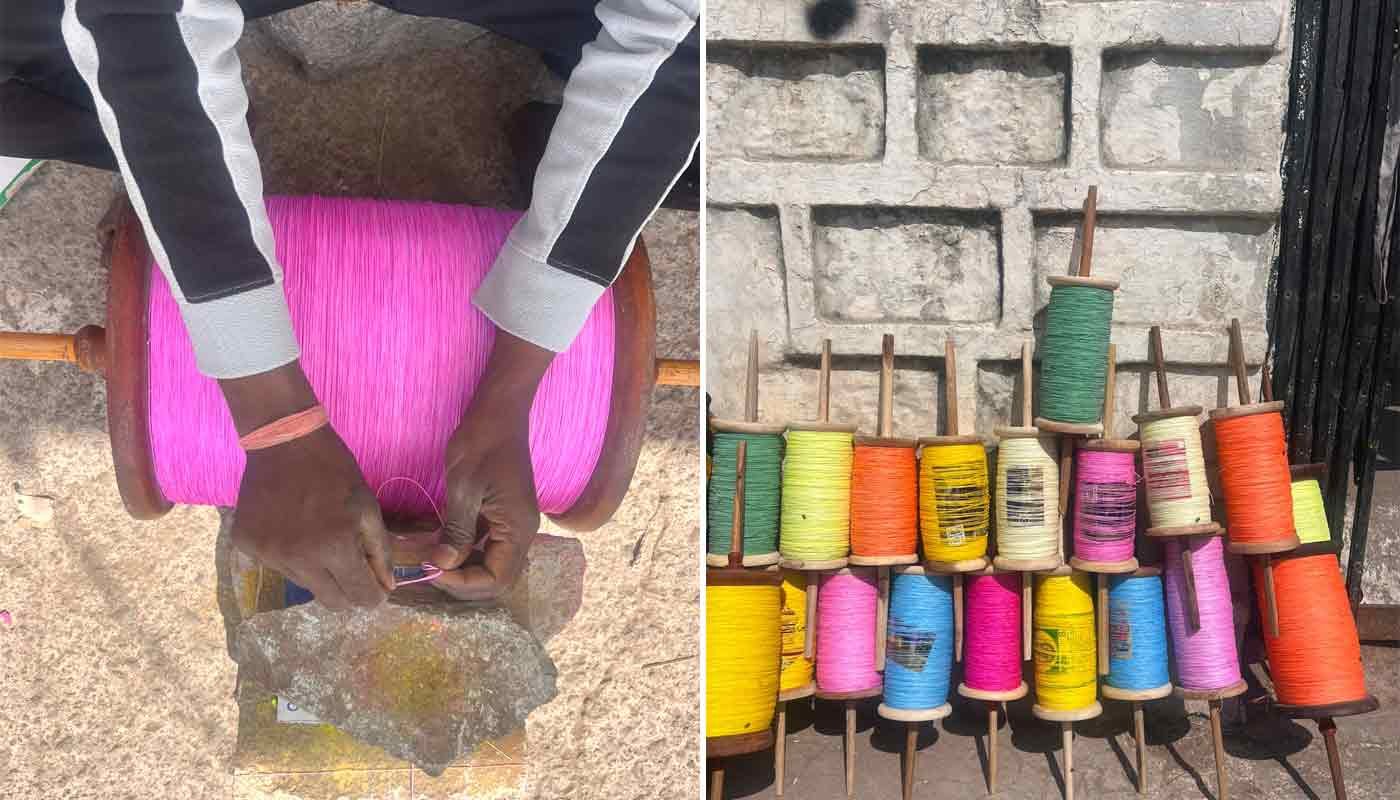
Glistening Manja coated on gilletis threads, wound on massive charka reels holding 10-24 rolls.
Manoj’s inventory boasts three prized varieties, sold by weight for precision in flight: the featherlight pond (one pound), the balanced half pound, and the robust panchka (five pounds equivalent in heft). These aren’t toys; they’re warriors graded for wind conditions and battles. The Doppan, a Dhoolpet classic resembling a diamond-shaped fighter, reigns supreme—sleek, responsive, and lethal with manja. Customers rave about the manja too, razor-sharp, yet durable, it slices through competitors in the frenzied pattar fights that light up Hyderabad’s Sankranti skies.
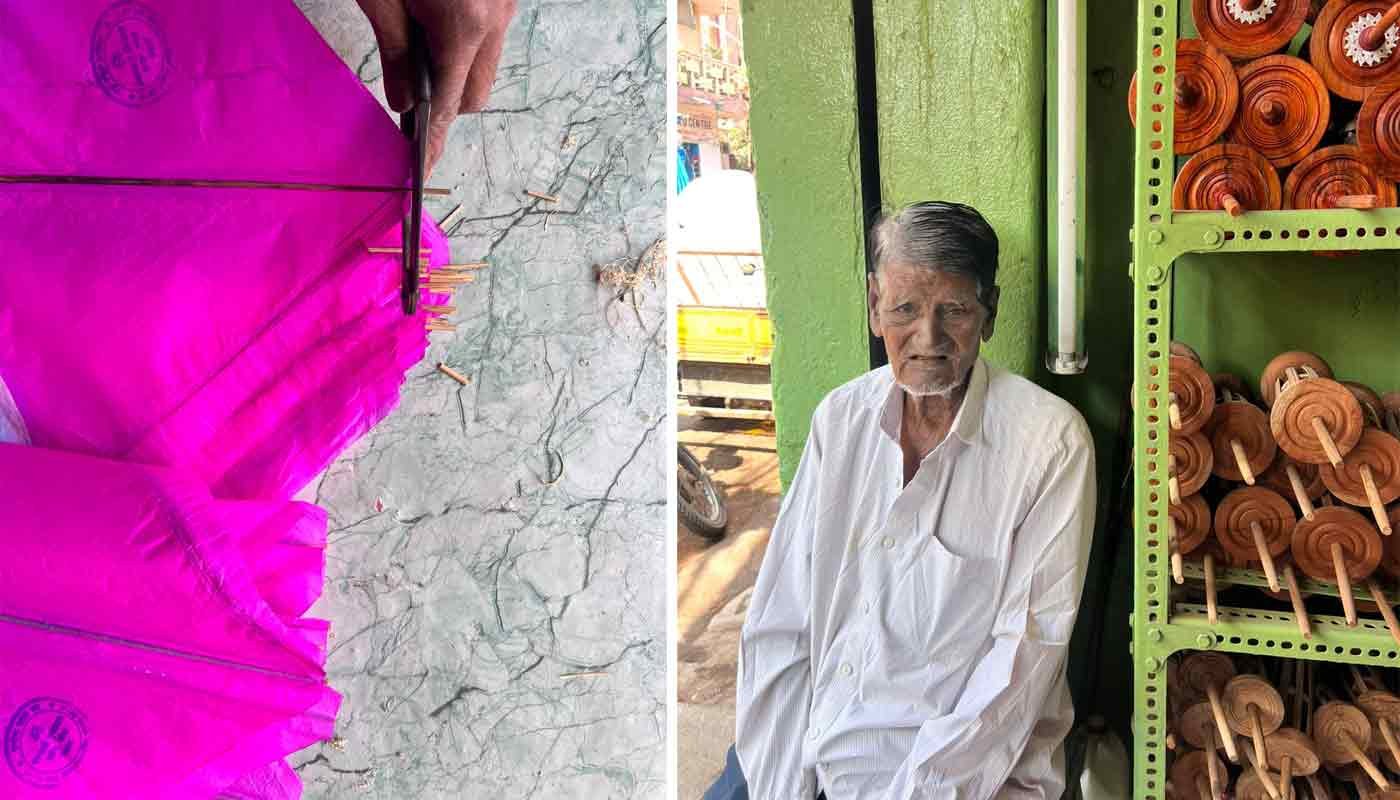
First-class quality—I’ve been taking these kites from Manoj for 30 years!” Rajamouli Sharma, a devoted customer of Manoj Patang Ghar, Dhoolpet.
What sets Manoj apart isn’t just craftsmanship—it’s clientele. The Singhs cater to an exclusive circle where kites symbolize status and skill. Asaduddin Owaisi, the fiery AIMIM leader, is a regular, stocking up for high-stakes aerial duels. “They make kites for champions,” he once quipped during a visit. MLAs from across Telangana flock here, as do NRIs and foreigners with a craze for authentic Indian kite culture. One loyal patron, Rajamouli Sharma, has been buying from Manoj for 30 years. “First-class quality—nothing compares,” Rajamouli told this correspondent, holding a freshly minted Doppan. “These kites don’t just fly; they perform. I’ve taken them to festivals abroad, and they steal the show.”
Manoj Singh expertly carves lightweight bamboo teelis using a traditional mathku tool at Manoj Kite Shop in Dhoolpet.
From featherlight pound (1 lb) to balanced half pound and robust panchka, handcrafted for Sankranthi battles in Hyderabad’s skies.
The family’s philosophy echoes in every frame: quality over quantity. In an era of cheap imports flooding Patang Bazaar, Manjoy produces just enough for discerning buyers. “We could churn out 10,000 kites a day,” Manoj admits, ” Our kites last for seasons, not days. Foreigners come for the real deal—handmade, battle-tested.” This ethos has sustained them through pandemics, urban sprawl, and shifting festivals. Even as Hyderabad’s skyline pierces the clouds with glass towers, the Singhs preserve a craft rooted in the Nizams’ era, when kite flying was a royal sport.
Yet, challenges loom. Younger generations chase IT jobs, leaving gaps in apprenticeships. Bamboo supplies fluctuate, and urban pollution dulls the festive fervor.
First-class quality—I’ve been taking these kites from Manoj for 30 years!” Rajamouli Sharma, a devoted customer of Manoj Patang Ghar, Dhoolpet.
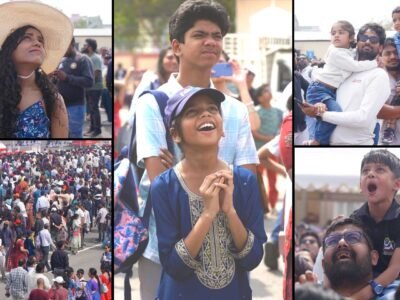
As the sun dips over Manghal Ghat, a fresh batch of panchka kites catches the breeze outside the shop, dancing at impossible angles. Passersby pause, mesmerized. In Dhoolpet’s chaos, Manoj Kite Shop isn’t just a store—it’s a portal to Hyderabad’s soaring soul, where family legacy lifts kites, and kites lift spirits. This Sankranti, as battles rage above the old city, the Singhs’ creations will remind us: true flight demands heart, not haste.