

Iran’s history spans thousands of years and helps explain the country’s current political tensions. Known historically as Persia, Iran was once home to powerful empires such as the Achaemenid Empire, which ruled large parts of Asia, the Middle East, and Europe. Over time, Persia experienced invasions and cultural changes, including the Arab conquest in the 7th century that introduced Islam and reshaped the region’s identity.
In the 20th century, Iran underwent rapid modernization under the Pahlavi dynasty. However, dissatisfaction with political repression and economic inequality led to the Iranian Revolution. This event ended the monarchy and established an Islamic republic led by religious leadership.
Since then, Iran has faced several challenges, including the devastating Iran–Iraq War, economic sanctions, and political disputes with Western countries. These pressures have affected Iran’s economy and social conditions.
In recent years, protests and economic struggles have increased public frustration. Combined with regional tensions and international pressure, these issues have created uncertainty about Iran’s political and economic future. Understanding Iran’s historical background helps explain why the country remains a key and often controversial player in global politics.
Essential Books to Understand Iran’s Modern Conflict and Geopolitical Crisis
Understanding the roots of Iran’s current geopolitical tensions requires exploring key historical and political developments. Several widely discussed books provide valuable insights into the events that shaped modern Iran and its complex relationship with global powers.
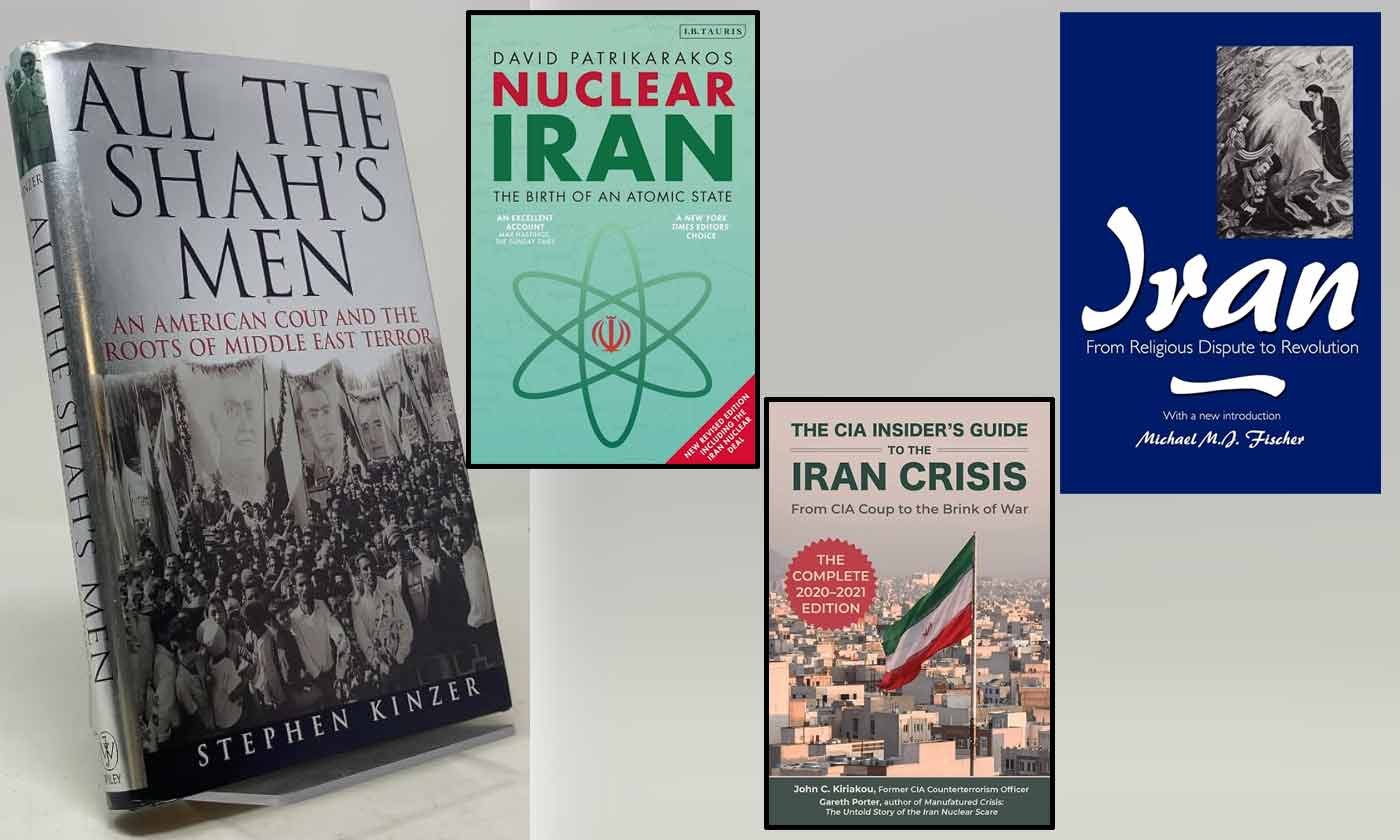
All the Shah’s Men by Stephen Kinzer examines the 1953 overthrow of Iranian Prime Minister Mohammad Mosaddegh. The book details how operations by the Central Intelligence Agency and MI6 helped restore the rule of Mohammad Reza Pahlavi, an event that significantly influenced Iranian perceptions of Western intervention.
Another important work, Iran: From Religious Dispute to Revolution by Michael M. J. Fischer, explores the social and ideological forces behind the 1979 revolution led by Ruhollah Khomeini, which established the Islamic Republic.
Modern diplomatic tensions are explored in The Iran Wars by Jay Solomon. The book investigates decades of rivalry between Iran and the United States, including negotiations surrounding the Joint Comprehensive Plan of Action nuclear agreement.
Further analysis appears in Nuclear Iran: Birth of an Atomic State by David Patrikarakos, which examines the development of Iran’s nuclear program and the international concerns it raised.
Finally, The CIA Insider’s Guide to the Iran Crisis by John Kiriakou and Gareth Porter provides an overview of four decades of diplomatic and intelligence conflicts shaping the modern crisis. Together, these works offer essential context for understanding Iran’s role in today’s Middle East politics.