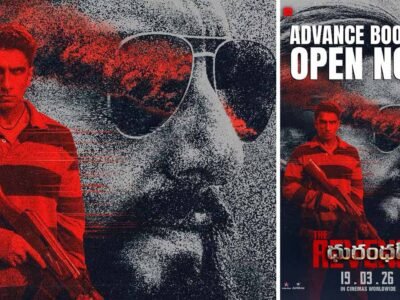

Dhurandhar released yesterday immediately reigniting fascination with Karachi’s most turbulent histories, drawing boldly from the legend of SSP Chaudhry Aslam and the bloody, convoluted years of Lyari’s gang wars. The film’s espionage-driven plot leans heavily on the imagery of a neighbourhood long caught between myth and fear, turning its real conflicts into a stylised battleground of spies, ganglords, and a supercop caught in between.
It didn’t just spark debate in India, it touched a nerve in Pakistan as well. Pakistani outlets, including Pakistan Today, questioned the film’s rewriting of Karachi’s past, arguing that its espionage-laden version of Lyari’s gang wars glosses over the neighbourhood’s real political and social struggles. By modelling its hard-edged supercop on the late SSP Chaudhry Aslam and framing Lyari as a stage for RAW and ISI intrigue, the film revived long-running controversies around the Lyari operations themselves. Their early critiques point toward a larger concern: that Dhurandhar, in recasting Karachi’s trauma as thriller spectacle, behind the cinematic spectacle lies a far messier story, is already blurring the fragile line between memory, myth, and the truth of what unfolded in Lyari’s streets. Dhurandhar claims to be entertainment, but it reminds us how easily cinema can reshape the past.
For decades, Lyari has been narrated in Pakistan’s national imagination as a place suspended between myth and fear, a dense slice of Karachi where political patronage, deprivation, and criminal enterprise fused into a form of urban conflict unmatched anywhere else in the country. Yet to understand how the neighbourhood became a recurrent war zone, one must step back into its longer trajectory: a history stretching from the repressive policing of the 1960s and 70s, through the consolidation of gang networks in the 1990s and 2000s, and ultimately into the full-scale police and paramilitary operations that dominated headlines between 2012 and 2013.
And at the centre of this more recent chapter stands a man who, for many Pakistanis, embodied the state’s most uncompromising face: SSP Chaudhry Aslam Khan. His name has since been absorbed into both legend and controversy, painted alternately as Karachi’s most fearless cop and as a symbol of the city’s extrajudicial anxieties. Today, more than a decade after his death, his ghost walks once again through popular culture, this time, refracted through the sharply fictionalised lens of the 2025 Indian thriller Dhurandhar, a film that reweaves Karachi’s criminal history into an espionage epic.
The truth, as always, is more tangled than cinema allows.
Lyari Before the War
Long before Lyari was associated with gang wars, it was one of Karachi’s most culturally rich neighbourhoods. It was a crucible of labour activism, football clubs, and resistance politics. Its struggles were shaped by poverty, but also by the fierce pride of its residents. In the 1960s and 70s, policing in the area was more about repressing political dissent than battling organised crime. Students, labour organisers, and left-leaning groups often found themselves targeted by the state’s security apparatus, laying an early foundation of antagonism between the neighbourhood and law enforcement.
1960s
-The first major crackdown in Lyari occurred in the early 1960s, during Ayub Khan’s military government.
-Around 1963–1965, police and intelligence agencies targeted political activists, especially left-wing groups and labor organizers who were strong in Lyari.
1970s
-Under Zulfikar Ali Bhutto (1972–1977), Lyari saw multiple police operations, mainly:
-1972–1973: Action against labor unions and ethnic conflicts.
-1974–1976: Crackdowns on gang-related violence and political militias.
These were not one large continuous operation but a series of raids and enforcement actions that escalated as gang culture grew during the mid-1970s.
Why dates are unclear: Unlike the 2012 operation, the 1960s–70s operations were not officially titled or recorded as single events. They were reported in newspapers and political histories as repeated police actions rather than a named “operation.”
The Lyari actions of the 1960s–70s occurred decades before Chaudhry Aslam’s police career began. They were conducted under different police administrations during:
Ayub Khan era (1960s)
Bhutto era (1970s)
The real spiral into militarised violence, however, began later, not in the era of Chaudhry Aslam, but in the socio-political mutations of the 1990s and 2000s, when Karachi’s political parties built heavily armed wings and criminal groups embedded themselves into the city’s economy. In Lyari, what began as neighbourhood-level turf rivalries gradually coalesced into structured gang networks. By the early 2000s, names like Rehman “Dakait”, Arshad Pappu, and later Uzair Jan Baloch had become symbols of a parallel authority, one built on extortion, brutal enforcement, and a warped form of community protection.
The Descent into a War Zone
The turning point arrived in the 2010s. Violence between gangs had become so intense, and so publicly visible, that the city’s administration could no longer manage it through targeted arrests. Lyari’s labyrinthine streets turned into sites of urban warfare: barricades, RPGs, automatic weapons, gunfights that lasted hours. When the police launched a major operation in April 2012, the entire country watched as armoured personnel carriers were damaged, officers were trapped, and the gangs fought back with a ferocity that stunned even veteran officers.
By 2013, the crackdown swept wider. With the paramilitary Rangers empowered by the federal government, Karachi entered a prolonged phase of state-led operations that stretched into the mid-2010s. Arrests mounted, fugitives fled, and the balance of power in Lyari began slowly, painfully, to shift.
The Rise of a Policeman Who Became a Symbol
In this fraught landscape, Chaudhry Aslam emerged as the most recognisable face of the Karachi Police. With his gravelly voice, his blunt confidence, and his reputation for raiding the dens of the most dangerous criminals, he cultivated an image equal parts heroic and fearsome. For the media, Aslam was the man who dared to enter places others avoided; for many in Karachi, he was the officer finally pushing back against an underworld that had held the city hostage for years.
But his rise was not without controversy. His detractors accused him of leading “encounter killings”, a euphemism for extrajudicial shootouts. Human rights organisations repeatedly questioned his methods. Yet Aslam, unflinching, insisted that fighting Karachi’s hardened militants and gangs required an iron hand. “These men don’t understand the law,” he once famously declared. “They understand fear.”
His involvement in Lyari operations was prominent though not solitary. He was neither the architect of the entire crackdown nor the only commander on ground, but he was the one most frequently thrust into public sight. His raids, arrests, and confrontations with gang leaders became staples of evening news. His defiance of threats from the TTP (Tehrik-i-Taliban Pakistan) only cemented his myth.
It was the TTP that ultimately claimed responsibility for the deadly bombing that killed him in January 2014, though in the years since, various political narratives, including claims about foreign intelligence links to those involved in Karachi’s violence, have tangled the story further. What remains uncontested, however, is that Chaudhry Aslam had become a symbol larger than the police uniform he wore.
Espionage, Allegations, and the Shadow of RAW
The question of whether Lyari’s gang wars involved foreign intelligence, particularly India’s RAW, is one of the most politically sensitive claims circulating in Pakistan’s discourse. Pakistani authorities have, at different times, alleged such connections, especially after the arrest of Indian national Kulbhushan Jadhav. Some media outlets extended those allegations, speculating that elements within Lyari might have been exploited by foreign agencies.
Yet the publicly available evidence remains largely limited to official statements rather than independently verified disclosures. The possibility of foreign intelligence interest in Karachi is plausible, few strategic cities escape such interest, but the idea of Lyari’s gang war being orchestrated from across the border remains, in open sources, an allegation rather than a proven, documented chain of control.
Still, in a region where geopolitics seeps into every crack of public life, these claims found fertile ground.
Enter Dhurandhar: Cinema Rewrites the Battlefield
In 2025, an Indian film Dhurandhar took this mixture of fact, speculation, and blood-soaked history and transformed it into a sprawling spy thriller. For Indian audiences, the film offered a sleek, stylised entry into Karachi’s underworld, a space forbidden, exoticised, and cinematic. For Pakistani viewers, however, the film’s dramatic liberties came with political overtones.
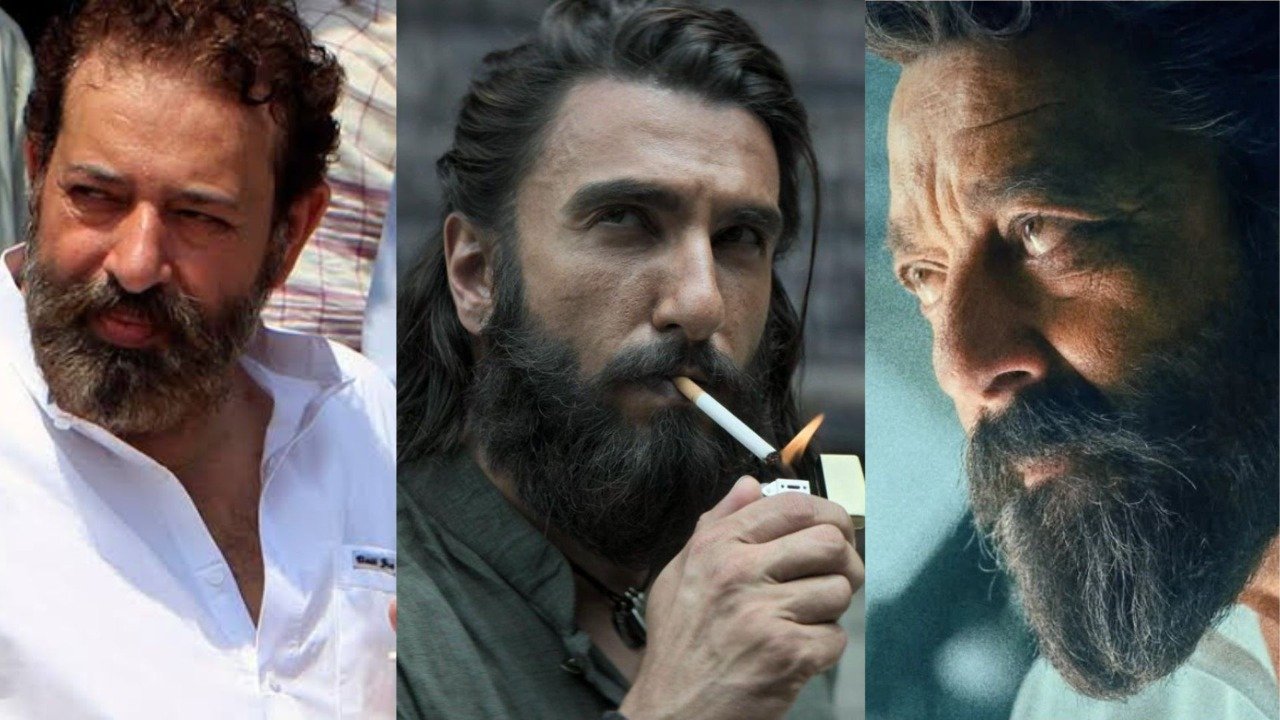
Dhurandhar casts Lyari not merely as a battleground of gangs and police but as a central theatre of an India–Pakistan espionage war. The film’s characters, clearly inspired by real figures, a gangster with echoes of Rehman Dakait, a politician-criminal hybrid reminiscent of Uzair Baloch, and a hard-nosed supercop modelled unmistakably on Chaudhry Aslam, move through a narrative in which RAW and ISI manipulate Karachi’s violence like chess pieces on a board.
The creative license is deliberate. Cinema demands clarity where life offers mess; it seeks motivations where history provides contradictions. In reality, the Lyari conflict was shaped far more by local political rivalries, the failures of municipal governance, and Karachi’s complex ethnic landscape than by foreign intelligence machinations. But in Dhurandhar, the neatness of a spy thriller eclipses the chaos of a city’s social history.
Some viewers embraced the spectacle; others were unsettled by how easily ongoing, unresolved traumas had been reconfigured into entertainment. But perhaps the most striking aspect of the film is how fully it absorbs Chaudhry Aslam into its mythology. The real man, with all his complications, becomes a cinematic archetype: the incorruptible cop pushing against a world of criminals and spies. It is a transformation that says more about South Asia’s hunger for heroism than about the actual mechanics of policing Karachi.
Where Fact Ends and Myth Begins
The story of Lyari cannot be told as a linear battle between good and evil. It is the story of a neighbourhood whose people endured decades of neglect, caught between the predations of gangs and the heavy hand of the state. It is the story of policemen like Chaudhry Aslam, who fought violently against violent men and became symbols precisely because the formal institutions of law and justice had frayed. And it is the story of how, in popular culture, these messy realities are polished into narratives that audiences can consume without facing the uncomfortable complexity underneath.
Dhurandhar is not a documentary, and it makes no claim to be one. But its use of Lyari’s history, its transformation of real grief, real violence, and real politics into a sleek geopolitical fantasy, forces an inevitable question: What happens when cinema becomes the primary storyteller of a conflict still raw in public memory?
For many viewers, the myth may endure longer than the truth.