
Mana Shankar Vara Prasad Garu review: A Star Vehicle Built on Outdated Stereotypes
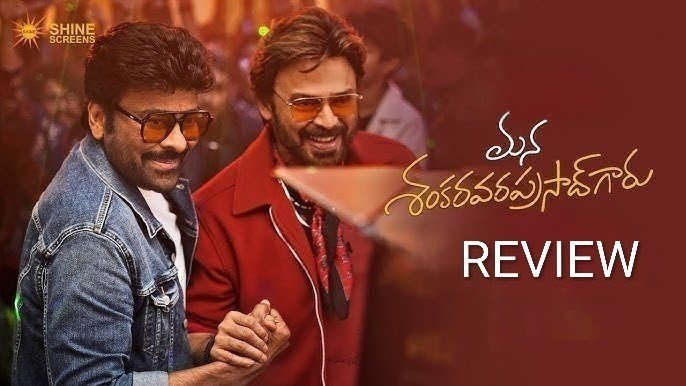
Mana Shankar Vara Prasad Garu, directed by Anil Ravipudi, starring Chiranjeevi, Nayanthara, Venkatesh, Sachin Khedekar and Catherine Tresa, is a film that makes its intention clear from the very beginning. Just like the song in which Chiranjeevi dances while the rest of the screen remains dark and a single spotlight follows him, the entire film is designed to keep all attention on him. Everything else in the film exists only to support the hero.
The movie is clearly tailored for Chiranjeevi. The writing gives him space to perform comedy, action scenes and light-hearted romantic moments. Many scenes seem written only to highlight his charm and screen presence. There is no real attempt to build a strong story, sharp humour or a logical screenplay. Instead, the film moves forward by relying on familiar situations that are meant to please a particular section of the audience.
Director Anil Ravipudi once again uses the Sankranti festival setting to stage a series of comedy scenes without creating a meaningful or coherent story. This film, like his earlier works, appears to be written for audiences who still hold on to old stereotypes. It speaks directly to those mindsets rather than questioning or challenging them.
The director’s favourite tool is to portray the hero as an “innocent man” trapped in unpleasant situations. But portraying a problematic character as an innocent man is painful enough to watch. In Mana Shankar Vara Prasad Garu, Chiranjeevi’s character is introduced doing household chores like washing clothes, cooking and cleaning the house. These scenes are meant to be humorous, but they are built on the idea that a man doing domestic work is something unusual or embarrassing. When his mother asks him to clean the corners of the house, his reaction is shown as if he is being unfairly tortured.
Later, at his workplace, there is a dialogue that says, “What else will a divorced husband do?” They continue to say that a divorced husband does the cooking and cleaning, reinforcing outdated ideas about masculinity and marriage. From this point onwards, the tone of the film is firmly set in old-fashioned thinking.
As the story moves ahead, the film continues to recycle popular tropes from older Telugu hit movies. The plot jumps from a Prime Minister-related track to family drama without any logical flow. The audience is expected to accept these jumps without question and simply enjoy the moments designed for the hero.
Nayanthara’s role is one of the biggest disappointments. Her character has no real purpose in the story. She has no strong opinions or personal agency and exists only to follow the instructions of the men around her, whether it is the hero or her father. Her presence adds no depth, making her role feel wasted.
The core conflict of the film is about a woman who divorces her husband after he slaps her. Instead of addressing this seriously, the film tries hard to prove that the man is actually a good person and that the woman was wrong to leave him in haste. This idea feels deeply uncomfortable and outdated because the film is not using dark comedy to comment on a broken or dead marriage. Instead, it goes backwards in its thinking, suggesting that a woman should not leave her husband even after being treated badly, but should stay and fight within the marriage. It clearly places the blame on the woman for choosing to leave, rather than on the man for his actions. It reduces domestic violence to a misunderstanding and places blame on the woman for standing up for herself. The film treats this serious issue lightly and without responsibility. The director should seriously consider watching Thappad to understand how such subjects can be handled with sensitivity.
Women in general are denied a voice in the film. When they are allowed to speak, it is often to deliver lines suggesting that women misuse divorce laws or deceive society. The film openly mocks divorce and the legal system, not through satire or dark comedy, but through careless humour aimed at pleasing stereotypical mindsets.
Mana Shankar Vara Prasad Garu feels like a film stuck in the past. While fans of Chiranjeevi may enjoy watching him dominate the screen, the movie offers little beyond that. It chooses comfort over progress and nostalgia over the responsibility that comes with mass cinema, making it difficult to appreciate in today’s changing social landscape.