

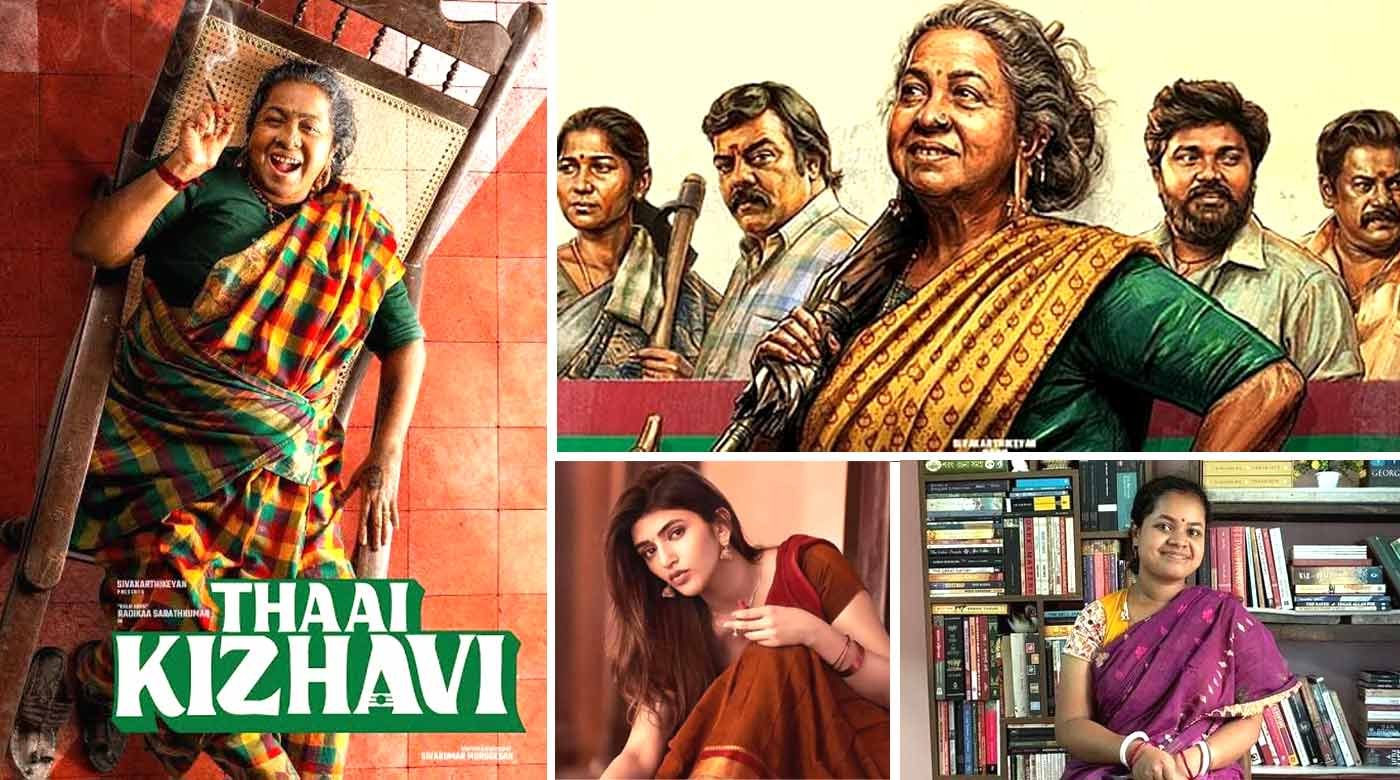
Thaai Kizhavi and her rural resilience to actor Sreeleela’s controversy and influencer Puja’s rise, a look at how Indian women navigate power, perception, and patriarchy raises pertinent questions. Who gets to define strength, awareness, and agency for Indian women today? At a time when conversations around feminism are often shaped by urban voices and digital narratives – Is progressive thinking and intelligence exclusive to privileged few?
Article By Rajeshwari Kalyanam
Thaai Kizhavi, one of the most talked-about films in Tamil Nadu in recent times, is about a grand old lady—the kind the old world who we saw in Mani Ratnam’s Roja-like films, with their elongated earlobes and heavy traditional studs, often singing in the background. In the film Puvunithaai lives in an old house with her daughter and grandson. Everyone in the village is terrified of her, more so because she lends them money on interest and is ruthless in her collection methods.
Thaai Kizhavi and the Power of Rural Female Agency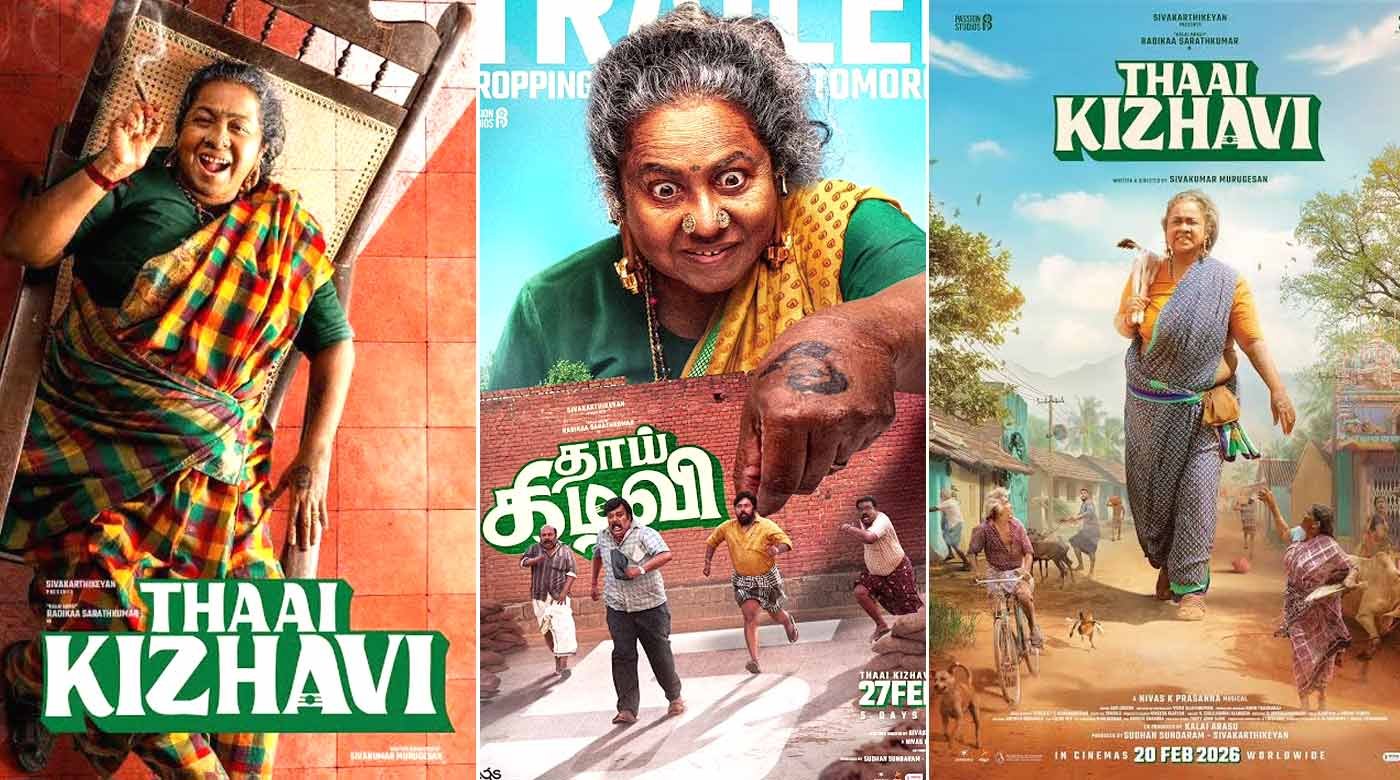
Early on, you realise one of the reasons she is single-minded about not allowing anyone to get away with her money and she is extremely frugal in the way she leads her life, is because she wishes to be secure with her money and house, so as not to be like several other older women in her neighbourhood, who are left behind to fend for themselves by their children. They hardly have proper food to eat, and it is this otherwise hard nut to crack, Thaai, who ensures they are well fed and taken care of.
In addition to the brilliant actor Radhika Sarathkumar, who has gone in for a complete deglamourised makeover and shines through every bit of her performance, the movie stands out for every other character that has been carefully recreated to reflect rural innocence, human greed, and distorted relationships. Above all, it portrays women influenced by deep rooted patriarchy in stark contrast with Puvunithaai, who, despite her crude disposition and rude behaviour, reveals herself as the most modern and revolutionary in her thoughts, independent and strong.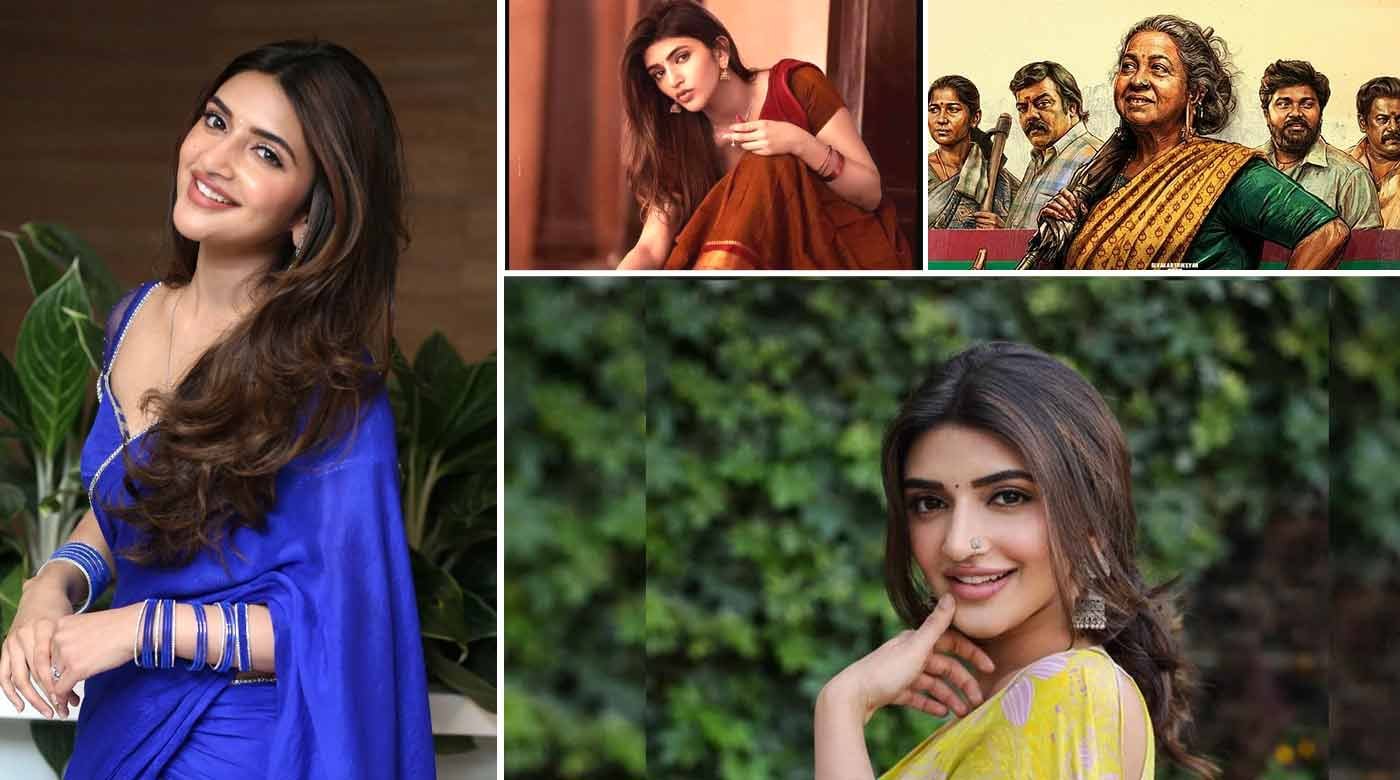
Feminism Without Labels: The Quiet Strength of Thaai
In the simple things she does, there are deep feminist truths that one can watch and learn from. Self-care, economic empowerment, self-respect, and living life on one’s own terms are principles that Thaai practices with conviction. This debut film by director Sivakumar Murugesan shows immense maturity and finesse in showcasing feminism while still being a fun-filled film. Produced by actor-director Siva Karthikeyan, the movie has deservedly brought accolades to the team, especially for Radhika.
Beyond Education: Awareness in Unexpected Spaces
Pujarini Pradhan
Another important aspect of Thaai Kizhavi that one cannot ignore is how a rural woman with no formal education or exposure can still be strong in her views and remain unaffected by detractors as she lives life on her own terms. She may not be able to define misogyny or feminism like new-age scholars on Instagram, but she has the courage and will to stand on her own, and understands what true female agency is.
Puja’s Story: A Rural Voice in a Global Conversation
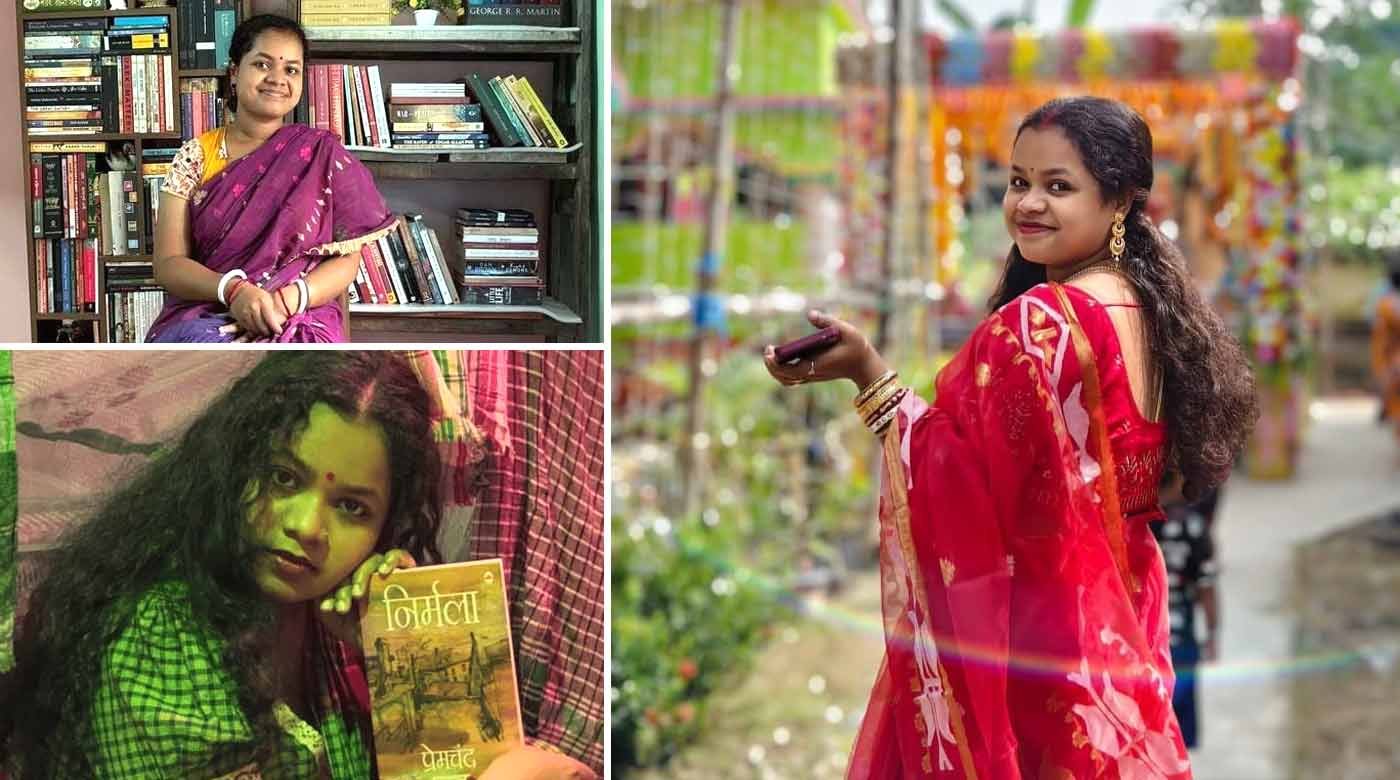
While Thaai is a fictional character, there is another woman, this time a real one, from a remote village in West Bengal’s East Midnapore, who rose to fame on Instagram. Pujarini Pradhan completed her basic education in a town before she was married to a farmer from a nearby village. She has a baby boy and lives with her husband and mother-in-law.
Even as she navigated village life, she began sharing vignettes from her daily experiences—her observations on misogynistic traditions and her opinions on the unequal status of women. On her Instagram handles, @lifeofpujaa and @little_ordinary_thingss, she shares her views on life, women, feminism, patriarchy, books, cinema, and her family. She speaks in English, which, by her own admission, is improving with each post. And all this she does while chopping vegetables, cooking or going about her daily work.
Her thoughts resonated with thousands of women across the world. As more people began to relate to her, her followers grew by millions. No one questioned her intentions—until she began to be noticed by big brands that signed her up for endorsements.
The Bias Against Non-Urban Intelligence
When she collaborated with platforms like Netflix and Audible and signed up with a professional agency to manage her brand deals, a new narrative began to emerge. She found herself in the middle of a digital controversy. While her long-time followers stood by her, a section of people seemed determined to prove her inauthentic.
Her intentions, agency, intellect, and identity were questioned. It was almost as if people were trying to prove that a woman with her background and circumstances could not possibly hold progressive or intellectual views. Did she actually read and share her views or some one gave her the script – and such other questions propped up. Her detractors forget that women, for centuries, despite confinement and limited access to education and opportunity, have built identities and created spaces for themselves.
Sreeleela and the Politics of Women’s Voices
Education and privilege do not automatically make a person sensitive towards women’s rights or render them intelligent and strong. Similarly, being from a village with limited access to education does not make one regressive.
Take the recent case of South actress Sreeleela, who said in an interview that period pain is an excuse. She said, “All of my songs, I can say, most of them at least have been appreciated. I have shot while I have been on my period, so that is not an excuse anywhere. When we want things in power, when we say we want things equally. I feel we have to push beyond physiological barriers.”
Even if quoted out of context, the statement is detrimental to the long-standing fight for acknowledging menstrual pain, which is medically recognised. As a celebrity who has much influence and as a qualified doctor, she should have been more responsible and sensitive towards women.
Digital Influencer Puja’s Reaction to Criticism Sets an Example
On the other hand is Puja, who, despite her circumstances, is aware, articulate, and sensitive towards women’s issues. Her awareness comes from reading. Puja is an avid reader, and her growing personal library is aspirational.
She has recently launched her YouTube channel, stating that it is her attempt to improve her vocabulary and English-speaking skills. She plans to create long-form videos, speaking on various subjects without editing. She says this is also her response to the controversy surrounding her. It is commendable how she turned the controversy into a positive opportunity to build upon her strength even while proving her critics wrong.
Who Gets to Define Empowerment in India
India today has over 806 million internet users, with rural regions driving much of this growth, according to the Data Reportal Digital 2025 report.
And yet, for many rural women, access remains restricted—often mediated through shared devices and social boundaries. It is within these limitations that voices like Puja’s take shape, quietly but powerfully breaking the stereotype that awareness, articulation, and feminism are urban constructs.
Puja is a progressive woman of today, who has the strength to convert challenges into opportunities, and is an inspiration to many. Thaai Kizhavi may be a character from a film, but she symbolises empowerment. Together, they represent the real India—beyond the glitz and glamour of commercialisation and privilege—the lived realities of women, who continue to define strength in their own ways.
Perhaps the question is no longer whether women are empowered—but whether we are ready to recognise it beyond our own definitions.