

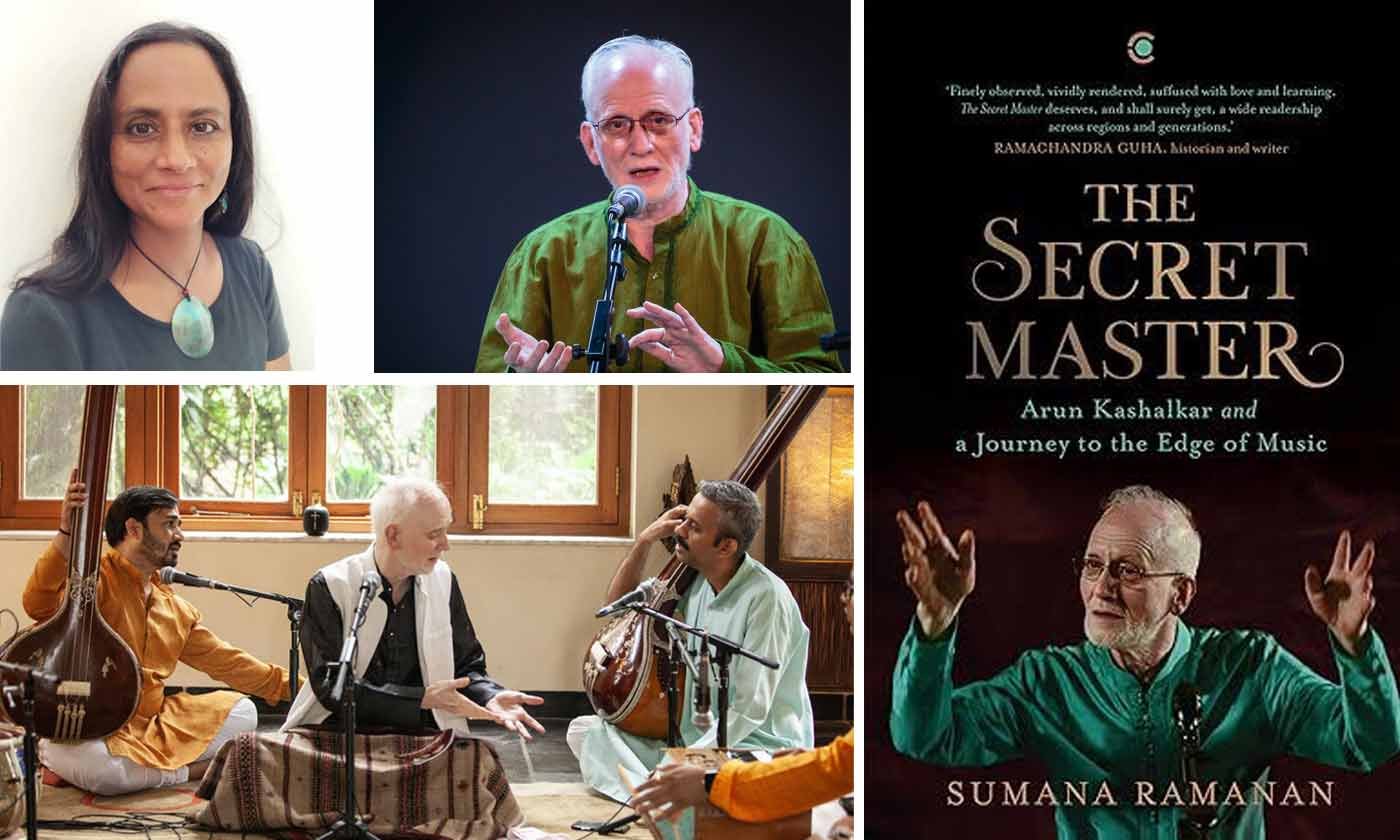
Discover the veiled Khayal maestro Arun Kashalkar, who chose obscurity over popularity. A visionary whose contribution to Hindustani Classical music is invaluable. Dive in to unravel his journey with Sumana Rao, the author of the book The Secret Master
In the bustling heart of Hindustani classical music’s epicenter, Bombay, lurked a musical genius few had ever heard. He was not amongst the flashy stars filling massive auditoriums with speed and spectacle; all you saw was a quiet elder blending three ancient styles into something profound. And, then a journalist accidentally discovered him. And, she decided to write on his journey to the Edge of Music. Author Sumana Rao dubs Arun Kashalkar, as “THE SECRET MASTER” in her new book. It was an eight-year long journey before she could bring his life into the light. This book is one of the key works on India’s forgotten maestros of Khayal.
Sumana, a lifelong concert-goer rediscovering the depths of khayal after decades, stumbled upon him by chance. “I heard Arun Kashalkar for the first time after many decades,” she recalls in a lively interview. Living in Bombay, she’d tuned into his younger brother’s performances but vaguely knew of this eldest sibling, a top-tier musician on the city’s fringes. “How come I haven’t heard of such a great musician?” she wondered, polling fellow enthusiasts. Only a niche circle knew him. The mainstream had overlooked him entirely. Intrigued, she attended his concert on the border of Bombay and the next district. What she witnessed shattered her expectations in a good way.
That first performance remains her favorite. He wove Gwalior, Agra, and Jaipur styles seamlessly, rare nom-tom ala derivations from Rupa, a single composition morphing from 7-beat Rupak to 16-beat Teen Taal, a flavorful Darbari Kanada brimming with raga essence, and masterful sargams that elevated Hindustani rhythm beyond gimmicks. “For the first time, I said, ‘Oh my God, the sargams are really good,'” Sumana shares, eyes lighting up. Backed by students on tanpura and harmonium, he laughed, joked, and chatted post-interval, approachable at 70-something, in a flat crammed with eager listeners. “I never saw a Hindustani musician so friendly and open,” she says. Musician, composer, guru, thinker: he embodied it all.
Access came easy. “There was no difficulty,” Sumana explains. Like Gandhi, he lived openly in a gurukul-like home where people flowed in and out. Fluent in Marathi, Hindi, and English, he welcomed her drafts when she decided to write a book on him, though not without debate. “I told him I’d show everything but wouldn’t promise changes,” she notes. They clashed on interpretations. Give-and-take ensued. “If someone gives access to their life, you write with full responsibility. What you write lasts forever.”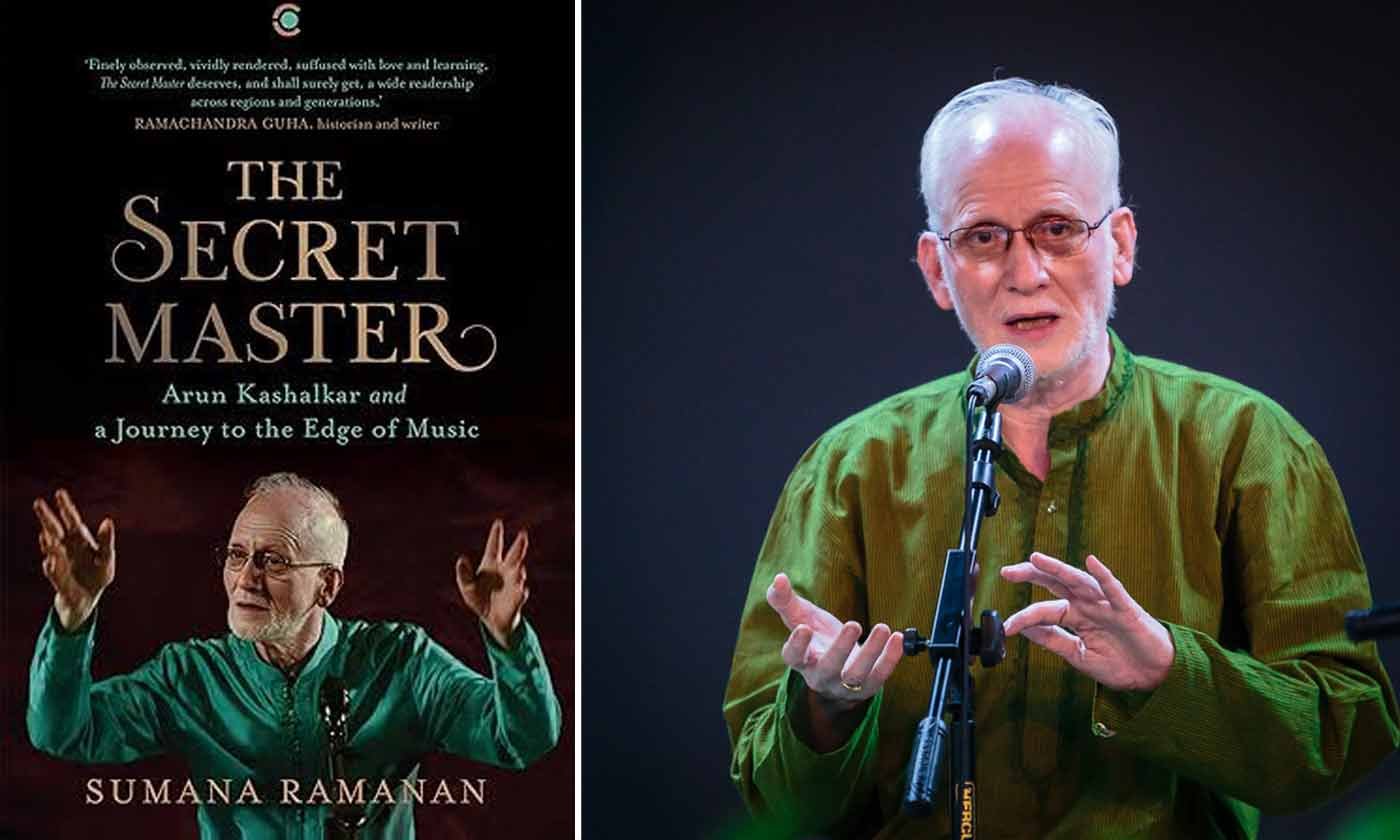
In Sumana Ramanan’s Book “The Secret Master”, we learn about Arun Kashalkar the khayal maestro. Khayal, “an imagination”, with its evocative form has been Hindustani music’s freestyle pinnacle. Sumana Ramanan spotlights Arun Kashalkar’s under-the-radar genius via his profound khayal interpretations, valuing artistic substance far above celebrity. Kashalkar makes ragas with deep thought. He unfolds them short but strong. Each note is carefully rendered. This creates feelings without extra words. His Agra gharana style mixes power and soft touch. It makes rare ragas like Darbari Kannada feel close and personal. His hold over the three gharanas Gwalior, Jaipur and Agra mastered under the guidance of Gurus, gradually lost patronage, especially when institutes like All India Radio began to change their priorities. He stayed away from private studios making commercial music as a mark of respect towards Hindustani classical music and his Gurus.
Fame eluded him, despite the many performances held for intimate gathering at his home amongst his students and music connoisseurs who knew him and filled the room to its brim.
Sumana unravels the layered reasons. Private promoters turned concerts into businesses, prioritizing gimmicks, speed, volume, jugalbandis, to fill halls and sell tickets. Audience tastes shifted. His gurus, still alive during his prime, were similarly unsung, leaving him reluctant to push. Independent by nature, he shunned begging promoters. He continued to teach his students.
“He’s rigorous about raag shape and taans, full control before deviation,” she says of his teaching. He trained hundreds, composed over 200 bandishes, penned music treatises, and fostered listeners in intimate settings. “The point of this music is best heard in small concerts with 100-150 people in eye contact,” she emphasizes. Sundays swelled his tiny flat to 50 souls, building an ecosystem where students mixed styles to suit their voices, blending tradition with personal flair.
What surprised her most? He held no bitterness. Despite near-stardom derailed by industry shifts, “everyone said he was next big thing,” he stayed joyful through eight years of her close observation. “How can someone so well-trained never feel depressed?” Even challenges, like chasing childhood details from fading memories or extracting novel-like specifics (What were you wearing? How did the house smell?), couldn’t dim his spirit, she relates.
Sumana’s book isn’t a dry bio. It’s literary non-fiction, dialogue-driven, vivid as a novel, chronicling Arun Kashalkar margins mastery amid a diluted scene. In reclaiming him, she reminds us: true genius often whispers from the edges.
You can catch Arun Kashalkar’s soul-stirring khayal performances in Mulund East, Mumbai.
Check out intimate venues like Karnataka Sangha, St. Xavier’s College, or NCPA, and events in Mulund’s cultural hubs, she adds.