

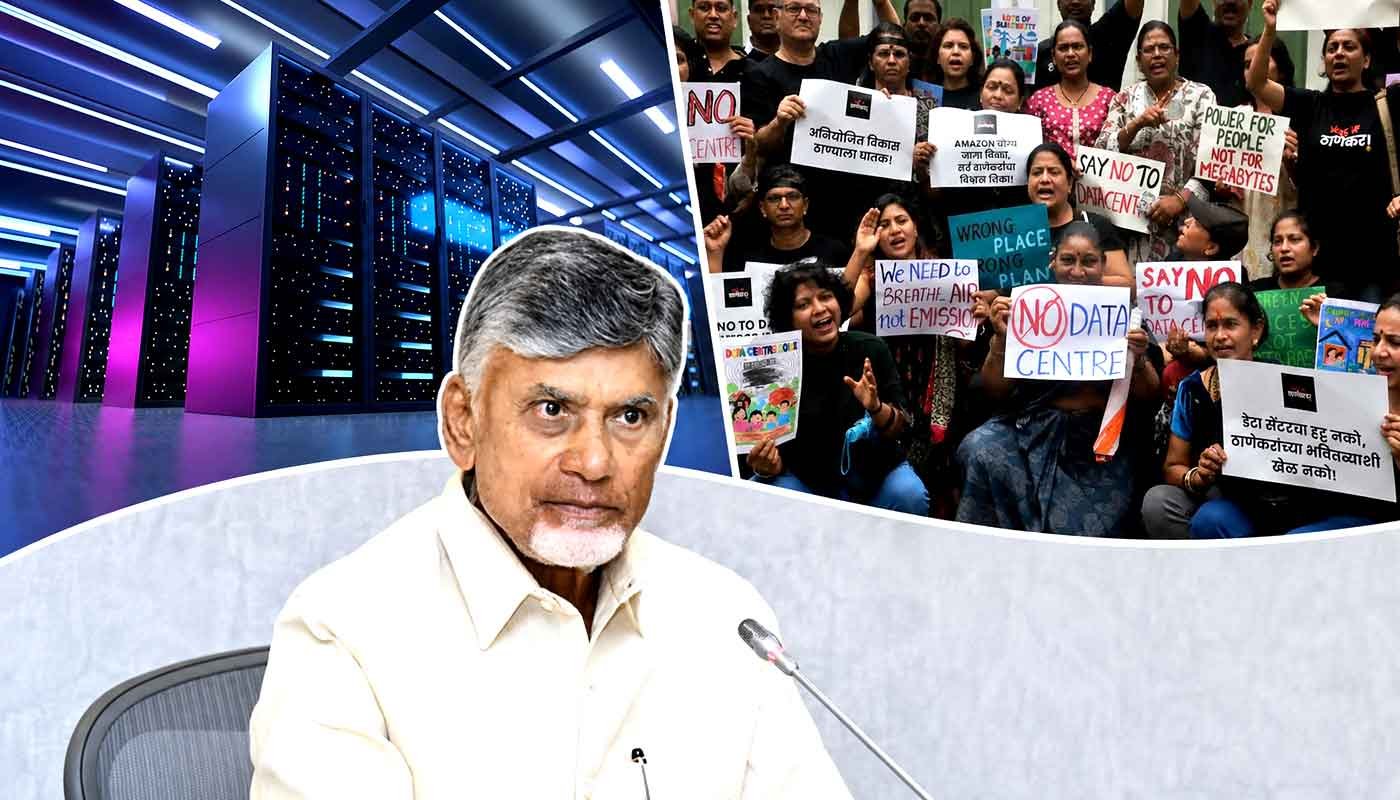
Visakhapatnam is being sold as the next big destination for artificial intelligence, cloud computing and digital infrastructure. But there is an increasingly uncomfortable question beneath that promise:
What happens when a city trying to become an AI hub is simultaneously struggling to secure something as basic as water?
The Andhra Pradesh government has now approved three additional data centre projects with a combined proposed capacity of 2.7 GW, adding to an already ambitious pipeline of digital infrastructure projects around Visakhapatnam.
The approvals come as the city is facing concerns over its water resources, making the timing difficult to ignore. And that raises a much bigger question than whether Vizag should become a data-centre hub.
What exactly do we mean when we call something development?
Three More Data Centres for Vizag
The latest approvals came through the Andhra Pradesh State Investment Promotion Board, with projects involving Renew Green, RMZ-Colt and AM Intelligence.
The combined proposed capacity is around 2.7 GW. The projects are part of Andhra Pradesh’s larger attempt to position Visakhapatnam as a major destination for artificial intelligence, cloud infrastructure and high-performance computing.
This ambition did not begin with these three projects. Earlier this year, the state laid the foundation for Google’s proposed AI hub near Visakhapatnam. The project, being developed with partners including AdaniConneX and Airtel Nxtra, involves a planned 1-GW data centre and an investment of approximately $15 billion. The state has described the broader project as transformative for Andhra Pradesh’s digital economy.
Other large-scale projects are also moving forward. RMZ and Colt Data Centres, for instance, are developing a 1.25-GW facility in Visakhapatnam with a reported investment of ₹1.77 lakh crore.
The government’s vision is clear: make Vizag an AI and data infrastructure powerhouse. The question is whether the city’s existing infrastructure can support that vision without placing disproportionate pressure on essential resources.
The 3.5 TMC Water Question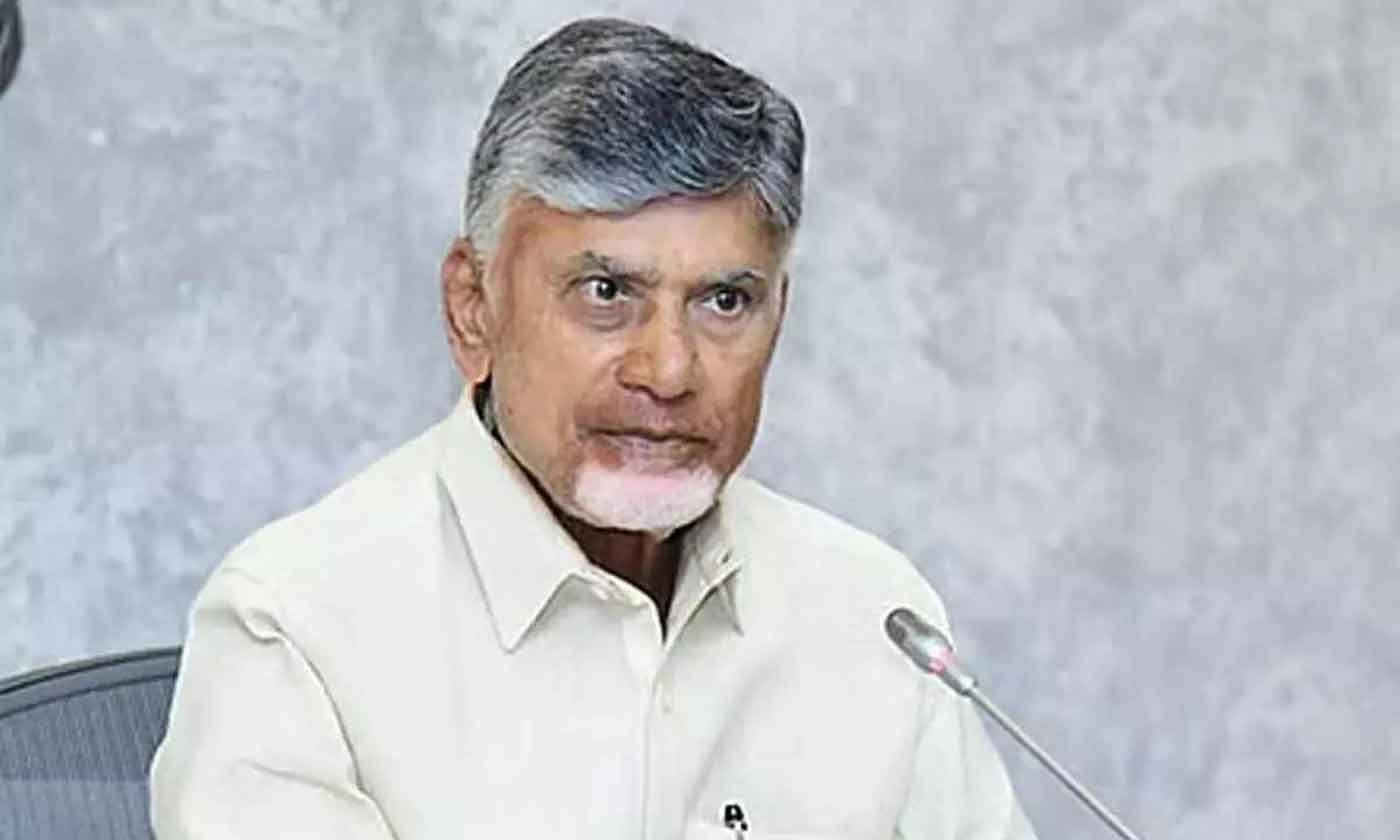
The most contentious part of the debate is water. Chief Minister N. Chandrababu Naidu has pushed back against criticism surrounding the water requirements of data centres, arguing that the facilities would require around 3.5 TMC of water annually for cooling.
At first glance, 3.5 TMC may sound like an abstract number. It isn’t. Three-point-five TMC is approximately 99 billion litres of water annually.
Spread across an entire year, that works out to roughly 271 million litres a day. Visakhapatnam’s present water supply is around 480 MLD, according to figures cited in the ongoing debate.
That means the comparison is striking: 271 MLD is more than half of the city’s current daily water supply. However, this calculation needs an important caveat. The 3.5-TMC figure being discussed is a stated annual requirement associated with the data-centre ecosystem; it should not automatically be read as the precise daily consumption of each of the newly approved projects individually.
Data-centre cooling technologies also vary considerably, including closed-loop and air-cooling systems.
Still, the scale of the number is enough to justify asking uncomfortable questions. Because Visakhapatnam isn’t a city swimming in surplus water.
A City Already Talking About Water Security
Government representatives have argued that Vizag’s water situation will improve substantially with future infrastructure projects. One argument is that the Polavaram-linked water pipeline could eventually increase the city’s supply capacity dramatically. The government has also discussed desalination as another possible source of resilience.
That is important context. But there is a difference between future water availability and water security today. A city cannot solve today’s shortage simply by promising tomorrow’s infrastructure.
And that is where the debate becomes more complicated. Recent reporting has highlighted that Visakhapatnam’s data-centre expansion is occurring alongside concerns about water availability, energy consumption and environmental pressure. Critics have questioned whether rapid digital expansion is moving faster than the safeguards designed to protect local resources.
The concern is therefore not simply: “Why are you bringing data centres to Vizag?”
It is: “Have we built the resource infrastructure required to support them responsibly?”
But Aren’t Data Centres Also Development?
Of course they are. It would be simplistic to describe data centres as useless luxuries. They are fundamental pieces of modern digital infrastructure. AI systems, cloud platforms, financial services, streaming platforms, enterprise software and countless online services depend on enormous computing infrastructure somewhere.
And Andhra Pradesh has a legitimate reason to want a larger share of that economy. The state hopes these projects will attract investment, create employment, improve connectivity and build an ecosystem around AI, cloud computing, cybersecurity and advanced technology. Government projections around the Google project, for example, have pointed to thousands of direct jobs and substantially larger indirect employment.
There is also a strategic geographical argument. Visakhapatnam is positioned to benefit from submarine cable connectivity, renewable-energy development and its location along India’s eastern coast. The state is explicitly attempting to build a multi-gigawatt digital infrastructure corridor rather than treating each data centre as an isolated facility.
So the question isn’t whether technology belongs in Vizag. It does. The question is whether technological ambition should move ahead of basic urban resilience.
This Is Where the Definition of Development Gets Complicated
For decades, development has been measured through numbers. How much investment came in? How many crores were announced? How many gigawatts were approved? How many companies signed MoUs? How many jobs were promised? How many acres were allocated? These numbers are useful.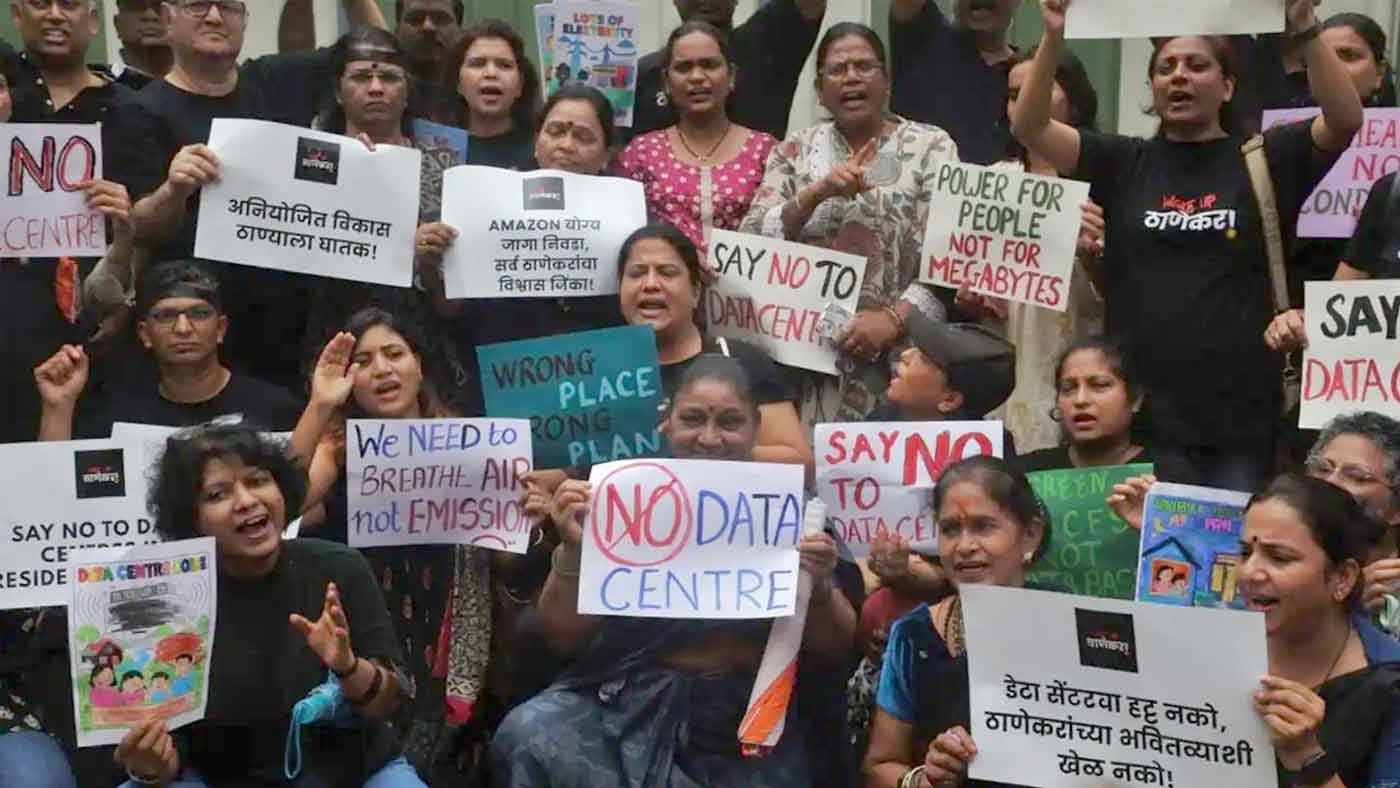
But they don’t tell the entire story. Imagine a city where a billion-dollar technology facility is operating at full capacity, while residents are still worrying about whether their neighbourhood will receive adequate water.
Can that city simultaneously be called developed and underdeveloped? Perhaps the problem is that we have reduced development to economic activity.
But development should also mean the ability to provide people with the foundations that make economic activity meaningful. Clean water. Reliable public transport. Affordable housing. Healthcare. Education. Sanitation. Accessible public spaces. Environmental security. And only then, perhaps, increasingly sophisticated digital infrastructure.
The Real Question Isn’t Data Centres vs Water
The debate is often presented as though Vizag must choose between technology and water. It shouldn’t have to. A genuinely developed city should be capable of doing both.
The government can pursue AI infrastructure while simultaneously investing aggressively in water security. Data-centre operators can be required to adopt the most water-efficient cooling technologies available. Water sourcing should be transparent. Consumption should be independently monitored. Communities should know exactly where the water is coming from and what safeguards exist during drought conditions.
And if desalination or recycled water is part of the solution, those systems should be developed before resource pressure becomes an emergency rather than after.
This is especially important because data centres are not simply buildings full of computers. They require enormous amounts of electricity, cooling, land, connectivity and supporting infrastructure.
The environmental footprint therefore has to be considered as a whole.
The Google Project Has Already Shown Why This Debate Matters
Visakhapatnam’s transformation into a digital hub is already attracting international attention. The proposed Google AI hub alone represents an investment of around $15 billion and is being positioned as one of the largest digital infrastructure projects in the country. The government has presented it as a catalyst for industries ranging from healthcare and education to logistics, agriculture and aerospace.
But the scale of such projects is precisely why scrutiny matters. When an investment is this large, its consequences are also large. The same infrastructure that can generate economic opportunity can place pressure on land, water, electricity, transport and local communities.
Development should therefore not mean asking citizens to simply trust that everything will work out. It should mean showing them how it will work.
So, What Should Development Look Like?
Maybe development isn’t about choosing between a water pipeline and a data centre. Maybe it is about asking whether the city has enough water before promising another 2.7 GW of computing capacity.
Maybe it is about ensuring that the benefits of AI infrastructure reach the people living around it rather than remaining confined to corporate balance sheets.
Maybe it is about measuring success not just in gigawatts and investment figures, but in litres of water secured, jobs created, public services improved and communities protected.
And perhaps most importantly, development should not force citizens to choose between their basic needs and their state’s ambitions.
Visakhapatnam deserves to become a technology hub. But it also deserves to remain a city where people can turn on a tap and know that water will come out.
Because a data centre can wait for the next upgrade. A city cannot wait for water.
The Bigger Question
The debate surrounding Vizag’s data centres is ultimately not about whether India should embrace AI. It absolutely should. It is about whether India’s technological future will be built with the same urgency with which it protects the resources that make human life possible.
If development means becoming richer while becoming more resource-insecure, then perhaps we need to rethink the word itself.
Because true development should not simply make a place more technologically advanced. It should make life better for the people who already call that place home.