
Kerala Screens All Films at IFFK 2025 Amid Censorship Row: Why Each Blocked Film Matters
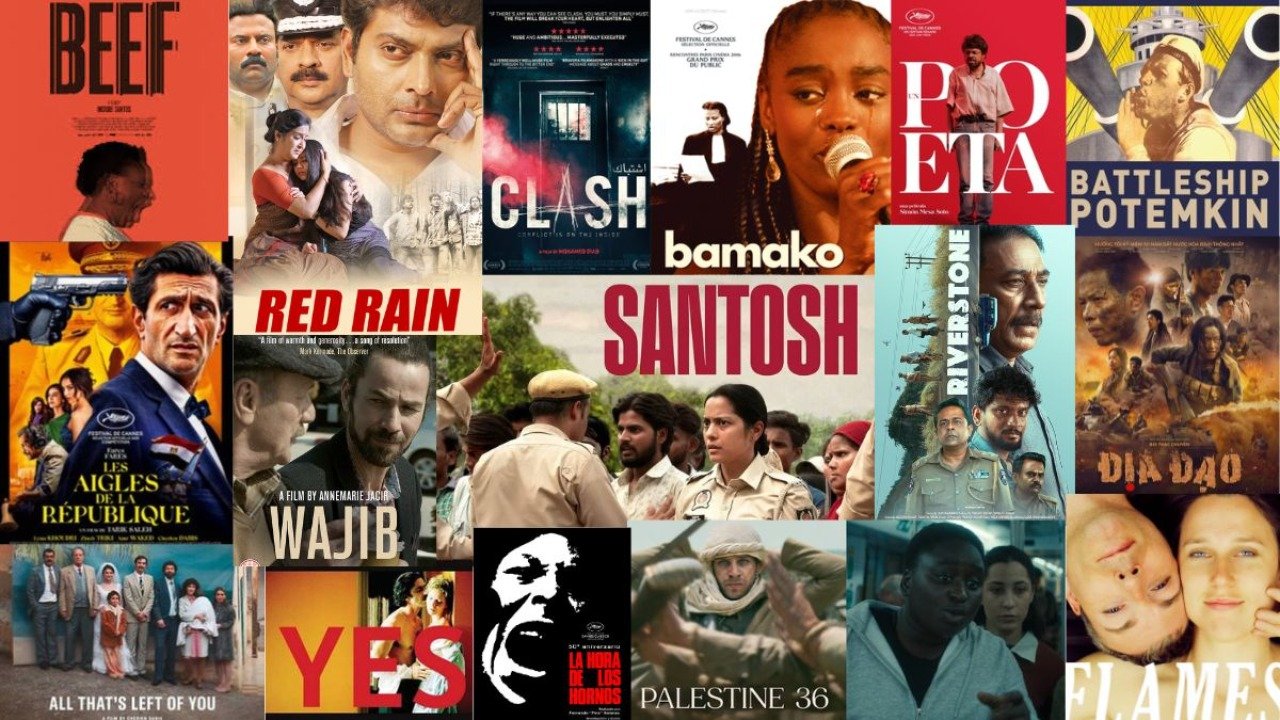
The 30th International Film Festival of Kerala (IFFK) has become a focal point for debates over censorship, artistic freedom, and cultural autonomy, following the Union Ministry of Information and Broadcasting’s initial refusal to grant censor-exemption certificates for 19 films. In a decisive move, the Kerala government overruled the Centre’s decision, ensuring that all films, including globally significant works and socially relevant narratives, would be screened, reaffirming the state’s commitment to cultural and artistic freedom.
Festival organizers confirmed that the entire lineup would be screened as originally planned, making IFFK 2025 not just a celebration of global cinema, but also a statement in defense of free expression.
What are the films blocked and why?
1. Battleship Potemkin (1925) – Directed by Sergei Eisenstein, this Soviet silent classic is foundational in cinema history for its revolutionary montage technique and storytelling, influencing generations of filmmakers worldwide.
Battleship Potemkin was most likely blocked not because of its content, but because of what it represents. The film is a globally famous symbol of Marxism and Leftist ideology, revolution, mass uprising, and resistance to state authority. Some critics even called it a Leftist propaganda film.
Given the political climate and the Centre’s strained relationship with Kerala’s Left-led government, the denial appears to be political and symbolic, rather than about censorship rules. The fact that a 100-year-old, widely taught film was flagged suggests the decision was driven by ideological discomfort, not any legal or moral concern.
That’s it — no technical reason, just politics.
2. Santosh – Directed by Sandhya Suri, Santosh is a crime drama about a recently widowed woman who steps into her late husband’s role as a police officer. She is tasked with investigating the rape and murder of a young Dalit girl, exposing police corruption, systemic discrimination, and societal misogyny in rural India. The film presents a gritty, realistic view of caste and gender-based injustice.
Why it might have been blocked: It directly portrays police brutality and corruption, showing how the system treats a vulnerable woman and deals with caste violence. CBFC cited concerns over the scenes showing systemic police brutality, institutional Islamophobia and rooted caste based discrimination against Dalits. Board demanded several pages of radical cuts and edits to these central themes…. Director Sandhya Suri refused to comply, leading to a deadlock that blocked its theatrical release. Check out the Silenced Reels: The Politics of Indian Cinema
3. A Poet: Unconcealed Poetry – A contemplative exploration of artistic and literary expression, offering festival audiences a deep dive into creative introspection.
A Poet: Unconcealed Poetry doesn’t necessarily promote party politics, but it aligns with values commonly associated with Leftist thought: questioning power, speaking for the marginalized, and treating art as a form of social or political resistance. Poetry and dissent have historically been linked to progressive and Left-leaning movements.
So while the film may not explicitly argue a Leftist ideology, its spirit of critique, resistance, and intellectual freedom can be perceived that way, which likely made it politically uncomfortable for the Centre.
4. All That’s Left of You – A Palestinian narrative humanizing life amid conflict, highlighting personal loss, resilience, and the human cost of political struggle.
All That’s Left of You was likely blocked because it centres the Palestinian experience and portrays life under occupation from a human, empathetic perspective.
Even when such films avoid slogans or overt politics, they are often seen as politically sensitive because they challenge dominant geopolitical narratives and invite sympathy for a people living under prolonged conflict. In the current climate, anything that can be read as critical of state power, occupation, or injustice tends to be treated cautiously.
So, like the others, it wasn’t about violating rules, it was about the film’s political sensitivity and the viewpoint it amplifies.
5. Bamako – Abderrahmane Sissako’s African masterpiece critiques Western economic influence on African nations through a courtroom drama, blending social commentary and cinematic innovation.
Bamako was likely blocked because it directly criticises global power structures.
The film stages a symbolic trial of international financial institutions and Western governments for their role in exploiting and impoverishing African nations. Even though it’s an acclaimed, intellectual work, its message is clearly anti-imperialist and system-critical, which places it close to Leftist and anti-capitalist thought.
So again, the issue isn’t legality or obscenity, it’s that Bamako questions global authority and economic power, making it politically uncomfortable rather than censorable in a technical sense.
6. Beef – This Spanish-Mexican film follows a young woman using rap to confront grief and societal prejudice, examining identity, marginalization, and gender issues.
Beef was likely blocked because it touches a highly sensitive social and political issue in India.
The film engages with themes of communal identity, prejudice, and social exclusion, and the very word “beef” itself is politically charged in the Indian context. Anything that can reopen debates around religion, food politics, or minority rights is often treated cautiously by authorities.
So the problem wasn’t the film’s artistic merit, but the fear that its subject could trigger political controversy or discomfort, especially at a high-profile international festival.
7. Clash – An Egyptian drama set entirely in a police van during protests, notable for its intense immersive technique capturing societal tension and human vulnerability.
Clash was likely blocked because it portrays street protests, state violence, and political polarisation in a very direct way.
The entire film unfolds during a public uprising, showing clashes between protesters, police, and civilians, without clearly endorsing state authority. Films that depict mass protests, repression, and breakdown of order are often seen as sensitive because they can be read as legitimising dissent or highlighting state excesses.
So again, it’s not about offensive content, it’s about the film’s uncomfortable depiction of protest politics and authoritarian control, which makes authorities wary.
8. Eagles of The Republic – Eagles of the Republic follows George Fahmy, a famous Egyptian actor, who is coerced by the authorities to star in a state propaganda film about the president. As he navigates this assignment, he becomes entangled in political pressure, power struggles, and moral dilemmas, showing how art and media can be manipulated by the state. It also dwells into his psychological trauma of the whole thing.
Why it might have been blocked: The film critiques state authority, propaganda, and the coercion of individuals, making it politically sensitive. Even though it doesn’t break any legal rules, its portrayal of power and manipulation likely made the central government wary of granting clearance.
9. Heart of The Wolf – Ecologically focused cinema blending human-animal conflict with environmental awareness, highlighting the growing intersection of storytelling and conservation.
Heart of The Wolf portrays the complex relationship between humans and wolves in a rural community. It shows how villagers’ livelihoods, cultural practices, and survival are affected by the presence of wolves, while also highlighting the ecological role of predators and the consequences of human encroachment on wildlife habitats. Through personal stories, conflicts, and community decisions, the film illustrates the ethical and environmental dilemmas of coexistence with nature.
Why it might have been blocked: The film critically examines human impact on the environment and questions societal and governmental handling of ecological issues. By showing conflicts between humans and wildlife and raising awareness about conservation challenges, it could be seen as politically or socially sensitive, prompting caution from authorities.
10. Once Upon a Time in Gaza – A human-centered Palestinian story emphasizing daily resilience and life under conflict, giving audiences intimate access to unheard voices.
Once Upon a Time in Gaza is a Palestinian drama that follows the daily lives of ordinary people living under conflict. It portrays how residents cope with restrictions, violence, and social pressures, focusing on human resilience, family bonds, and the struggle to maintain normalcy amid political and military tensions.
Why it might have been blocked: The film is politically sensitive because it humanizes Palestinians living under occupation, which can be seen as critical of state policies or international dynamics. Even though it is a personal, human story, authorities may have considered its content controversial from a political standpoint, rather than for any legal reason.
11. Palestine 36 – Palestine 36 is a film that portrays the lives of Palestinians living under occupation, focusing on personal stories of daily struggle, resilience, and identity. It highlights how ordinary people navigate conflict, checkpoints, and social pressures, giving audiences a humanized view of life in a politically tense environment.
Why it might have been blocked: The film is politically sensitive because it shows the hardships of Palestinians under occupation, which can be interpreted as critical of state actions or sympathetic to a politically charged narrative. Even though it is largely human-centered and non-violent, authorities may have considered its themes controversial in the context of India’s careful diplomatic balance between Israel and Palestine.
12. Red Rain – Red Rain tells the story of Cường, a young Vietnamese soldier who joins the Liberation Army during the 1972 Battle of Quảng Trị, facing brutal combat, the loss of friends, and moral dilemmas. The film portrays both sides of the conflict with nuance, highlighting the human cost of war and the complexities of nationalism. Because it depicts war, power struggles, and ideological conflict in a realistic and critical way, authorities may have considered it politically sensitive, leading to its initial denial of clearance.
13. Riverstone – Riverstone follows a rural community living along a river, showing how their livelihoods, traditions, and spiritual practices are tied to the water and surrounding environment. The narrative explores the effects of environmental degradation, human encroachment, and social change on both people and nature, highlighting the delicate balance between cultural heritage and ecological sustainability.
Why it might have been blocked: The film critically examines human impact on the environment and questions societal or governmental management of natural resources, which could be seen as socially or politically sensitive, even though it doesn’t violate any censorship laws.
14. The Hour of the Furnaces – Fernando Solanas’ Argentine documentary is a landmark of Third Cinema, combining revolutionary politics and experimental form to inspire activist filmmaking.
The Hour of the Furnaces is an Argentine documentary that explores colonialism, imperialism, and social injustice in Latin America. It combines interviews, archival footage, and experimental techniques to show how economic exploitation and political oppression affect ordinary people, and how revolutionary movements emerge in response.
Why it might have been blocked: The film is politically radical, advocating resistance against oppression and criticizing imperialist powers and entrenched authority. Even though it is a historical and educational documentary, its revolutionary message and anti-establishment content likely made the central government wary of granting clearance.
15. Timbuktu – Timbuktu is a Malian drama, directed by Sissako, that depicts life under extremist Islamist rule in the city of Timbuktu. It follows ordinary citizens as they navigate strict religious laws, oppression, and daily hardships, showing both the resilience of the human spirit and the impact of authoritarian control on culture, music, and personal freedoms.
Why it might have been blocked: The film is politically sensitive because it critiques extremist rule and oppressive governance, portraying how power structures restrict human rights and freedoms. While it is internationally acclaimed and not illegal, authorities may have been cautious due to its depiction of political and religious control, which could be seen as controversial or sensitive for audiences.
16. Tunnels: Sun in the Dark (Địa Đạo: Mặt Trời Trong Bóng Tối) – Vietnamese cinema symbolizing resistance and survival under historical oppression, using underground tunnels as a metaphor for resilience.
17. Wajib – Palestinian family drama highlighting tradition, identity, and interpersonal relationships, providing intimate insight into everyday life under political constraints.
18. Yes – Explores identity, affirmation, and personal journey, reflecting the introspective and experimental nature of festival cinema.
19. Flames – Addresses emotional intensity, societal pressures, and transformation, contributing to thematic richness in contemporary art cinema.
Kerala Government and Festival Response
Festival chairman Resul Pookutty confirmed that all films would be screened as scheduled, emphasizing that no bureaucratic decision should limit access to culturally and historically important works. Chief Minister Pinarayi Vijayan condemned the central decision as an attempt to stifle creative expression, asserting that Kerala would defend audiences’ rights to experience diverse and meaningful cinema. Cultural Affairs Minister Saji Cherian noted that the audience had a right to see the films promised in the festival programme, framing the screenings as a defense of artistic freedom.
Political and Cultural Fallout
The controversy has drawn criticism from politicians, filmmakers, and international observers. Congress MP Shashi Tharoor called the initial denial of historically and artistically significant films “deeply unfortunate,” urging the Centre to reconsider. Veteran filmmakers highlighted that works like Battleship Potemkin, Palestinian documentaries, and critically acclaimed international cinema provide both educational value and cultural insight, which festival-goers would be unfairly denied without state intervention.
Beyond IFFK, the row has sparked debate on censorship, federal authority, and cultural autonomy in India. Many of the blocked films are not just entertainment; they are instruments for critical engagement with history, politics, and society. Palestinian films, African narratives, and Indian social dramas expose audiences to conflict, identity struggles, and resilience, while classics like Battleship Potemkin offer insight into cinematic history and technique.
Political Dimension of the Controversy
The row has strong political undertones. Critics argue that the central government’s initial denial was politically motivated, reflecting concerns about films addressing social tensions, communal issues, or politically sensitive topics.
Examples include:
- Beef and Santosh, which explore communal tensions, caste discrimination, and social inequality in India.
- Palestinian narratives (Palestine 36, All That’s Left of You, Wajib) that depict political conflict, potentially considered sensitive in diplomatic contexts.
By denying clearance selectively, the Centre was seen as exerting political control over a Left-leaning state’s cultural programming, prompting accusations that the action was less about censorship and more about curbing narratives that challenge political or social orthodoxy.
Kerala’s decision to allow all films to be screened became a symbolic stand for state autonomy, freedom of expression, and resistance to political interference, asserting that cultural institutions must retain the power to curate globally significant and socially conscious cinema.
A Broader Message on Freedom of Expression
By allowing all films to be screened, Kerala asserts cultural sovereignty and the importance of festivals as platforms for diverse voices. The decision underscores that cinema can educate, provoke, and inspire, especially when it includes voices that challenge mainstream narratives.
As IFFK approaches its conclusion on December 19, the festival is not only celebrating global cinema but also championing artistic freedom and cultural expression in real time. Attendees are witnessing a festival that refuses to compromise on historical, social, and artistic significance, demonstrating the transformative power of film in society.