

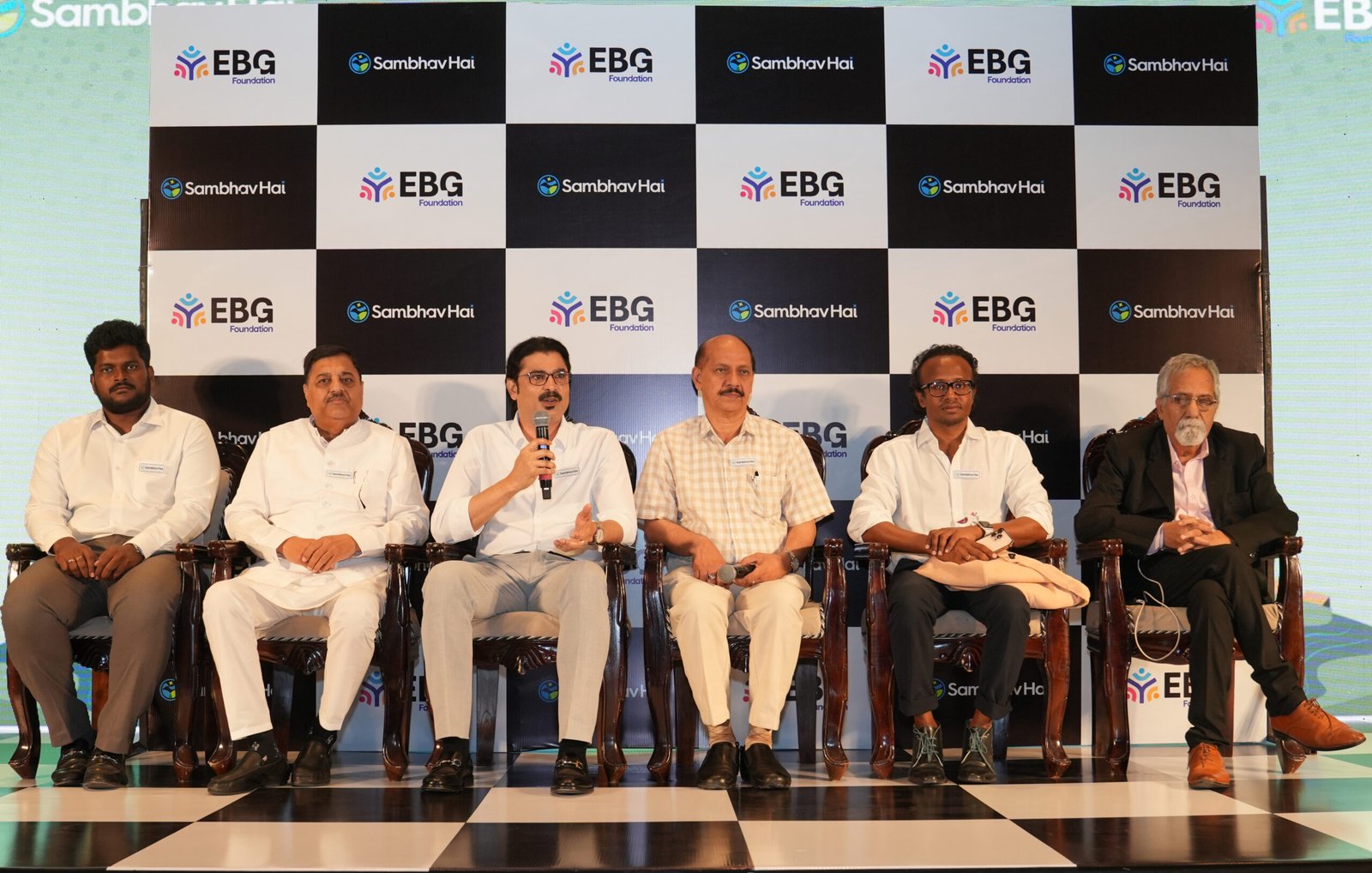
World Earth Day Launch: EBG’s “Sambhav Hai” Begins in Charla Thanda
On World Earth Day, EBG Company adopts Telangana village, Charla Thanda Nalgonda, carbon-neutral makeover Earth Day 2026, Sambhav Hai initiative, Dr. Irfan Khan, rural sustainability Telangana, solar power villages, rainwater harvesting Nalgonda, EBG Foundation green villages.
Starting with INR 30 crore for 50 villages in year one, it tackles climate challenges head-on, converting underserved areas into thriving, carbon-neutral ecosystems.
Rigorous Selection: Color-Coded Carbon Hunt
Dr. Khan spotlighted the process: “Charla Thanda topped Green Mentor Company’s rigorous color-coded survey, segregating villages by carbon status, dark maroon for highest emissions, via low-soot carbon accounting.” A bold three-year timeline aims to flip it green, scaling to 50 villages annually.
Tackling Ground Realities: Sanitation to Connectivity
Mirroring India’s rural battles, Charla Thanda grapples with poor sanitation, limited connectivity, and low civic awareness. EBG counters with waste management, hygiene drives, digital inclusion, and mobility boosts, sparking public health and eco-responsibility.
Data-Driven Core: The 6-Color Environmental Spectrum
At heart lies a six-color framework from green (sustainable) to dark maroon (critical). Surveys reveal scarce green zones, fueling urgency. Field guides like Sai Prasad rally efforts, weaving Anganwadi centers into awareness and behavior shifts.
Path to Neutrality: Solar, Water, and Scalable Wins
EBG eyes carbon neutrality first, deploying rainwater harvesting, solar systems, street lights, and 300-400ft village panels, cutting emissions 10-20% in year one, hitting full neutrality in three scalable, replicable, community-owned steps.
Grassroots Power: Forests, Training, and Happiness Hubs
“Sambhav Hai” merges afforestation, waste solutions, and climate training. Charla Thanda’s Anganwadis morph into education hubs, lifting happiness indexes with sustainability. EBG crafts self-reliant models slashing footprints and empowering locals.
Building Climate-Conscious Grassroots Ecosystems
“Sambhav Hai” blends afforestation, waste management, and climate resilience training. In Charla Thanda, Anganwadis become hubs for education, boosting the happiness index alongside sustainability. EBG gives back to Earth by creating self-reliant models that lower carbon footprints and empower residents.
Key Figures at the Hyderabad Launch
The event featured Hari Kiran (Co-founder, EBG), Suresh Goyal (Director, EBG Foundation), Prof. RK Kotnala (Chairman, New Science Creators Institute), Pattnaik Ompriya Mohanty (Entrepreneur and Environmentalist), and Ajai Arora (Author on Carbon Accounting).
Telangana Leads Grassroots Climate Action
As Earth Day calls for global action, “Sambhav Hai” positions Telangana at the forefront, one village at a time. EBG’s vision delivers tangible returns to the planet: cleaner air, resilient communities, and proof that rural India can pioneer carbon neutrality. With structured tools and unwavering commitment, sustainable change is not just possible, it’s happening now.
Sambhav Hai is live now, check out at www.sambhavhai.com
For more such stories, please read on www.fridaywall.com
By Vaishnavi Dr