

Every October, pink ribbons flood our streets, social media feeds, and workplaces. Stories of survival are celebrated, victories are shared, and awareness campaigns encourage women to get screened. Yet, amid these hopeful narratives, one group is often left standing quietly in the background. Women living with metastatic breast cancer.
There is no cure for metastatic breast cancer. While treatments can slow the disease and improve quality of life, patients continue living with the knowledge that their diagnosis is incurable. Yet their stories are rarely told with the same visibility as stories of survival.
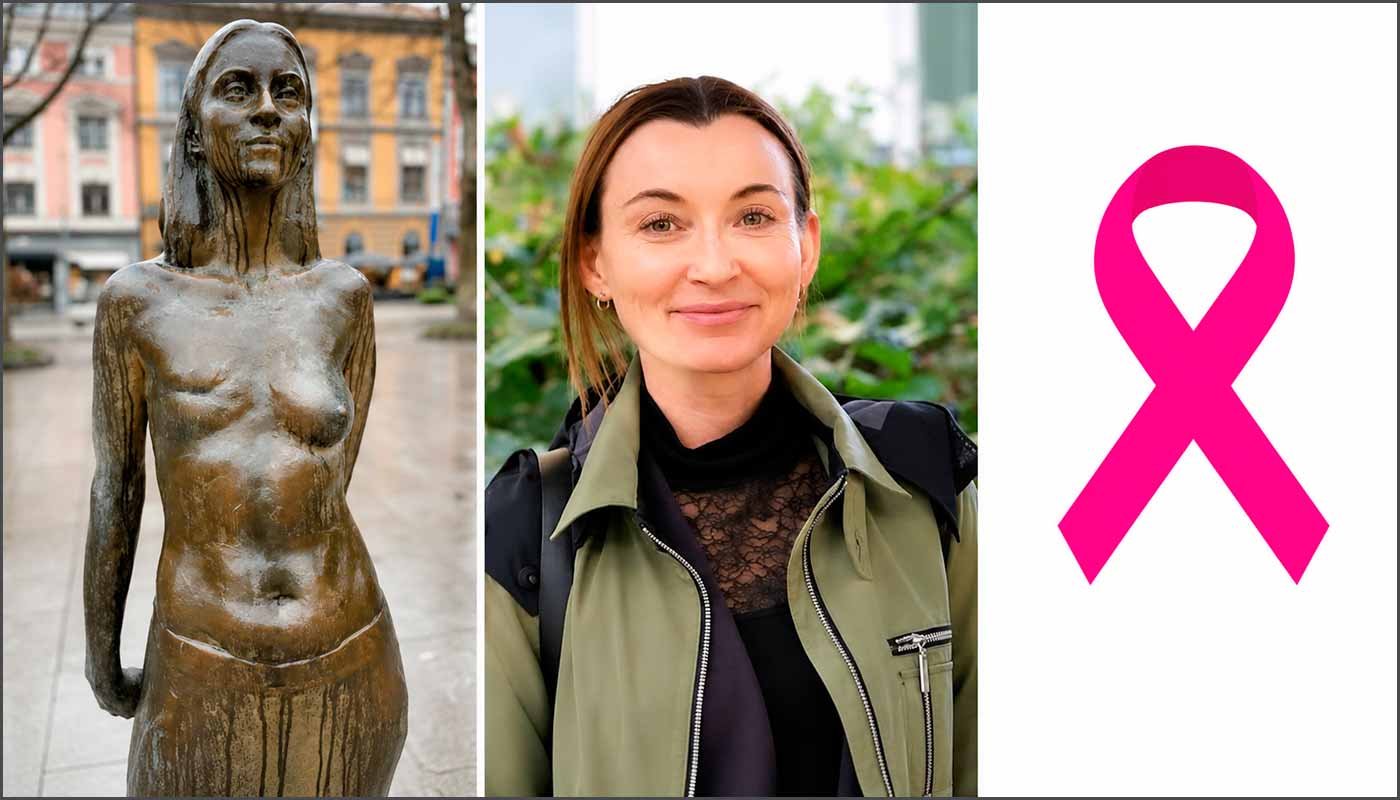
In a powerful effort to change that, Pfizer, in collaboration with the Norwegian Breast Cancer Association, unveiled what is believed to be the world’s first public statue honoring a woman living with incurable breast cancer.
Named “Cecilie,” the bronze sculpture stands in the heart of Oslo, serving as a permanent reminder that people living with metastatic breast cancer deserve to be seen, acknowledged, and remembered.
The sculpture was created by acclaimed Norwegian artist Håkon Anton Fagerås and modelled after Cecilie Flatvoll, a wife, mother of three, and passionate advocate who was diagnosed with metastatic breast cancer at just 42 years old.
Rather than portraying an idealized image, the sculpture presents Cecilie exactly as she wished to be remembered. One breast is absent, and her mastectomy scar remains visible. It is an honest representation of both the physical and emotional realities of living with advanced breast cancer. The result is striking not because it hides illness, but because it refuses to.
According to global estimates, more than 2.3 million women are diagnosed with breast cancer every year, while between 670,000 and 764,000 women lose their lives annually to the disease. Despite these staggering numbers, conversations often focus almost exclusively on early detection and survivorship. Those whose cancer has spread beyond the breast frequently find themselves overlooked, despite continuing treatment for the rest of their lives.
That silence is precisely what this monument seeks to challenge.
For Cecilie, the statue was never about personal recognition. It was about ensuring that women like her would no longer remain invisible.
She once said:
“For my loved ones, the statue will mean having a place to go, like a memorial. I hope it can also give something to others, an opportunity to talk about a difficult subject. We are so much more than just a patient group.”
Those words have become the heart of the monument itself.
Perhaps the most poignant part of Cecilie’s story is that she lived long enough to witness the unveiling of the sculpture. She passed away in 2023, knowing that her legacy would continue through a public work of art dedicated not only to her life but to thousands of women whose experiences are too often left out of public conversations. The statue now belongs to every woman living with metastatic breast cancer. It belongs to every partner sitting beside a hospital bed. Every child watching a parent undergo treatment. Every family learning to live alongside uncertainty.
Public monuments have traditionally commemorated kings, military victories, political leaders, and historic events. Rarely do they honour ordinary people living with extraordinary courage. Cecilie changes that narrative. It reminds us that resilience is not always about defeating illness. Sometimes, it is about choosing to live fully despite it.
In a world eager to celebrate survivors, Norway has chosen to honour those still fighting. And perhaps that is what makes this statue so remarkable. It is not a monument to death. It is a monument to visibility. To dignity. To compassion.
And to the simple yet profound truth that every person living with an incurable illness deserves to be seen, remembered, and included in the conversation.