
Dhurandhar review: A sleek, sprawling thriller with a divisive fixation
Dhurandhar review by Kausalya Rachavelpula
When Spectacle Meets Uneasy Ideology
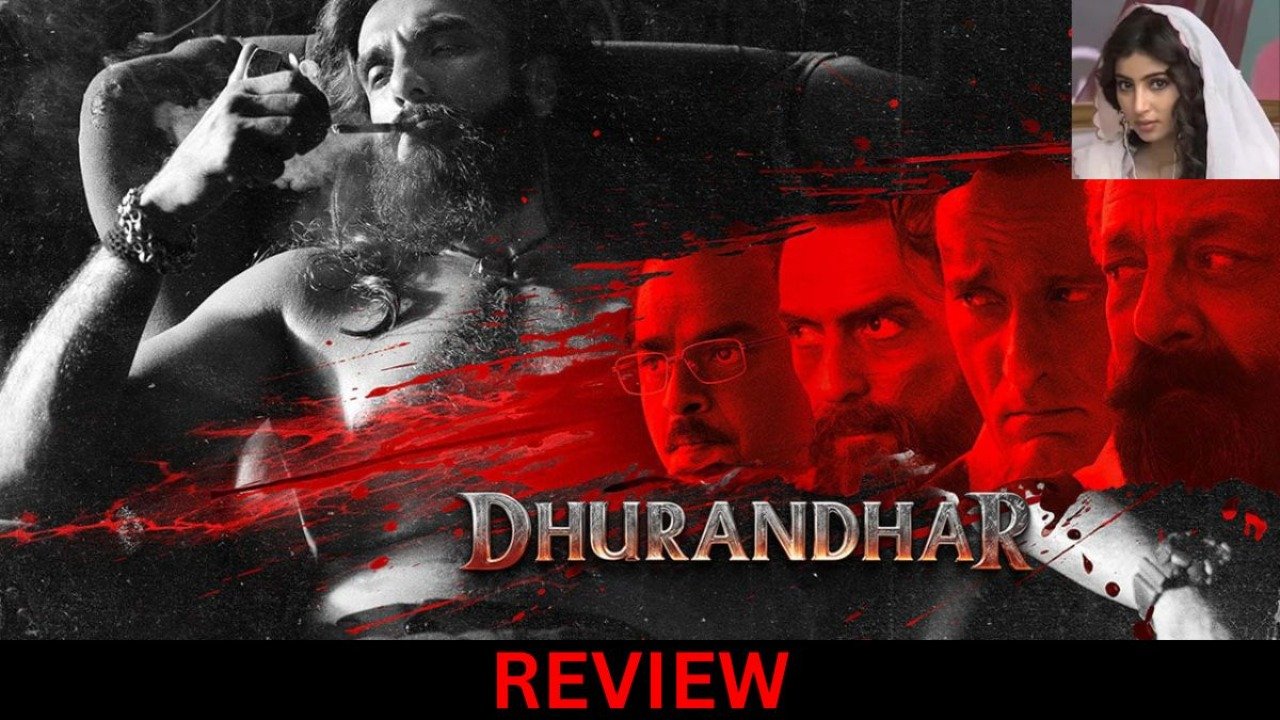
Dhurandhar is the latest cinematic venture of Aditya Dhar, a sprawling spy-action thriller that dares to reimagine real-world covert operations through the lens of dramatized vengeance. Produced by Jio Studios and B62 Studios, and anchored by a formidable ensemble including Ranveer Singh, Akshaye Khanna, Sanjay Dutt, R. Madhavan and others, the film plunges into the murky underbelly of gang-war politics, espionage and national trauma. Drawing inspiration from real-life events, especially the notorious gang conflicts in Karachi’s Lyari district and the wider RAW vs ISI saga, Dhurandhar sets out with grand ambitions.
Yet, for all its visual ambition and dramatic scale, the film often feels less like a balanced historical drama and more like a loud declaration of allegiance, a trait that becomes both its greatest strength and its fundamental flaw. As one critic put it: the film’s obsession with Pakistan is “so extreme that if it were a teenage boy, one would assume it has a crush on Pakistan.”
The Story: From Innocence to Instrument of War
The narrative of Dhurandhar is raw, ambitious, and heavy with emotional weight. It revolves around IB Chief Ajay Sanyal and his high-stakes mission to dismantle a powerful terrorist-mafia network operating out of Pakistan. In an act of desperation and daring, Sanyal recruits a 20-year-old Punjabi youth, a man imprisoned for a crime born of vengeance, and grooms him into a lethal undercover agent, capable of infiltrating the ruthless criminal world of Lyari.
Unfolding over eight distinct chapters (from The Price of Peace to Et Tu Brutus), the film charts a steep, often brutal transformation: from innocence to blood-soaked betrayal, from hope to hard-edged vengeance. The backdrop of real events, including the 1999 hijacking of IC-814 and the 2001 Parliament attack, provides ominous echoes, even if the narrative diverges into dramatic license.
What Works: Immersion, Craft, and the Power of Performance
Immersive World-Building: The film succeeds in transporting us, convincingly and viscerally, into the chaotic, dimly lit, morally ambiguous world of 1999-2009 Karachi and India. The alleys of Lyari, the pressure-cooker atmosphere of intelligence offices, the sense of men on edge, everything feels carefully constructed.
Gripping Scene-Writing and Pace: There are moments, especially post-interval, where what seems like a quiet, ordinary sequence detonates into pivotal turning points. The contrast between stillness and sudden eruption amplifies emotional impact.
Music and Soundscape: The background score, blending retro vibes with contemporary intensity, sustains the film’s relentless pulse. It elevates scenes, builds tension, and often speaks louder than dialogue.
Performances That Anchor the Film: The ensemble cast delivers. Performances by Khanna, R. Madhavan, and even supporting actors manage to ground the story emotionally. Their portrayals, whether of grief, terror, aggression or desperation, bring weight to what could have been one-dimensional roles.
Where It Falters: The Cost of Unchecked Bias
Heavy-Handed Political Messaging: The film makes no secret of its narrative leanings. Real-footage montages, contextual references, and carefully chosen historical flashpoints are woven in not just to enhance realism, but to push a specific worldview. In doing so, Dhurandhar often trades complexity for binary morality: India good, Pakistan evil.
Stereotyped Depiction of “The Other”: Pakistani characters, gangsters, terrorists, bystanders, rarely escape reductive portrayals. Human complexity is replaced with caricatures of savagery. The result is a world where nuances are sacrificed at the altar of shock value.
Narrative Overreach and Unrealistic Convergence: Events and characters from different real-life situations are conflated, the 2001 Parliament attack, Mumbai blasts, gang wars, creating a narrative that occasionally feels more like a checklist of grievances than a coherent story. The emotional and historical gravity of each event is often undercut by bombast.
Run Time vs. Substance: Clocking in at 214 minutes, making it one of the longest Hindi films in recent decades, Dhurandhar aims for epic. Yet despite the length, many arcs feel underdeveloped, and several threads are left dangling, presumably for a sequel. For all the runtime, some characters (even leads) lack emotional depth or believable motivations.
Dhurandhar review conclusion: A Cinematic Spectacle, But Also a Moral Warning
Dhurandhar is an audacious film, raw, grand, and unafraid to plunge into the darkest alleys of geopolitics, crime and revenge. It excels as a visceral experience: the world-building, the performances, the musical undercurrent, all coalesce into a film that commands attention.
But it is impossible to overlook the unsettling ways it simplifies history, pigeonholes communities, and trades moral ambiguity for dramatic black-and-white storytelling. Its “obsession” with portraying a particular side, so intense that it feels personal, raises difficult questions about responsibility, representation, and the cost of sensational storytelling. As one critic bluntly put: if Dhurandhar were a teenager, it would have a crush on Pakistan.
Dhurandhar review: Dhurandhar is likely to be remembered as much for its cinematic strengths as for the controversies it ignites, a film that fascinates even as it unsettles, that awakens adrenaline even as it demands critical distance.