

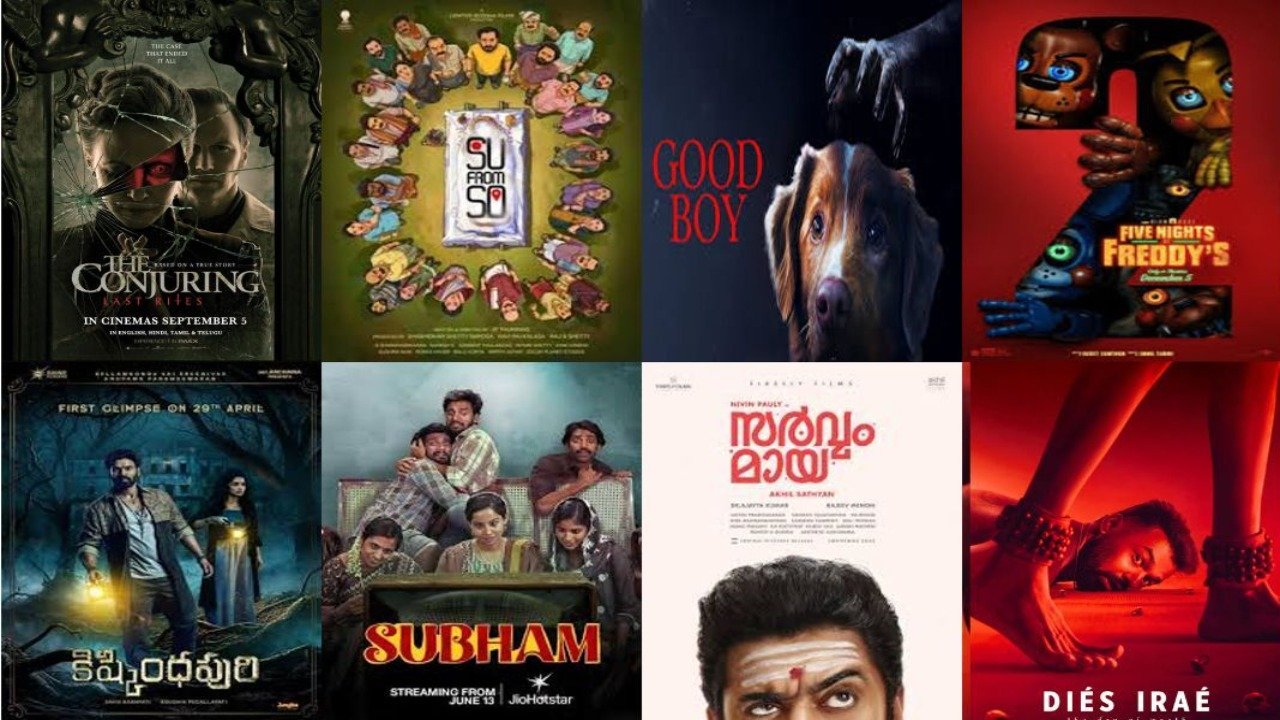
A Year of Fear: Horror Cinema Across Languages in 2025
Horror in 2025 proved one thing decisively: fear speaks every language. From Hollywood’s large-scale franchise spectacles to South India’s folklore-driven ghost stories, the year offered a wide spectrum of chills, thrills, and dark humor. Rather than relying only on jump scares, filmmakers across industries explored psychology, mythology, comedy, and cultural anxieties, making 2025 one of the most diverse years for horror cinema in recent memory.
Global Horrors: English-language cinema in 2025
Internationally, horror continued its strong box-office momentum in 2025. Major franchises reaffirmed the genre’s commercial power, while original films found success through strong concepts and unsettling atmospheres.
The most talked-about release of the year was The Conjuring: Last Rites, which marked the final chapter in the popular Conjuring universe. Combining familiar demonology with emotional closure, the film attracted both longtime fans and new audiences. Another major release, 28 Years Later, expanded the post-apocalyptic horror legacy with a grimmer, more reflective tone that focused on survival, memory, and moral collapse.
Good Boy emerged as one of 2025’s most unique international horror films, blending supernatural tension with the good dog Indy driven storytelling. The film’s unusual protagonist and grounded approach highlighted how everyday fears can become genuinely unsettling.
Alongside these big titles, films like Final Destination: Bloodlines, Five Nights at Freddy’s 2, Sinners, and Weapons showed how horror franchises and high-concept thrillers can coexist with fresh storytelling. The English-language horror scene in 2025 balanced spectacle with substance, proving that fear can be both entertaining and thought-provoking.
Telugu Cinema: Supernatural meets experimentation
Telugu horror in 2025 leaned heavily into supernatural thrillers and horror-comedy hybrids. Filmmakers embraced creative premises, often blending fear with humor and psychological tension.
Kishkindhapuri stood out for its eerie setting and layered storytelling, turning a seemingly harmless ghost-tour concept into a deeply unsettling experience. Ghatikachalam explored psychological horror, focusing on inner demons as much as supernatural ones. On the lighter side, Subham used comedy as a gateway to horror, making the genre more accessible to family audiences while still delivering spooky moments.
Overall, Telugu cinema in 2025 showcased confidence in experimenting with tone, proving that horror doesn’t always have to be dark to be effective.
Tamil Horror: Atmosphere and folklore
Tamil horror films in 2025 favored atmosphere over excess, drawing from rural legends, haunted spaces, and psychological unease. Yamakaathaghi exemplified this approach, using village traditions and spiritual beliefs to create tension rooted in cultural familiarity. Meanwhile, House Mates offered a more playful take, mixing supernatural elements with comedy in an urban apartment setting.
Tamil filmmakers continued to explore how horror can emerge from everyday environments, transforming ordinary spaces into sources of dread.
Kannada Horror: Psychological and mythic elements
The Kannada industry continued to embrace horror with conceptual depth.
Su from So became a cult favourite, combining surrealism, symbolism, and suspense. Its abstract storytelling pushed Kannada horror into experimental territory while retaining a chilling, eerie atmosphere.
Other Kannada horror projects also explored internal fears and mythic structures, showing that the genre in this industry is equally comfortable with atmospheric dread as with psychological tension.
Rakshasa stood out for its mythological foundation, drawing from demon lore and blending it with modern narrative techniques such as time loops and psychological suspense.
The film demonstrated how Kannada cinema uses mythology not just as background but as a driving force for horror storytelling.
Malayalam Cinema: Horror with heart and humour
Malayalam cinema delivered some of the most acclaimed horror films of 2025, continuing its tradition of intelligent, layered storytelling. Rahul Sadasivan’s Diés Iraé, released worldwide on October 31, starred Pranav Mohanlal and stood out for its haunting atmosphere and emotional depth, though it didn’t fully match the impact of the director’s earlier Bhoothakaalam. Moving beyond jump scares, Malayalam horror blended folklore, humour, and character-driven narratives, with Sarvam Maya exemplifying how fear in 2025 coexisted with warmth, cultural identity, and narrative richness.
Gujarati Horror: Vash Level 2
Gujarati cinema made a splash with Vash Level 2. A sequel to the 2023 hit Vash, this psychological horror continues the narrative of dark hypnosis and supernatural manipulation, unravelling more mystery and terror more than a decade after the original. Released in both Gujarati and a Hindi‑dubbed version on August 27, 2025, the film expanded its reach while maintaining the unsettling spirit of its predecessor.
The film’s psychological intensity and crowd‑hypnosis elements pushed Gujarati horror into new territory, with the director building tension through atmosphere and entanglement of belief systems.
Trends defining horror in 2025
Industry observers note that several trends emerged in horror cinema this year:
-
Psychological horror gained prominence, with films like Vash Level 2, Su from So, and Good Boy emphasizing fear rooted in the mind rather than traditional monsters.
-
Horror-comedy and genre-blending became more common, especially in Telugu and Malayalam films.
-
Folklore and cultural references played a key role in regional horror narratives, grounding supernatural events in local belief systems.
-
Balance between franchises and original content allowed the genre to appeal to both mainstream audiences and niche, cult-following viewers.
Horror cinema in 2025 was not confined by language, geography, or formula. From Hollywood’s polished spectacles to South India’s culturally rooted ghost stories, the genre evolved in exciting directions. Whether through laughter, mythology, psychological tension, or outright terror, filmmakers proved that fear remains one of cinema’s most powerful and universal tools.
For audiences, 2025 offered not just scares, but stories worth remembering long after the lights came back on.