

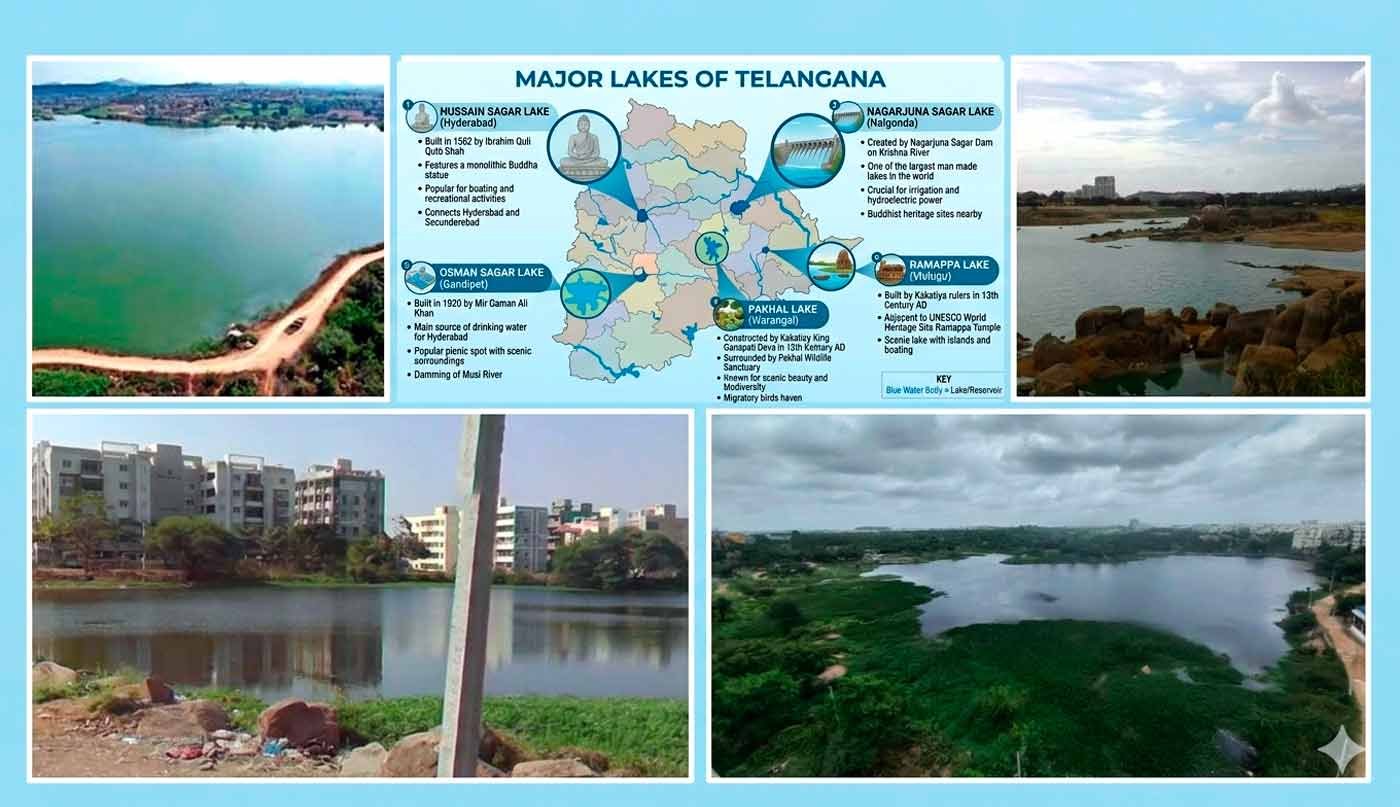
Hyderabad lakes are degrading and the 2026 Telangana Lake Health Survey highlights the many factors including pollution, sewage inflow, and encroachments. Here’s an overview on the challenges and way forward for saving lakes in and around the city
The lake health survey in Telangana is a systematic assessment designed to understand the real condition of water bodies, especially in rapidly urbanising regions like Hyderabad. It examines key indicators such as water quality (including pollution levels), extent of sewage inflow, loss of lake area due to encroachments, and the presence (or absence) of biodiversity. What emerged from the latest survey (2026 Telangana Lake Health Survey) findings is a concerning picture: many lakes are no longer functioning as natural ecosystems but are increasingly polluted, shrinking, and struggling to sustain life. The survey brings to attention to the degradation that could become irreversible, without immediate and coordinated intervention, affecting not just the environment but also water security and urban resilience.
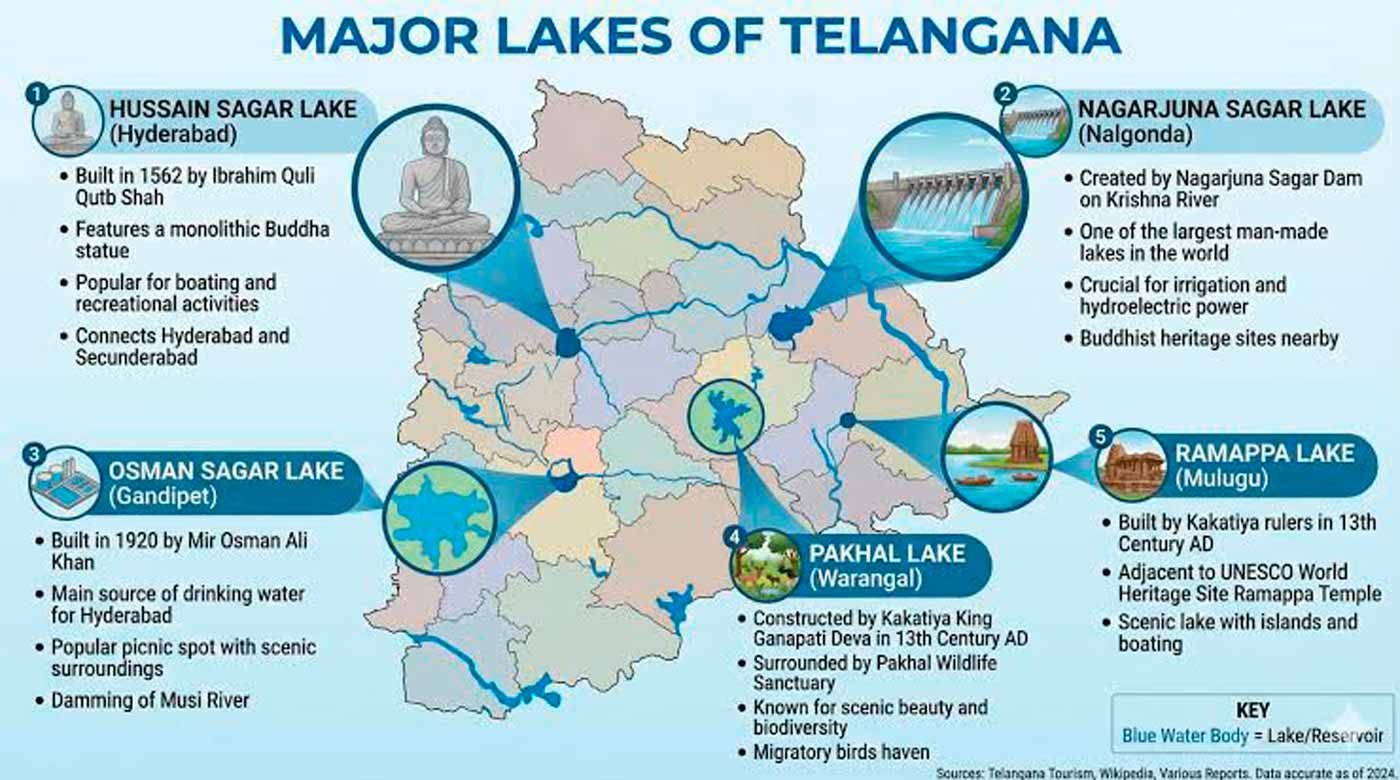
According to the 2026 Telangana Lake Health Survey many lakes in Hyderabad are rapidly degrading due to pollution, sewage inflow, and encroachments. The survey was conducted by the Telangana Pollution Control Board and the Hyderabad Metropolitan Development Authority along with environmental groups.
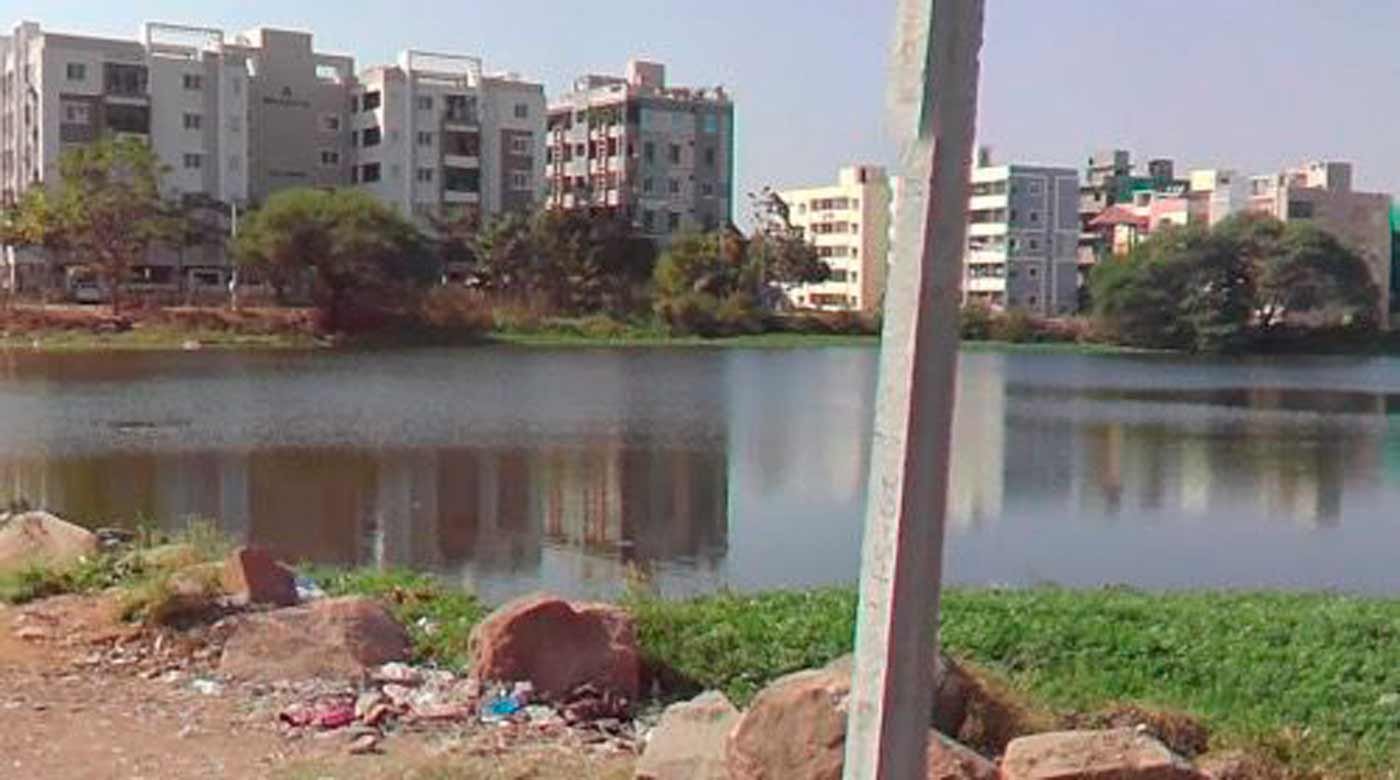
What makes these surveys important is that they turn a complex environmental issue into something people can easily grasp. They answer basic but critical questions: Is the lake safe? Is it shrinking? Can it recover? By putting facts into perspective, the surveys help citizens, planners, and policymakers see the urgency of the situation. More importantly, they create a starting point for action, because once the problem is clearly understood, it becomes harder to ignore.
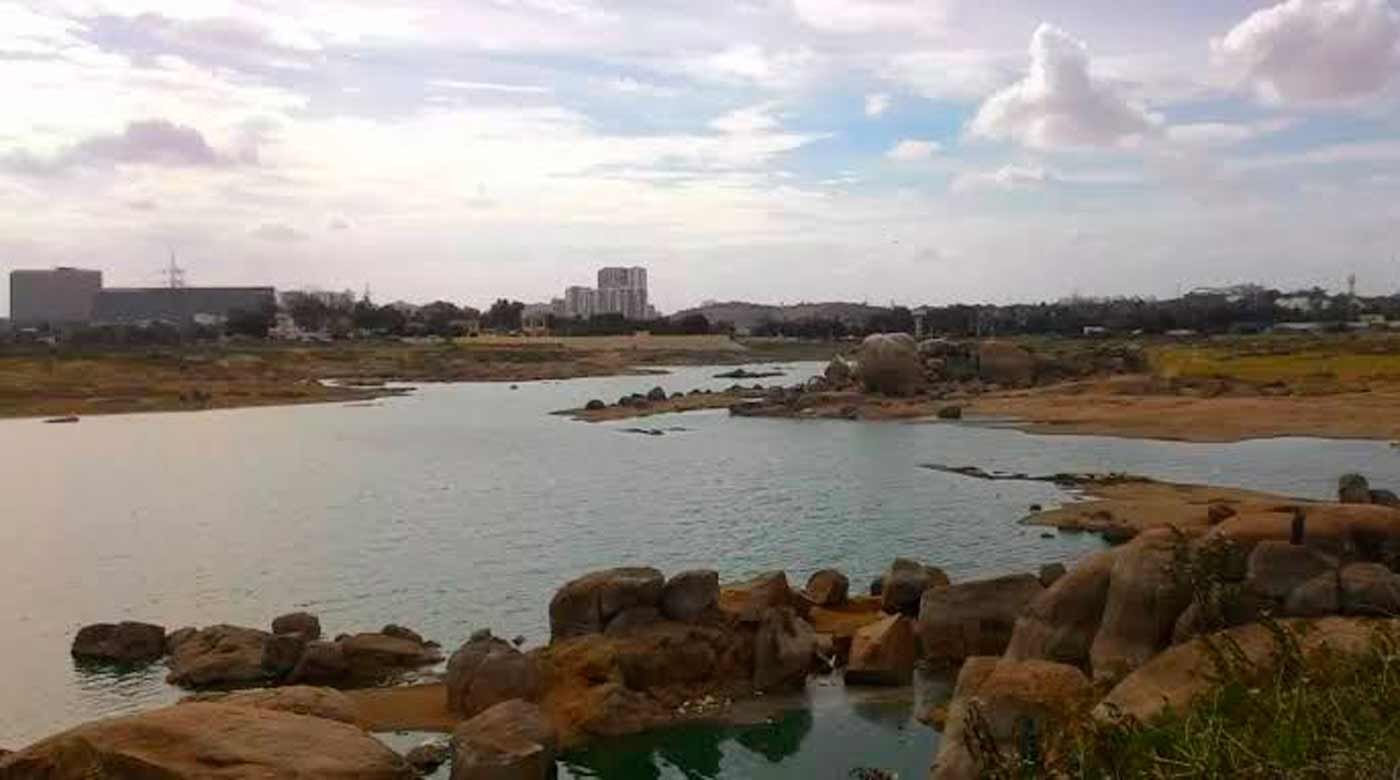
Hyderabad lakes crisis is no longer just an environmental concern, it has become a civic and legal battleground, driven by a handful of persistent voices who refuse to let these water bodies disappear quietly
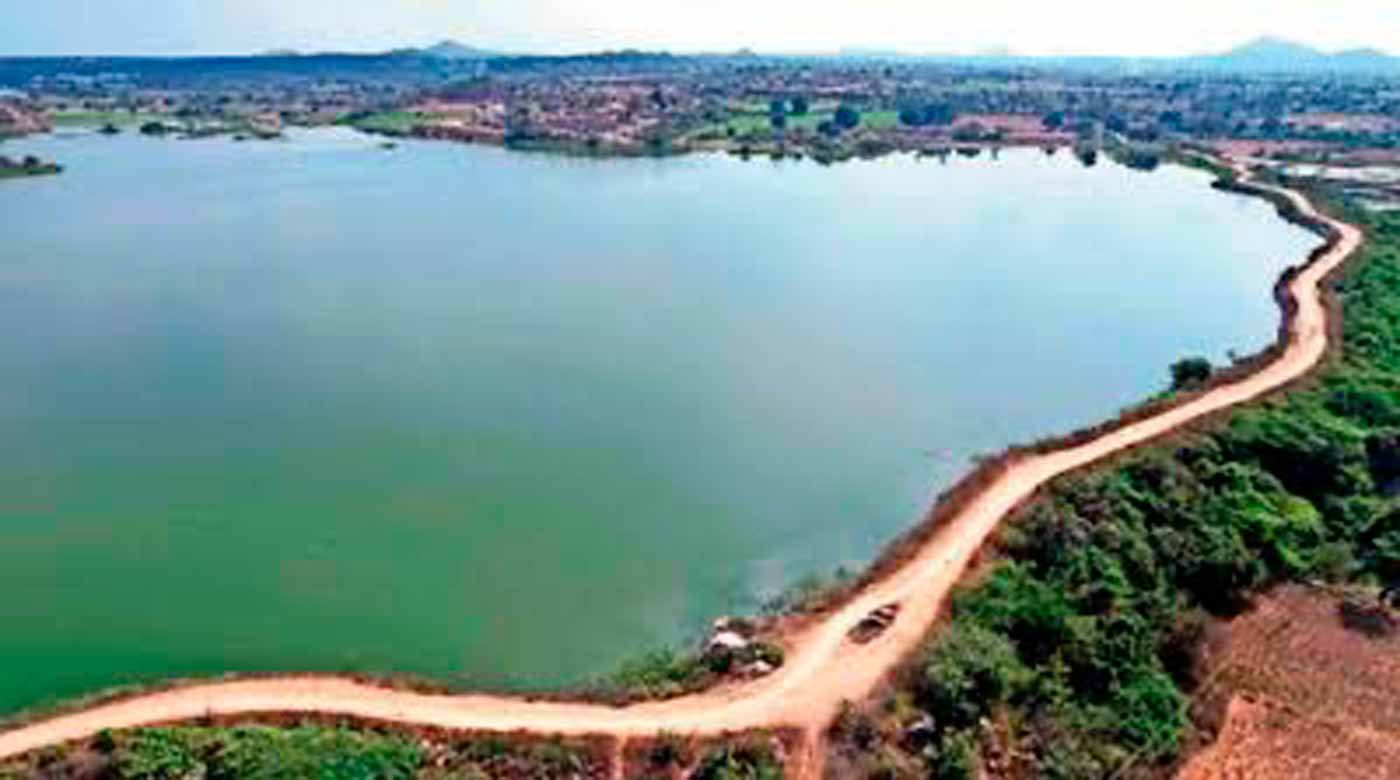
At the forefront of the issue and the activism to save the lakes is Dr. Lubna Sarwath, former convener of Save Our Urban Lakes (SOUL). She has consistently framed the issue as one of public accountability. “Lakes are critical public resources; their safety is government’s responsibility. As citizens, we shall not allow the degradation to continue,” She shares. Her legal interventions, including efforts to protect Bam Rukn-Ud-Dowlah lake in Shivarampally village area, highlight how encroachments continue despite court scrutiny.
Working alongside her, Jasveen Jairath, a founding member of SOUL, has played a crucial role in mobilizing citizen action.“Public concern must translate into legal and civic pressure, only then do institutions respond.”
Her work underscores how documentation, litigation, and community engagement are essential in holding authorities accountable.
On the ground, restoration efforts are being led by Kalpana Ramesh, founder of The Rainwater Project. Through her “Live the Lakes” initiative, she focuses on reviving water bodies like Kudikuntla and Gopicheruvu.

“If communities don’t reconnect with their lakes, restoration will remain temporary, ownership is the real solution.” says Kalpana.
Her approach blends ecology with community stewardship, pushing beyond policy into practice.
Veteran activist Anuradha Reddy, one of the earliest voices in the Save Lakes movement, brings historical perspective to the crisis. “We’ve been warning about disappearing lakes for decades, what we see today is the cost of prolonged neglect.”
Meanwhile, organizations like Dhruvansh continue to address on-ground challenges such as sewage inflow and solid waste dumping.
“Restoration is not cosmetic, it begins with stopping sewage and waste at the source.” Together, these voices reveal a stark reality: Hyderabad’s lakes are not just shrinking, they are being systematically compromised. But they also point toward a path forward, where legal action, citizen ownership, and ecological restoration intersect to reclaim what remains.
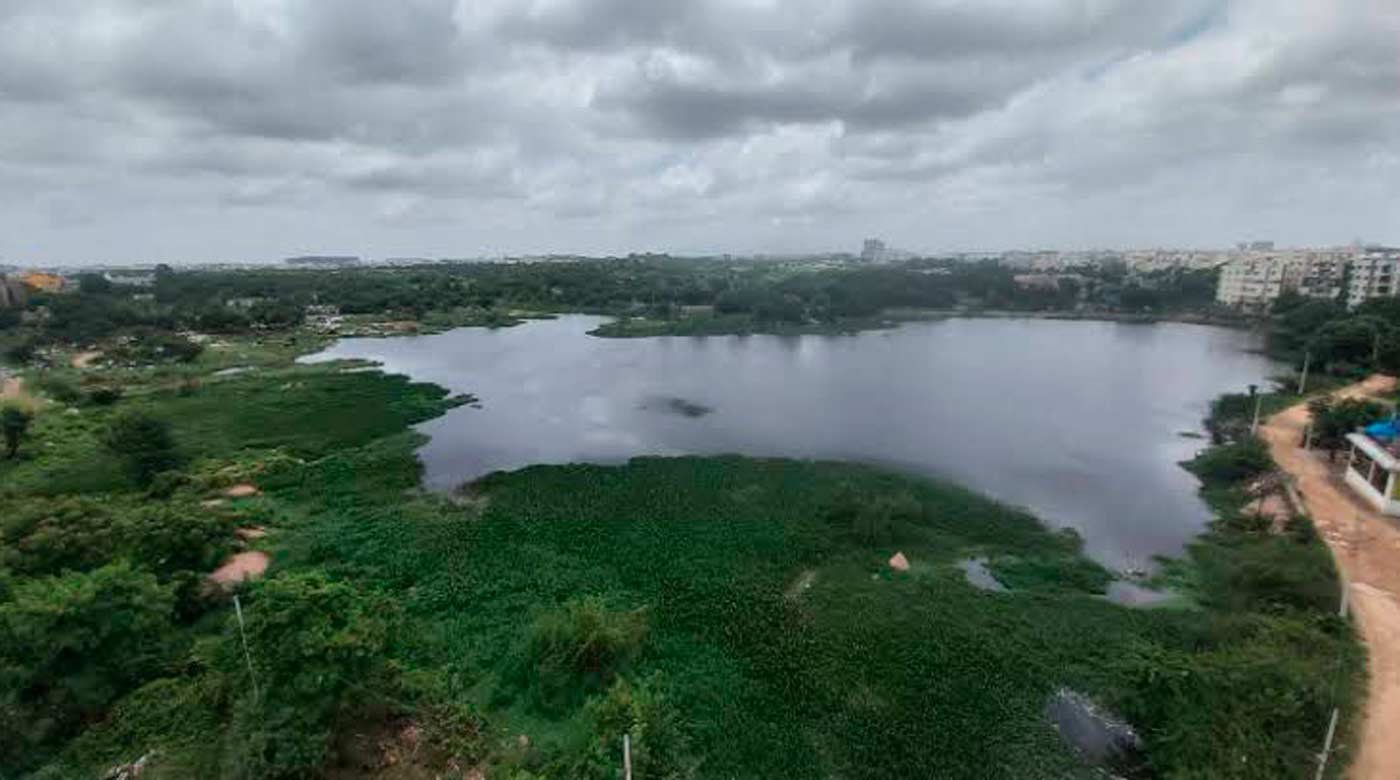
Hyderabad Lakes Restoration – Right Indicators – Challenges – The Way Forward
Most surveys rely heavily on physico-chemical parameters like dissolved oxygen and pollutant levels. While these are essential, they often overlook deeper ecological markers such as soil health, microbial balance, and long-term biodiversity shifts. This creates a partial picture, where a lake might appear “improved” on paper but still lack ecological resilience. Expanding survey frameworks to include ecosystem-based indicators is crucial for meaningful restoration.
Does Pollution Persist Despite Identification
The gap lies not in identification but in enforcement and coordination. Multiple agencies often share overlapping responsibilities, leading to delayed or diluted action. Surveys highlight pollution sources, but without strict interception systems and accountability mechanisms, these findings remain underutilized. The persistence of pollution reflects systemic governance gaps rather than lack of data.
The Documentation of lake encroachments
While many surveys do record shrinking lake boundaries, the follow-up action is inconsistent. In some cases, encroachments are treated as static conditions rather than violations to be reversed. This normalisation weakens restoration efforts over time. For surveys to be effective, they must be linked to legal frameworks that not only document but also trigger corrective
Is Data considered as change?
Data is only as powerful as its implementation. While surveys provide a scientific basis for action, restoration depends on political will, funding, and community involvement. Without these, even the most detailed reports risk becoming archival records. The real value of these surveys lies in their ability to inform policy, guide interventions, and mobilize citizens, not just diagnose the problem.
The Ultimate Reveal
Taken together, lake health surveys in Telangana do more than assess water bodies, they expose a disconnect between knowledge and action. They confirm that degradation is not accidental but cumulative, driven by planning gaps, weak enforcement, and limited ecological prioritisation. At the same time, they offer a roadmap: one where better metrics, stronger governance, and active public participation can still reverse the damage to Hyderabad lakes if acted upon in time.
By Vaishnavi DR