
Om Shanti Shanti Shantihi Review: More Obsessed With Purpose Than Earning It
Om Shanti Shanti Shantihi review by Kausalya Rachavelpula
Om Shanti Shanti Shantihi begins on a very strong note. The opening scenes are direct, engaging, and immediately pull the audience into the story. Right from the start, the purpose of the film is clearly delivered through the dialogues. There is no confusion about what the film wants to say, and this clarity continues throughout the entire first half. The pacing in the first half is steady, and the narrative remains interesting without dragging.
One of the most interesting aspects of the film is its perspective. Usually, we judge people based on what we see from the outside and assume we know their lives. But this film chooses to challenge that habit. In the beginning, we see the story from an external point of view, just like how society looks at a person. Then, within the first ten minutes, the perspective shifts to the protagonist, Shanti. This shift works well and immediately adds depth to the story. It reminds us that behind every person is a life full of struggles that we may never understand.
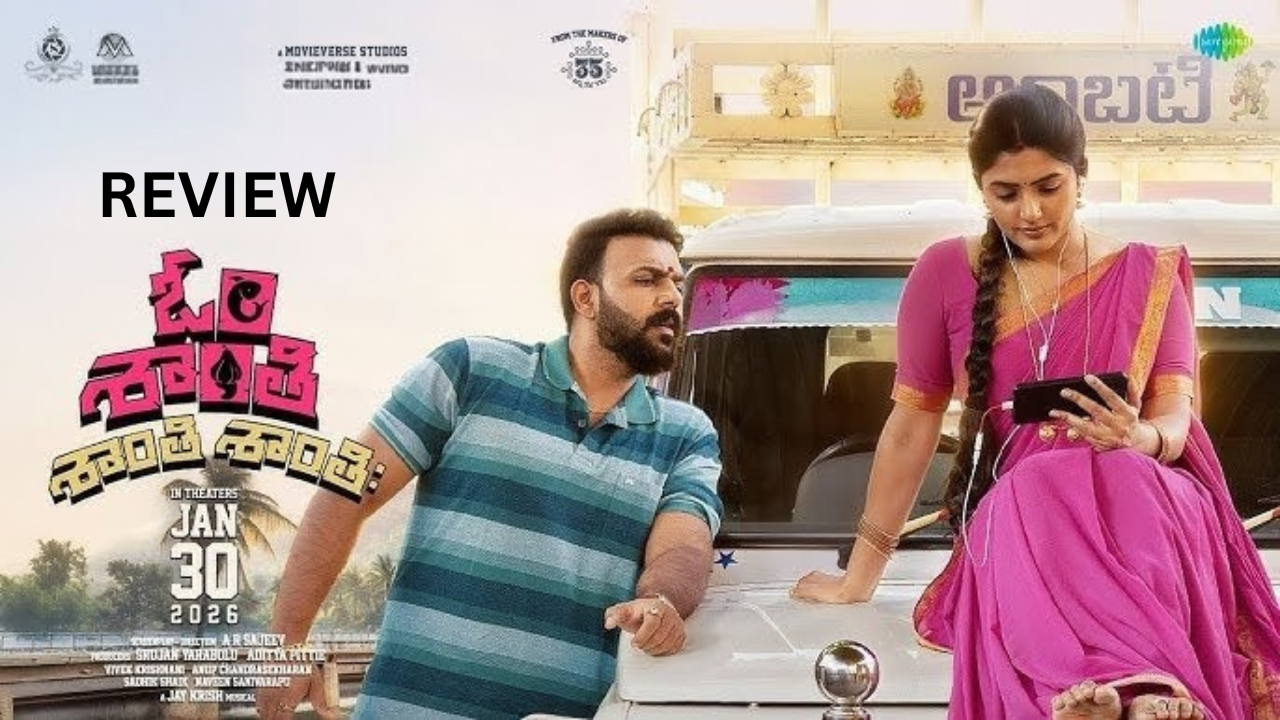
Shanti is played by Eesha Rebba. She is a talented actress, and her previous work has shown her strength, especially in comedy. However, in this film, her performance does not fully justify the role of Shanti. While Shanti’s story is relatable and represents the life of a typical Indian middle-class woman, the character never truly feels alive. Eesha Rebba seems uncomfortable in many scenes, and this discomfort is visible on screen. It is not entirely her fault, as the role demands a certain emotional weight that the film itself does not support well. As a result, the movie never becomes truly centered around Shanti, even though she is the main character.
The first half stays faithful to its original film Jaya Jaya Jaya Jaya Hey, but the second half takes a completely different turn. The storytelling becomes bumpy and uneven. Instead of flowing naturally, the film starts feeling like a collection of dialogues stitched together. Scenes come and go without leaving any lasting impact. By the end, the audience is left without any strong emotions.
While comparisons may not always be fair, the original film succeeds in making the audience feel something after the credits roll. Om Shanti Shanti Shantihi attempts to do the same but fails in execution. Its strong focus on delivering a message takes away the emotional depth. The storytelling feels more like a purpose-serving exercise rather than an emotionally driven journey.
The second half, especially the pre-climax and climax, goes completely off track. The characters begin to feel inauthentic, and their decisions no longer feel natural. The climax, in particular, is extremely cringe-worthy. The decision to change the ending from the original makes little sense and weakens the overall impact of the film.
That said, the makers do deserve appreciation for trying to bring nativity into the film. The dialogues and writing reflect local flavor and cultural grounding, which works in parts. However, the film is much more direct than the original, almost as if the makers assumed the Telugu audience prefers to be spoon-fed. This approach removes subtlety and reduces the emotional power of the narrative.
Among the cast, Tharun Bhascker clearly stands out with a strong and convincing performance. His presence brings some much-needed authenticity to the film. The rest of the cast also performs well and manages to hold their ground.
Om Shanti Shanti Shantihi review: Om Shanti Shanti Shantihi starts with promise but loses its way in the second half. Despite good intentions and a strong beginning, the film fails to leave a lasting emotional impact.