


There is so much happening in the first unveiling of Pa Ranjith’s ‘Vettuvam‘ that it takes a moment to absorb its scale. Bodies fly around poles, men train for combat, communities gather, landscapes become contested territory and an ancient-looking world gradually gives way to something increasingly unsettling and futuristic.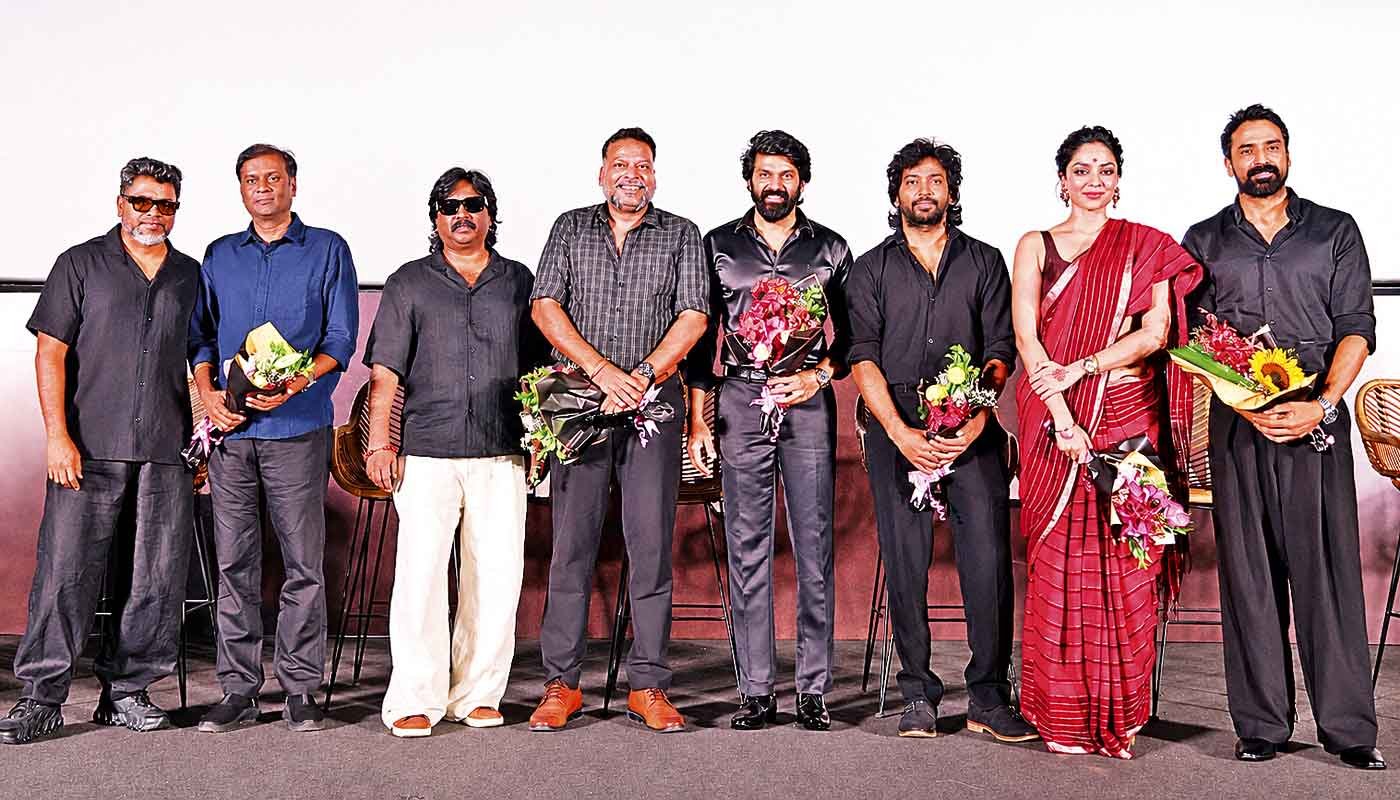
Titled ‘World of Vettuvam‘, the video is less a conventional teaser than an invitation into the universe Ranjith is building. The film traverses the past, present and future, connecting questions of land and power with environmental destruction and the consequences that one generation leaves behind for another. Mallakhamba, the traditional pole sport, is placed at the centre of a struggle involving power and survival.
And then there are the voices.
Ranjith has chosen a different narrator for each language: he himself narrates the Tamil version, Pankaj Tripathi lends his voice to Hindi, Rana Daggubati to Telugu, Soubin Shahir to Malayalam and Kiccha Sudeep to Kannada.
Listen to the versions one after another and an interesting difference emerges.
Pankaj Tripathi’s Hindi narration has the quality of oral storytelling. His characteristic pauses and conversational cadence make it feel as though this extraordinary world has existed for centuries and someone is now telling us its story.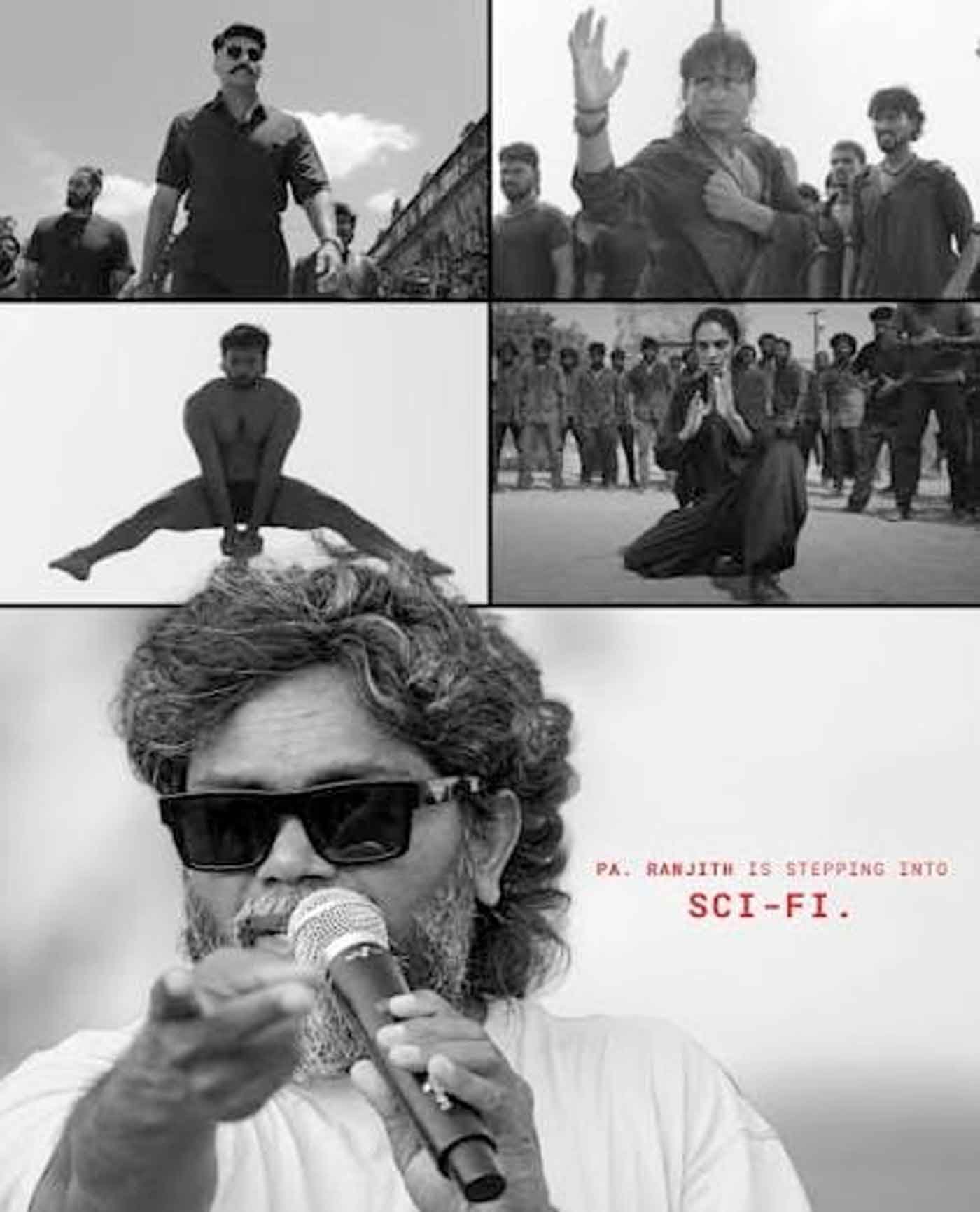
Ranjith’s Tamil narration works differently. There is something instinctive about hearing the filmmaker himself introduce the universe he has conceived. The voice need not overwhelm the visuals because it seems to belong to them.
The Telugu version, despite being narrated by Rana Daggubati, doesn’t quite have the same impact.
That is surprising precisely because this is Rana.

A voice that has commanded attention before
Rana Daggubati has one of the most recognisable baritones among contemporary Telugu actors. His voice, diction and dialogue delivery have repeatedly been important elements of his performances.
Go all the way back to his debut in Sekhar Kammula’s ‘Leader’. As the young Arjun Prasad entering the corridors of political power, Rana had to convey authority without playing the conventional mass hero. Contemporary reviews specifically noticed his diction and baritone, with The Times of India calling both “excellent”.
Then came Krish’s ‘Krishnam Vande Jagadgurum’, perhaps an even better example of what Rana can do with his voice. Playing B Tech Babu, a Surabhi theatre performer, required him to negotiate theatrical dialogue, mythology, anger and long monologues. Reviews at the time singled out how effectively the film used his voice and diction. Rana himself spoke about the difficulty of holding his voice and breath through the demanding monologues while dubbing.
And then there is Bhallaladeva.
Across the two ‘Baahubali‘ films, Rana’s physical transformation understandably attracted enormous attention, but Bhallaladeva was not built on physique alone. The character needed vocal authority — arrogance, controlled menace and the certainty of a man who believed power belonged to him. Rana could make Bhallaladeva threatening even before the character lifted a weapon.
‘Nene Raju Nene Mantri‘ offered yet another shade. As Jogendra, the seemingly ordinary moneylender who transforms into a ruthless political player, Rana moves between charm and menace. A contemporary Hindustan Times review described it as a “power-packed performance” and particularly noted the strength of his screen presence and the film’s dialogues.
There is also ‘The Ghazi Attack‘, where bombast would have been completely wrong. As Lt Commander Arjun Varma aboard a submarine, Rana had to project authority while remaining controlled. Reviews noted that his physique and voice helped him carry the role with authority, while his performance grew stronger as the crisis intensified.
So ‘Vettuvam’ is certainly not a case of casting the wrong voice.
Rana has also literally lent that voice to other films. His narration credits include the Telugu version of ‘Ponniyin Selvan: I’. Perhaps most memorably, he dubbed for Thanos in the Telugu versions of ‘Avengers: Infinity War’ and ‘Avengers: Endgame’.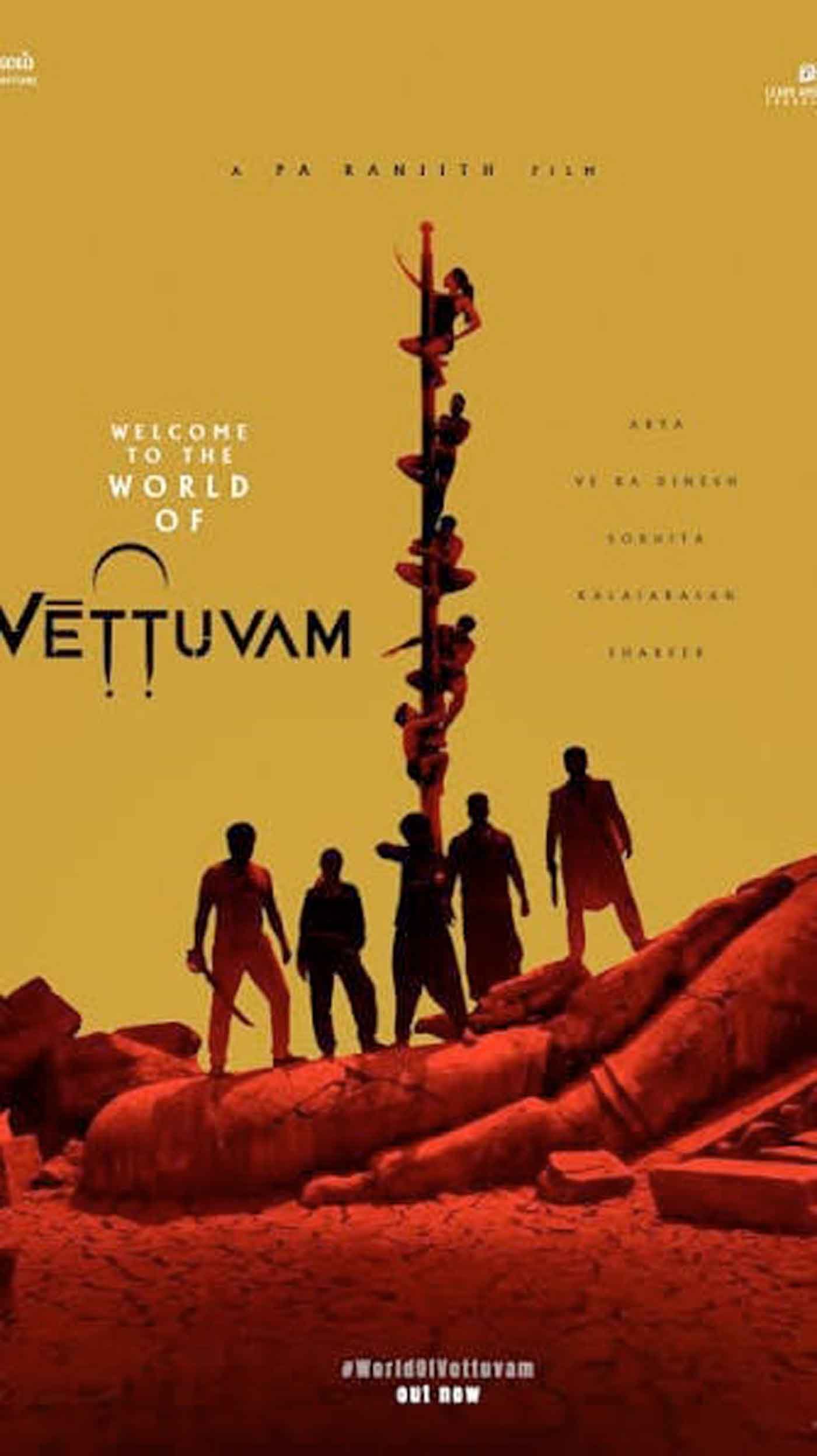
Which makes the ‘Vettuvam‘ experience all the more curious.
When the visuals overpower the voice
The problem is not Rana’s baritone. Nor is the narration poor.
It simply feels too measured for what is unfolding on screen.
Ranjith’s images have an almost primal energy. Human bodies become part of the landscape. The physicality of Mallakhamba gives the images an unusual verticality and danger. Land is not merely a backdrop but something people appear to fight for, possess and inherit. And as the unveiling shifts across timelines, what initially resembles an ancient conflict begins to acquire the dimensions of an environmental and dystopian nightmare.
The narration accompanying imagery this powerful needs to do more than explain the world. It needs to make us feel that it comes from within that world.
That is where Pankaj Tripathi has an edge in the Hindi version. There is an earthiness to his delivery, a sense that he is telling rather than announcing a story.
Ranjith has another advantage in Tamil: ownership. We are hearing the man who imagined ‘Vettuvam’ speak about ‘Vettuvam’.
Rana’s Telugu narration, by comparison, occasionally feels like a powerful voice placed over powerful images — the two don’t completely fuse.
Perhaps that response is heightened by what we already know Rana is capable of. We have heard the controlled political authority of ‘Leader’, the theatrical command of ‘Krishnam Vande Jagadgurum’, the imperious menace of Bhallaladeva, the political swagger of ‘Nene Raju Nene Mantri’ and the restrained command of ‘The Ghazi Attack’.

Rana Daggubati
The bar has, in other words, been set by Rana himself.
But the real star is Ranjith’s world
If the voice-over invites debate, the visual ambition of ‘Vettuvam’ is much harder to dispute.
Ranjith appears to be taking concerns that have travelled through his cinema — land, hierarchy, power, dispossession, community and resistance — and putting them inside a much larger genre canvas.
‘Vettuvam’ moves across three eras and combines action, science fiction, environmental concerns and traditional physical culture. The ensemble includes Arya, Sobhita Dhulipala, Dinesh, Shabeer Kallarakkal and Kalaiyarasan.
There are echoes of the filmmaker we know, but the scale feels different.
Ranjith has previously located struggles over land and social power within recognisable political and historical worlds. Here, he seems interested in asking what happens when those struggles are allowed to travel through time itself — when the violence of the past doesn’t disappear but mutates into the crises of the future.
That may ultimately be what makes World of Vettuvam so arresting.