

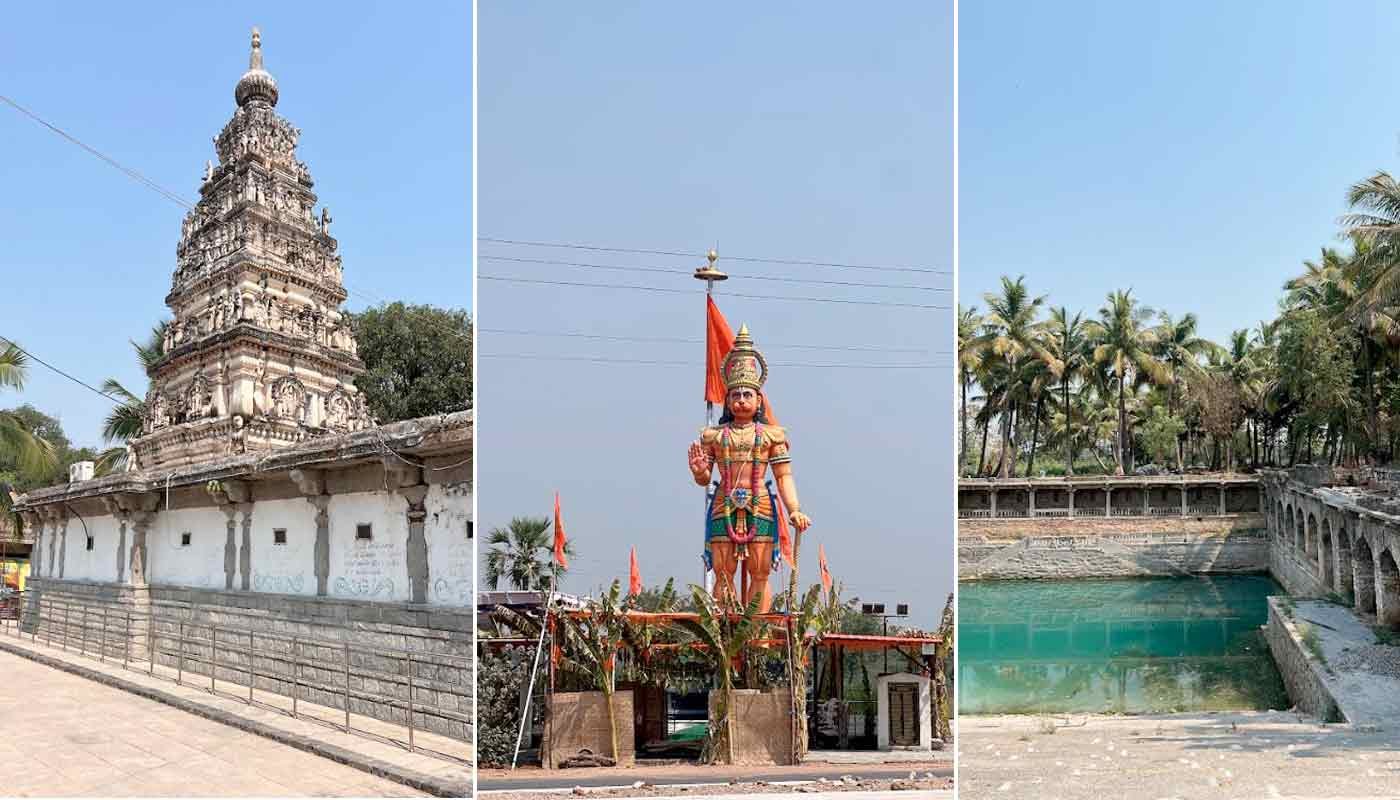
At Telangana’s Ammapalli temple, a rare eka shila idol, stone makhara thoranam, and Dashavatara carvings define a sacred Sri Rama Navami tradition.
As the chants of “Jai Shri Ram” rise with the morning sun and temple bells echo through the quiet village, Sri Rama Navami at the centuries-old Ammapalli temple unfolds not just as a festival, but as a living testament to devotion, lineage, and sacred artistry.
At Ammapalli temple, Sri Rama Navami unfolds amid rare stone traditions, where faith, folklore, and a 300-year-old legacy converge seamlessly.
Tucked away from the bustle of city life, the Ammapalli temple, believed to be over 300 years old, holds within its stone walls a rare confluence of mythology, craftsmanship, and oral tradition. With no inscriptions or written records to trace its origins, the temple’s history has instead been preserved through generations of priests and devotees who continue to keep its legacy alive.
At the heart of this continuity is priest Avinash Sharma, who has been performing rituals here for 17 years. “This is not just a place of पूजा (pooja), it is a lineage,” he says. “My great-grandfathers served here before me. What we know about this temple has been passed down through devotion, not documentation.”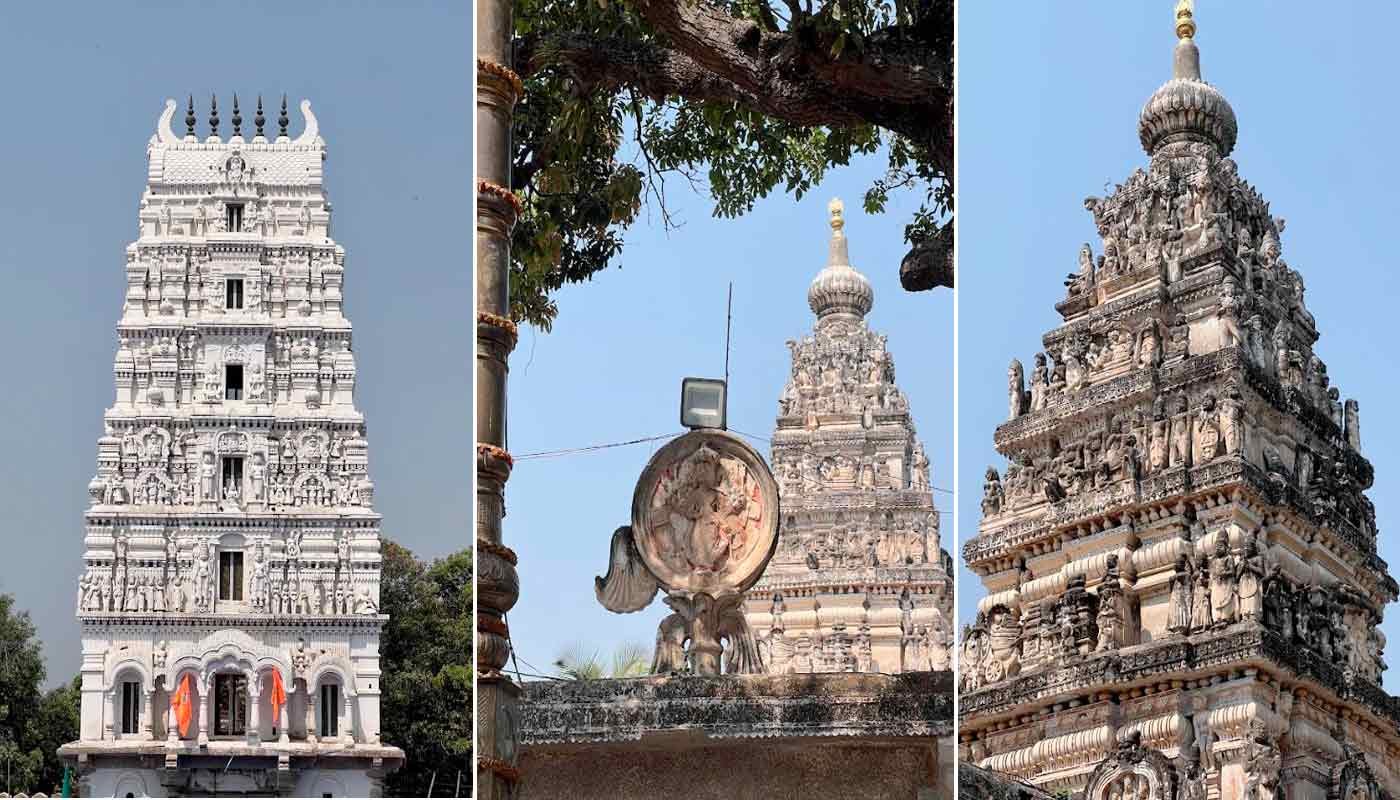
A Rare Form: The Eka Shila Vigraham
Unlike many temples where idols are assembled or sculpted in parts, the deity here is an eka shila vigraham, a form carved entirely from a single stone. This monolithic representation of Lord Rama lends the sanctum a quiet power, an unbroken continuity that devotees say can be felt the moment they step inside.
Adding to its uniqueness is the makhara thoranam, a decorative arch that frames the deity. While most temples use metalwork crafted in silver, gold, or brass, the Ammapalli temple stands apart. Here, the arch too is sculpted from stone, intricately carved and seamlessly attached to the idol itself.
Dashavatara in a Single Glance
What makes this makhara thoranam even more significant is its detailing; it houses miniature carvings of the Dashavatara, the ten incarnations of Lord Vishnu.
“In most traditions, a devotee would visit ten different temples to seek blessings of the Dashavatara,” explains Sharma. “But here, all ten are present in one दर्शन (darshan), carved onto the arch itself. It is both symbolic and spiritually efficient.”
This rare feature transforms the temple into a singular spiritual destination, where multiple forms of divinity converge within a single sacred frame.
Why Kodanda Rama?
The deity worshipped here is revered as Kodanda Rama, a form where Lord Rama holds an arrow in his right hand. The term “Kodanda” refers to his bow, symbolizing his warrior aspect.
According to temple tradition, such representations are not found everywhere. “Kodanda Rama is installed only in places believed to have been part of Lord Rama’s 14-year exile (Aranyavasam),” Sharma notes. “These are locations where Rama, Sita, and Lakshmana are said to have journeyed.”
Interestingly, the absence of a Hanuman idol near the main deity is seen as further validation of this belief. “Hanuman enters the Ramayana narrative later,” Sharma adds. “His absence here suggests this moment belongs to an earlier phase of Rama’s exile.”
Faith That Brings Devotees Back
Beyond its architectural and mythological significance, the Ammapalli temple is deeply rooted in local faith. Devotees believe that prayers offered here often bear fruit, bringing them back time and again in gratitude.
“There are countless stories,” says Sharma. “People come with wishes, and they return with thanks. That is the शक्ति (power) of this place.”
A Festival That Feels Personal
On Sri Rama Navami, the temple comes alive with special rituals, floral decorations, and a steady stream of devotees. Yet, despite the celebrations, the experience remains intimate, grounded in tradition rather than spectacle.
In a world where many temples are defined by grandeur and scale, Ammapalli offers something rarer: authenticity. A place where every carving tells a story, every ritual carries memory, and every prayer feels heard.
As the day of Sri Rama Navami unfolds, one thing becomes clear here: devotion is not just practiced. It is inherited, preserved, and etched in stone.