

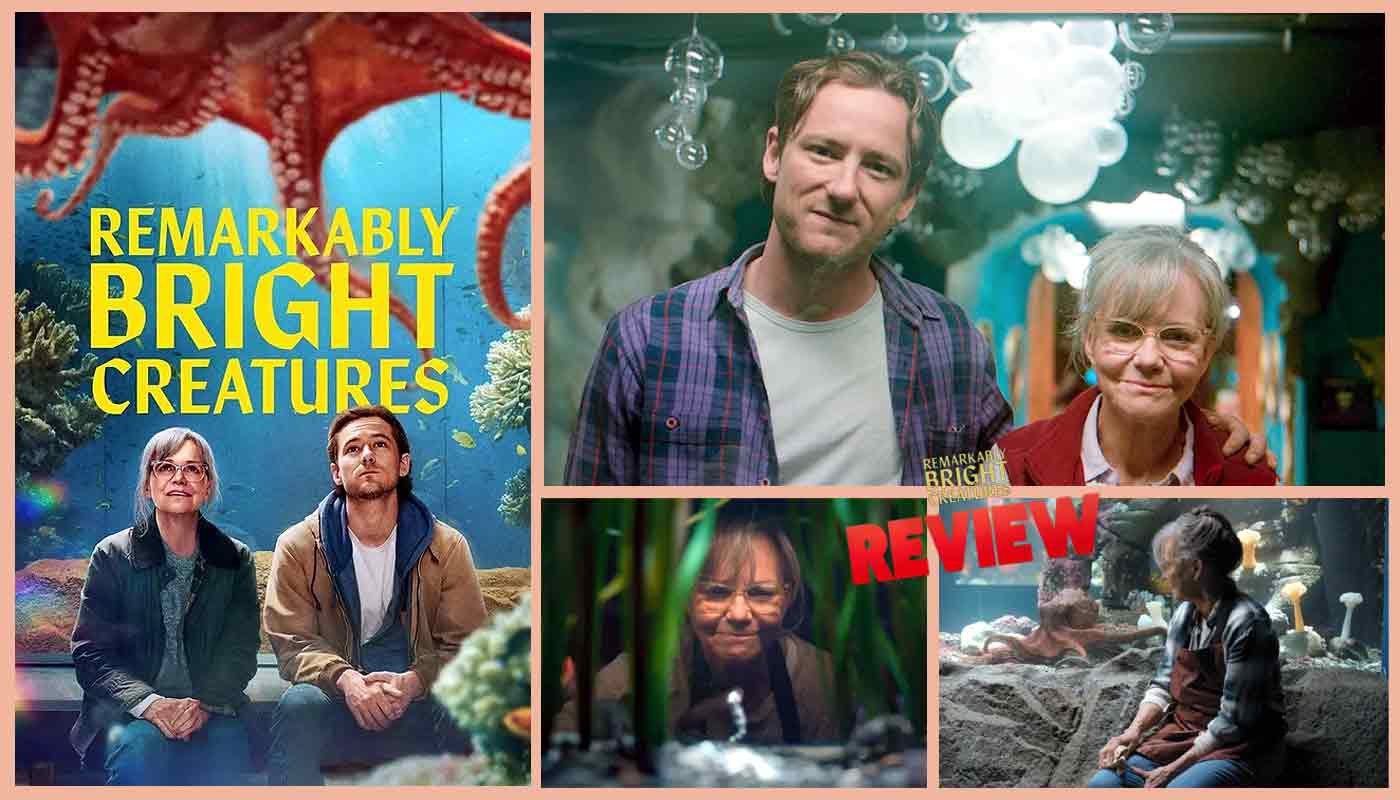
Remarkably Bright Creatures movie review – explores why the Netflix movie is a beautifully written emotional drama that grows more fulfilling with every passing scene
Review by Kausalya Rachavelpula
Olivia Newman’s Remarkably Bright Creatures is the kind of film that reminds you how powerful disciplined screenwriting can be. At a time when so many movies spend their first forty minutes drowning in exposition and endless “world-building,” this film understands a simple but often forgotten truth: every scene matters. Nothing here feels written merely to stall before the “real story” begins. The narrative unfolds with confidence, trusting the audience to emotionally settle into the world without spoon-feeding every detail. That trust becomes one of the film’s greatest strengths.
From its opening moments, the screenplay moves with quiet purpose. Conversations reveal character instead of functioning as information dumps. Emotional beats emerge naturally rather than being artificially highlighted with melodrama. Newman’s direction carries the same patience and restraint, allowing silence, glances, and atmosphere to speak as loudly as dialogue. The result is a film that feels intimate and deeply human, even while centering around an unusual emotional connection involving an octopus. Critics have highlighted the film’s warmth and emotional sincerity, and it’s easy to see why.
What makes the film especially effective is how beautifully it grows as it progresses. Many emotional dramas peak too early, exhausting their strongest moments halfway through before limping toward a predictable ending. Olivia Newman avoids that completely. The emotional depth keeps expanding scene after scene, and by the final act the movie reaches a level of tenderness that feels genuinely earned. The payoff is not manufactured through dramatic twists or loud emotional manipulation; instead, it emerges from careful character work and emotional honesty.
At the center of everything is Sally Field, delivering a performance filled with grace, sorrow, and quiet resilience. She doesn’t demand sympathy from the audience; she simply exists within the character so fully that empathy arrives naturally. Every expression carries years of loneliness and memory. Field gives the film its emotional spine, grounding even its more whimsical moments in something authentic and painfully relatable. Reviews across multiple publications have praised her performance as the heart of the movie, and deservedly so.
Then there is Lewis Pullman, whose performance works in a completely different but equally affecting way. There’s something remarkably vulnerable about his screen presence here. Without overplaying emotion, he carries a visible sadness and uncertainty that immediately draws sympathy. His face alone communicates confusion, longing, and hope in ways dialogue never could. Pullman and Field share a chemistry rooted less in dramatic exchanges and more in emotional understanding, and that subtle connection gives the film much of its warmth.
The movie’s emotional rhythm is another reason it works so well. It never rushes toward catharsis, yet it never drags either. The pacing feels purposeful because every scene contributes either to character, emotion, or thematic progression. That sense of narrative economy is rare in modern streaming dramas, many of which mistake slowness for depth. Here, the storytelling is calm but never empty.
Visually, the film also possesses a gentle beauty that perfectly complements its themes of grief, healing, loneliness, and unexpected companionship. The water bodies, Tova Sullivan’s wooden house, the aquarium setting becomes more than just a backdrop; it turns into an emotional space where broken people quietly rediscover connection. Even the film’s softer, quieter moments carry emotional weight because Newman directs them with sincerity rather than sentimentality.
By the ending, Remarkably Bright Creatures becomes emotionally fulfilling. The payoff lands because the film has patiently earned every feeling it asks from the audience. It leaves behind a lingering warmth that many emotionally driven films strive for but rarely achieve. Beautifully written, delicately directed, and anchored by deeply compassionate performances, this is a film that understands the value of restraint, purpose, and emotional truth.