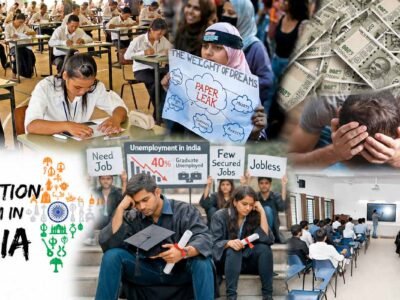

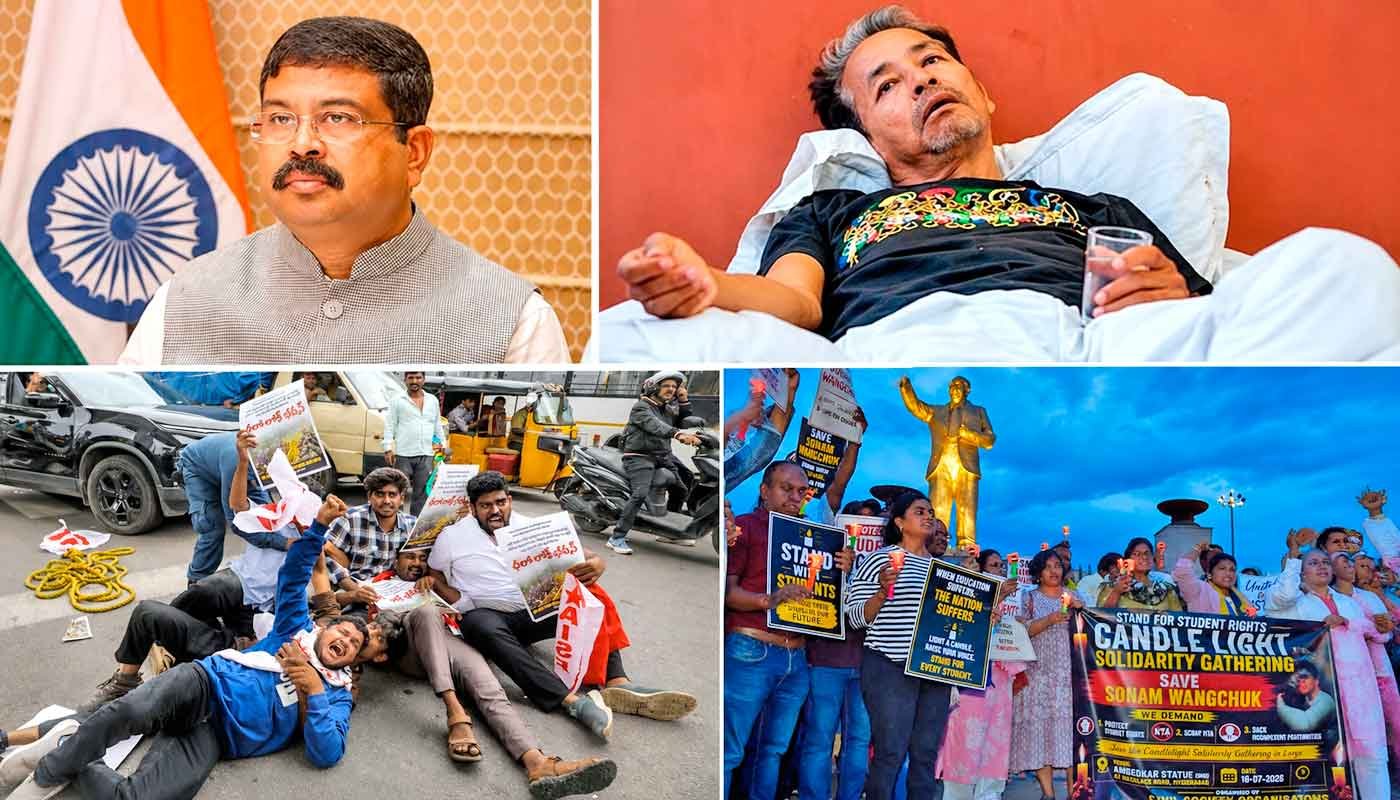
The nationwide movement demanding accountability over alleged examination irregularities continued to gather momentum on Tuesday as Hyderabad witnessed widespread solidarity protests following the police crackdown on demonstrators in New Delhi. Hundreds of students, activists, artists, and members of civil society assembled across the city to express support for education activist Sonam Wangchuk, condemn the alleged use of force against peaceful protesters in the national capital, and renew calls for systemic reforms in India’s examination process.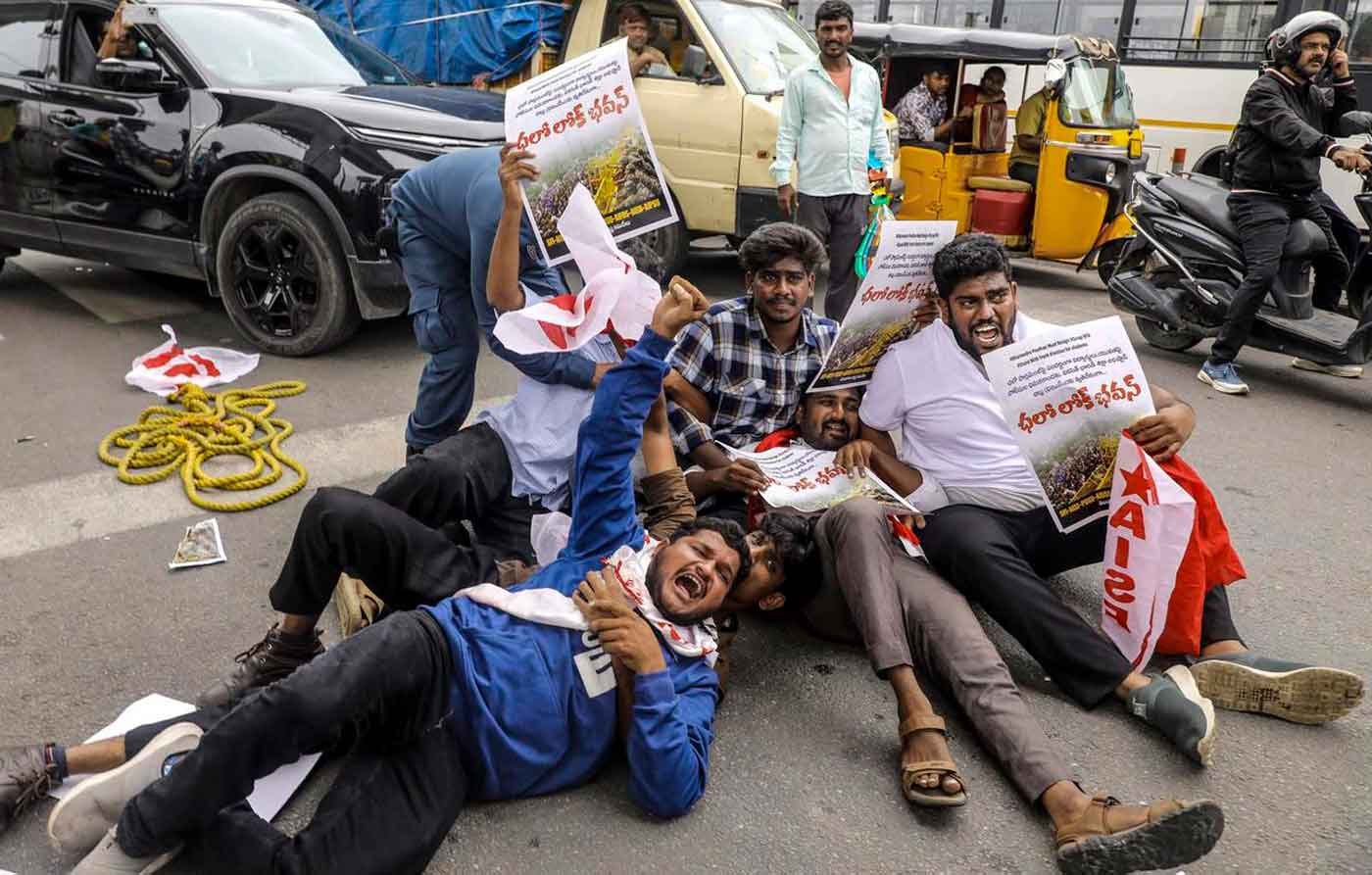
The largest gathering took place at the Press Club in Somajiguda, where slogans such as “Inquilab Zindabad,” “Jai Bhim,” “Dharmendra Pradhan should resign,” and “We want justice” echoed through the venue as participants demanded transparency, accountability, and democratic freedoms. The meeting drew students, academics, professionals, and social activists united by concerns that the issue extended far beyond a single examination controversy.
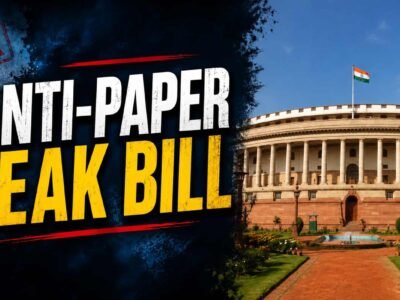
The Hyderabad gathering came just a day after dramatic scenes unfolded in Delhi, where thousands of protesters marching towards Parliament were stopped by police, with several opposition leaders, student activists, and demonstrators detained. Speakers at the Press Club described the alleged police action as an assault on the constitutional right to peaceful protest, arguing that democratic dissent must never be met with force.
Students attending the gathering stressed that the protests were no longer solely about supporting Sonam Wangchuk’s ongoing hunger strike. Instead, they argued that the movement had evolved into a broader demand for transparent examinations, institutional accountability, and the protection of democratic rights.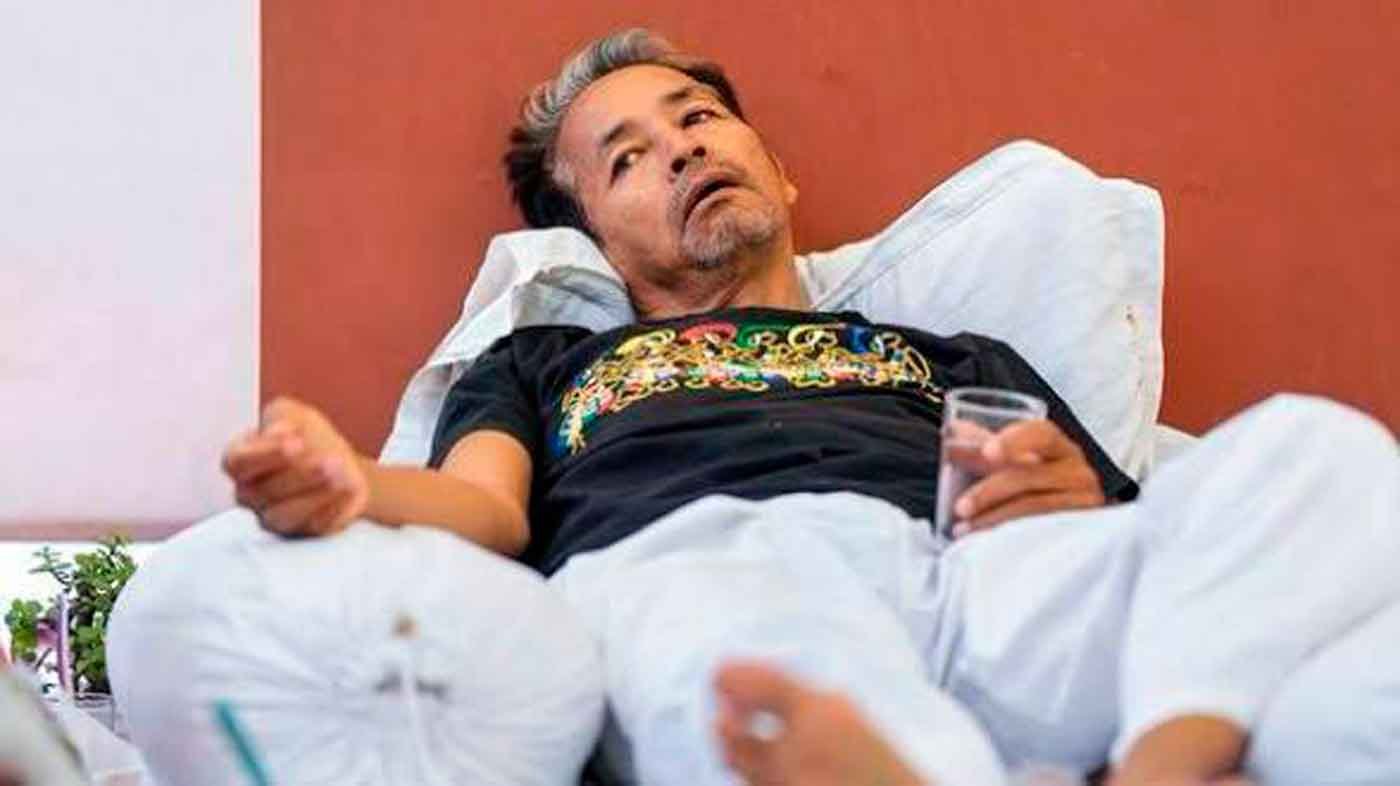
Many speakers questioned whether young people raising concerns over their futures should face police action instead of meaningful engagement from policymakers.
Following the meeting at the Press Club, demonstrators marched towards People’s Plaza, where another large protest had been organised jointly by the Disha Students Organization and the Naujawan Bharat Sabha. Despite intermittent rain, hundreds continued to participate, carrying placards and chanting slogans demanding justice for students affected by alleged examination irregularities.
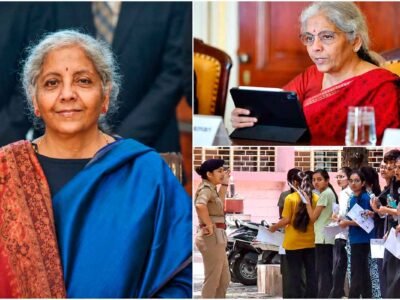
The protesters called for an independent investigation into the alleged police brutality witnessed during the Delhi demonstrations, particularly reports concerning the treatment of women and young protesters. They also reiterated demands for the resignation of Union Education Minister Dharmendra Pradhan, accountability for alleged examination irregularities, and structural reforms to restore public confidence in India’s competitive examination system.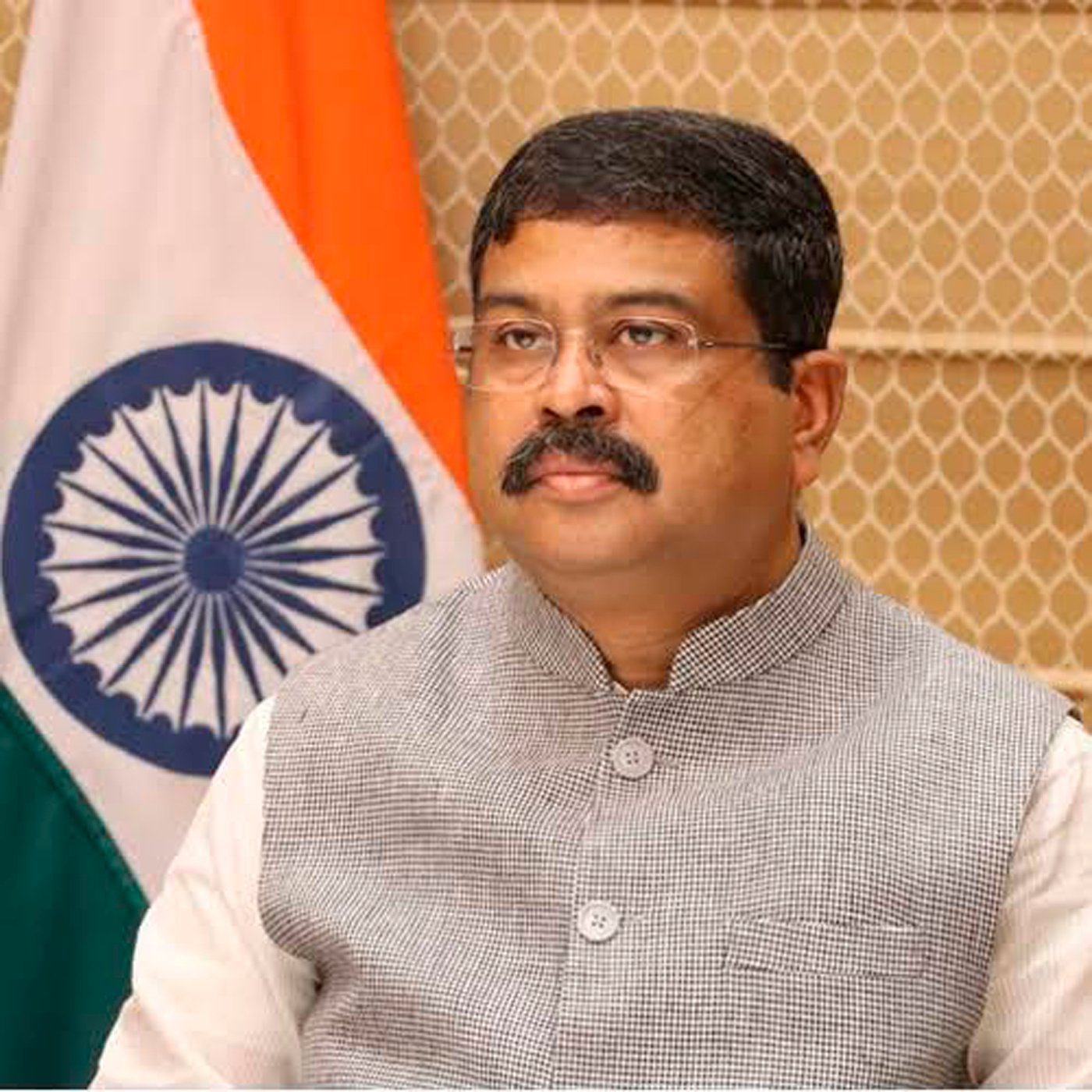
Several participants also demanded that the National Testing Agency (NTA) undergo major institutional reforms, with some calling for the existing system to be completely overhauled following repeated controversies surrounding national entrance examinations.
The movement extended beyond conventional street demonstrations. At Sundarayya Vignana Kendram in Gachibowli, artists, writers, musicians, and cultural activists organised a performance resistance programme, using theatre, poetry, music, and spoken word to express solidarity with students and highlight concerns surrounding freedom of expression and democratic participation.
Elsewhere, groups gathered near the Dr. B.R. Ambedkar statue at Necklace Road, where slogans demanding justice, educational accountability, and democratic rights continued late into the evening. Protesters described Ambedkar’s ideals of constitutional democracy and equality as central to the movement, arguing that students seeking fair opportunities deserved institutions they could trust.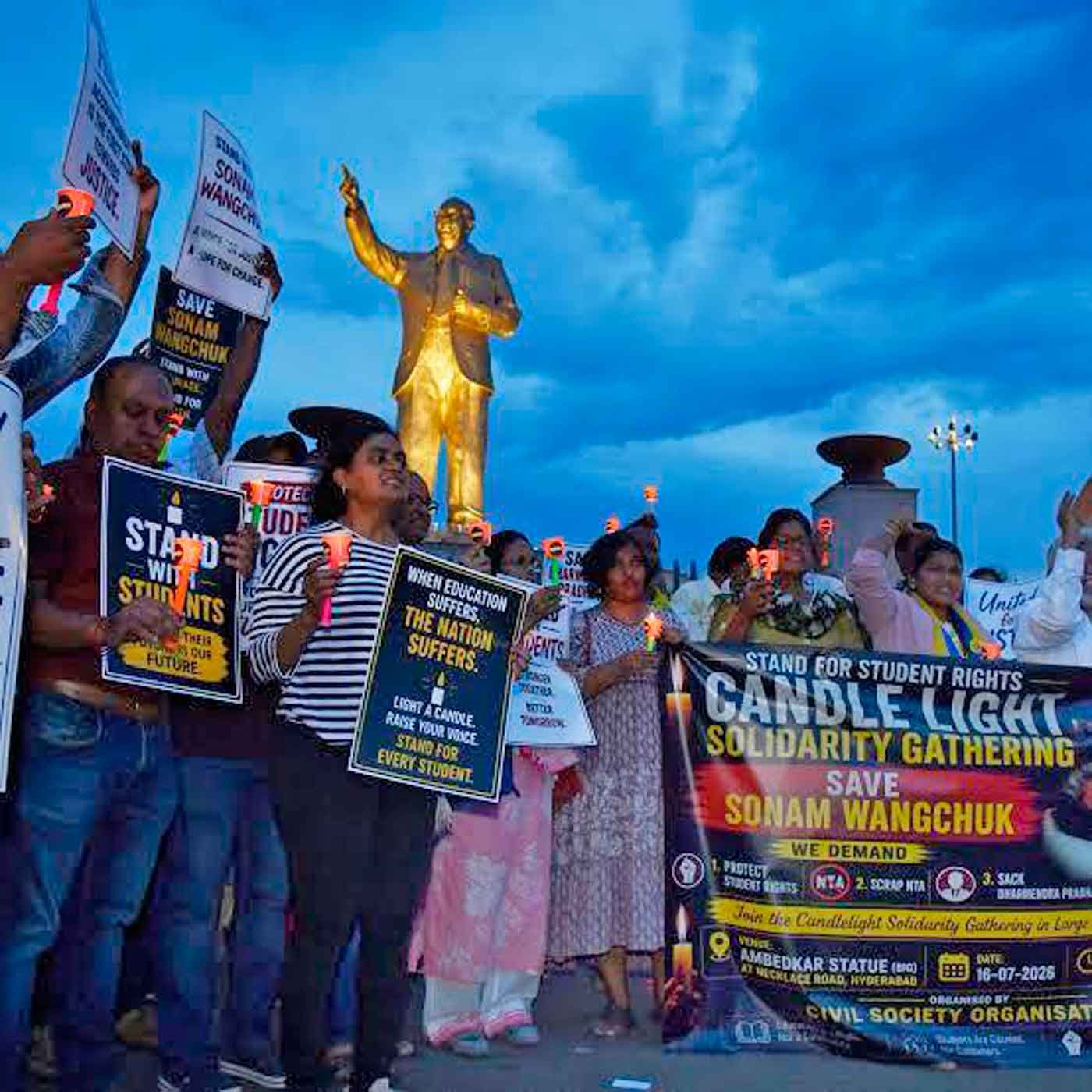
The demonstrations in Hyderabad reflect how what began as outrage over alleged examination irregularities has transformed into a much wider public conversation about governance, transparency, and civil liberties. For many participants, the movement is no longer confined to a single examination or a single protest site, it has become a larger call for institutions that are accountable, examinations that are fair, and a democracy where peaceful dissent is protected rather than suppressed.
As solidarity protests continue to emerge across different cities, Hyderabad’s response signals that the demand for educational reforms and democratic accountability is resonating far beyond the national capital, with citizens from diverse backgrounds joining a movement they believe is about safeguarding the future of India’s students.