

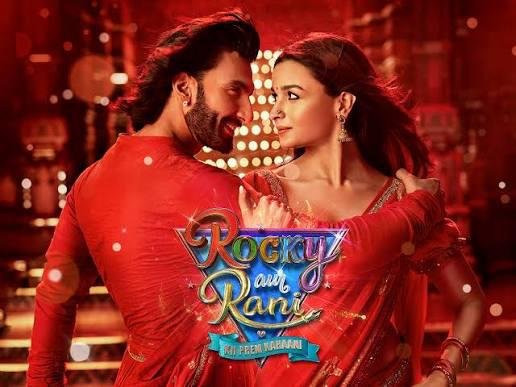
Three Years of Rocky Aur Rani Kii Prem Kahaani: How Karan Johar Redefined Love, Masculinity and Family
Three years after its release, Rocky Aur Rani Kii Prem Kahaani continues to stand out as one of Bollywood’s most refreshing romantic dramas. At a time when mainstream Hindi cinema often leaned on familiar formulas, Karan Johar returned to the director’s chair with a film that blended grand romance with conversations about feminism, masculinity, family, identity, and generational trauma.
While wrapped in colourful songs, lavish sets, and trademark Bollywood spectacle, the film quietly questioned many of the stereotypes that Hindi cinema had normalized for decades.
Rani Chatterjee: A Heroine Who Never Apologises for Her Ambition

Unlike the traditional Bollywood heroine waiting to be rescued, Rani Chatterjee knows exactly who she is.
She is outspoken, politically aware, career-driven, and financially independent. As a successful television journalist, Rani refuses to shrink herself to fit patriarchal expectations. She challenges sexism within her relationship, within both families, and within society without ever being portrayed as “too much.”
The film celebrates a woman whose confidence is not softened to make others comfortable, a rarity even in contemporary commercial cinema.
Rocky Randhawa: Redefining Bollywood Masculinity

Perhaps the film’s biggest surprise is Rocky himself. Played effortlessly by Ranveer Singh, Rocky initially appears to embody the stereotypical loud, macho Punjabi hero. But beneath the flamboyant exterior lies an emotionally intelligent man who is unafraid to cry, express affection, seek advice, admit mistakes, or support the woman he loves.
Instead of presenting masculinity as dominance, the film portrays it as empathy.
Rocky’s willingness to challenge his own upbringing becomes one of the film’s strongest emotional arcs, reminding audiences that vulnerability is not weakness.
A Kathak-Dancing Father Challenges Gender Expectations
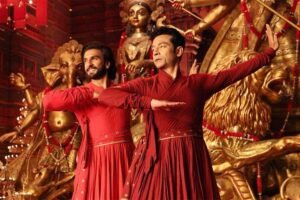
One of the film’s most quietly revolutionary characters is Rani’s father.
In many Indian households, classical dance has often been unfairly stereotyped as a feminine pursuit. Yet Rani’s father proudly embraces Kathak, performing with grace, confidence, and dignity. The film never treats his passion as a joke.
Instead, it normalises artistic expression beyond gender stereotypes, reminding viewers that interests and professions should never be restricted by societal expectations of masculinity.
Love Is Not Enough Without Respect

Unlike many romantic films where love alone solves every problem, Rocky Aur Rani Kii Prem Kahaani argues that compatibility also requires mutual respect. The couple constantly disagrees. They argue over politics. They challenge each other’s beliefs. They confront uncomfortable truths about privilege and family. Yet neither attempts to erase the other’s individuality.
The relationship succeeds because both continue learning from one another rather than demanding change.
A Family Drama That Questions Patriarchy

Much of the film unfolds inside Rocky’s deeply patriarchal household. Women are expected to cook, obey, and remain invisible while men exercise authority. Rather than treating these dynamics as harmless family traditions, Karan Johar directly critiques them.
The women in Rocky’s family slowly begin reclaiming their voices, ambitions, and autonomy, making their liberation one of the film’s most satisfying journeys. The message is clear: tradition should never become an excuse for inequality.
Generational Trauma Doesn’t End on Its Own
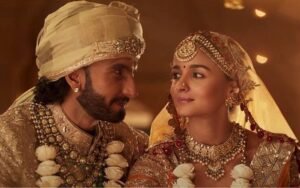
The film also explores how families often inherit harmful behaviours without questioning them. Rigid gender roles. Emotional suppression. Control disguised as love. Silence mistaken for respect. Each generation passes these expectations to the next until someone chooses to break the cycle.
Rocky and Rani become that generation. Rather than rebelling for the sake of rebellion, they encourage their families to confront beliefs that no longer serve them.
Culture Is Celebrated, Not Weaponised
One of the film’s greatest strengths is that it never portrays one culture as superior to another. The flamboyant Punjabi Randhawas and the intellectual Bengali Chatterjees initially stereotype each other.
But as the story unfolds, both families begin appreciating each other’s traditions, food, language, music, and values. Instead of asking either family to abandon their identity, the film celebrates coexistence.
Women Are Allowed to Be Complex
Nearly every major female character undergoes meaningful development.
Whether it is Rani, Rocky’s mother, grandmother, or other women within the Randhawa household, the film gives them emotional depth beyond simply supporting male characters.
Their aspirations, disappointments, sacrifices, and courage become central to the narrative rather than existing on the sidelines.
Karan Johar’s Modern Comeback
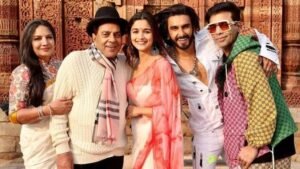
Following a long gap as director, Rocky Aur Rani Kii Prem Kahaani marked Karan Johar’s return with a film that retained his signature glamour while embracing more contemporary conversations.
It proved that commercial entertainers can still tackle feminism, toxic masculinity, emotional vulnerability, generational conflict, and social change without losing their entertainment value.
Three years later, the film remains more than just another Bollywood love story.
It is a reminder that romance becomes richer when both people are allowed to remain fully themselves, that strength can coexist with vulnerability, and that families grow stronger not by preserving outdated traditions, but by finding the courage to question them.
Perhaps that is why Rocky Aur Rani Kii Prem Kahaani continues to resonate.
Because beneath its songs, humour, and spectacle lies a simple but powerful idea:
Love should never ask anyone to become less than who they are.