


Few cultural projects carry the artistic prestige of the Pirelli Calendar. What began in 1964 as a promotional calendar produced by an Italian tyre manufacturer has evolved into one of photography’s most exclusive and influential annual publications, featuring the work of some of the world’s greatest photographers. Over six decades, it has transformed from glamour photography into an artistic document reflecting culture, identity, and changing perceptions of beauty.
For its 2027 edition, the calendar turns its attention to India, not as a tourist destination or a collection of postcard-perfect monuments, but as a living, breathing country viewed through multiple perspectives. At the heart of that story lies one deeply personal collaboration: the legacy of legendary photographer Raghu Rai, continued by his daughter, Avani Rai.
A Legacy Continued, Not Recreated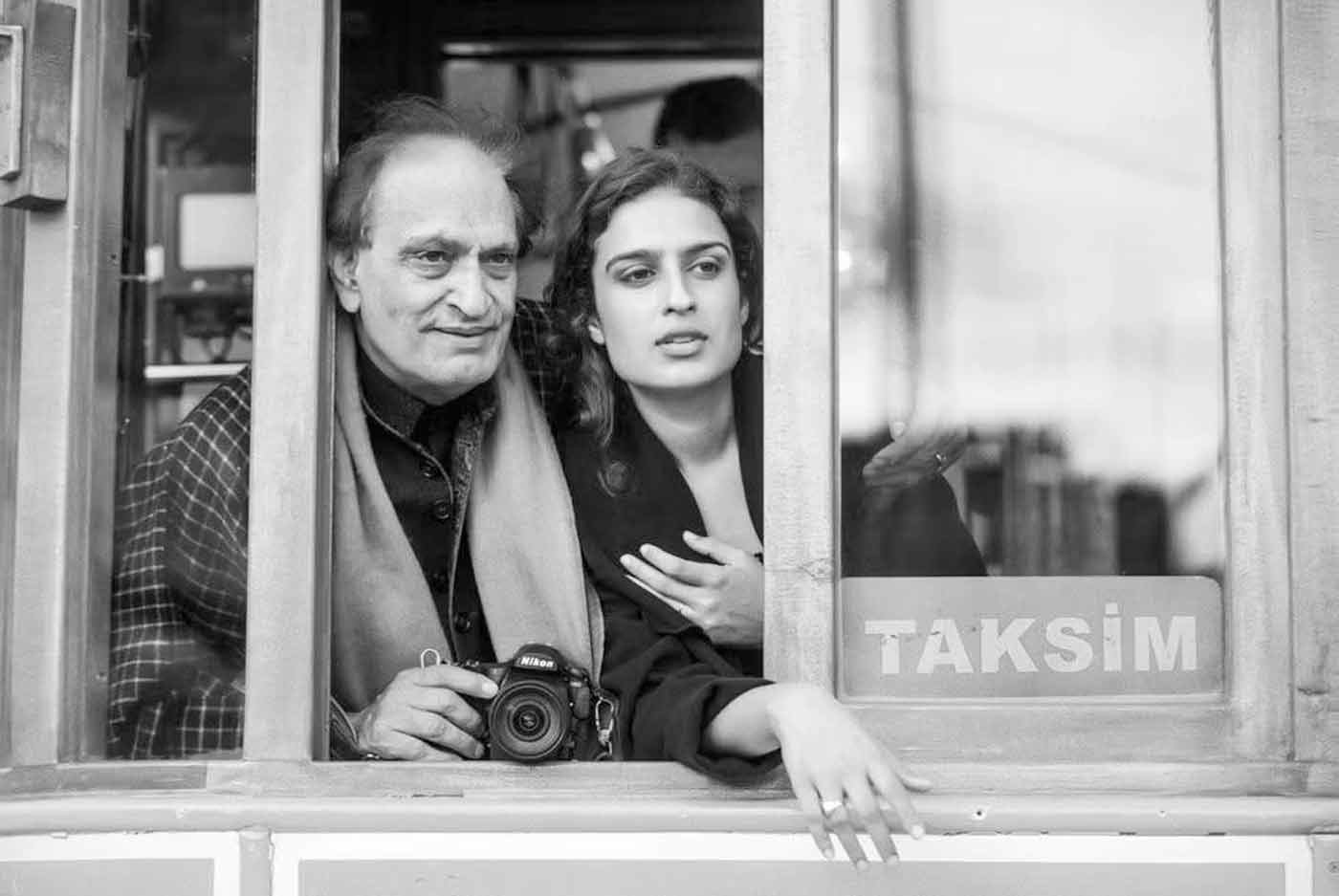
Among Rajasthan’s historic landscapes and bustling streets, Avani Rai found herself standing in two roles simultaneously, both behind and in front of the camera.
Following the passing of Raghu Rai, she stepped into a project that had originally been conceived alongside him. Rather than attempting to imitate one of India’s greatest photographers, Avani embraced a far more honest approach: carrying his vision forward while remaining unmistakably herself.
As she has acknowledged, recreating her father’s style would never have been possible because his way of seeing the world belonged uniquely to him. Instead, she chose dialogue over duplication, allowing her own photographic language to exist alongside his timeless work.
India Through Two Very Different Lenses
The 2027 calendar brings together two contrasting yet complementary artistic voices. Renowned Norwegian photographer Solve Sundsbo approaches India as an observer, carefully constructing portraits that celebrate Indian personalities without pretending to define the country itself.
Avani, meanwhile, photographs from within. Her relationship with India is deeply personal, shaped by memory, family, and lived experience rather than discovery. The result is not a competition between perspectives but a conversation, one offering an outsider’s admiration and the other an insider’s emotional understanding.
Together, they remind viewers that no single photograph can ever fully represent a nation as layered and complex as India.
Past Meets Present
One of the calendar’s most fascinating creative ideas was a concept known as “Past Forward.”
Rather than leaving Raghu Rai’s unpublished archive untouched, Avani incorporated many of his decades-old photographs into contemporary settings. Historic frames became visual companions to present-day India, allowing the past and present to coexist within the same image.
Walking through the streets of Old Delhi, she positioned herself alongside photographs captured by her father thirty, forty, and even sixty years earlier, creating images that feel less like recreations and more like conversations across generations.
The project becomes an exploration of inheritance, not preserving history under glass, but allowing it to continue evolving.
A Celebration of Remarkable Indian Women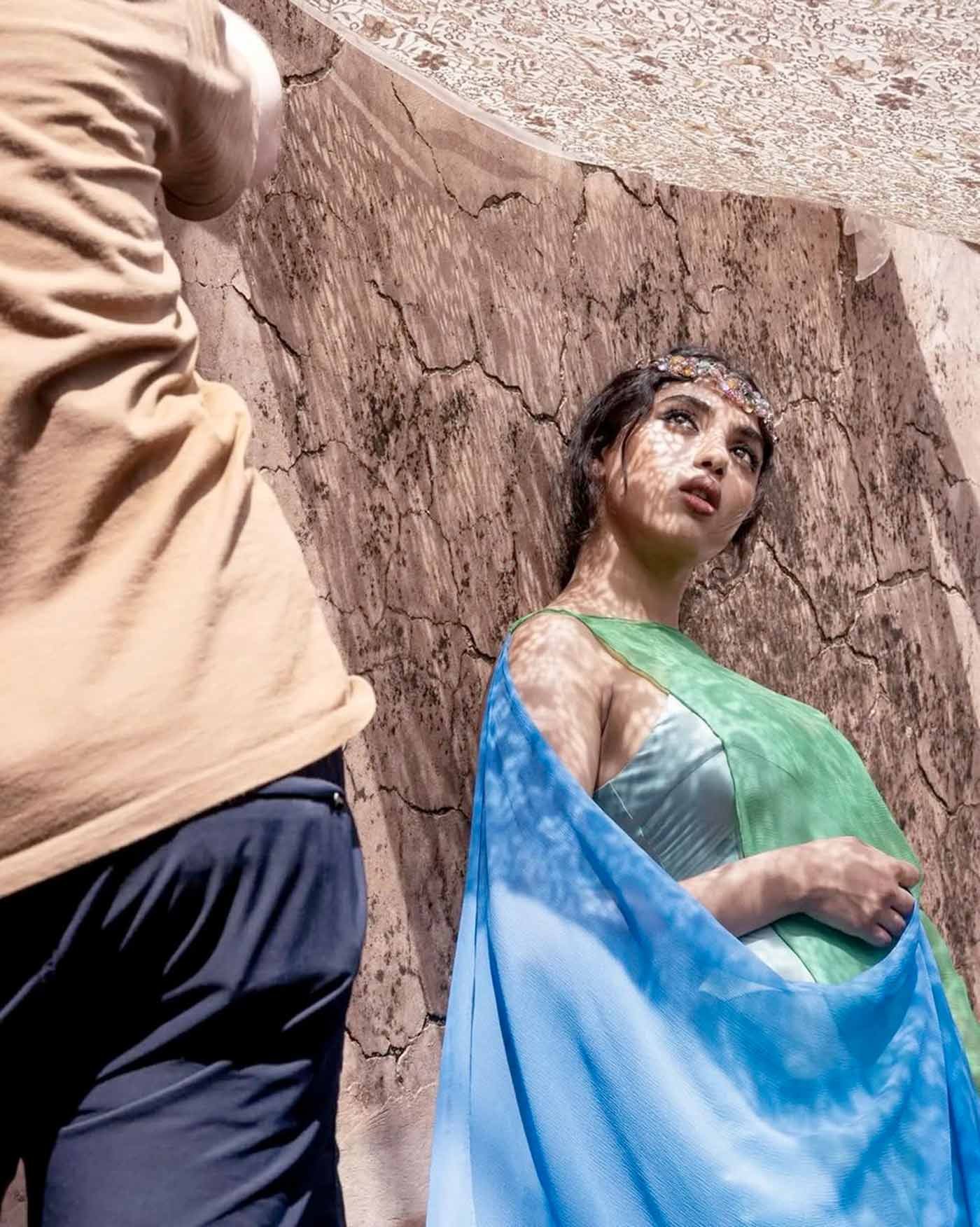
The calendar assembles an extraordinary cast of Indian women whose achievements extend far beyond fashion. Featured personalities include Freida Pinto, Padma Lakshmi, Anoushka Shankar, Lakshmi Menon, Bhavita Mandava, Avantika Vandanapu, Avani Rai, Rupi Kaur, and Aditi Rao Hydari.
Rather than presenting them merely as celebrities, the calendar positions them as representatives of modern Indian creativity across cinema, literature, music, photography, food, and fashion.
Collectively, they embody an India that is confident, global, and deeply connected to its cultural roots.
Photography That Finds Beauty Beyond Spectacle
Some of the calendar’s most memorable images emerged through patience rather than extravagance. At Jaigarh Fort in Jaipur, Bhavita Mandava was photographed against centuries-old stone architecture, with the creative team waiting for natural light to transform the frame before pressing the shutter.
Elsewhere, Padma Lakshmi spent nearly forty minutes partially submerged in water surrounded by lotus flowers, creating one of the calendar’s most striking portraits.
These moments highlight a philosophy that values observation over speed, allowing light, landscape, and emotion to shape each image naturally.
Moving Beyond Exoticism
For Padma Lakshmi, participating in the project represented something larger than another fashion shoot. She has often spoken about how India has historically been portrayed through an exotic lens in Western media. Projects like the Pirelli Calendar, however, provide an opportunity to present Indian faces with dignity, elegance, and individuality rather than reducing them to cultural stereotypes.
It’s a subtle yet significant shift, one where India isn’t simplified for international audiences but celebrated in all its complexity.
The India Raghu Rai Spent a Lifetime Photographing
Across more than sixty years, Raghu Rai documented India’s defining moments with remarkable honesty. From political upheavals and social movements to the Bangladesh Liberation War and the devastating Bhopal Gas Tragedy, his photographs consistently rejected romanticized portrayals of the country. Instead, they embraced contradiction, humanity, resilience, and everyday life.
His images never searched for perfection. They searched for truth. That commitment continues to shape the 2027 calendar, even in his absence.
Looking Outside the Screen
One lesson Avani remembers most vividly from childhood came long before she became a photographer herself. Whenever she became absorbed in her phone during family drives, her father would gently remind her to lift her head and observe the world outside.
That simple instruction, to look, truly look, echoes throughout the calendar. Whether through Raghu’s documentary eye, Avani’s deeply personal perspective, or Sundsbo’s carefully constructed portraits, the project encourages viewers to slow down, observe patiently, and appreciate the countless stories hidden within everyday life.
More Than a Calendar
The Pirelli Calendar 2027 ultimately refuses to offer a single definition of India. Instead, it embraces multiple truths. There is the India remembered by Raghu Rai.
The India rediscovered by Avani. The India encountered by Solve Sundsbo. The India found in ancient forts, crowded streets, quiet lakes, powerful women, artisans, colour, memory, and movement.
Rather than claiming to explain the country, the calendar acknowledges that India can never be fully captured in one photograph, or even fifty-two.
Perhaps that is its greatest achievement. It doesn’t present India as something to be understood once. It invites us to keep looking.