

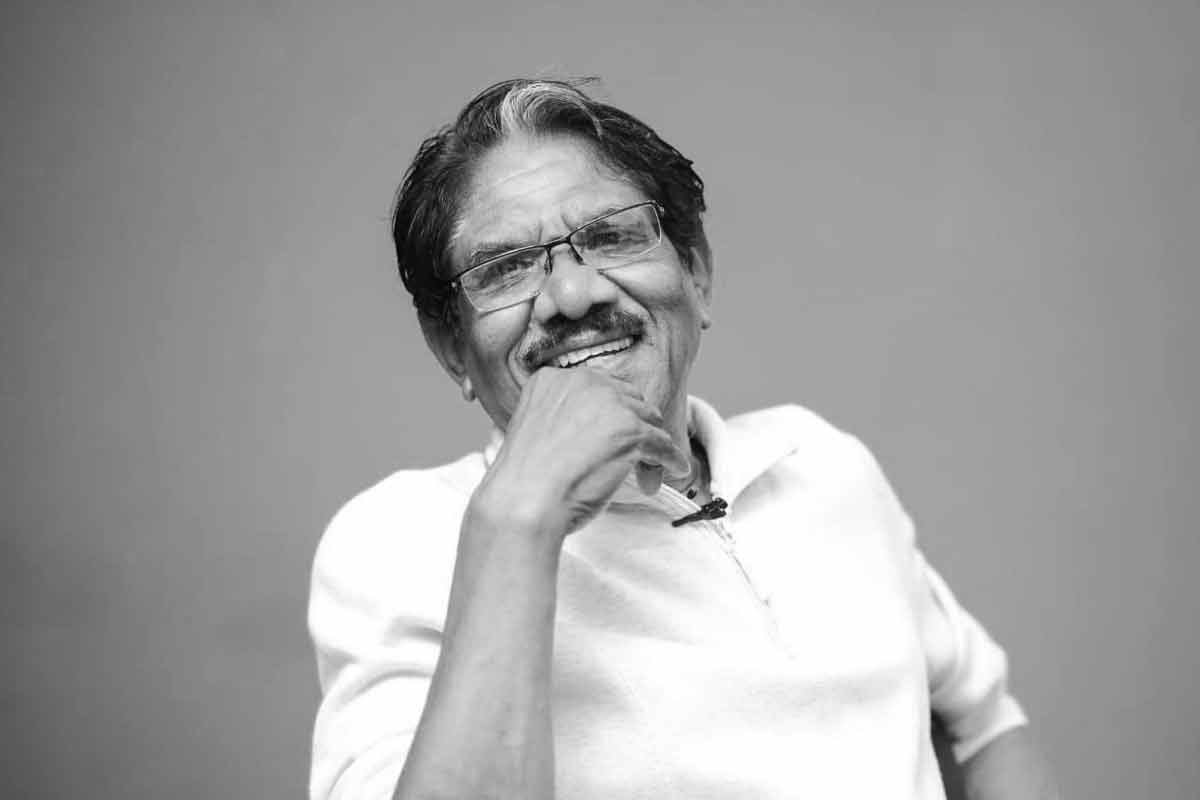
Bharathiraja: The Filmmaker Who Brought the Smell of the Soil to Indian Cinema, breathed his last. But, he will live forever through his timeless classics
There is a generation of Telugu movie lovers who still remember the first time they watched Seethakoka Chilaka. The wind-swept fields, the innocence of first love, the music that seemed to drift out of the landscape itself and the feeling that these were not movie characters but real people living real lives. For many, that film was also their introduction to a filmmaker named Bharathiraja.
Decades before “pan-India” became a marketing term, Bharathiraja’s stories were travelling across linguistic borders and finding homes in the hearts of audiences who spoke different languages but recognised the emotions he placed on screen. His films were dubbed, remade, discussed and cherished across South India. Telugu audiences embraced him not as a Tamil filmmaker but as one of their own.
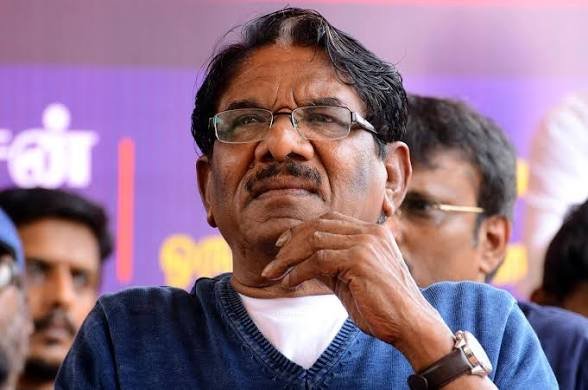
With Bharathiraja’s passing at the age of 84, Indian cinema bids farewell to a visionary who transformed the grammar of filmmaking, discovered generations of stars and brought a new realism to the screen. Yet his legacy is not confined to awards, box-office records or critical acclaim. It lives in every filmmaker who believes stories rooted in local culture can speak to universal emotions.
Born Chinnasaamy Periyamaya Thevar in a small village near Theni in Tamil Nadu, Bharathiraja never forgot where he came from. In interviews over the years, he often spoke about his deep connection to rural life and how it shaped his storytelling instincts. That connection would become the defining force of his cinema.
When he made his directorial debut with 16 Vayathinile in 1977, South Indian cinema was still heavily dependent on studio sets and stylised storytelling. Bharathiraja changed that almost overnight. He took the camera out into real locations. Villages ceased to be decorative backdrops and became living, breathing worlds filled with dreams, heartbreaks, prejudices and passions.
The impact was revolutionary.
The success of 16 Vayathinile not only established Bharathiraja as a major filmmaker but also demonstrated that audiences were ready for a different kind of cinema. The film remains a landmark for its realistic portrayal of rural life and for the memorable performances of Kamal Haasan, Rajinikanth and Sridevi.
What followed was one of the most extraordinary runs in Indian cinema.
Films such as Kizhakke Pogum Rail, Sigappu Rojakkal, Alaigal Oivathillai, Mann Vasanai, Mudhal Mariyathai, Vedham Pudhithu and Karuthamma cemented his reputation as a filmmaker who could combine artistic integrity with popular appeal.
Many of these films travelled far beyond Tamil Nadu.
Kizhakke Pogum Rail found a devoted audience in Telugu as Toorpu Velle Railu directed by Bapu. Alaigal Oivathillai became Seethakoka Chilaka, one of the most beloved romantic dramas in Telugu cinema. Mann Vasanai reached Telugu audiences through dubbed versions and television screenings, while several other Bharathiraja films became familiar to viewers across Andhra Pradesh and Telangana through remakes and repeated broadcasts.
His stories crossed borders because they were deeply human.
For Telugu audiences, however, Seethakoka Chilaka remains the defining Bharathiraja experience.
Released in the early 1980s, the film introduced a freshness rarely seen in mainstream romantic dramas. The story of young love confronting social barriers resonated deeply with audiences. The performances, the natural locations, the lyrical storytelling and Ilaiyaraaja’s unforgettable music helped transform it into a timeless classic.
Yet Bharathiraja’s contribution to Telugu cinema extended beyond that single film.
In 1987, he directed Aaradhana, starring Chiranjeevi and Suhasini. Coming at a time when Chiranjeevi was rapidly emerging as Telugu cinema’s biggest star, the film showcased a more vulnerable and romantic side of the actor. Bharathiraja brought his trademark visual sensitivity and emotional depth to the project, creating a film that remains fondly remembered by admirers of both the actor and director.
What distinguished Bharathiraja from many of his contemporaries was his ability to discover talent before the industry recognised it.
He introduced or provided breakthrough opportunities to several actors who would later become major stars. Karthik became a sensation through Alaigal Oivathillai. Revathi was introduced in Mann Vasanai. Radha and Radhika emerged as significant screen presences through his films. Time and again, Bharathiraja chose newcomers over established names because he valued authenticity above familiarity.
His confidence in fresh talent helped reshape the industry’s approach to casting.
The list of actors whose careers were influenced by Bharathiraja is remarkable. Kamal Haasan, Rajinikanth, Sridevi, Karthik, Revathi, Radha, Radhika, Napoleon and many others found defining moments in films directed by him.
Yet it was not merely his eye for talent that made him legendary.
It was his filmmaking style.
Bharathiraja possessed a rare ability to make landscapes part of the narrative. His villages were never postcard images. They were complex social spaces where love, caste, ambition, honour and heartbreak collided. His camera lingered on fields, rivers, rain-soaked paths and weathered faces, creating an intimacy that drew audiences into the world of his characters.
He trusted silence.
He trusted expressions.
He trusted nature.
At a time when mainstream cinema often relied on theatricality, Bharathiraja embraced realism. His characters spoke like ordinary people. They made mistakes. They carried emotional scars. They lived in recognisable worlds.
That authenticity became his signature.
Even when he ventured away from village dramas, as he did with the psychological thriller Sigappu Rojakkal or the stylish thriller Tik Tik Tik, his storytelling retained a distinct emotional truth that audiences recognised instantly.
His films were also notable for confronting difficult social issues. Vedham Pudhithu challenged caste prejudices with uncommon courage. Karuthamma addressed female infanticide long before the issue became a subject of mainstream discussion. Through cinema, Bharathiraja consistently engaged with the realities of the society around him.
In later years, he reinvented himself as an actor.
A younger generation that had not grown up with his directorial classics came to know him through his performances on screen. Whether playing village elders, fathers or authority figures, Bharathiraja brought remarkable authenticity to his roles. Films such as Pandiyanadu, Kurangu Bommai, Thiruchitrambalam and Vaathi showcased his natural ease as a performer and earned him a new wave of admirers.
Few filmmakers manage to remain relevant across five decades.
Fewer still influence multiple generations of actors, directors and audiences.
Bharathiraja achieved both.
Today, many celebrated filmmakers who champion rooted storytelling, realistic characters and regional identities are working within a cinematic tradition he helped establish. Long before authenticity became fashionable, Bharathiraja demonstrated that local stories could possess universal appeal.
His achievements earned him National Awards, State Awards and numerous honours, but his true legacy lies elsewhere.
It lies in the villages he immortalised.
It lies in the stars he discovered.
It lies in the generations of filmmakers he inspired.
And it lies in the countless viewers who found pieces of their own lives reflected in his stories.
For Telugu audiences, he will always remain the creator of Seethakoka Chilaka and Aaradhana. For Indian cinema, he will remain the filmmaker who changed the landscape of storytelling itself.
The man who brought the smell of the soil to the silver screen may have taken his final bow, but the worlds he created will continue to live on—timeless, authentic and unforgettable.