

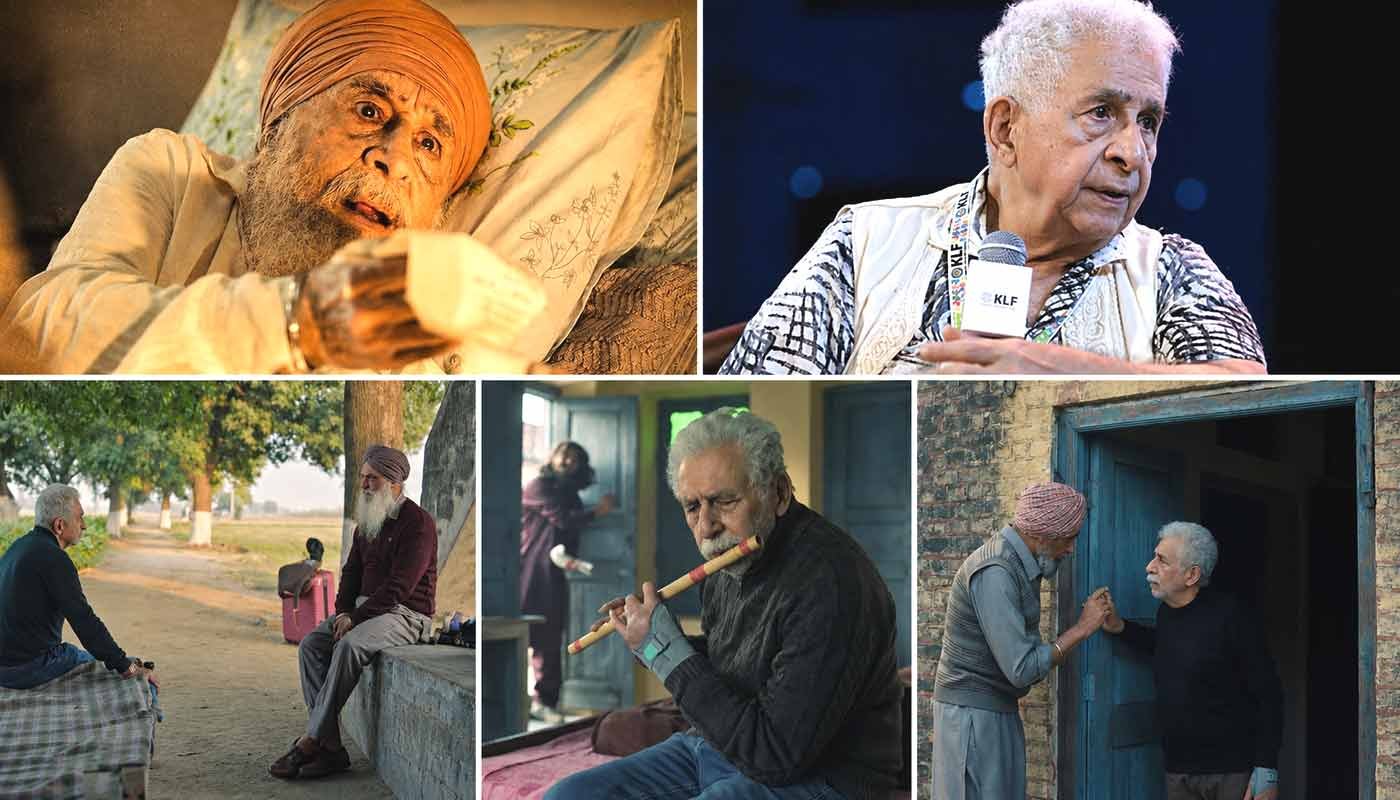
There are films that depict a place. And then there are films that seem to listen to it. Gurvinder Singh’s Rehmat belongs firmly to the latter category. Making its world premiere in the main competition at the 79th Locarno Film Festival, the film approaches Punjab not through spectacle or nostalgia, but through the silences left behind by violence, displacement and political memory.
This is a Punjab that could belong to the present day. It could also be 1995. It could be 1984. The dates almost stop mattering because the wounds have never entirely left.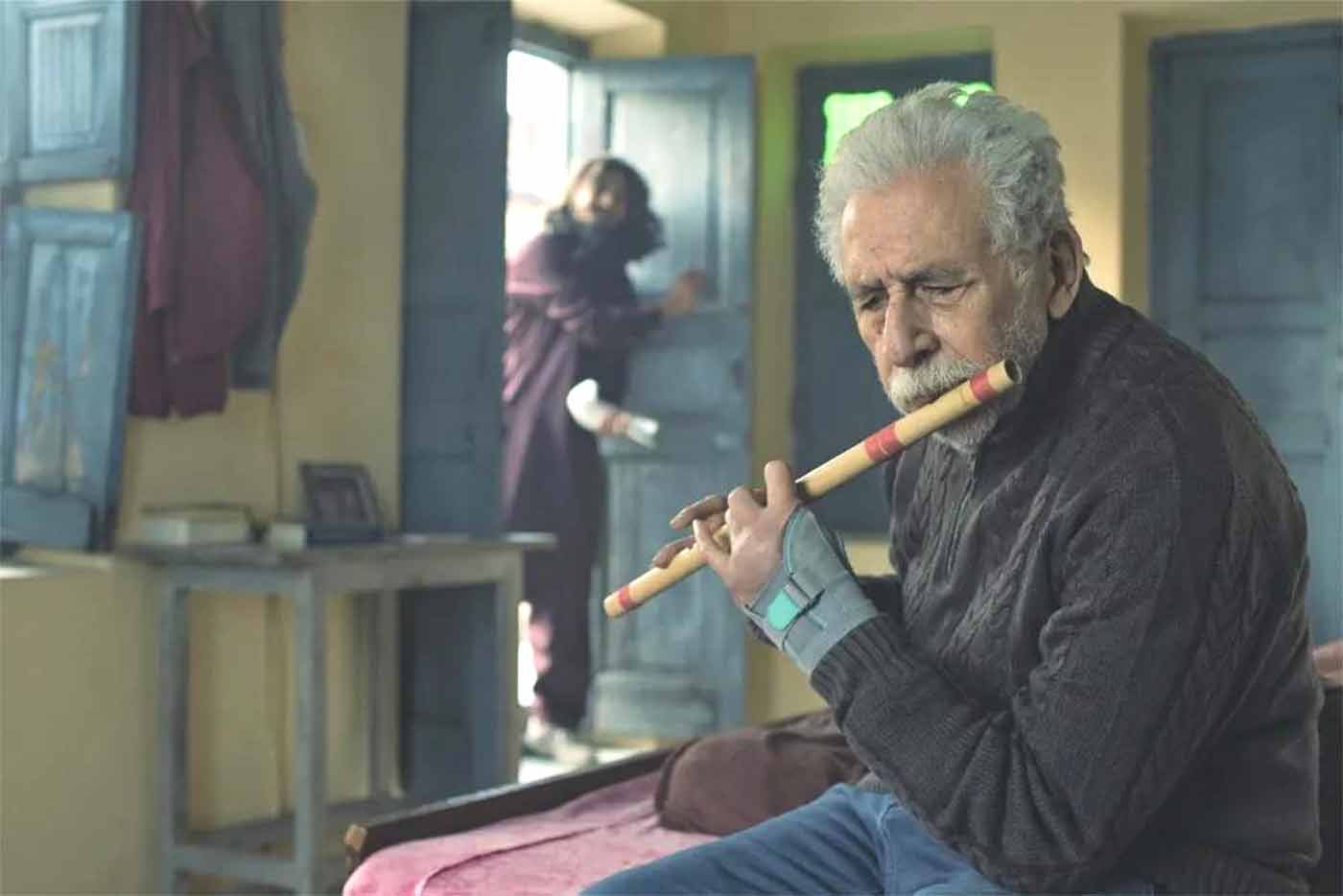
Set in the village of Gujrawal, Rehmat inhabits a landscape where everyone seems to know something that nobody is willing to say aloud. Families wait for missing sons. Police explanations become increasingly difficult to believe. Stories of encounters and separatist violence circulate alongside grief, suspicion and fear. Yet ordinary life continues around these ruptures—people cook, care for one another, open their homes and attempt to make sense of losses that have no satisfactory ending.
That tension between an enormous political history and the quiet routines of ordinary people becomes the film’s emotional foundation.
A Village Haunted by Disappearance
At the centre of the narrative are several intertwined stories. Keshav is missing from one family. Balwinder, a young father, has disappeared from another. The authorities move through the village, presenting official explanations for violence while simultaneously monitoring the families left behind.
The tragedy is not simply that people disappear. It is that those who remain are expected to live with explanations that never quite resemble the truth.
The film captures this atmosphere without turning every scene into an overt political statement. Instead, uncertainty settles into living rooms and conversations. Grief becomes part of the architecture of everyday life.
And then Rashid Ali arrives.
Naseeruddin Shah’s Rashid Ali: A Stranger Coming Home
An elderly stranger appears at one of the village houses, initially claiming, almost playfully, to be God, a fitting introduction in a place where people have been praying for answers.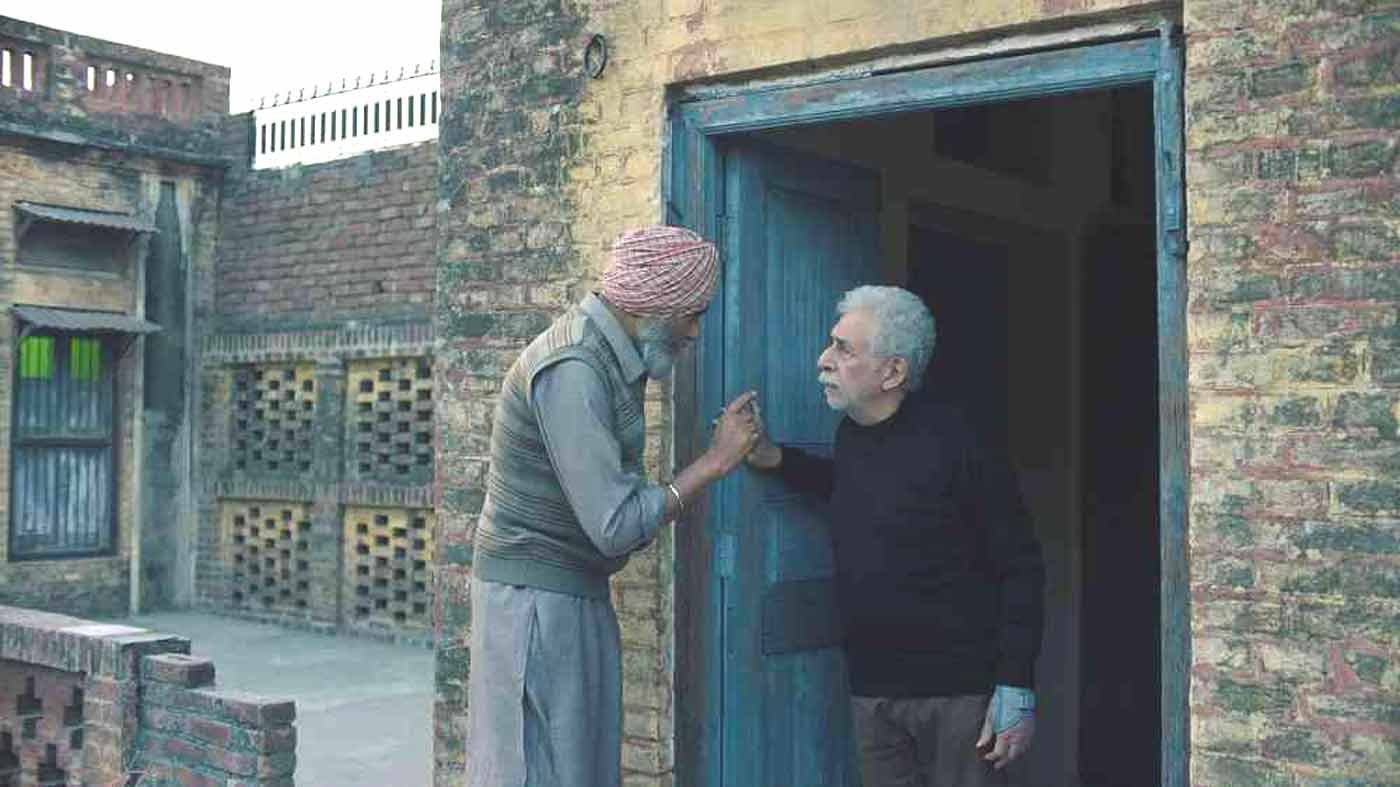
He eventually reveals himself as Rashid Ali, a British citizen returning to the village of his birth. Played by Naseeruddin Shah, Rashid is simultaneously an outsider and someone who feels strangely familiar. He has spent much of his life away from the place he calls home, yet when he returns, he seems to slip effortlessly into its rhythms.
There is something almost spiritual about his arrival. But Rehmat does not turn him into a conventional saviour figure. Rashid is not necessarily there to repair Punjab.
He is trying to repair his own relationship with a homeland that exists partly in memory and partly in imagination. As an Indian Muslim who has spent decades living abroad, his return carries another layer of displacement. He belongs to the village, but he also has to rediscover what that belonging means.
Naseeruddin Shah plays him with the weight of age: physical frailty, accumulated experience, emotional exhaustion and the quiet wisdom of someone who has lived long enough to understand that identities are rarely as straightforward as institutions make them appear.
There are occasional rough edges, including an uneven British accent, but the performance ultimately works because Shah allows Rashid to feel like both a person and a larger idea.
He represents a version of India in which identities can overlap without becoming threats to one another.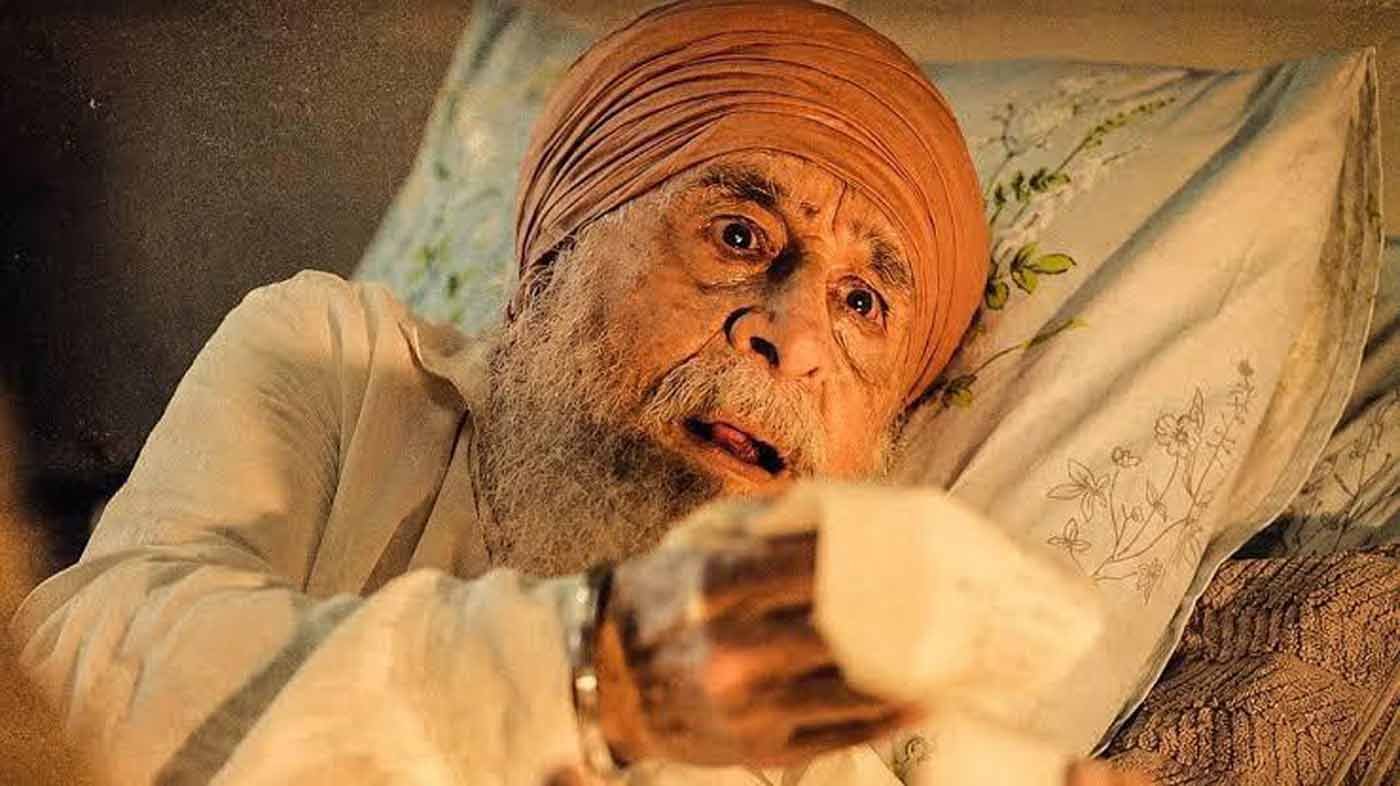
Punjab Beyond the Fault Lines
This is where Rehmat becomes particularly compelling. The film could easily have made Rashid’s homecoming the centre of everything. Instead, Gurvinder Singh uses him to illuminate the people around him.
The families hosting him do not appear to spend their time calculating his religious identity. They simply receive a guest. A Sikh family welcomes a Muslim stranger into the home where he was once a child. Elsewhere, a young woman shelters an injured man believed to be a Sikh militant despite knowing the danger surrounding him.
These moments are not presented as grand declarations of secularism. They are instinctive. That distinction is crucial. The people of Gujrawal have inherited a culture in which hospitality and compassion existed before the political vocabulary that now attempts to divide them. Their generosity becomes almost an act of resistance, not because they are staging a rebellion, but because they refuse to abandon their humanity.
The film’s title begins to acquire another meaning here. Rehmat mercy, grace, compassion becomes less a character trait than a way of understanding the village itself.
The Politics of Belonging
The authorities in the film occupy an entirely different moral universe. Whenever they appear, they bring categories with them. Religion becomes something to be identified. Communities become something to be watched. Personal relationships become suspicious when they cross boundaries established by official narratives.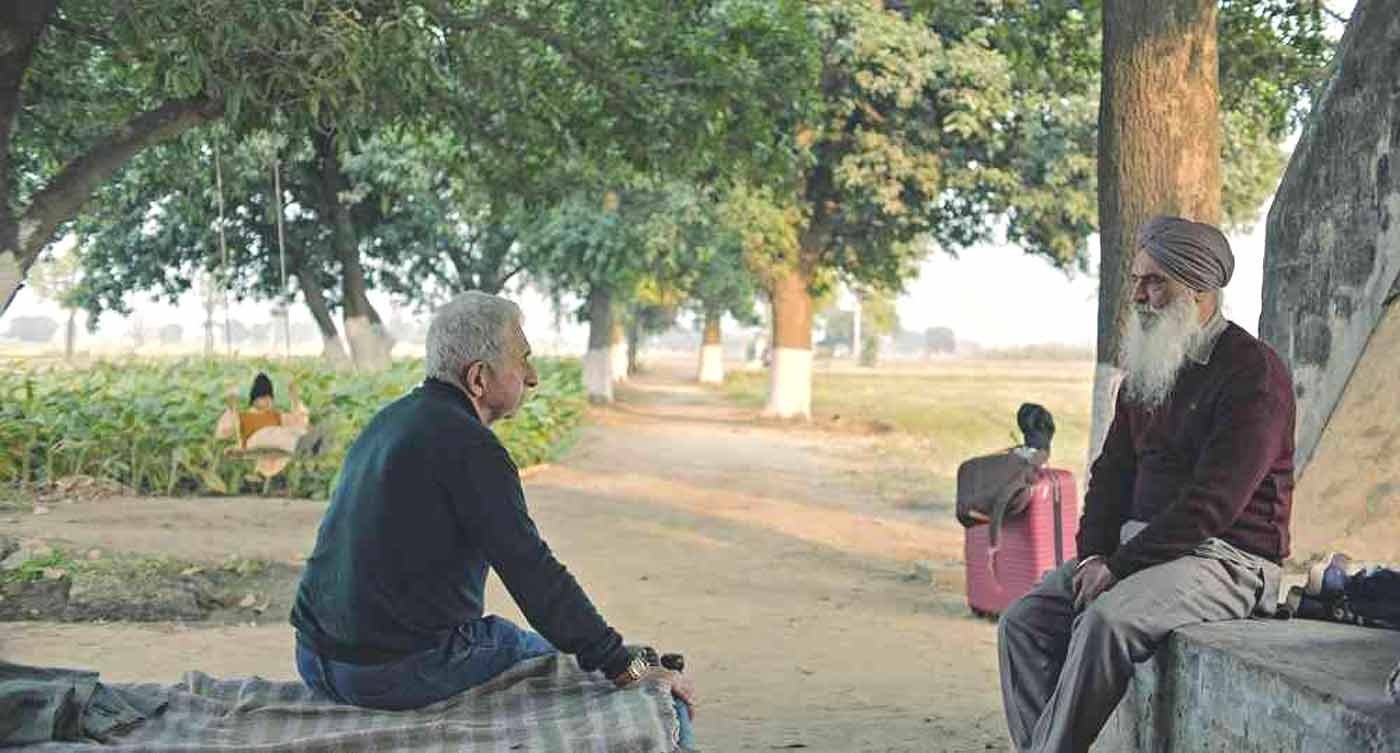
The police attempt to impose political explanations upon people who are simply trying to survive their private grief. And that creates one of the film’s most striking contrasts.
The state sees labels. The villagers see people. Rashid becomes particularly difficult for the authorities to understand because he does not behave according to the divisions they expect him to respect.
In that sense, he becomes a living remnant of an older pluralistic imagination, one in which a mosque, temple and gurudwara could coexist not merely as institutions, but as different expressions of the same human need for faith and belonging.
A Story Told Through Three Wounds
The film’s narrative is built around more than Rashid’s return. There is the grief surrounding Keshav. There is Balwinder’s family’s trauma. And there is Rashid’s own complicated search for home.
These stories do not exist independently. They overlap like wounds in the same body. What makes the film powerful is that none of these characters are reduced to victims. They continue to cook, work, care for children, welcome strangers and perform the ordinary rituals of life.
One particularly striking sequence involves a young woman whose tears while chopping onions blur the distinction between everyday discomfort and profound grief. Later, she discovers an injured man hiding in her storeroom and chooses to protect him.
The gesture is small. Its implications are enormous. Rehmat repeatedly finds its politics in these apparently insignificant acts.
Hospitality as Resistance
There is an almost ancient quality to the hospitality running through the film. The idea of receiving a stranger as a guest carries deep cultural and mythological significance. Rehmat connects that instinct to something much older than contemporary political divisions: the belief that the person standing at your doorstep deserves compassion before they are assigned an identity.
Rashid’s return therefore becomes more than a personal homecoming. It becomes a test. Can people continue to recognise one another as human beings when institutions have taught them to see categories first?
The villagers’ answer is quietly affirmative. They do not possess political power. They possess something else. The ability to remain decent.
Naseeruddin Shah and Surinder Vicky Find Something Beautiful Together
Some of the film’s most affecting moments come from the relationship between Rashid and the new owner of his childhood home, played by Surinder Vicky.
Vicky, previously associated with darker and more morally complicated roles, brings an unexpected gentleness to this character. His interactions with Rashid are initially cautious, but gradually become warmer. Respect replaces uncertainty. Affection emerges where suspicion could easily have taken root.
The conversations between the two men are understated, but they carry the film’s central argument. Empathy does not require agreement. It does not require identical histories.
Sometimes it simply requires seeing another person without the label that has been placed upon them. Their relationship is, in many ways, Rehmat distilled into two people sitting across from each other.
Dia Kamboj and the Women Who Carry the Grief
Dia Kamboj brings another important dimension to the film as a bereaved sibling whose instinct is to protect a stranger even while she is struggling to understand what really happened to her brother.
Her character’s conflict isn’t simply about secrecy. It is about confronting the gap between the story she has been given and the reality she is beginning to suspect.
Through her, the film also examines how women frequently become the quiet custodians of communities damaged by political violence. They care for the wounded, maintain households and absorb grief while larger institutions argue over narratives and culpability.
In Rehmat, caregiving becomes its own form of courage.
A Camera That Refuses to Look Away
Gurvinder Singh’s visual approach is as important as the screenplay. The camera rarely behaves like a conventional observer. It glides through rooms and domestic spaces with an almost spectral quality, creating the impression that the homes themselves remember the people who have disappeared from them.
There is a sense that the dead are still present, not literally, but through objects, gestures, memories and routines. The camera watches people continue living in spaces shaped by those who are no longer there.
That stillness gives the film its unusual rhythm. Rehmat does not rush toward revelation. It allows silence to become part of the storytelling.
A Punjab That Refuses to Be Simplified
The Punjab presented here is not the colourful, romanticised landscape often encountered in mainstream cinema. Nor is it simply a region defined by militancy, communal violence and historical trauma.
It is all of those things and more. That complexity is precisely what makes Rehmat so affecting. The film recognises the violence in Punjab’s history without allowing violence to become its entire identity. It acknowledges political division without suggesting that ordinary people are incapable of compassion. And it remembers displacement without turning memory into nostalgia.
Rashid’s homecoming becomes the thread connecting these contradictions. He is both real and almost mythical. A man searching for his childhood home, but also a reminder of the India that existed before identities became so aggressively politicised.
The Quiet Power of Rehmat
There is no grand speech that solves Punjab’s wounds in Rehmat. There is no convenient political conclusion. Instead, the film offers something much smaller and perhaps much more meaningful: people continuing to care for one another despite everything that has happened around them.
Governments change. Official narratives change. Political divisions change. But people still build lives through hospitality, memory, food, family and small acts of kindness.
That is the film’s deepest understanding of rehmat. Mercy is not weakness. It is survival. And in Gurvinder Singh’s hands, Punjab’s plurality is not something that needs to be invented again.
It is something that has survived quietly in the people who refused to let it disappear.