

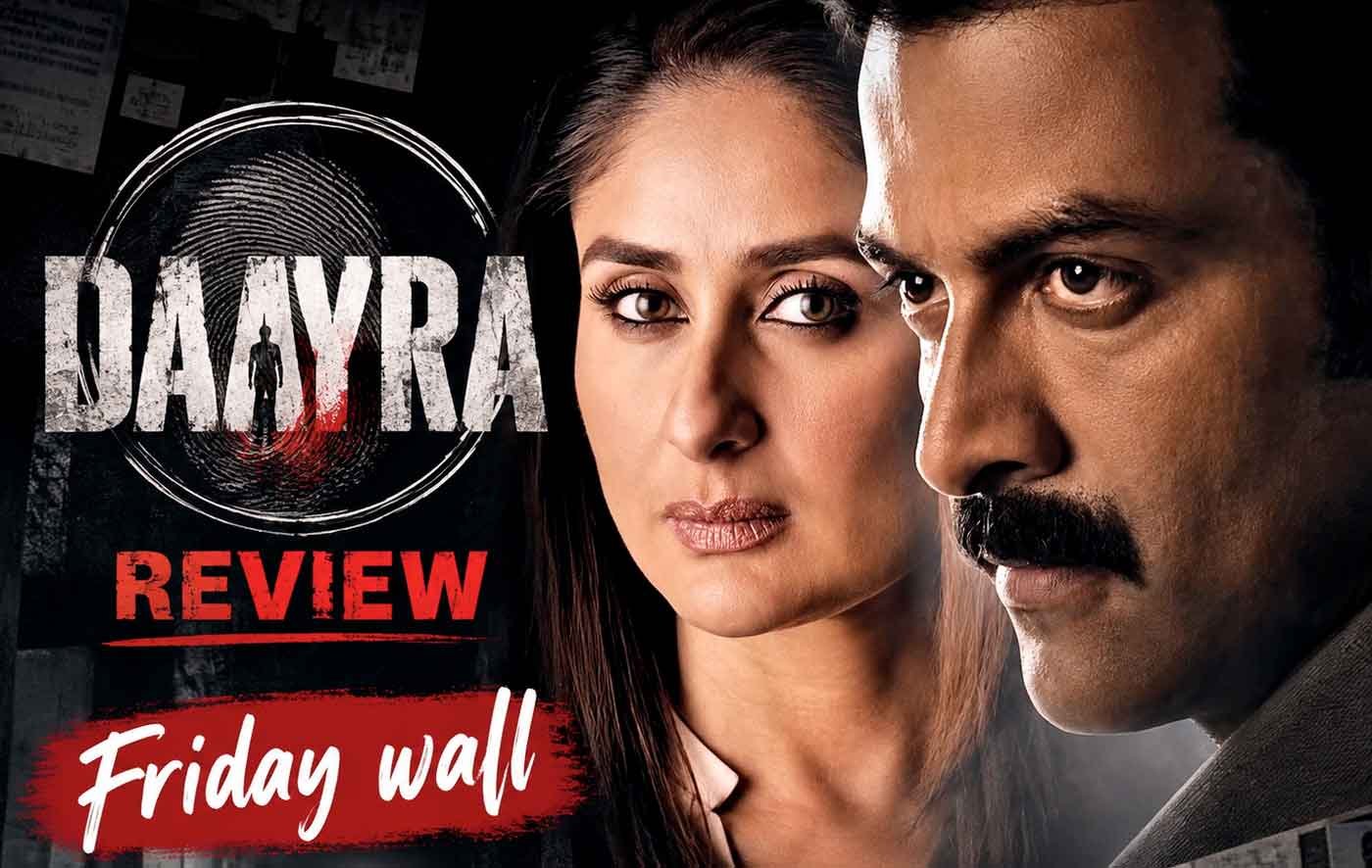
Being slotted into a box can be confining for a filmmaker, but it can also give them a chance to become specialists in their domain. Meghna Gulzar’s career is a prime example. Despite directing lighter, warm romances like Filhaal and Just Married early on, it was with Talvar that she truly found her niche. The film opened new avenues for her, but it also came at a price.
In an increasingly corporatised Hindi cinema, she has been restricted to films based on real-life incidents ever since. Yet, she has rarely spoon-fed the viewer with rigid opinions on the source material. She has used these incidents as a springboard to explore the emotional ramifications and psychological contradictions of her subjects, while infusing them with situational humour.
Her latest, Daayra, loosely based on the 2019 gang-rape of a doctor in Hyderabad where all four accused were killed in a police encounter, uses the incident as a lens to examine questions of social justice and human rights. The film serves as a character study of two firm police officers with conflicting viewpoints. Both get their chance to make a point, and there is no winner.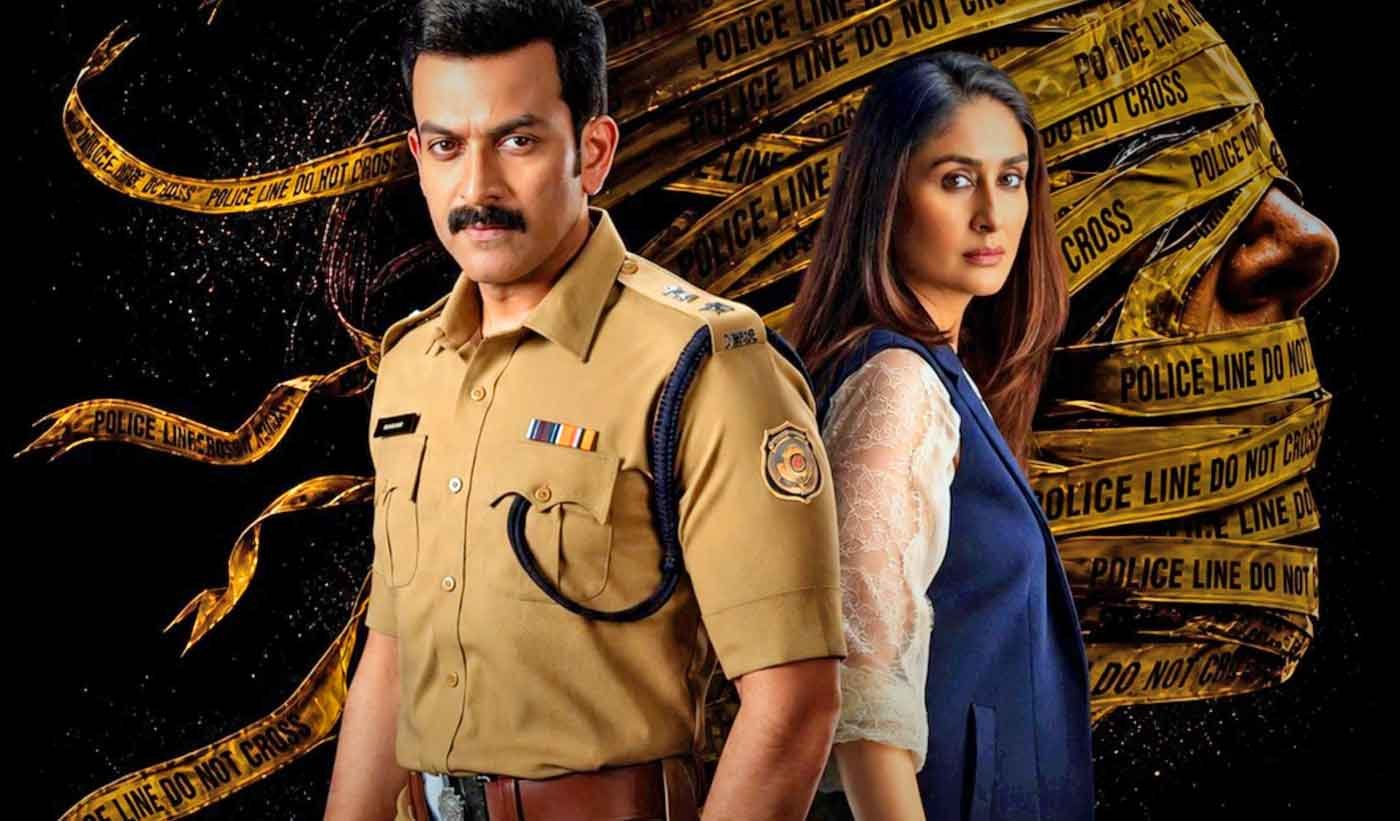
Daayra doesn’t limit itself to the accused and instead becomes a social commentary on how the encounter was passed off as the need of the hour through a media trial, even celebrated before the court kacheri. While Raman Kumar (Prithviraj Sukumaran) leads the team behind the encounter, Ajooni Kohli (Kareena Kapoor) heads an SIT probe to investigate its necessity.
The film opens with Raman being greeted with rave applause from all corners, with a subordinate even thanking him for including him in the team. When a superior informs Raman of an internal inquiry, his response is casual. He is prepared for it. It’s not the first time his team has been grilled for an encounter.
Ajooni’s ideological position, as the daughter of a judge with a firm belief in the judicial process, is established clearly. Intentionally, the narrative presents the incident in stark, uncomplicated terms to begin with – a woman’s charred body is found near a highway, and the men responsible have been silenced permanently.
The narrative straddles multiple timelines as Ajooni’s team faces immense resistance piecing together accounts leading to the encounter, while also taking stock of the pressure under which Raman was compelled to resolve the case. Meanwhile, the victim’s family wonders if all of this could have been avoided with prompt action after the complaint.
Ajooni’s approach is measured and composed, refusing to act on impulse. With Raman, the focus is on instinct. The case becomes a ticking time bomb as he and his team make irrational decisions in the guise of speedy justice. Alternating between Ajooni’s pursuit of truth, Raman’s push for the encounter and the actual crime, the narrative is sharp, even if not always cinematically exciting enough.
Daayra is at its sharpest when Raman and his men are incessantly probed. You feel the tension in his camp, in contrast to the casual assurance with which Ajooni and her officers expose the contradictions in their responses. Ajooni brutally lays bare the fallacies in their accounts through a re-enactment at the crime scene. It’s probably Meghna’s best use of humour to drive her point across.
The nod to the Aarushi Talwar case through the sex-offender subplot is a smart touch. Though Daayra claims to project two approaches to justice and allows its pivotal characters to have an elaborate conversation about it only in the climax, it’s anyone’s guess which position it categorically favours. As one may have noticed in Talvar, Meghna nudges a thought but never picks a side.
Through the film, Meghna seeks to initiate a conversation between two people who agree to disagree. It shies away from examining the consequences of their choices, leaving it for the viewer to decode. Yet, Daayra doesn’t quite balance its two viewpoints when it comes to Ajooni’s faith in the judiciary. Given her father’s long-pending case, the film never really interrogates why that faith remains so unwavering.
More importantly, with Ajooni leading the probe on behalf of the human rights commission, the film sidesteps a larger conversation about the accused’s right to a fair trial. Questioning the encounter while acknowledging that right could have added another layer.
Though Daayra shares similarities with Talvar in its portrayal of a professional clash between officers over a high-profile case, the former plays out as a drama exploring contrasting ideologies while the latter is a whodunit built on conflicting testimonies. Yet, both run into a familiar issue. Despite attempting to give each side its due, they quietly favour one theory over another.
TJ Gnanavel’s Vettaiyan, starring Rajinikanth, is perhaps the closest companion piece to Daayra thematically, though it was far more upfront in its stance. Its typically ‘heroic’ protagonist, in his response to a crime, is directly responsible for the death of an innocent man in his quest to resolve the case impulsively and faces the music later.
Technicalities apart, Daayra is a testament to Kareena Kapoor’s fabulous range. She fits into Meghna Gulzar’s world like a fish to water, embodying the poise and unhurried confidence of a cop who is quite good at her job. While you expect Prithviraj to pull this off with ease, given his body of work in cop sagas, Kareena’s impact is more striking because of her effortlessness.
While Raazi’s legacy as Meghna Gulzar’s best work remains untarnished, Daayra is a necessary, if not perfect, and unsensationalised probe into hurried justice, serving as a subtle plea to trust the judicial process. It gets a lot right – the way it sets up a clash through restrained humour, the interrogation sequences and how the anatomy of a crime plays out. Yet, for a film so interested in the many ways we understand justice, parts of it leave you underwhelmed.