

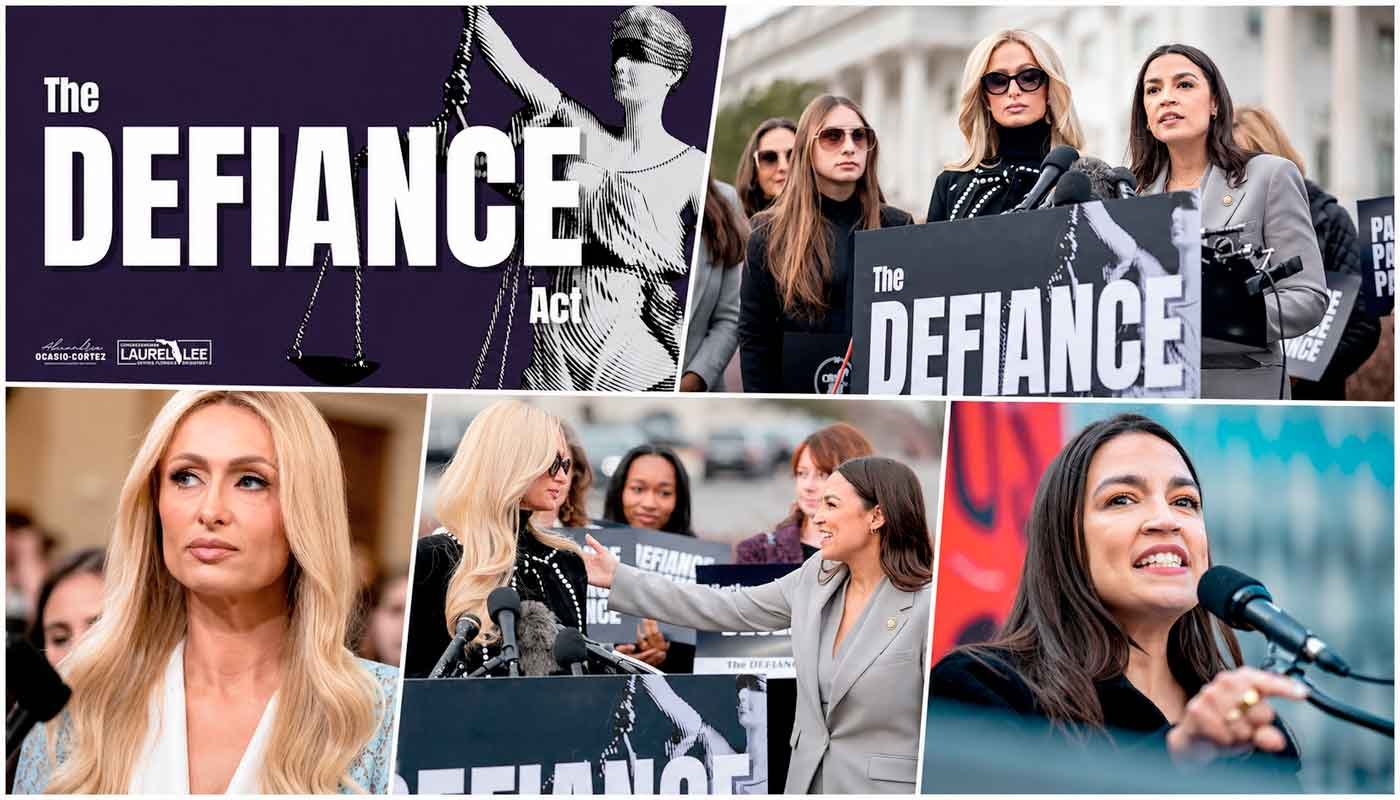
Artificial intelligence has made it easier than ever to create images that look real. But when that technology is used to place someone’s face into sexually explicit material without their consent, the consequences can be devastating.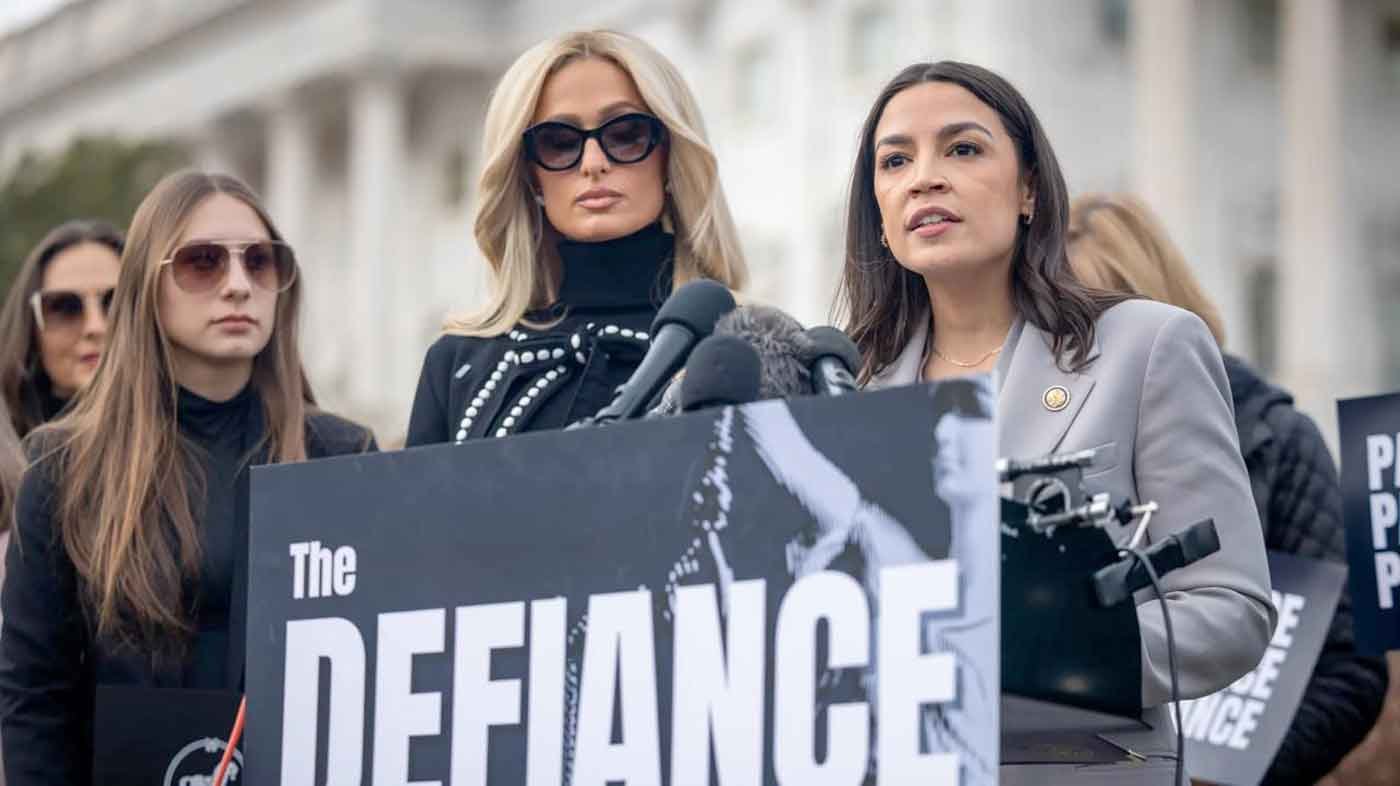
Now, Paris Hilton and US Congresswoman Alexandria Ocasio-Cortez are joining forces to push for stronger legal protections for people targeted by such abuse.
Hilton is backing the DEFIANCE Act, legislation designed to give victims of non-consensual sexually explicit digital forgeries a clearer path to legal action against those responsible. The bipartisan bill was reintroduced in Congress in May 2025, with Ocasio-Cortez among its lead supporters.
For Hilton, the campaign is deeply personal.
Paris Hilton: “That’s Unacceptable”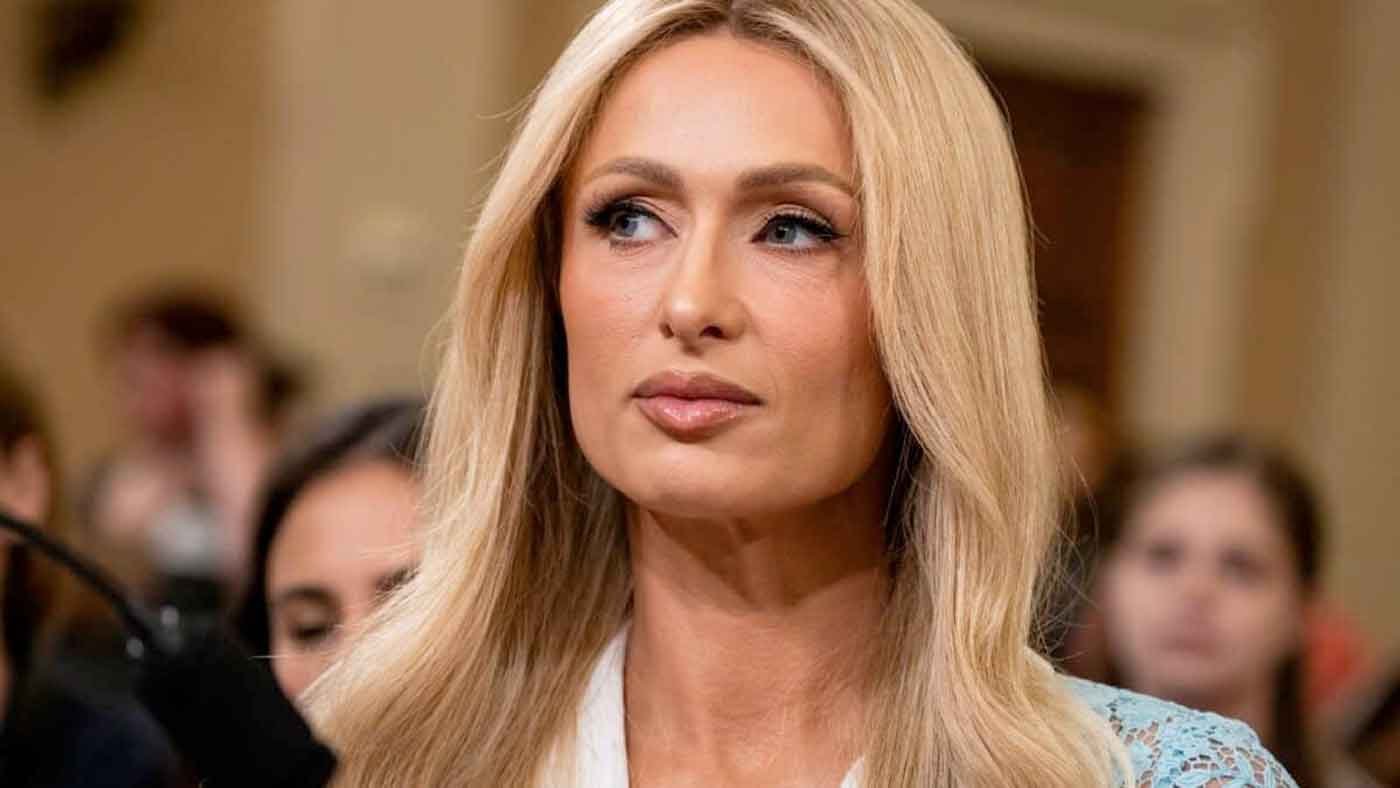
Speaking about the growing accessibility of AI-generated sexual imagery, Hilton highlighted the particular danger faced by young women.
“I think about teenage girls growing up in a world where this technology is becoming more accessible every day, and that’s unacceptable.”
Her concern is not simply about celebrity deepfakes. It is about a technology that can take an ordinary photograph from social media and transform it into an explicit image without the person’s knowledge or permission.
Hilton has also described the emotional violation involved in discovering that fabricated images are circulating online.
“It’s incredibly violating knowing these fake images are circulating and being viewed by so many people.”
The problem is made more frightening by the speed and accessibility of modern generative AI. Creating convincing manipulated imagery no longer necessarily requires sophisticated technical expertise, while removing material after it has spread can be extraordinarily difficult.
What Is the DEFIANCE Act?
The Disrupt Explicit Forged Images and Non-Consensual Edits Act, better known as the DEFIANCE Act, seeks to establish a federal civil right of action for victims of sexually explicit digital forgeries.
The 2025 version of the legislation would allow people whose likenesses have been used in non-consensual intimate digital forgeries to pursue the individuals responsible. It specifically addresses the creation and distribution of digitally manipulated sexual imagery rather than requiring a victim to prove that an authentic intimate photograph was originally shared.
That distinction matters. Traditional laws surrounding intimate-image abuse were largely developed before generative AI could convincingly manufacture an image of someone appearing to do something they never actually did. Deepfakes create a different legal problem because the underlying photograph or video may never have existed in the first place.
The proposed legislation is intended to close some of that gap and give survivors an avenue for seeking damages and accountability.
Why Hilton’s Story Makes the Campaign Personal
Hilton is not approaching the issue as a distant observer. When she was 19, an intimate video involving her and her former partner Rick Salomon was leaked without her consent. She has spoken publicly about the experience and the profound impact the incident had on her life.
More than two decades later, she sees AI-generated sexual imagery as a new technological version of an old problem: the ability to strip someone of control over their own image and sexuality.
The difference is that AI can now manufacture material that never happened at all. Hilton has said that thousands of explicit deepfake images using her likeness exist online, underscoring how difficult it can be for even a highly visible public figure to regain control over her image. Recent reporting has put the number at around 10,000.
Her advocacy therefore comes from both personal experience and a broader concern about what this technology could mean for girls growing up with increasingly powerful image-generation tools.
AOC Has Also Spoken About the Gendered Nature of Deepfakes
Ocasio-Cortez has been vocal about the scale of the problem as well. The congresswoman has argued that sexually explicit deepfakes disproportionately target women and girls. In advocating for the legislation, she has pointed to the overwhelming prevalence of non-consensual sexual imagery among deepfake material.
The partnership between Hilton and Ocasio-Cortez consequently brings together two very different public figures around a common issue. One comes from entertainment, fashion and digital culture. The other comes from federal policymaking.
Their argument is essentially the same: technological innovation cannot move faster than the protections available to the people it can harm.
The Psychological Cost Can Be Severe
The consequences of deepfake abuse extend far beyond embarrassment. Victims can face harassment, damaged relationships, professional consequences, reputational harm and the constant fear that an image could resurface years after it was created.
The psychological consequences can be particularly severe. Hilton has cited research suggesting that more than half of deepfake victims in the United States have contemplated suicide. UN Women has also referenced research documenting the same disturbing finding.
That statistic makes the debate around deepfakes fundamentally different from an ordinary conversation about manipulated images. For victims, the issue is not whether an image is technically “real.”
The harm is real.
The Law Is Still Catching Up With AI
The DEFIANCE Act is part of a broader effort to bring laws surrounding digital abuse into the age of generative AI. The legislation was originally introduced in 2024 and reintroduced in May 2025 after earlier efforts failed to become law. The current bill was referred to the House Judiciary Committee after its introduction.
The bill has received bipartisan support, but turning that support into legislation has proved more complicated. As of now, the House still has to act on the measure.
Meanwhile, technology continues to evolve. AI image generators are becoming increasingly accessible, while researchers have documented how easily some systems and models can be used to create non-consensual intimate imagery. One 2025 study identified tens of thousands of downloadable deepfake model variants, with women overwhelmingly among the targets.
A Fight Bigger Than Celebrity Deepfakes
What makes Hilton and Ocasio-Cortez’s campaign significant is that the conversation extends well beyond celebrities. A public figure may have lawyers, publicists and financial resources to pursue a case. A teenager targeted by classmates may have none of those things.
Young victims have already described being targeted with AI-generated explicit images created from ordinary social-media photographs. Some have subsequently become advocates for stronger legislation themselves.
That is why the central question surrounding AI-generated sexual imagery is no longer simply what the technology can create. It is whether society is prepared to protect the people whose identities can be manipulated by it.
For Hilton, the answer is clear.
“Our laws need to catch up to the negative impacts of technology before one more life is impacted.”
The DEFIANCE Act represents one attempt to make that happen. Whether Congress ultimately passes it will determine how much legal power victims have when technology turns their own likeness into a weapon.