
In an era dominated by artificial intelligence, automation, and digital fabrication, one of the world’s biggest art exhibitions has quietly reminded us that some of humanity’s most extraordinary creations still begin with a pair of hands.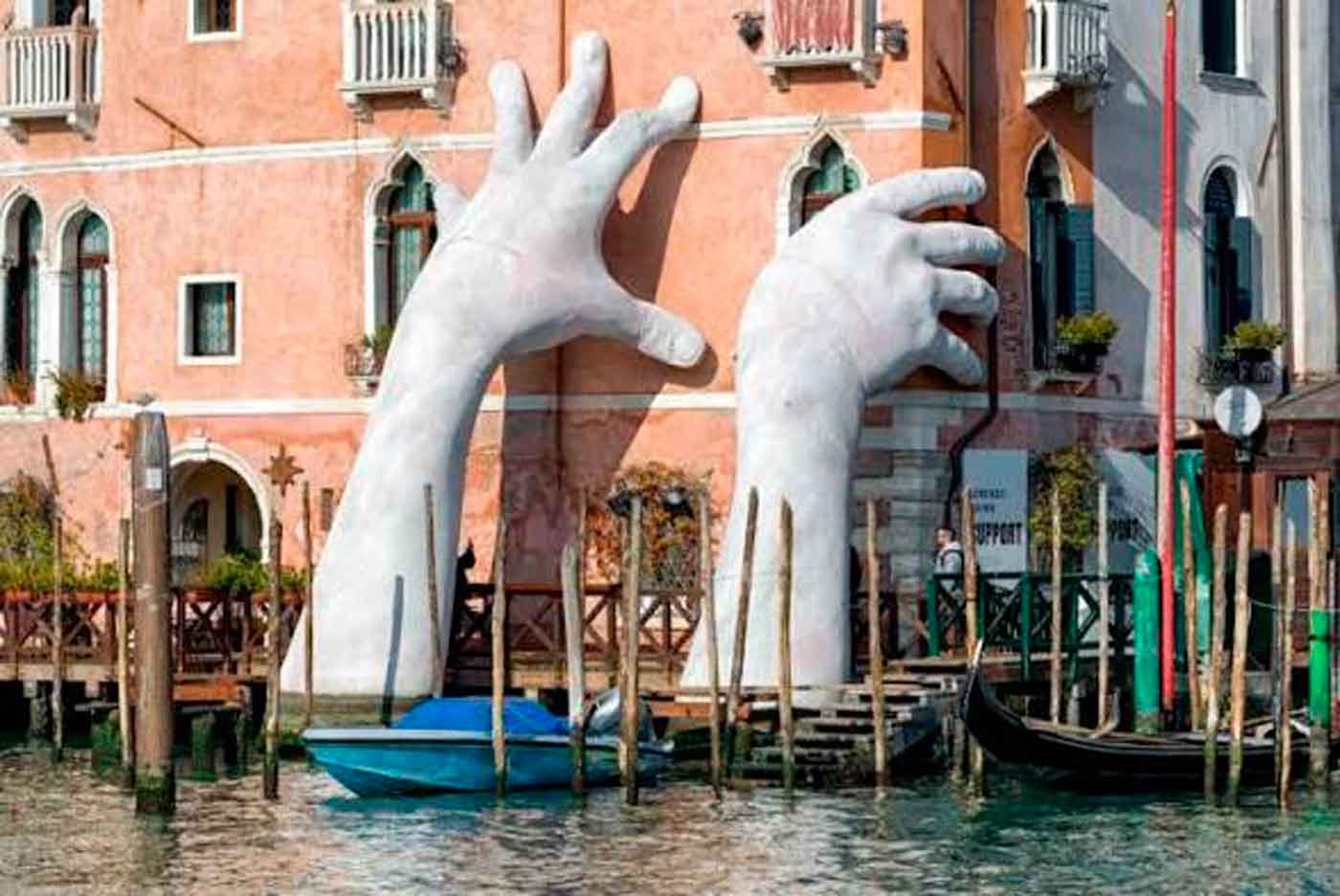
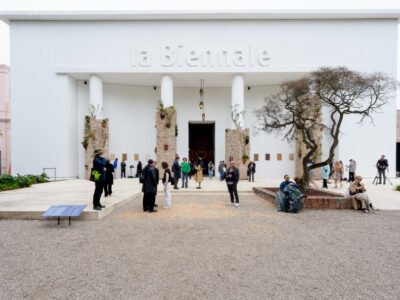
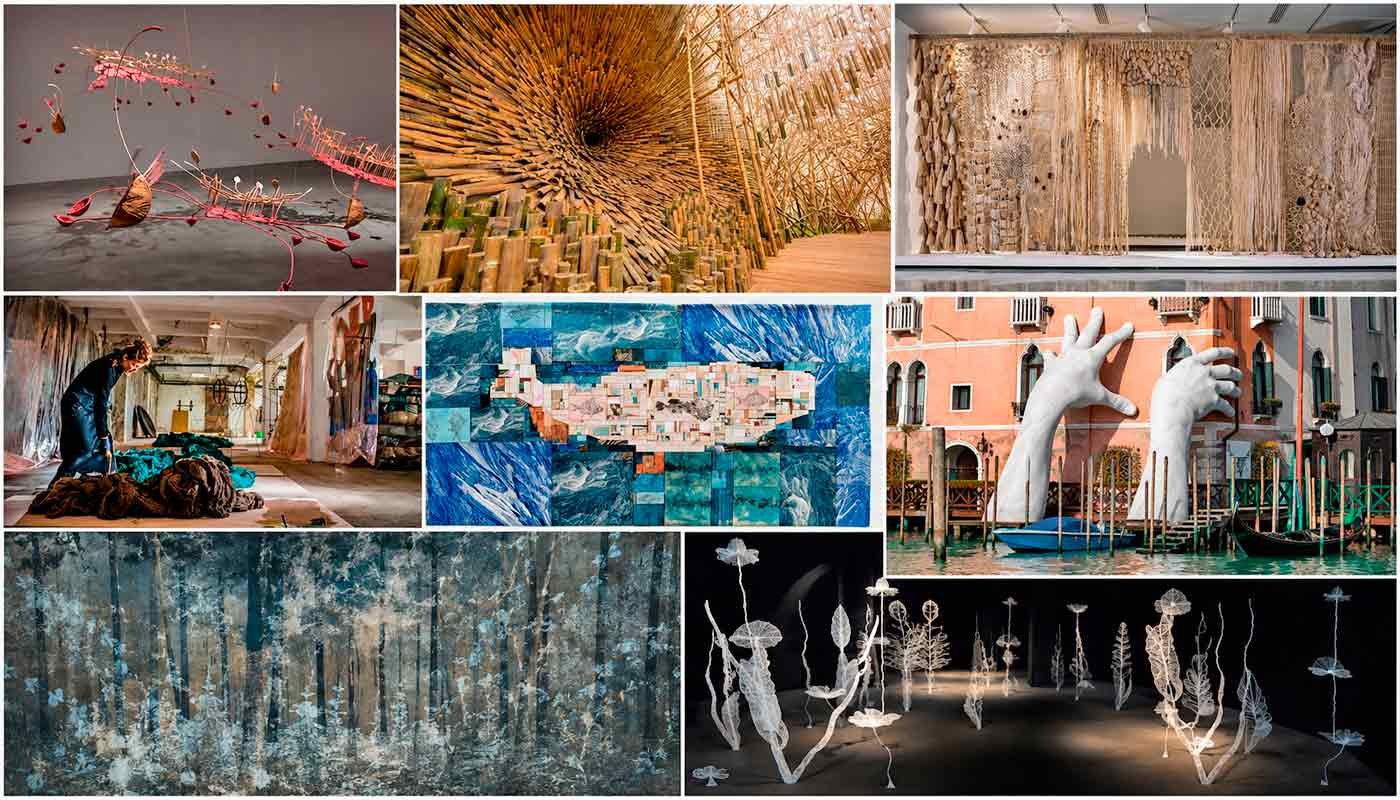
At this year’s Venice Biennale, artists from across the globe are proving that traditional craftsmanship is far from obsolete. Embroidery, bamboo weaving, pottery, textile manipulation, handmade paper, natural dyes, and indigenous building techniques have all found a place on one of contemporary art’s grandest stages.
Among them are three Indian artists whose works transform age-old crafts into deeply personal narratives of memory, identity, architecture, and ecology.
Sumakshi Singh: Stitching a Lost Home Back Together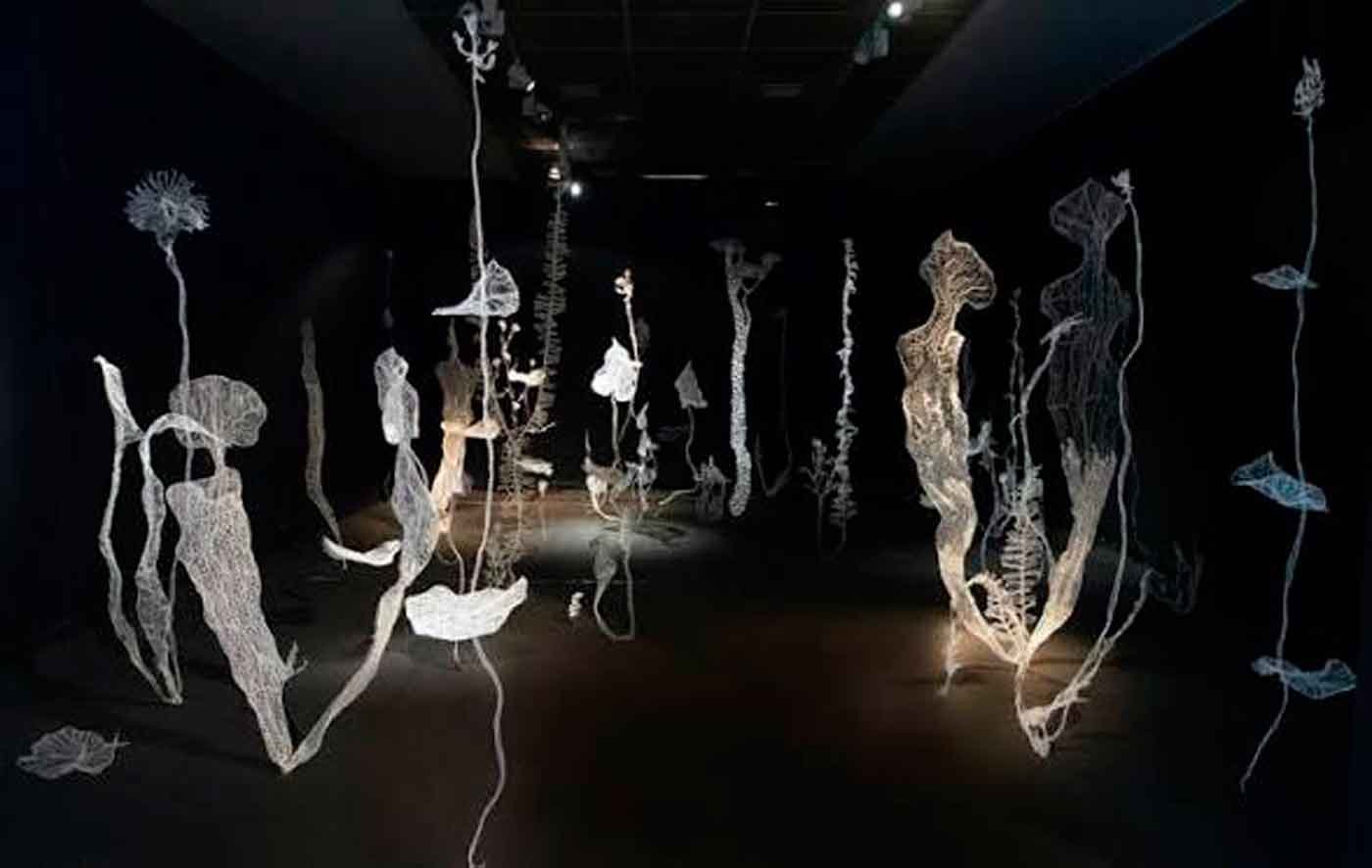
Walking into India’s pavilion, visitors are greeted not by brick and mortar but by a house made almost entirely of thread.
Artist Sumakshi Singh’s installation, Permanent Address, recreates her refugee grandparents’ New Delhi home, built in 1952 and demolished in recent years. Delicate walls embroidered from silk, cotton, and nylon stand almost weightlessly, their cracks, staircases, windows, and doorways suspended like memories refusing to disappear.
The work began with meticulous documentation. Singh measured every brick, every hinge, every fracture before reconstructing the house through embroidery using more than a dozen traditional stitching techniques. The inspiration runs even deeper.
As a child, Singh embroidered alongside her grandmother and mother, transforming an everyday domestic activity into an artistic language that now preserves family history.
As she beautifully explains:
“Embroidery is an act of mark-making, a way of layering time. I wanted to render the once solid, opaque architectural surface into something that felt very ethereal, like the ghost of a house that once existed before demolition.”
For Singh, home is no longer a building. It is memory itself.
Asim Waqif: Architecture Woven from Bamboo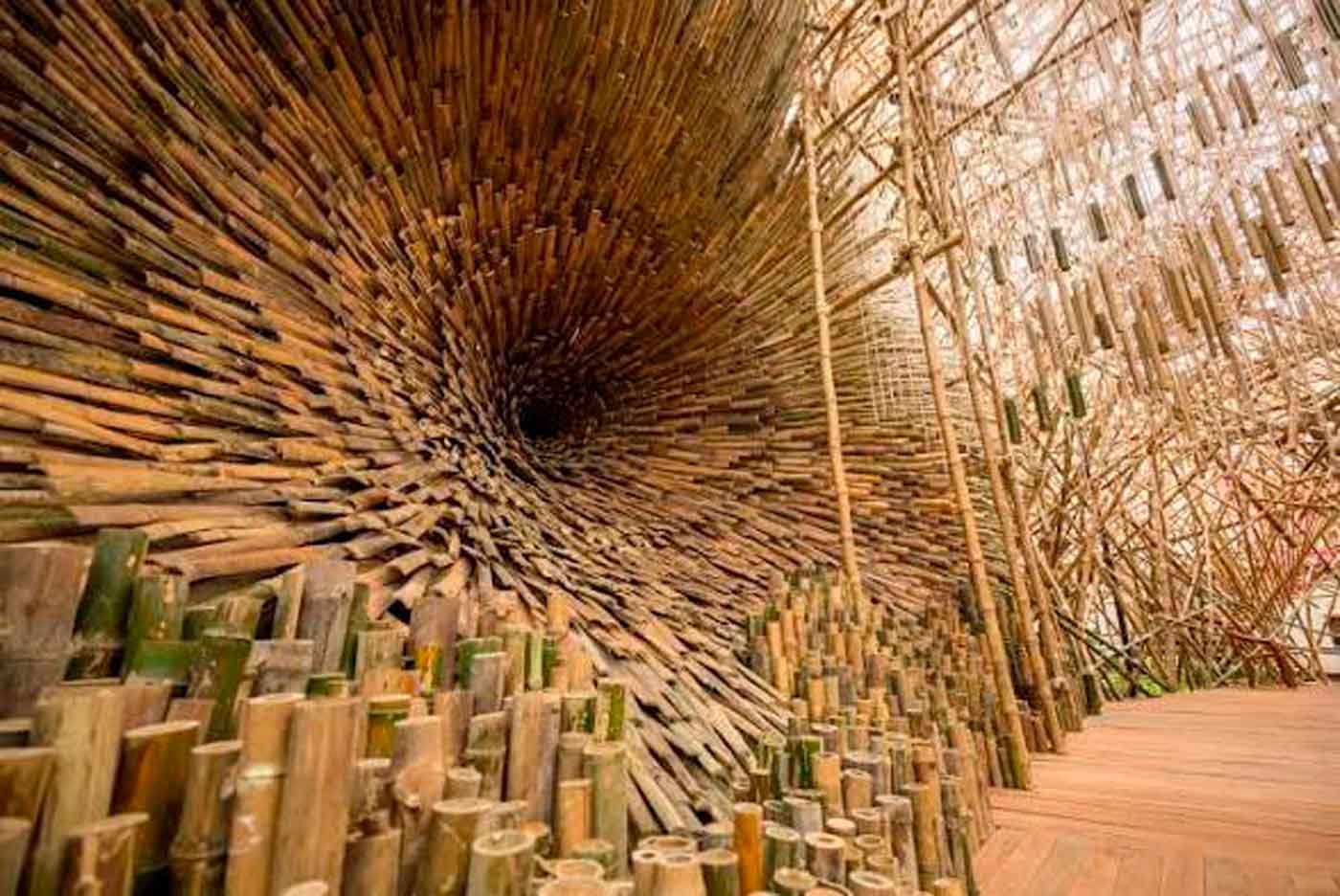
While Singh works with threads, Asim Waqi builds with bamboo. His monumental installation Chaal appears almost chaotic from afar, with countless protruding cones creating a sculptural landscape.
Up close, however, every joint, bend, knot, and weave reflects generations of indigenous craftsmanship.
Working alongside artisans from West Bengal and a Manipuri architect, Wakefield celebrates vernacular building traditions once common across Assam and Meghalaya.
Different bamboo species are arranged according to density, strength, and flexibility, demonstrating how traditional ecological knowledge remains remarkably sophisticated even today.
His work sits somewhere between sculpture and architecture, proving that one of humanity’s oldest building materials still has endless contemporary possibilities.
Ranjani Shettar: Nature Suspended in Mid-Air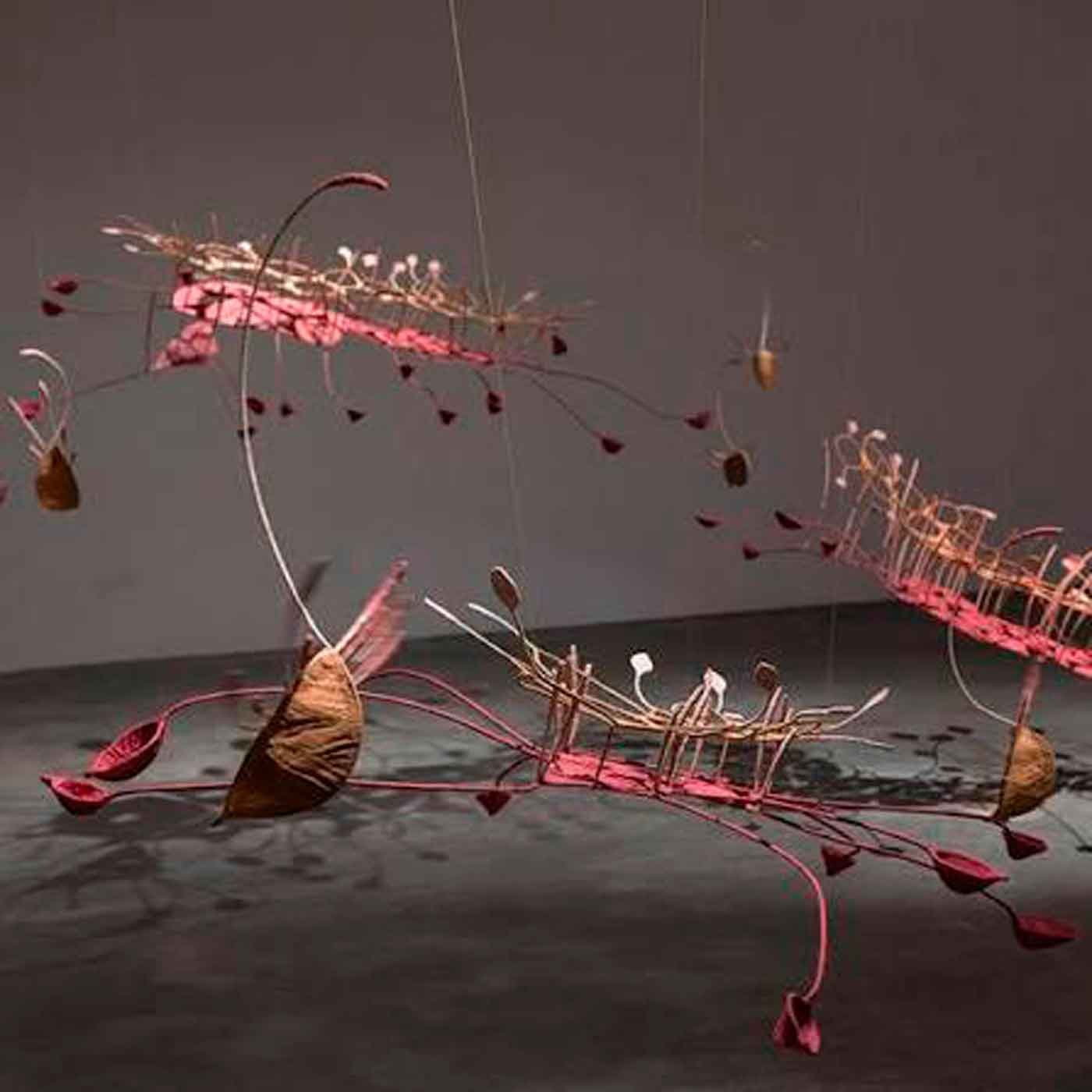
If Sumakshi Singh’s installation speaks of memory, Ranjani Shettar’s work speaks of nature. Her enormous installation, Under the Same Sky, transforms the pavilion into a floating meadow filled with blossoms, vines, tendrils, and seed pods that appear to defy gravity.
Constructed using handwoven cotton coated in natural lacquer, the work glows with a luminous pale-yellow finish while remaining remarkably lightweight.
Although breathtakingly beautiful, the installation also quietly addresses environmental loss.
Rapid urbanisation, disappearing ecosystems, and humanity’s fragile relationship with nature underpin Shettar’s practice.
Rather than presenting environmental destruction directly, she allows handcrafted beauty itself to become the message.
Every flower, every vine, every suspended element is painstakingly made by hand using natural materials with minimal waste, reflecting her commitment to sustainable making.
Adebunmi Gbadebo: Clay That Carries Ancestral Memory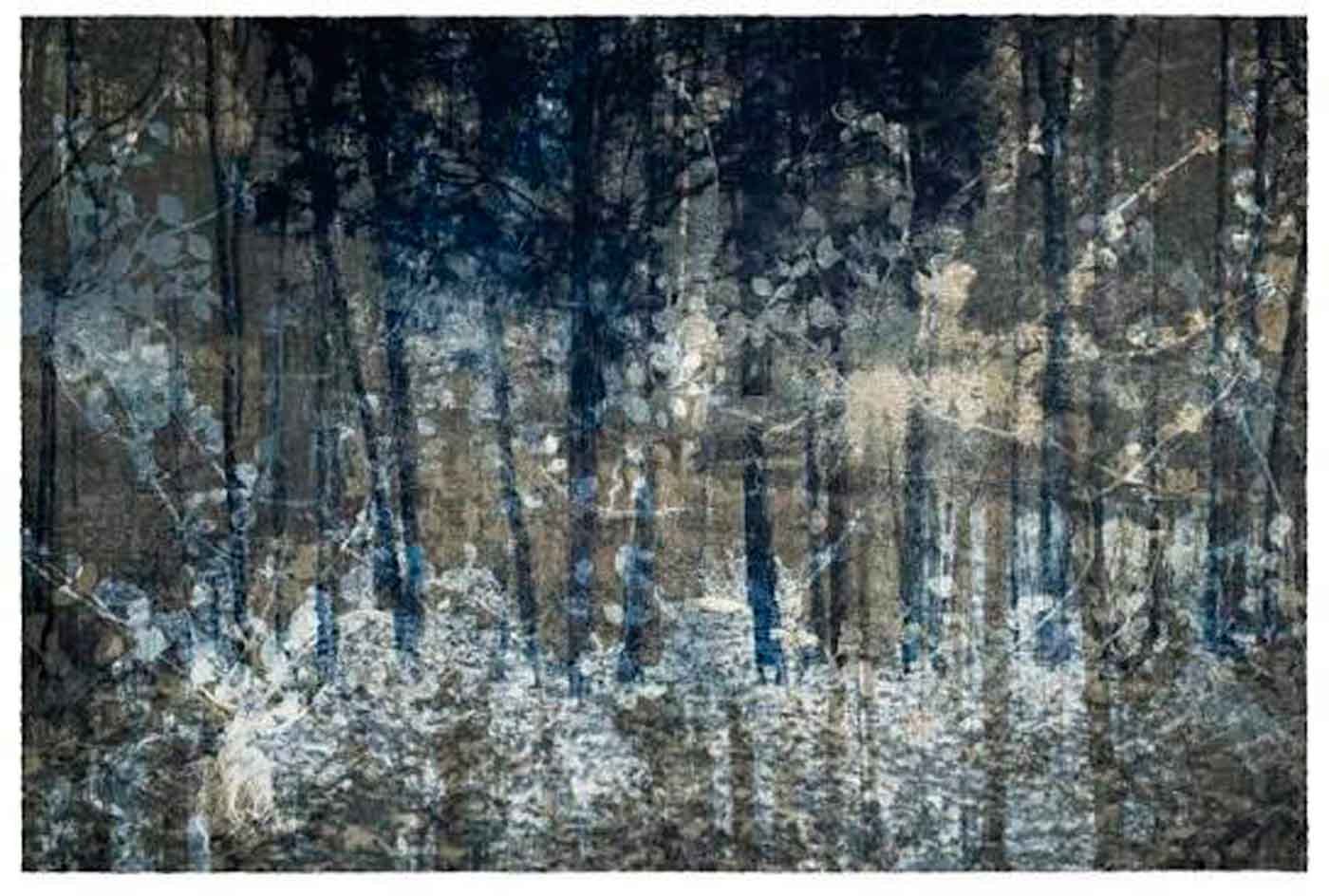
At the Biennale’s main exhibition, Adebunmi Gbadebo transforms history into sculpture. Her rust-coloured ceramic vessels and tree-like forms are created using soil collected from a burial ground in South Carolina where enslaved Africans and their descendants were laid to rest.
The soil itself becomes both material and witness.
Adebunmi Gbadebo transforms it into clay before employing the ancient Nigerian coil-building technique inherited through heer father’s heritage. Some pieces are later fired using Japanese raku methods, creating surfaces marked by ash, rice, sugar, and fire.
Her sculptures become vessels carrying memory, ancestry, displacement, and resilience.
Alexa Kumiko Hatanaka: Preserving Fish, Landscapes and Emotion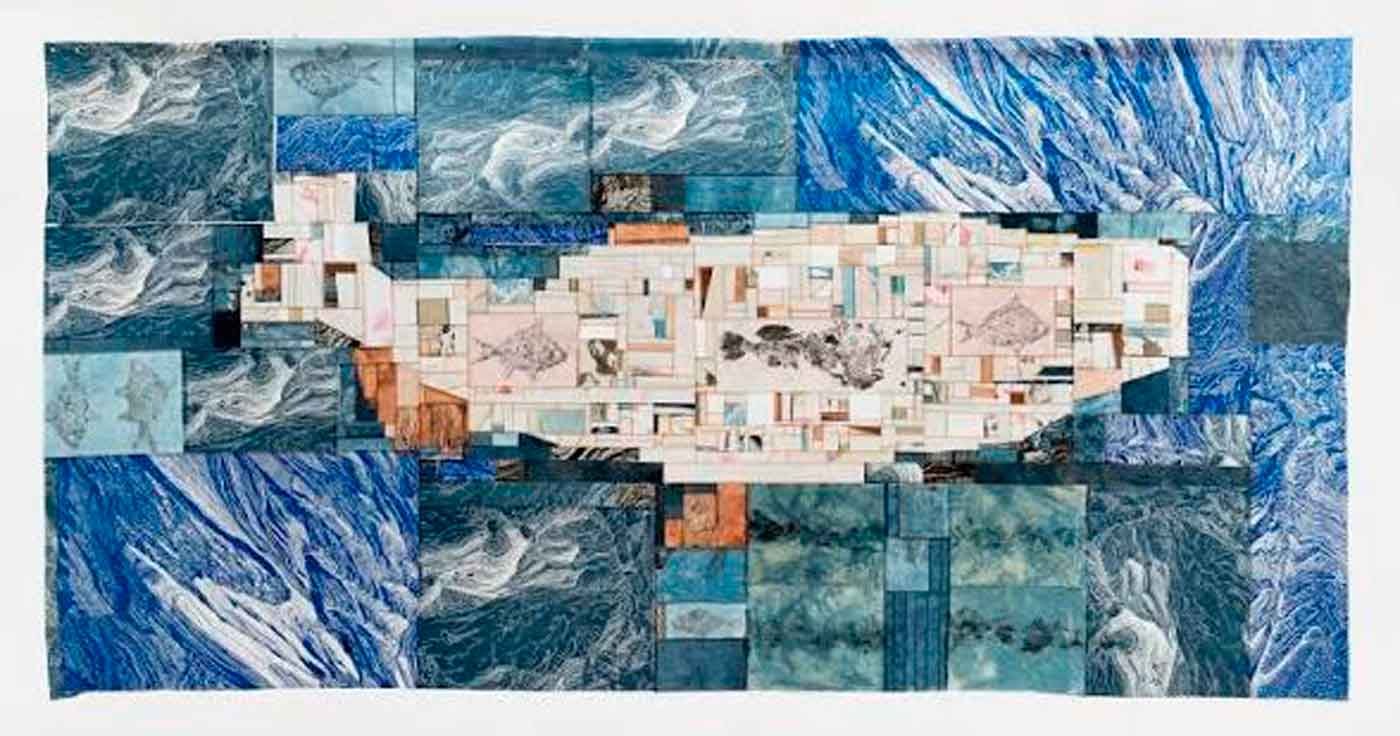
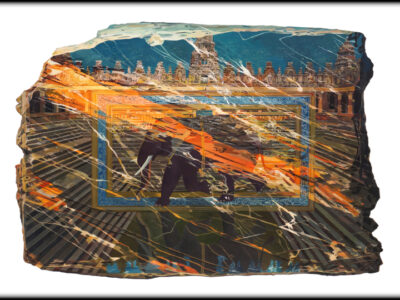
Japanese-Canadian artist Alexa Kumiko Hatanaka revives Gyotaku, a nineteenth-century Japanese printmaking technique once used by fishermen to document their catches before photography existed.
Covering real fish with sumi ink before pressing handmade washi paper over them, she captures every scale with astonishing precision. But tradition is only the beginning.
Her Biennale presentation combines Gyotaku with linocut, handmade washi paper, natural dyes, and stitched sculptural forms exploring climate anxiety, mythology, and mental health.
As a queer artist living with bipolar disorder, Hatanaka embraces contradiction.
Her sewn washi sculptures resemble enormous stone boulders despite weighing almost nothing, embodying emotional states that feel simultaneously heavy and fragile.
Amina Agueznay: Morocco Woven Together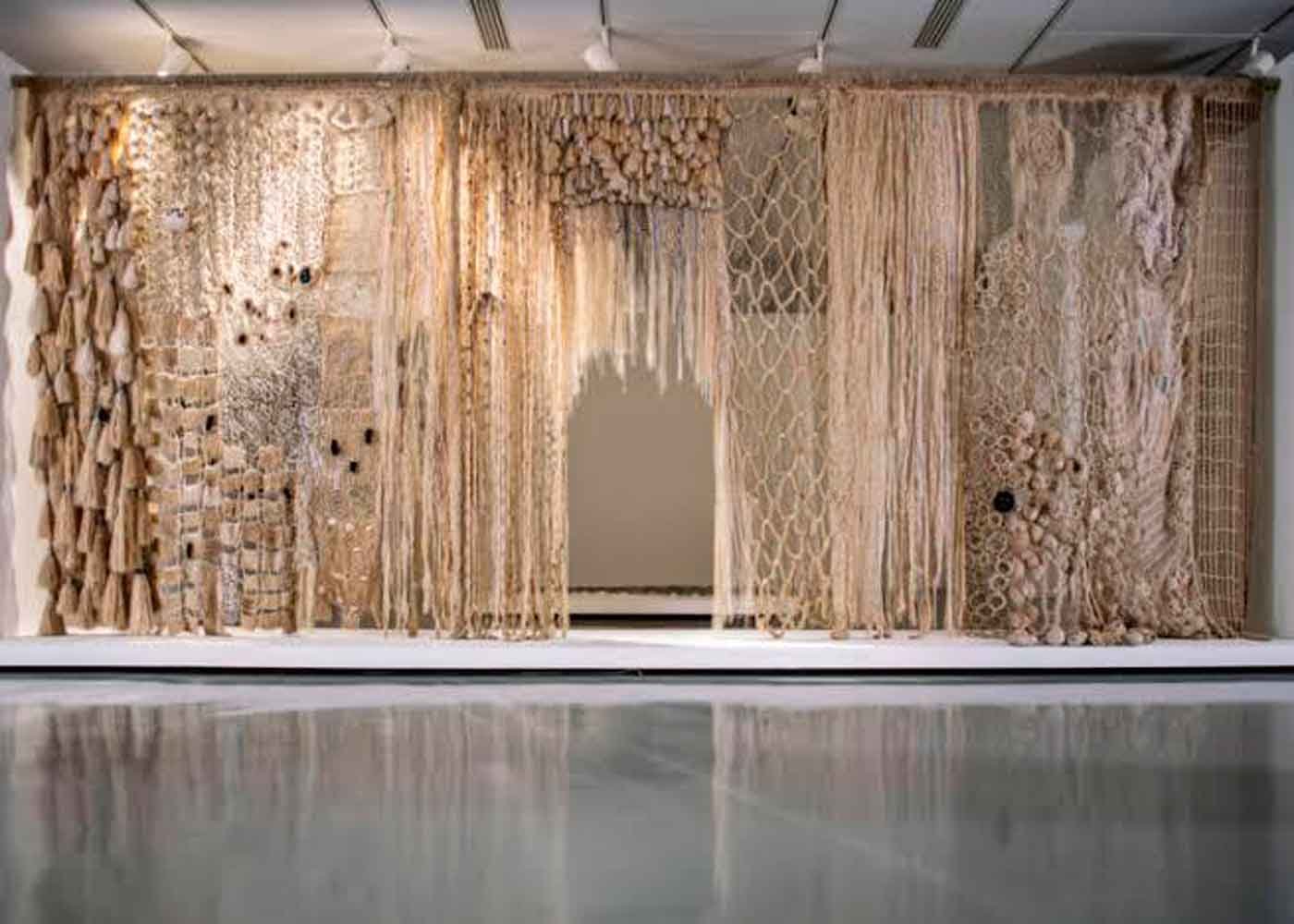
For Morocco’s first-ever national pavilion, Amina Agueznay presents an extraordinary installation titled Aseta: Ritual of Weaving in Amazigh Land.
Spanning over 300 square metres, the work represents the collective efforts of 166 craftspeople from across Morocco.
Weavers, embroiderers, silversmiths, bead workers, basket makers, crochet artists, and raffia specialists all contributed their expertise, making the installation a living archive of Moroccan craftsmanship.
Rather than treating craft as decoration, Agueznay presents it as cultural memory. Every woven fibre carries regional history. Every bead tells a story.
Every handcrafted surface preserves knowledge passed between generations.
Dubravka Lošić: Textiles That Remember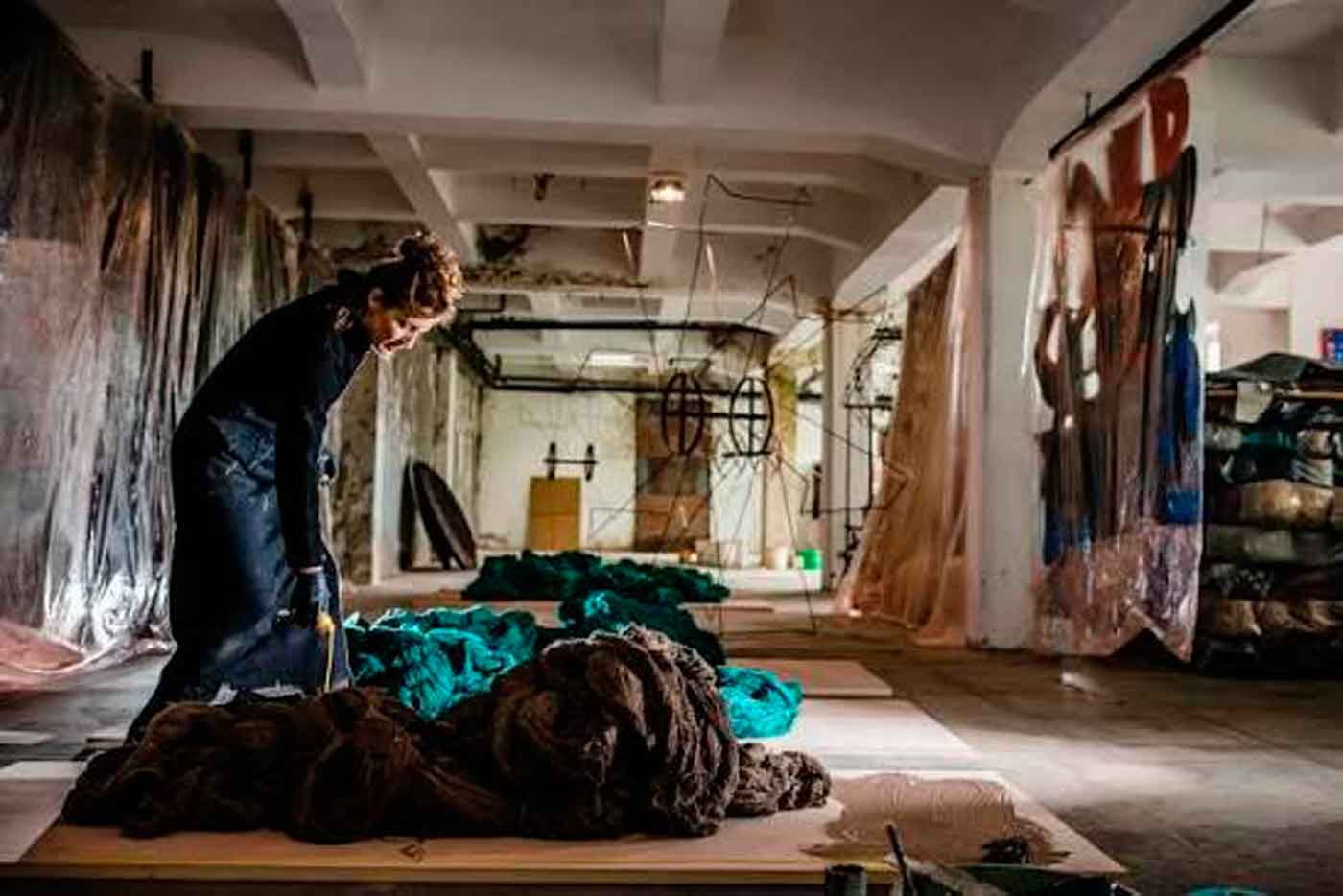
Croatian artist Dubravka Lošić turns fabric into emotionally charged sculpture.
Raised among knitting machines in her family’s textile factory, she developed an intimate understanding of cloth, yarn, stitching, stuffing, binding, and wrapping from childhood.
Her Biennale installation Rosary consists of tightly wrapped gauze forms arranged like a field of flowers.
Their soft white surfaces are interrupted by fluorescent pink stains that evoke wounds, healing, and vulnerability.
Elsewhere, swollen textile sculptures stitched and stapled together resemble skin itself, reminding viewers how cloth can become an extension of the human body.
When Craft Becomes Contemporary
What unites these seven artists is not simply their use of traditional techniques.
It is their refusal to let those traditions remain frozen in museums. Embroidery becomes architecture. Bamboo becomes monumental sculpture. Pottery becomes ancestral testimony. Weaving becomes national identity. Paper becomes emotional landscape. Textiles become memory.
In a world racing towards automation, the Venice Biennale quietly reminds us that perhaps the future of art does not lie in abandoning craft.
It lies in rediscovering it.
Because every stitch, every woven strand, every carved surface, and every coil of clay carries something machines never can.
The touch of a human hand.