
Restoring Hyderabad’s Heritage, One Drop at a Time: Kalpana Ramesh’s Fight for Water and Wells
By Vaishnavi D
In a city where glass towers rise alongside centuries-old monuments, water and heritage rarely occupy the same conversation. For Kalpana Ramesh, conservationist and community activist, they are deeply interconnected. Her work across Hyderabad and Telangana, reviving wells, restoring lakes, and mobilising communities—has quietly reshaped how urban spaces can engage with water.
Early Steps: Building Community Awareness
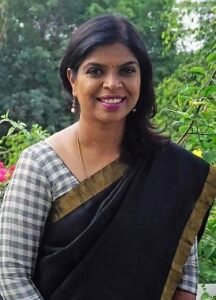
Kalpana Ramesh’s journey began in 2011 with a simple but ambitious goal: to make her neighbourhood “tanker-free” while spreading awareness about the value of rainwater. What started as a local effort soon evolved into a broader philosophy of water conservation.
She explains, “This basic knowledge about rainwater, how we can augment it, reuse it, and strengthen ecosystems through recharge, is very important. You need to do multiple things in tandem to achieve holistic conservation. That means looking at lakes, rejuvenating wells, and understanding both surface water bodies and groundwater.”
She emphasises the urgency of capturing rainfall effectively, especially in the context of changing climate patterns. “Surface water bodies are critical. This huge amount of rainfall has to be captured somewhere; otherwise, it leads to urban flooding. Lakes, wells, and rainwater systems, within communities, on roads, in common areas, must work together.”
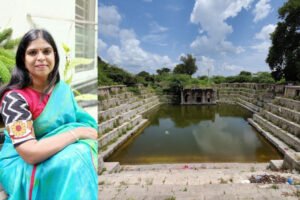
For Kalpana Ramesh, the conversation is no longer theoretical. “We are dealing with climate change. It has triggered intense rainfall and cloudbursts. These require large ‘buckets’, our lakes and wells, to capture and hold water. They need to be deeper, protected, and free from encroachment.”
Wells that Speak of History
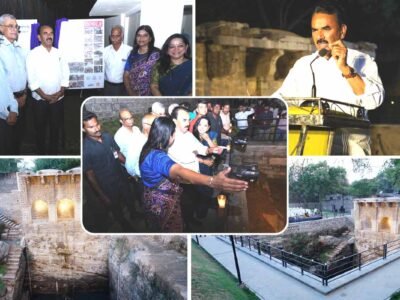
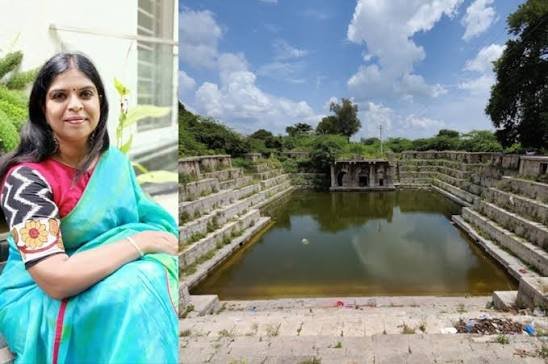
Among her recent significant restoration efforts are three wells: the Osmania University Well, the Bansilalpet Well, and a historic stepwell near Kondapur. Each project has been approached with equal attention to structural integrity and cultural memory.
She notes, “Most of them had become garden beds. If all these come back, think of the water they can hold when it rains.”
The restoration process was far from straightforward. Decades of neglect had left these wells clogged with sewage, garbage, and debris. At Bansilalpet, the team uncovered thousands of discarded wedding invitations. Rather than simply clearing them, Kalpana Ramesh traced their origins and used the opportunity to educate residents about responsible waste disposal.
These wells, she insists, are not relics of the past. They are essential, functional water systems. “Rooftops are the cleanest sources of rainwater. Why can’t we reuse that for domestic purposes? Zero discharge. Ethical recharge.”
Lakes and Climate Reality
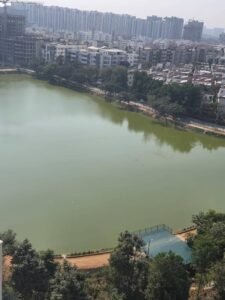
Her work extends beyond wells to larger water bodies, including Kondapur Lake. Like many urban lakes, it had suffered from unchecked urbanisation, sewage inflow, and neglect.
She says, “Climate change has triggered intense rainfall. These large surface water bodies act as buffers—they capture and hold water.”
Reviving the lake required coordination across multiple government bodies, GHMC, irrigation departments, town planning authorities, and HMWSSB. Blocked inlets were reopened, sewage inflows were diverted, and the lake’s natural flow was restored.
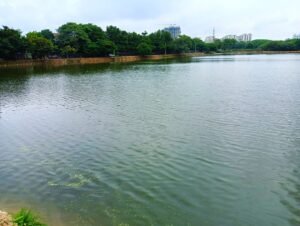
The process was physically demanding and often emotionally charged. She recalls, “Earlier, even temple water overflowed into the lake with sewage. We cleaned it with our own hands, without thinking about anything else, just the lake.”
Equally important was community involvement. Kalpana Ramesh helped establish a Lake Protection Committee and led sustained clean-up efforts. Over time, even those initially hesitant began to participate, transforming the lake into a shared civic responsibility.
Rainwater Projects: From Awareness to Action
Alongside large-scale restorations, she has implemented neighbourhood-level rainwater harvesting initiatives. These projects integrate rooftop collection systems, recharge pits, and garden bed designs to maximise water retention.
Her approach is rooted in practical engagement. “Awareness alone is not working. Action upon awareness is what works.”
She is now looking to expand this model through a more structured, neighbourhood-focused initiative. She says, “I want to work at a local level. It’s not about one-day clean-ups or symbolic walks. It’s about long-term engagement with people.”
Community Impact and Future Vision
The impact of her work is visible not only in restored wells and cleaner lakes but in the communities themselves. Residents around Kondapur Lake and other restored sites report improved water quality, safer surroundings, and a renewed sense of ownership.
Educational institutions, technology campuses, and residential associations have also become active participants, signalling a shift towards collective responsibility.
Yet, Kalpana Ramesh remains grounded in the larger challenge ahead. She says, “Today, it has become normal to use river water even for flushing. That is very concerning. River water is the food security of tomorrow.”
Her work brings together conservation, heritage preservation, and climate resilience—demonstrating that restoring the past can be a powerful way to secure the future.
For Hyderabad and Telangana, Kalpana Ramesh’s efforts offer a compelling model: one that recognises water not just as a resource, but as a shared legacy. One well, one lake, and one community at a time.
Hyderabad Lake