

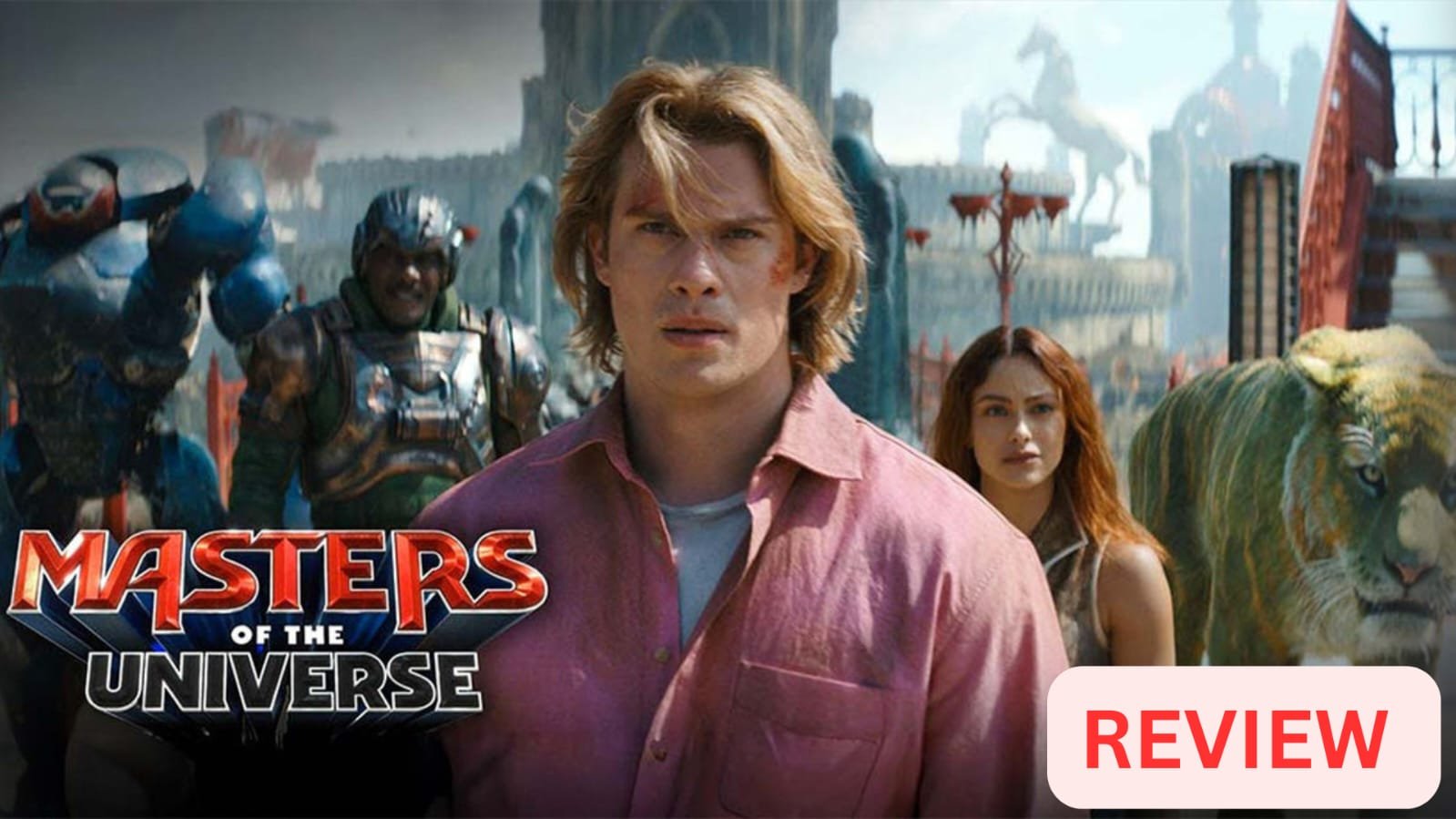
Masters of the Universe (2026): He-Man trades muscle for modern morality in Amazon’s progressive fantasy reboo
Masters of the Universe (2026) review by Kausalya Rachavelpula
For decades, He-Man represented a straightforward fantasy ideal: strength, courage and the triumph of good over evil. The original Masters of the Universe cartoons were unapologetically simple, built around larger-than-life heroes, memorable villains and clear moral lessons which also included the macho-man vibe in a male-dominated storytelling. Amazon’s 2026 live-action reboot, directed by Travis Knight, attempts something different. Rather than simply reviving the franchise, it reinterprets it through a contemporary lens, producing a film that feels determined to update its values as much as its visuals.
The story follows Prince Adam, whose main constume as human is a pink shirt which also adds to their inclusion of modern ideology relating with masculinity and pink colour, played by Nicholas Galitzine, who has spent years on Earth disconnected from his destiny on Eternia. When circumstances force him back into the conflict against Skeletor, he must rediscover not only his powers but also his sense of purpose. On paper, this sounds like a familiar hero’s journey. In execution, however, the film spends considerable time reframing what heroism means in the modern era.
Galitzine certainly looks the part. His physical transformation is impressive, and he brings a likeable quality to Adam that helps carry the film through its lengthy running time. The supporting cast is similarly committed, with Idris Elba providing gravitas and Jared Leto delivering a theatrical interpretation of Skeletor. Unfortunately, the screenplay rarely allows these performers to elevate the material beyond its increasingly predictable themes.
Visually, the film presents a colourful and ambitious version of Eternia. There are moments when the production design successfully captures the eccentric charm of the original toy line and animated series. Practical creature effects, elaborate costumes and expansive fantasy environments create a world that frequently looks impressive, even when the storytelling struggles to maintain momentum.
Where the film becomes more divisive is in its treatment of He-Man himself. The traditional image of He-Man was built around physical strength and heroic confidence and macho-man vibe. Here, those qualities are repeatedly questioned, deconstructed and redefined. The narrative emphasises emotional intelligence, empathy and communication as superior virtues to raw power. There is nothing inherently wrong with that approach, but the film often feels less interested in adventure than in ensuring audiences understand its updated moral framework.
This progressive perspective reaches its peak during the climax. Rather than celebrating victory through courage and sacrifice alone, the film delivers a message aimed squarely at kids and younger viewers about understanding others, managing emotions and rejecting simplistic ideas of masculinity. It is clear what the filmmakers are trying to achieve, and many viewers will appreciate the intention. Others may feel that the message is delivered with such emphasis that it overshadows the fantasy adventure they came to see.
Ironically, despite spending much of its running time arguing that problems cannot be solved through strength alone, the finale still relies heavily on conventional action spectacle. This creates a contradiction at the heart of the film. It wants to challenge the traditional He-Man formula while simultaneously depending on it for excitement and resolution. The result is a film that never fully commits to either approach.
Masters of the Universe (2026) is therefore likely to divide audiences. Viewers seeking a modern, progressive reinterpretation of a classic property may find plenty to admire. Long-time fans hoping for a more traditional celebration of He-Man’s iconic mythology may leave disappointed. The film is ambitious, visually attractive and occasionally entertaining, but it often feels more focused on updating the character’s values than on delivering a truly memorable fantasy adventure.
Masters of the Universe Review