

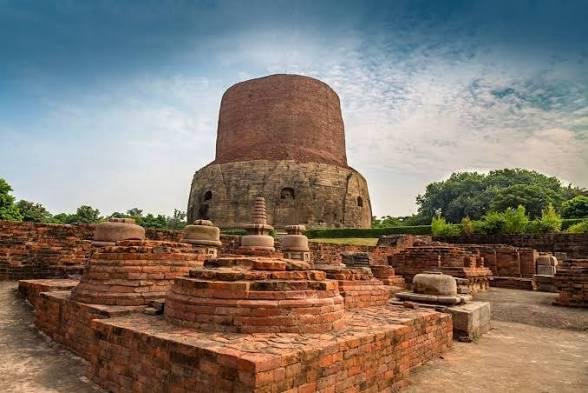
Sarnath Becomes UNESCO World Heritage Site, PM Modi Calls It a Proud Moment for India
India’s rich cultural and spiritual heritage has received another global honour as Sarnath, one of Buddhism’s holiest sites, was officially inscribed on the UNESCO World Heritage List. Celebrating the historic recognition, Prime Minister Narendra Modi described it as “a proud moment for every Indian,” highlighting Sarnath’s enduring significance in the country’s civilizational history.
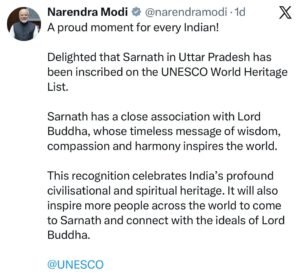
Sharing the news on social media, the Prime Minister wrote:
“A proud moment for every Indian. Delighted that Sarnath in Uttar Pradesh has been inscribed on the UNESCO World Heritage List. Sarnath has close association with Lord Buddha, whose timeless message of wisdom, compassion, and harmony inspires the world. This recognition celebrates India’s profound civilizational and spiritual heritage. It will also inspire more people across the world to come to Sarnath and connect with the ideals of Lord Buddha.”
The Birthplace of Buddha’s Teachings
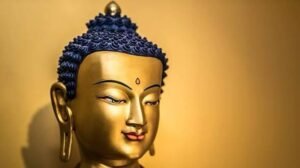
Located near Varanasi in Uttar Pradesh, Sarnath occupies a unique place in Buddhist history. It was here that Lord Buddha delivered his first sermon, known as the Dhammacakkappavattana Sutta, after attaining enlightenment at Bodh Gaya. The sermon marked the beginning of the Buddhist Sangha and the formal spread of Buddhism across the world.
For millions of Buddhists, Sarnath is one of the four most sacred pilgrimage destinations associated with Buddha’s life, alongside Lumbini, Bodh Gaya, and Kushinagar.
A Treasure of Ancient Heritage
Sarnath is home to several monuments of immense archaeological and historical importance, including the iconic Dhamek Stupa, believed to mark the spot where Buddha preached his first sermon. The site also houses the remains of ancient monasteries, temples, the Ashokan Pillar, and the famous Lion Capital of Ashoka, which today serves as the National Emblem of India.
The archaeological museum at Sarnath preserves sculptures, inscriptions, and relics that offer invaluable insights into India’s ancient artistic and religious traditions.
Global Recognition for India’s Cultural Legacy
UNESCO World Heritage inscription is among the highest international recognitions for sites of outstanding cultural or natural value. The inclusion of Sarnath acknowledges not only its immense historical significance but also its continuing relevance as a symbol of peace, compassion, and spiritual learning.
The recognition is expected to boost global tourism, encourage greater conservation efforts, and introduce millions more visitors to one of India’s most important centres of Buddhist heritage.
A Message That Still Resonates
More than two and a half millennia after Lord Buddha first spoke at Sarnath, his teachings of compassion, non-violence, mindfulness, and harmony continue to resonate across cultures and continents.
With its inclusion on the UNESCO World Heritage List, Sarnath now joins the ranks of the world’s most treasured cultural landmarks—an acknowledgement of India’s enduring contribution to global philosophy, spirituality, and human civilization.