

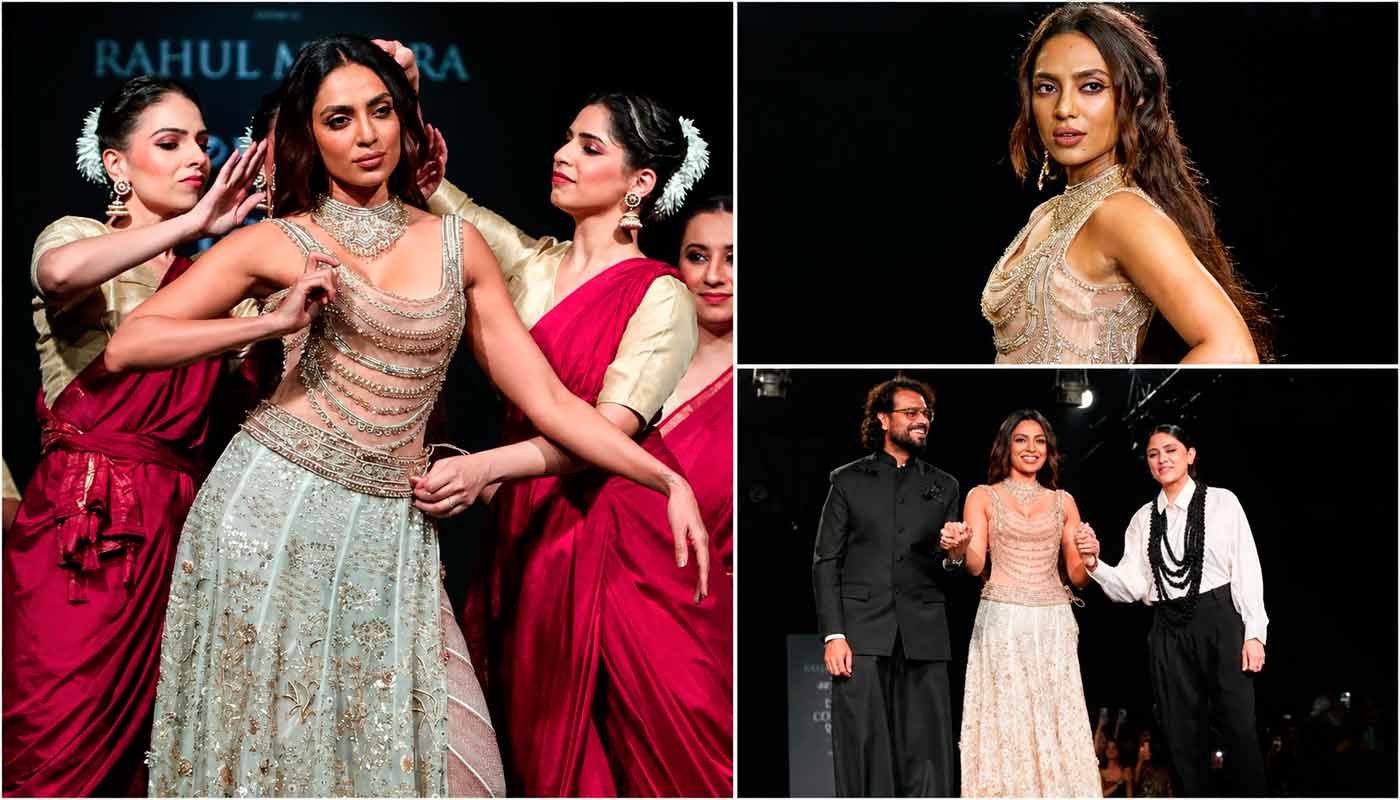
There are fashion shows that display clothes. Then there are fashion shows that become art.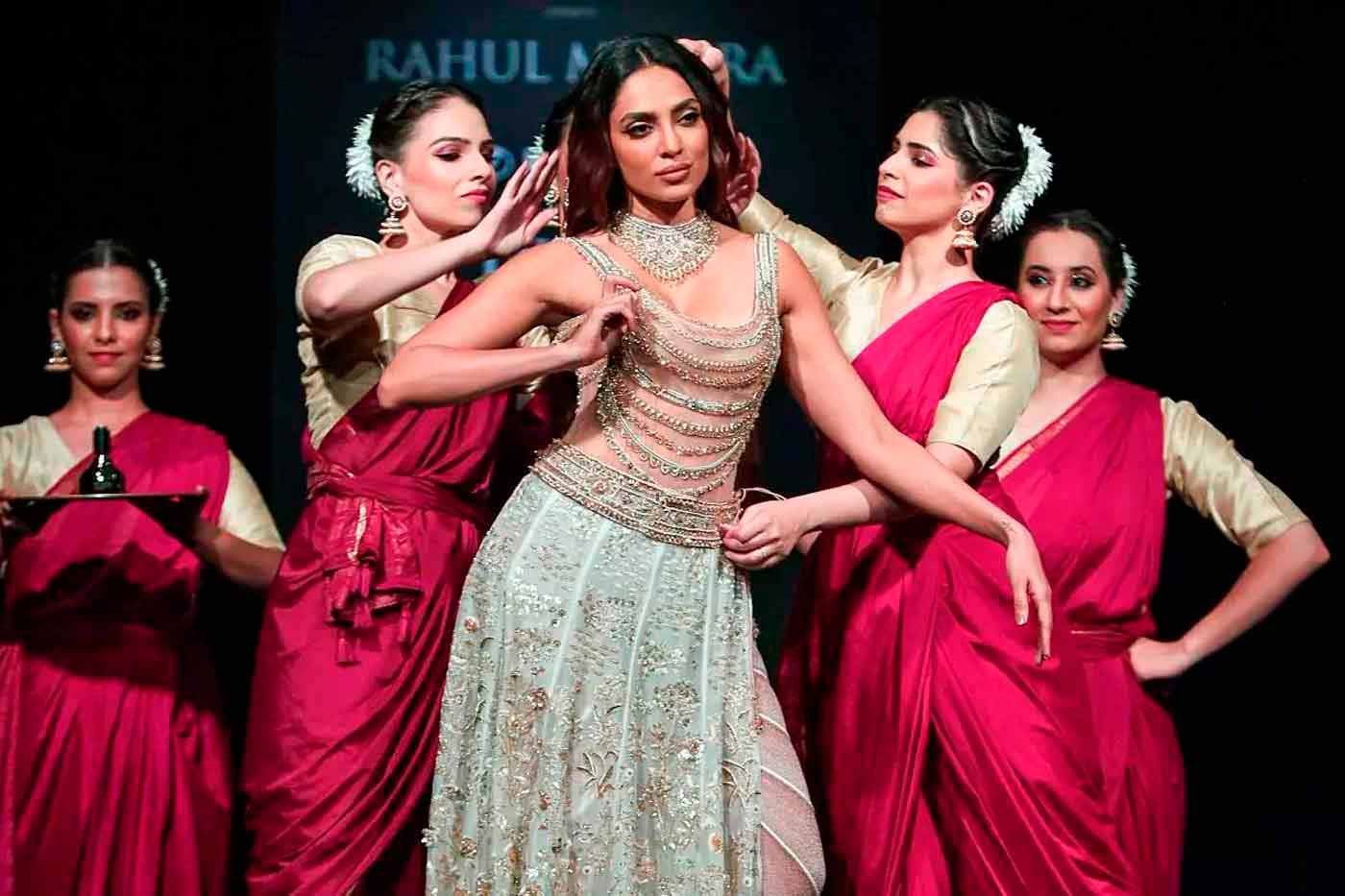
Rahul Mishra’s Devi collection at the grand finale of India Couture Week belonged to the latter. Inspired by ancient Indian temples, sculptures, and the timeless idea of feminine divinity, the collection celebrated India’s artistic legacy through couture that blurred the line between architecture and fabric. And standing at the center of it all was Sobhita Dhulipala, who transformed into the ultimate muse for Mishra’s vision.
A Collection Carved From India’s Past
Rahul Mishra looked inward instead of outward. Rather than drawing inspiration from Western silhouettes or fleeting trends, Devi celebrated India’s civilizational history. Temple architecture, stone carvings, and centuries-old sculptures became the foundation of the collection.
The garments appeared almost impossible at first glance.
From a distance, they looked like weathered stone sculptures. But a closer look revealed painstaking embroidery, silk threads, intricate handwork, and couture craftsmanship that recreated the porous texture of ancient stone. The illusion constantly shifted. One moment the fabric looked soft and fluid. The next, it resembled sculpted granite that had stood for centuries.
That tension between softness and monumentality became the defining language of the collection.
Sobhita Didn’t Wear the Collection. She Became It.
Some outfits need a model. Others need a muse. Sobhita Dhulipala was undoubtedly the latter. As she walked the runway, the presentation unfolded almost like a ritual. The gradual shringar transformed her on stage, allowing audiences to witness not just a couture finale but the making of a goddess.
Her gaze remained calm yet commanding. Her posture echoed the stillness of temple sculptures. Her measured walk carried quiet confidence rather than theatrical drama. Everything about her presence made it feel as though an ancient stone deity had stepped out of a temple and into the modern world.
It wasn’t merely styling. It was a performance. 
Why Sobhita Was the Perfect Choice
Rahul Mishra has always understood that couture is as much about the wearer as it is about the garment. Sobhita brings an unmistakable elegance to everything she wears. Her classical features, restrained expressions, and effortless poise naturally complement Indian textiles and heritage-inspired fashion.
For a collection titled Devi, casting someone who embodies quiet strength instead of loud glamour felt like the perfect creative decision. The result didn’t feel like celebrity styling.
It felt like storytelling.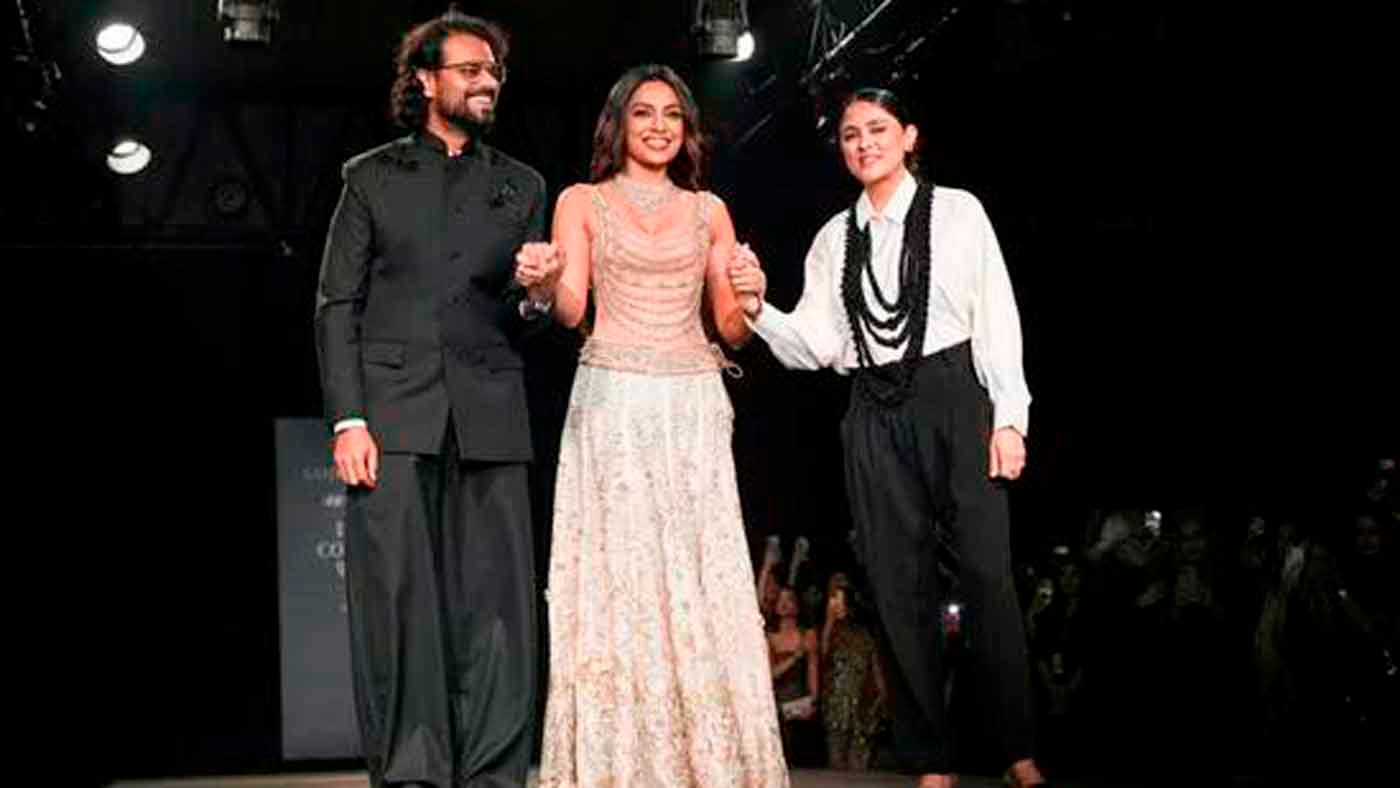
When Couture Becomes Cultural Memory
One of the most striking aspects of Devi is that it doesn’t treat Indian heritage as nostalgia. Instead, it reinterprets it for the present. Temple carvings become embroidery. Stone becomes silk. Architecture becomes couture.
Ancient craftsmanship finds a place on one of India’s biggest fashion stages without losing its authenticity. In an era where fashion often chases trends, Rahul Mishra reminds us that India’s own artistic traditions remain an endless source of inspiration.
A Finale Worth Remembering
India Couture Week closed with more than a spectacular runway. It closed with a reminder that fashion can preserve history, celebrate craftsmanship, and honour culture all at once. And if Rahul Mishra’s Devi needed a face, it is difficult to imagine anyone more fitting than Sobhita Dhulipala.
She didn’t simply wear the collection. She became its living sculpture.