

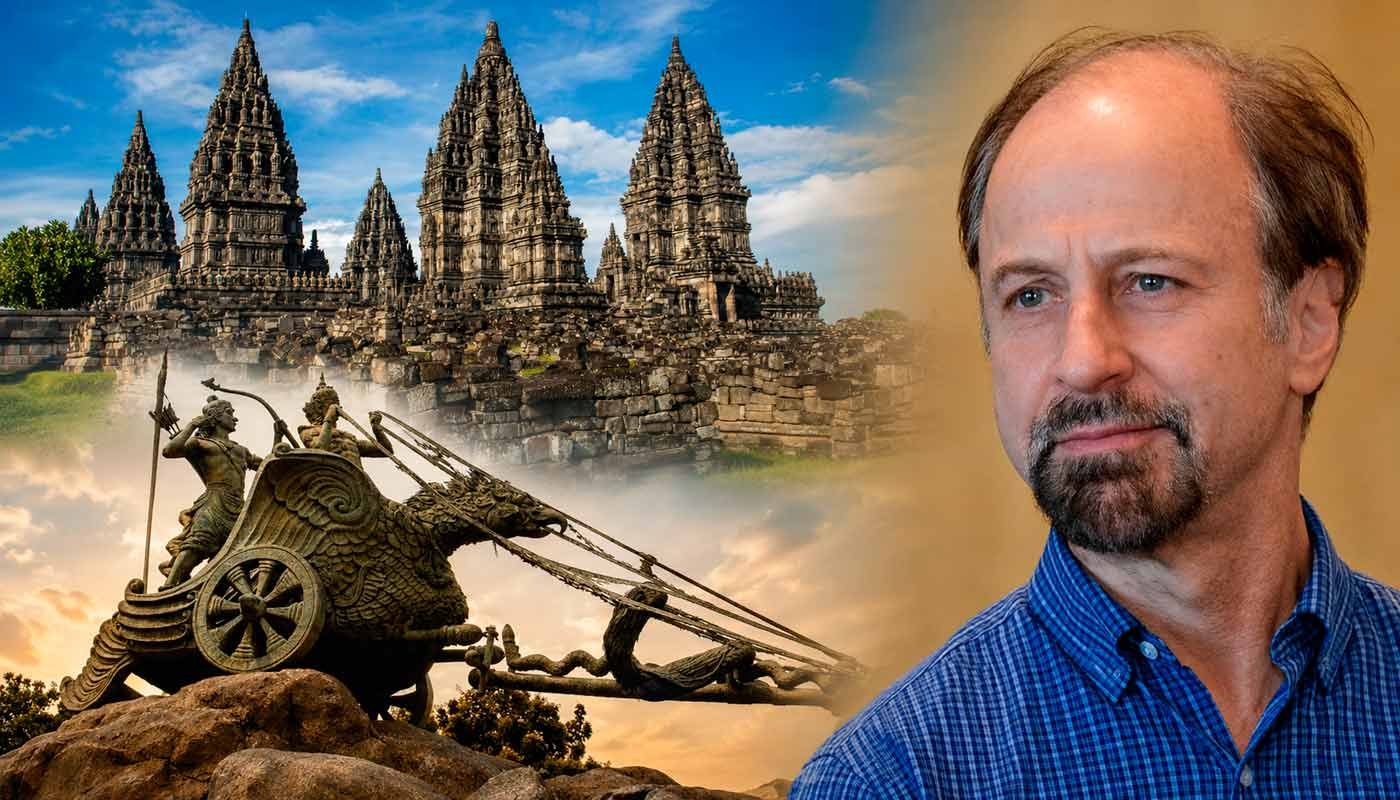
When most people think of Indonesia today, they think of the world’s largest Muslim-majority nation. What many don’t realize is that for nearly a thousand years, Hindu kingdoms shaped its politics, architecture, literature, language, and identity.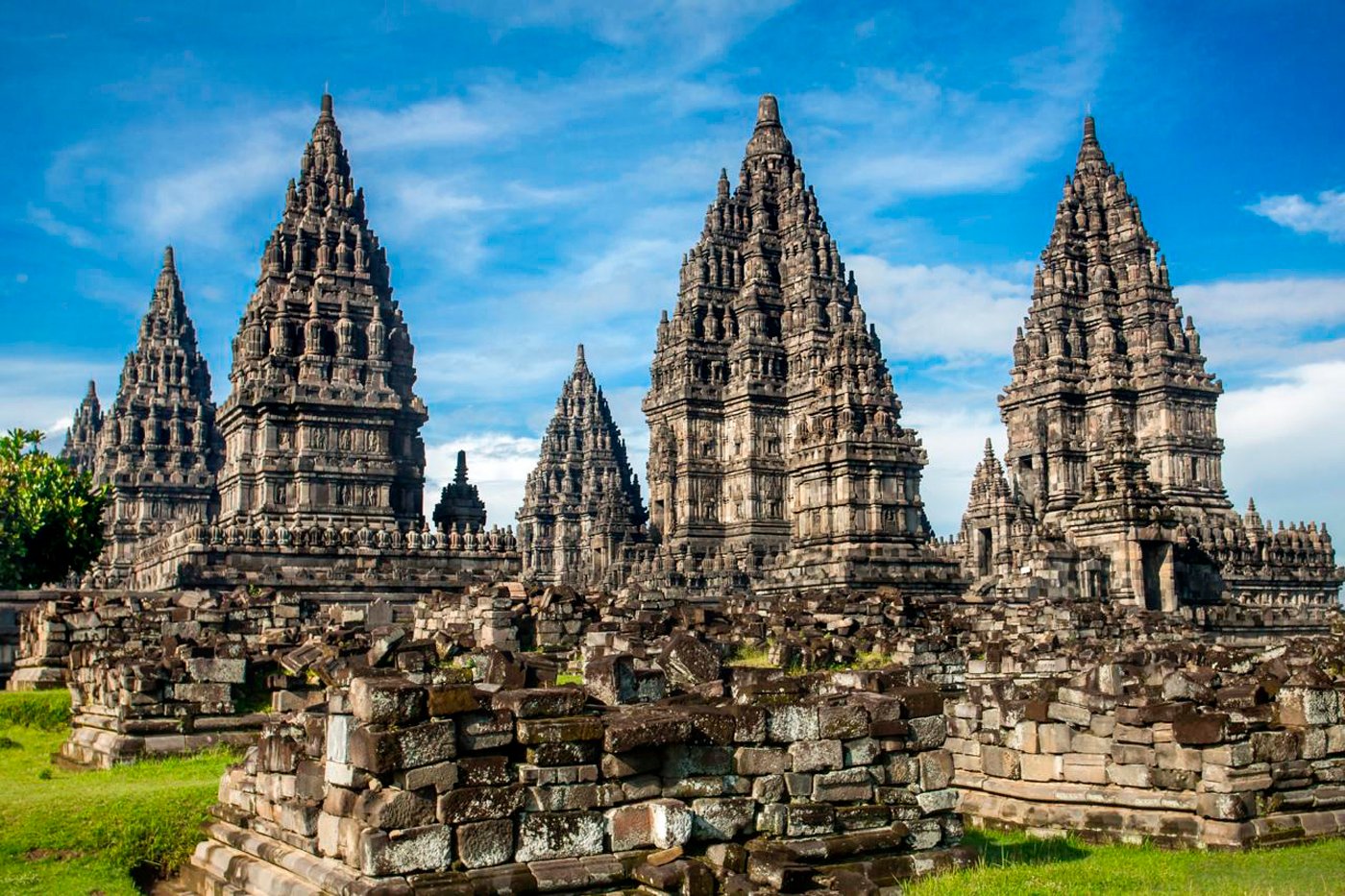
Long before mosques dotted the skyline, towering temples dedicated to Shiva, Vishnu, and Brahma stood across Java. Hindu kings ruled vast maritime empires that controlled trade routes stretching from India to China.
The story of Hindu Indonesia isn’t simply one of a religion that disappeared. It is the story of a civilization that transformed and still quietly lives on.
A Civilization Built Across 17,000 Islands
Indonesia is a vast archipelago made up of more than 17,000 islands stretching across the equator. Separated from India by thousands of kilometres of ocean, it nevertheless became one of the greatest centres of Hindu and Buddhist civilization outside the Indian subcontinent.
Indian traders, scholars, and priests arrived through flourishing maritime trade routes as early as the first centuries CE. Rather than conquering the islands, they exchanged ideas, languages, philosophies, and traditions.
Over time, local rulers embraced Hinduism, blending it with indigenous beliefs to create a uniquely Indonesian identity.
The Rise of Hindu Kingdoms
Several powerful Hindu kingdoms emerged across the Indonesian islands. Among the most influential were Kutai, Mataram, Singhasari, and eventually the mighty Majapahit Empire, which reached its height during the 14th century.
Majapahit ruled one of the largest empires in Southeast Asian history, controlling much of present-day Indonesia, parts of Malaysia, Singapore, Brunei, southern Thailand, and even the Philippines.
Its influence extended far beyond military power. Art, literature, governance, architecture, and philosophy flourished under its rule.
Prambanan: Indonesia’s Greatest Hindu Temple
One of the most spectacular reminders of this era is Prambanan, Indonesia’s largest Hindu temple complex. Built in the ninth century and dedicated to the Trimurti, Brahma, Vishnu, and Shiva, the temple complex rivals many of India’s greatest monuments.
Its towering spires, intricate carvings, and panels depicting the Ramayana continue to attract millions of visitors every year.
In July, the Government of India announced its support for restoration efforts at Prambanan, strengthening cultural ties between the two nations and recognizing the monument’s immense historical importance.
Why Did Hindu Rule Decline?
The decline of Hindu kingdoms wasn’t caused by one dramatic invasion. Instead, it unfolded gradually. Internal succession disputes weakened major kingdoms. Maritime trade shifted. Islamic merchants established thriving commercial networks throughout Southeast Asia. Over generations, many coastal rulers embraced Islam, partly for trade and partly through peaceful cultural exchange.
When the Majapahit Empire weakened during the 15th century, its political influence steadily declined.
According to anthropologist Robert Hefner:
“Without the temples, which were the anchors of Hinduism in Java, Hindu institutions fell into disarray.”
As royal patronage faded, many temples were abandoned, and Hindu institutions gradually lost their central place in Javanese society.
Did Hinduism Really Disappear?
Not at all. While Islam became the dominant religion, Hindu culture never truly vanished. The island of Bali remains overwhelmingly Hindu even today, preserving rituals, ceremonies, temple traditions, and philosophies that have continued for centuries.
Elsewhere across Indonesia, Hindu influence survives in ways many people rarely notice.
Hindu Heritage Is Everywhere
Walk through Jakarta, a city where nearly 87 percent of the population is Muslim, and Hindu history quietly reveals itself. The national airline is called Garuda Indonesia, named after Vishnu’s divine eagle.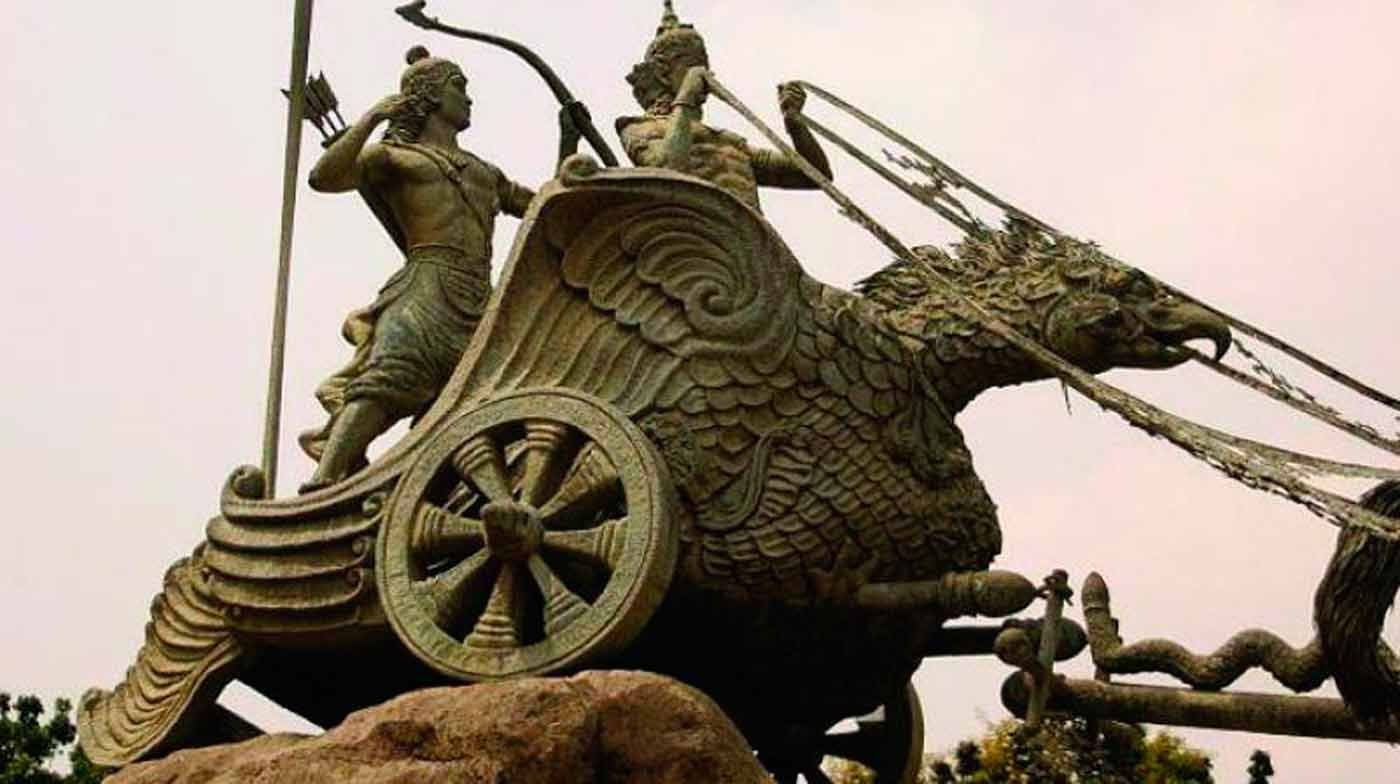
One of Jakarta’s most iconic traffic circles features a massive sculpture of Arjuna and Krishna from the Mahabharata. Businesses proudly carry names like Rama, Indra, and Garuda. Traditional shadow puppet theatre, classical dance, literature, and even elements of the Indonesian language continue to draw heavily from the Ramayana and Mahabharata.
As Indonesian scholar Muhammad Thaykal explains:
“This is our culture, our intellectual, spiritual heritage. I take it seriously.”
His words reflect an important truth. For many Indonesians, these traditions are not viewed as foreign religious imports but as part of their shared national identity.
History Is More Complicated Than Labels
Indonesia’s past reminds us that civilizations are rarely defined by a single religion or culture. The country did not erase its Hindu past when it embraced Islam. Instead, it absorbed centuries of history into a broader cultural identity.
Its temples still stand. Its epics are still performed. Its monuments still celebrate Hindu heroes. Its national symbols still carry Sanskrit names.
A Shared Heritage Across Oceans
The story of Hindu Indonesia challenges the idea that cultures exist in isolation. Long before globalization became a buzzword, ideas crossed oceans through merchants, travellers, artists, and scholars.
Today’s Indonesia may be home to the world’s largest Muslim population, but its temples, monuments, mythology, and traditions continue to tell the story of a civilization that once flourished under Hindu kings.
Sometimes history doesn’t disappear. It simply waits to be remembered.