

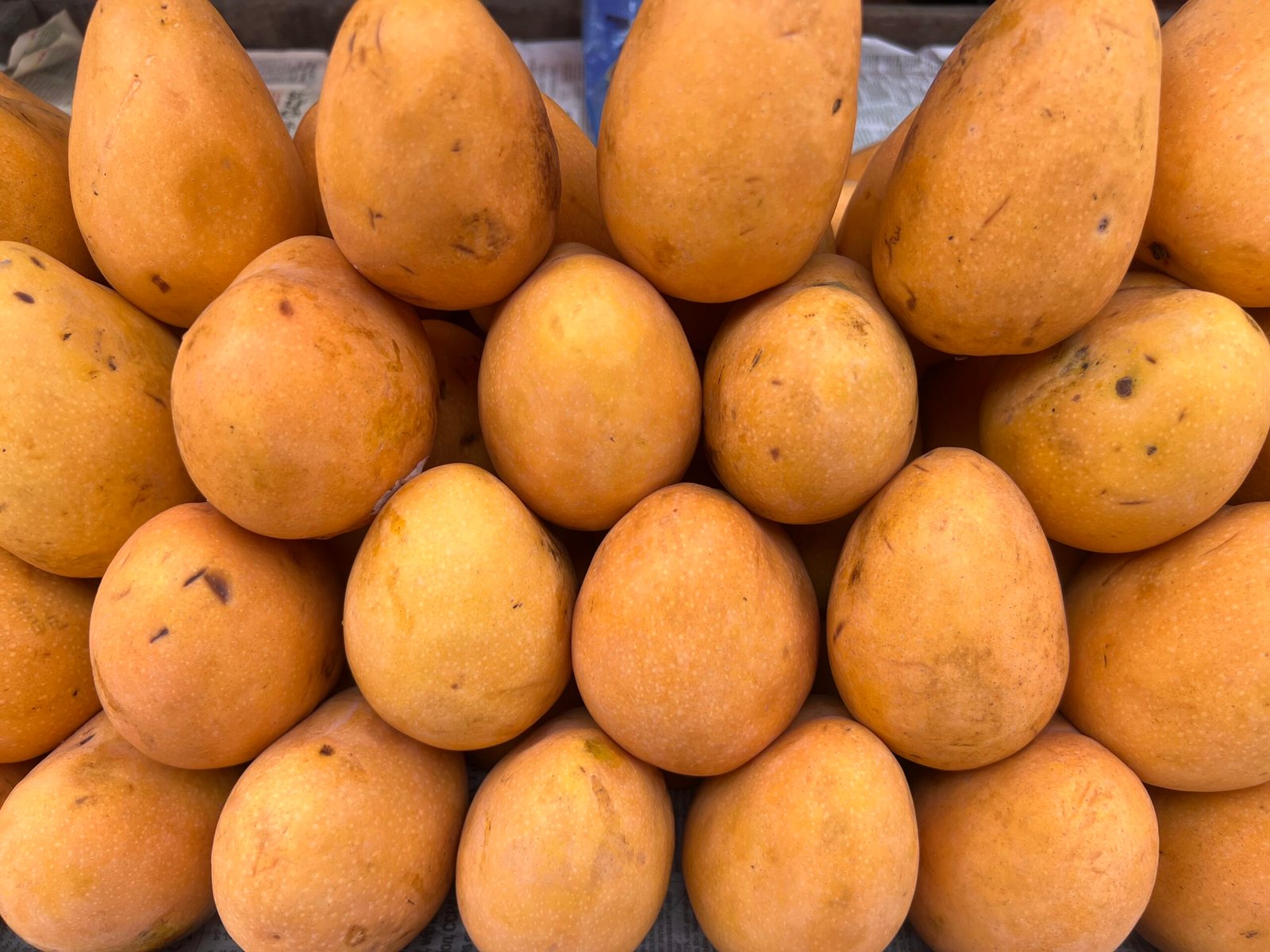
The Golden Fever of Banginapalli, Hyderabad’s Yellow Obsession
If you wander Hyderabad’s fruit lanes in April 2026, a golden tide grabs your attention: pyramids of butter-yellow mangoes glowing like captured suns, their soft, sugary scent pulling you closer. At the storm’s heart beats the Banginapalli, smooth-skinned, temptingly plump, begging to be cracked open for that first dripping slice. This isn’t just fruit; it’s ritual, a summer heirloom handed down through sticky-fingered generations, now feverish in Telangana’s markets.
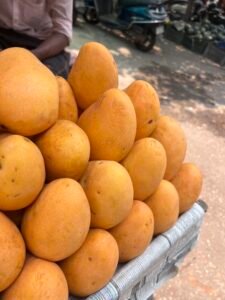
The name Banginappalli is actually a sweet echo of history, it comes from the small town of Banganapalle in Andhra Pradesh, once linked to a quiet palace where local rulers used to grow and enjoy this very mango in their royal orchards. Legend has it that the fruit became so beloved in those palace gardens that the town’s name slowly slipped into fruit‑stalls across Telangana, turning “Banganapalle” into the mouthful “Banginappalli” we know and crave today. So every time you peel open that bright yellow mango in Hyderabad, you’re not just tasting summer you’re tasting a slice of royal orchard history.
What is a Banganapalle, really?
Banginappalli, or Banganapalle, is a variety of mango scientifically known as Mangifera indica ‘Banganapalle’. It originated in the Banaganapalli region of Andhra Pradesh over a century ago, where farmers first noticed its unique mix of sweetness, mild acidity, and long shelf life. Unlike some perfumed, overpowering mangoes, Banginappalli speaks in softer tones, its pulp is smooth, almost fibre‑free, and its flavour lingers like a gentle afterthought. That’s why it became the default “safe” mango across Telangana, a fruit you can buy for a family gathering, a wedding gift, or a simple treat after lunch.
Roots in Royalty: The Banginapalli Legacy
Banginapalli (or Banganapalle) traces its name to the sleepy town of Banganapalle in Andhra Pradesh’s Kurnool district, once home to a nawab’s palace orchards where rulers savored its gentle sweetness.
Over a century old, this Mangifera indica variety earned a Geographical Indication (GI) tag in 2017, safeguarding its legacy from the region’s red loamy soils.
Key production hubs like Banganapalle, Rayalaseema, and Vijayawada churn out millions of these fibreless wonders, prized for their creamy, almost buttery texture, mild tang, and no-fuss pulp that melts without strings. In Hyderabad, biting into one isn’t eating; it’s tasting royal history, softened by Telangana summers.
From Vijayawada Orchards to Batasingaram’s Buzz
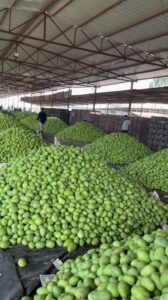
The journey starts in Vijayawada’s mango heartlands, where 2026’s bumper crop thrives amid April rains. Farmers harvest green gems by the quintal, reports peg Banginapalli at₹2,500–₹3,500 per quintal, with lower-grade fruit starting around ₹833–₹2,400 per quintal. From www.commodityonline.com
Truckloads rumble 250+ km to Batasingaram, Hyderabad’s unsung mango gateway on the city’s outskirts. This bustling fruit market hub receives 500–700 quintals of Banginapalli daily during peak season, sorting, ripening, and dispatching to city stalls. Vendors haggle under shamianas; loaders stack crates like golden bricks. From here, 200–300 quintals fan out to Hyderabad’s core markets weekly, fueling the fever, affordable at ₹90–110/kg retail, yet aspirational as the “safe king” for families, weddings, and post-meal bliss.
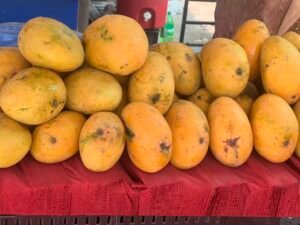
Hyderabad’s Mango Throne: Market Pulse and Vendors’ Tales
In Jambagh’s chaotic embrace, Khan & Sons stands as a yellow beacon amid the frenzy. Mohd Muqbool, the soft-spoken seller from nearby Osmangunj, has manned the shop for over 30 years, his days blurring into a rhythm of crates and smiles. “Mangoes are family,” he says, wiping sweat from his brow. He stocks five stars: Banginapalli at ₹100/kg, Kesar’s saffron glow, Rasam’s bold tang, Alphonso’s elite creaminess, and Himayat’s royal heft. Daily, 200–300 kg arrive green from Batasingaram; Muqbool ripens them naturally over 3–4 days in shaded stacks, no carbide rush. “Wait for the scent,” he advises, pressing a stem. “That’s honesty.” His stall moves 150 kg of Banginapalli alone some days, drawing regulars who trust his touch over flashier foes.
Across Uppal, Kapra, and Punjagutta, the market hums similarly. Vendors like 15-year Uppal veteran Raju shift 15–20 kg daily, but scale soars: Batasingaram’s flow means citywide stocks hit 1,000+ quintals weekly. Prices hold steady, Banginapalli’s fibreless reliability edges out pricier rivals, yet 2026 whispers inflation, with quintal costs nudging ₹12,000 amid transport hikes.
The Right Mango for Every Palate
Mangoes aren’t monolithic. Alphonso dazzles with intensity; Langra bites back; Dasheri perfumes the air. Banginapalli? The brilliant middle: sweet for dessert urges, gentle on stomachs, versatile in curd, halwa, or biryani sides. Your amma’s go-to, it rarely flops, fibreless texture making it kid-proof and elder-friendly.
The Color Trap: Ripening Realities
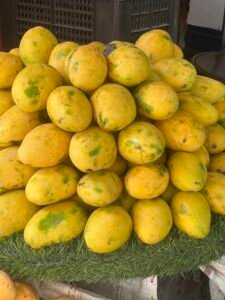
That 2026 gold rush dazzles, but beware the sheen. Calcium carbide, banned yet sneaky, forces green fruit into fake yellow, releasing gut-irritating acetylene. Residues spark nausea, headaches, worse over time. Markets brim with it; even Batasingaram sees shady loads.
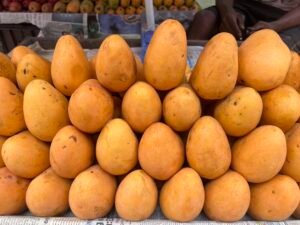
Savoring Safely: Your Golden Guide
Make 2026’s ritual pure. Quiz vendors: “Carbide-free?” Seek farm-direct labels or Batasingaram trusted hauls. Pick Muqbool-types who wait 3–4 days for nature’s hand. A true Banginapalli yields softly at the stem, wafts sweetness from its base, blushes real, not neon. Softer hue means honest taste.
Banginapalli isn’t mere fruit; it’s Hyderabad’s summer soul, Vijayawada’s earth to Jambagh’s joy, Muqbool’s patience to your plate. One fibreless bite whisks you to childhood fans and laughter. Choose wise, ripen real, and let the fever glow true.
for more updates and stories of mangoes in Hyderabad to turn your tropical cravings real, read on to www.fridaywall.com
By Vaishnavi DR