

An evening of wit, clarity and quiet provocation as the spiritual teacher reframes success, relationships and the language of empowerment
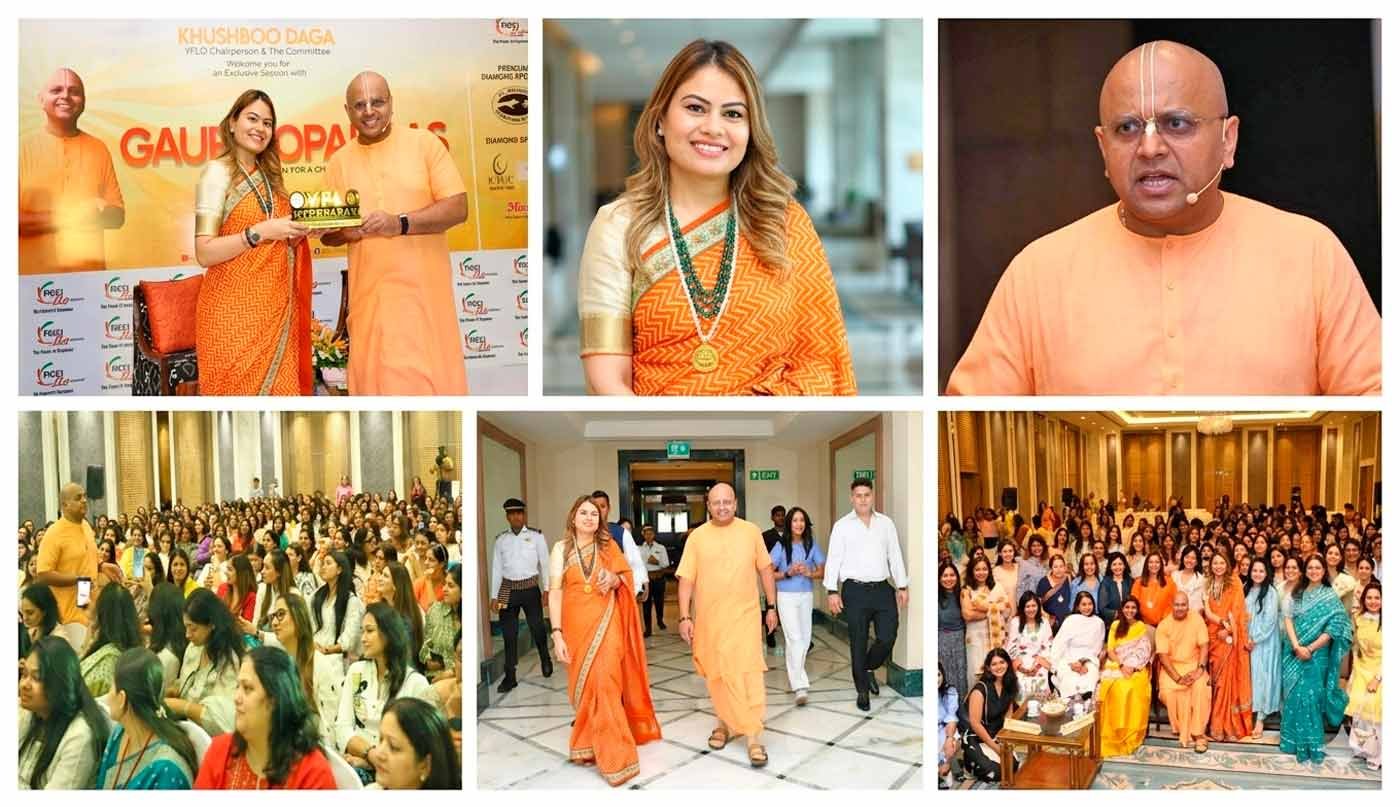
There are speakers who motivate, and then there are those who gently dismantle the very idea of what we think motivation should look like. At a recent session hosted by the Young FICCI Ladies Organisation (YFLO) Hyderabad Chapter at ITC Kakatiya, Gaur Gopal Das did the latter—with humour that disarmed and observations that lingered.
Opening the chapter’s annual calendar under Chairperson Khushboo Daga, the evening carried the theme “Together – We Progress.” It was an idea that threaded seamlessly through the talk—moving from the individual to the collective, from “I” to “We,” from performance to purpose.
“The only person not allowed to sleep in a session like this is the speaker,” he began, drawing easy laughter. But what followed was less about keeping the room awake and more about asking it to be present.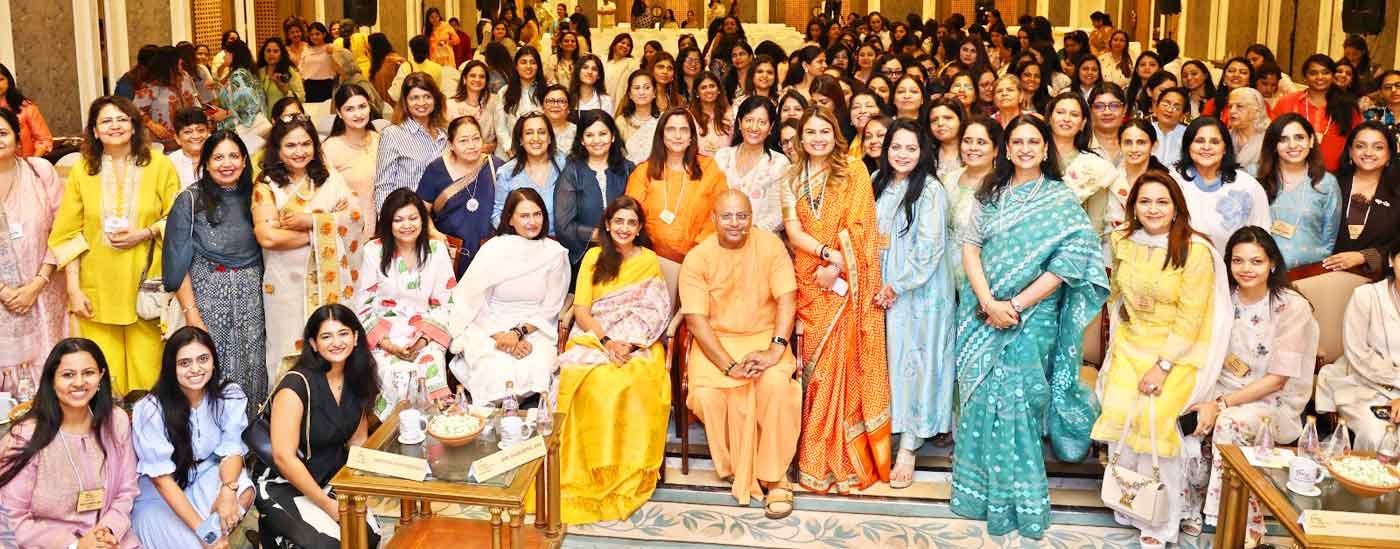
THE SHIFT FROM PROVING TO IMPROVING
Much of modern life, he suggested, is built around the quiet pressure to prove—competence, success, happiness. His counterpoint was simple, almost deceptively so: improvement over validation.
“Don’t try to prove yourself—focus on improving yourself.”
It is a line that reads like advice but lands like a recalibration. In a culture increasingly shaped by visibility, the idea of inward progress feels almost radical.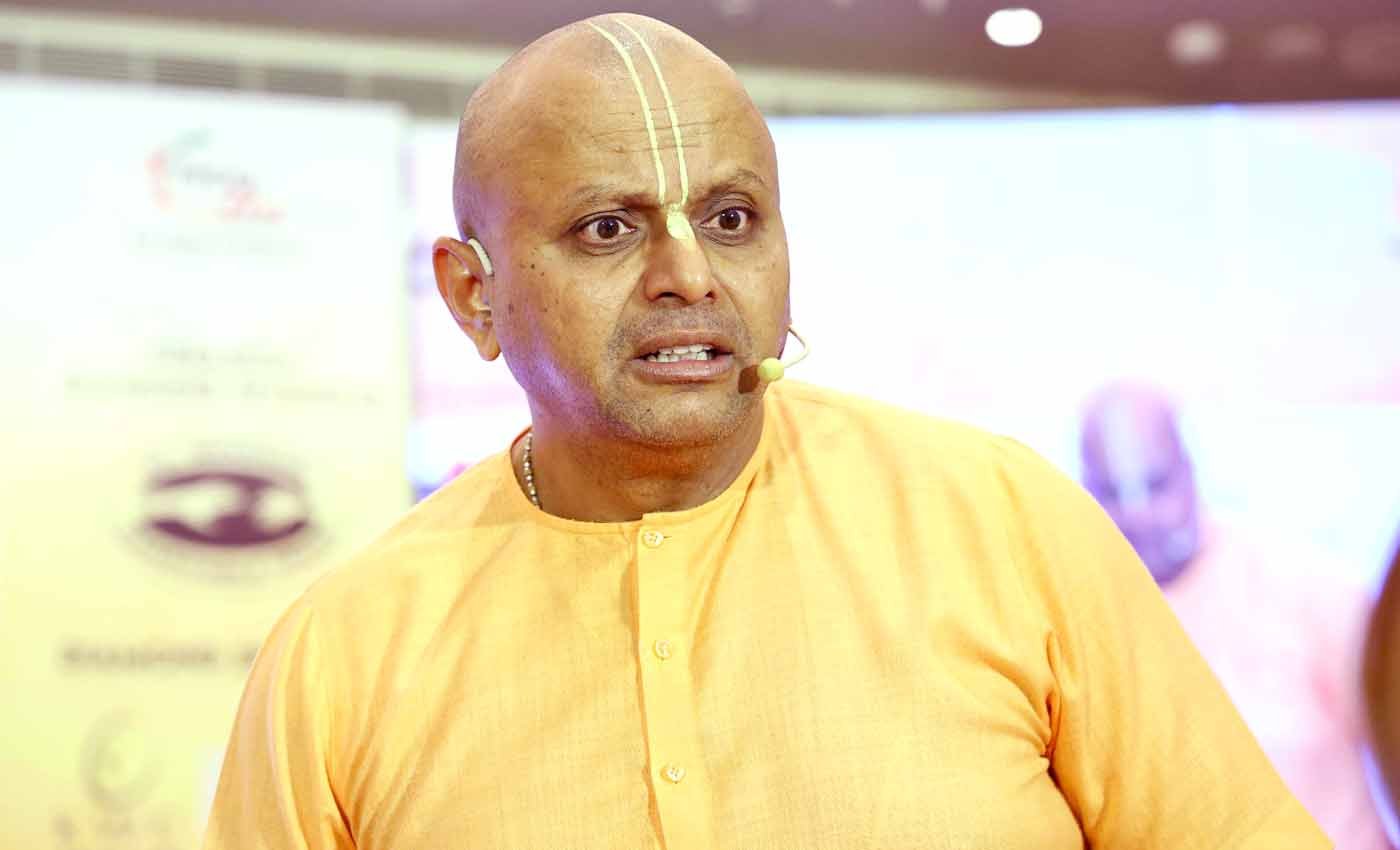
ON TIME, ENERGY AND THE ECONOMY OF ATTENTION
If time is often spoken about as currency, he pushed the metaphor further—towards accountability. Imagine, he said, a daily deposit of 86,400 units, each to be used before the day ends. The analogy is familiar, but its insistence lies in application.
What we spend, more than what we have, defines the outcome.
He spoke as much about energy as about time—the quieter resource that determines how meaningfully either is used. Not everything deserves equal attention, and discernment, he implied, is a form of discipline.
THE PERFORMANCE OF HAPPINESS
There was a moment in the evening where humour edged into critique.
“Vacations today are less about relaxation and more about posting.”
It’s an observation that doesn’t accuse as much as it reveals. The distance between experience and its display has never been thinner—and perhaps never more exhausting. Living well, he noted, is relatively simple; appearing to live well is where the cost escalates.
Comparison, in this context, becomes less a habit and more a condition—subtle, pervasive, and quietly disruptive.
RELATIONSHIPS WITHOUT THE BURDEN OF PERFECTION
In speaking about relationships, the tone shifted again—towards acceptance. Perfection, he reminded the audience, is neither realistic nor necessary. What sustains relationships is not flawlessness but balance.
Men and women, he observed, may not need each other in the strictest sense, but they complete each other in ways that are less about dependence and more about complementarity.
The reference to leaders such as Indra Nooyi underscored a recurring theme: success, however individual it may appear, is rarely achieved in isolation.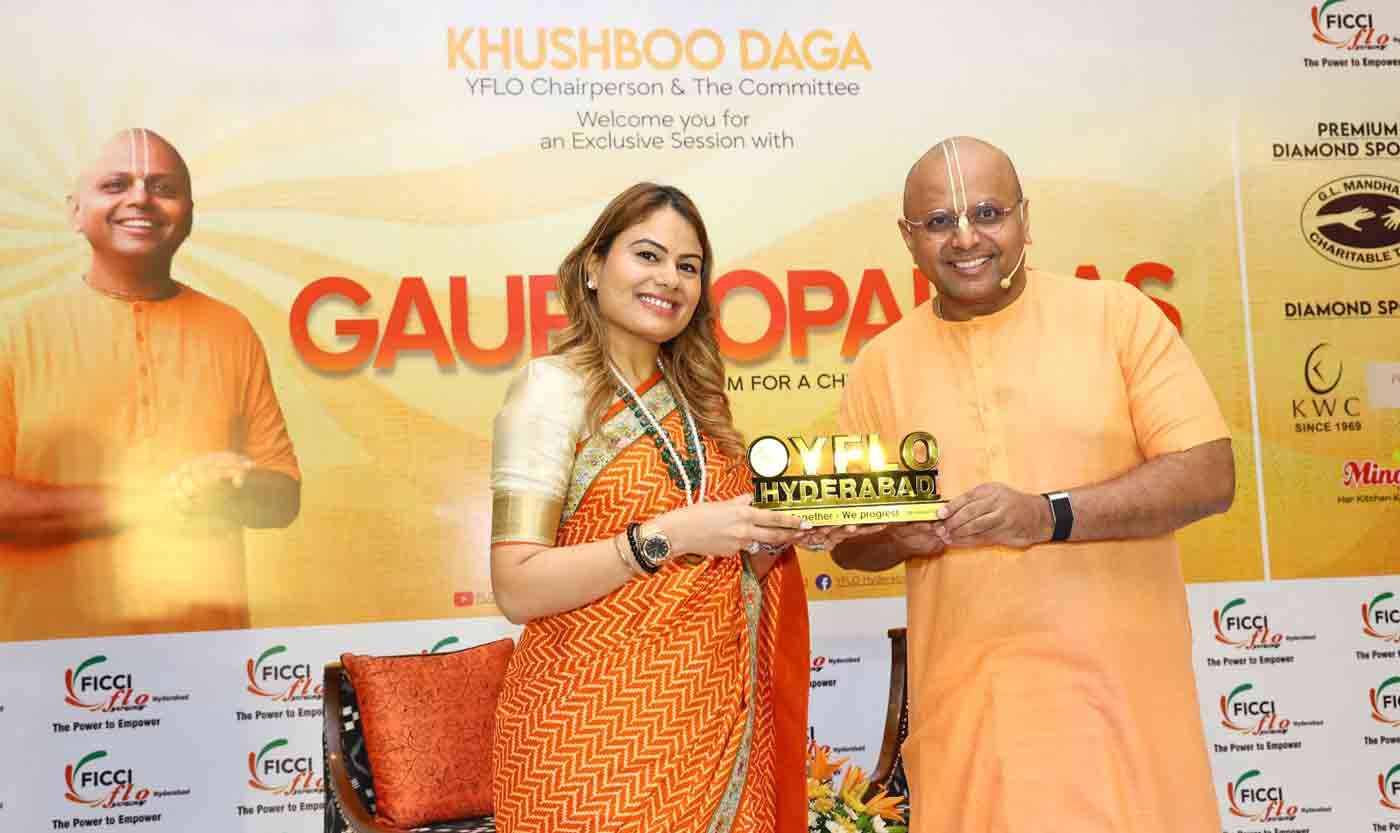
RETHINKING THE LANGUAGE OF EMPOWERMENT
Perhaps the most quietly provocative moment came when he questioned a phrase that has become almost default in public discourse.
“Stop using the term ‘women empowerment’—women are already powerful.”
It wasn’t a dismissal of the movement, but a reframing of it. The emphasis, he suggested, should shift from granting power to recognising it—and from isolation to support systems that allow it to thrive.
In a room that represented leadership, ambition, and evolving identities, the idea resonated not as rhetoric, but as reflection.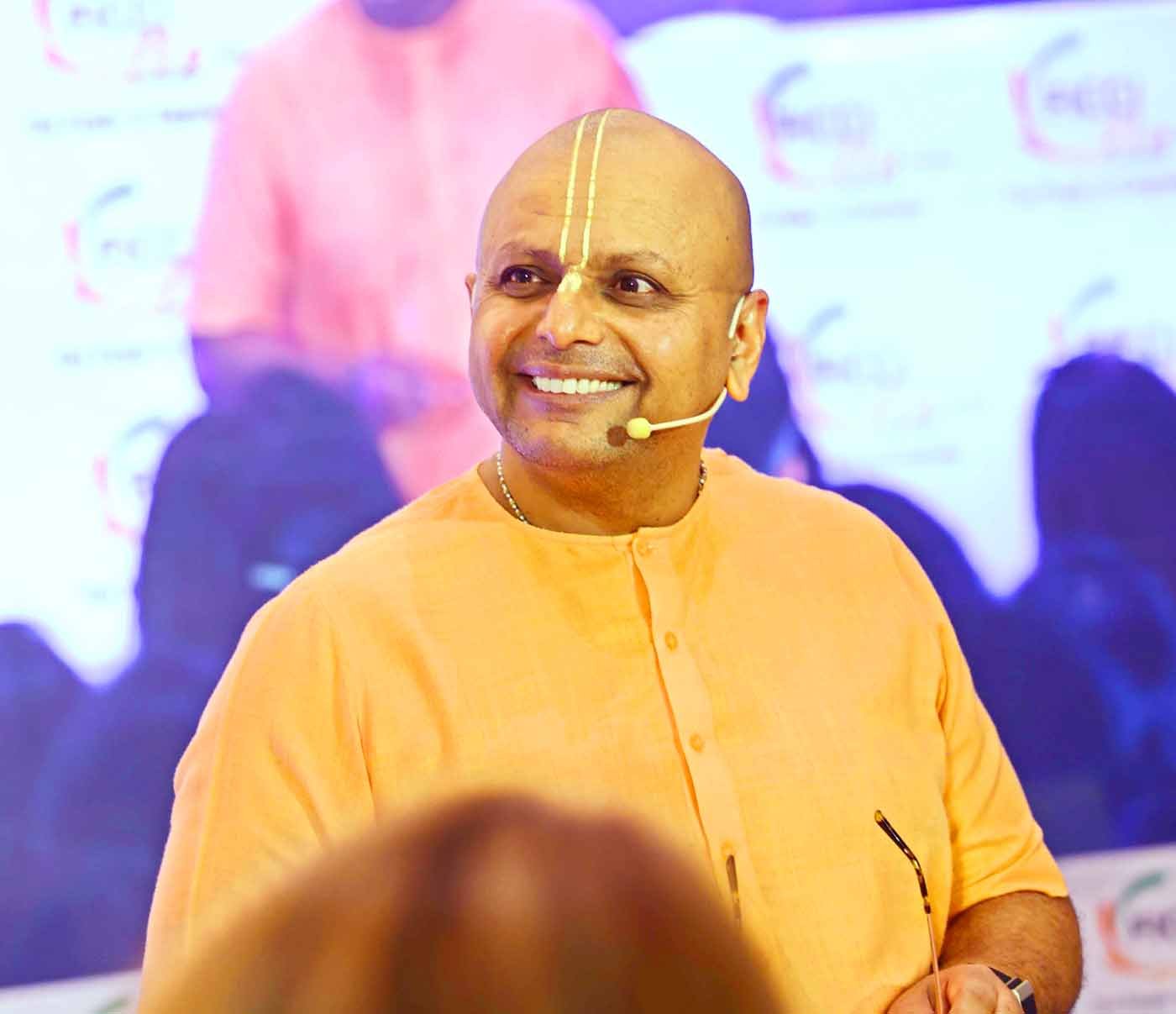
WHAT LINGERS AFTER
By the time the session moved towards its close—with the presence of YFLO National President-Elect Kamini Saraf and a roomful of members and guests—the tone had subtly changed. Not louder, not more energetic, but more considered.
There is a certain restraint to the way Gaur Gopal Das communicates—an understanding that not every idea needs amplification; some simply need space.
If the evening began with humour, it ended with something quieter: the recognition that progress, personal or collective, may have less to do with how convincingly we present ourselves to the world, and more to do with how consistently we choose to refine ourselves within it.