

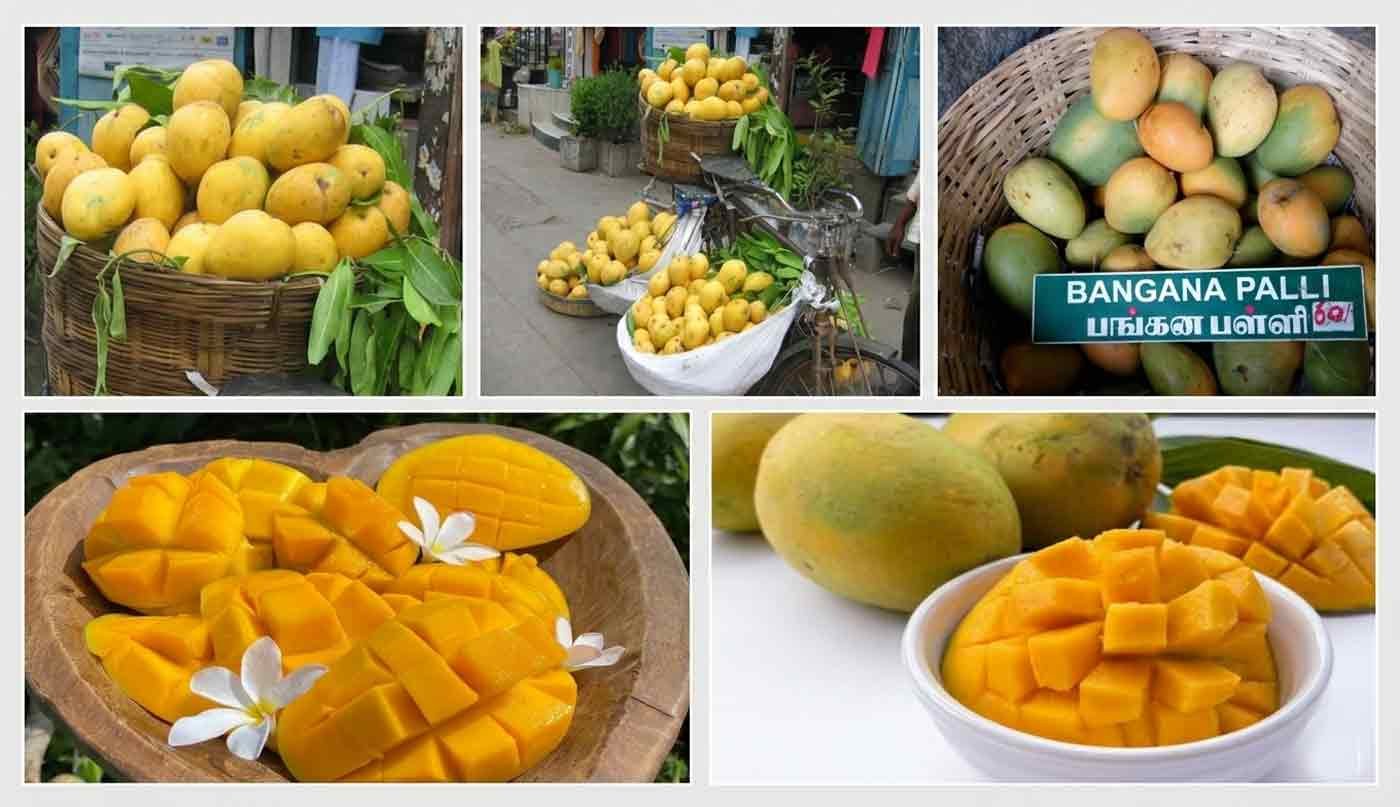
The golden fever of Banginappalli
If you walk through any Hyderabad fruit lane in April 2026, you’ll see it instantly: a sea of yellow, a soft sugary fragrance, and stacks of mangoes glowing like stolen suns. At the very heart of that summer storm is the Banginappalli mango, smooth, butter‑yellow, and dangerously tempting. Just one glance at its glossy skin and your hands itch to break it open, your tongue already imagining the first thick, dripping slice. You’re not just seeing a fruit; you’re seeing a ritual, a tradition, a small joy passed down from one summer to the next.
The name Banginappalli is actually a sweet echo of history, it comes from the small town of Banganapalle in Andhra Pradesh, once linked to a quiet palace where local rulers used to grow and enjoy this very mango in their royal orchards. Legend has it that the fruit became so beloved in those palace gardens that the town’s name slowly slipped into fruit‑stalls across Telangana, turning “Banganapalle” into the mouthful “Banginappalli” we know and crave today. So every time you peel open that bright yellow mango in Hyderabad, you’re not just tasting summer you’re tasting a slice of royal orchard history.
What is a Banganapalle, really?
Banginappalli, or Banganapalle, is a variety of mango scientifically known as Mangifera indica ‘Banganapalle’. It originated in the Banaganapalli region of Andhra Pradesh over a century ago, where farmers first noticed its unique mix of sweetness, mild acidity, and long shelf life. Unlike some perfumed, overpowering mangoes, Banginappalli speaks in softer tones, its pulp is smooth, almost fibre‑free, and its flavour lingers like a gentle afterthought. That’s why it became the default “safe” mango across Telangana, a fruit you can buy for a family gathering, a wedding gift, or a simple treat after lunch.
Hyderabad’s love affair with one yellow king
In Hyderabad, Banginappalli is not just a mango; it’s a status symbol. On the fruit stalls of Uppal, Kapra, and Punjagutta, you’ll see it stacked high, its colour screaming “pick me”. Local vendors like Raju, who has run a cart in the Uppal market for over 15 years, moves 15–20 kg of fresh Banginappalli every day during peak season. “People don’t ask for a mango anymore,” he smiles. “They ask for the Banginappalli.” In the city, the price hovers around ₹90–110 per kg, depending on size and ripeness, making it both affordable and aspirational.
What mango is right for you?
Mangoes are not one‑size‑fits‑all. For some, the intense sweetness of Alphonso is heaven; for others, the tang of Langra or the musky perfume of Dasheri is unmatched. But for many Telangana households, Banginappalli occupies the perfect middle ground: sweet enough to satisfy dessert cravings, mild enough not to hurt delicate stomachs, and versatile enough to pair with curd, desserts, and even biryani plates. It’s the “basic but brilliant” mango, the one your mother would always reach for because it rarely disappoints.
The colour that can lie
By summer 2026, mango seasonis in full swing, and the markets are a riot of colour. Deep yellow, almost artificial‑looking, these mangoes look like they’ve been dusted with gold. But here’s the hard truth: some of that dazzling yellow is not sunshine- it’s carbide. Unscrupulous traders use calcium carbide, a chemical that releases acetylene gas, to ripen raw mangoes faster and push them to market with a perfectly golden skin. The problem? Carbide leaves chemical residues, irritates the gut, and can cause nausea, headaches, and long‑term digestive issues.
Choosing what’s good, and what’s safe
For a truly healthy summer of 2026, your mango ritual must begin with awareness. Always ask the vendor: “Is this carbide‑free?” Choose sellers who clearly label their mangoes as carbide‑free or farm‑direct, and preferably buy from trusted online platforms or local farmers who avoid chemical ripening. A naturally ripe Banginappalli will feel slightly soft at the stem, smell sweet at the base, and give just a little when gently pressed. Its colour might be softer, less unreal, but its taste will be honest, and so will your health.
Banginappalli mangoes of 2026 are not just a fruit; they’re an experience. One bite, and you’re back in childhood summers, sticky fingers, and laughter under the fan. But that sweetness deserves to be safe. Choose wisely, choose naturally, and let your mango season be golden in more ways than one.