

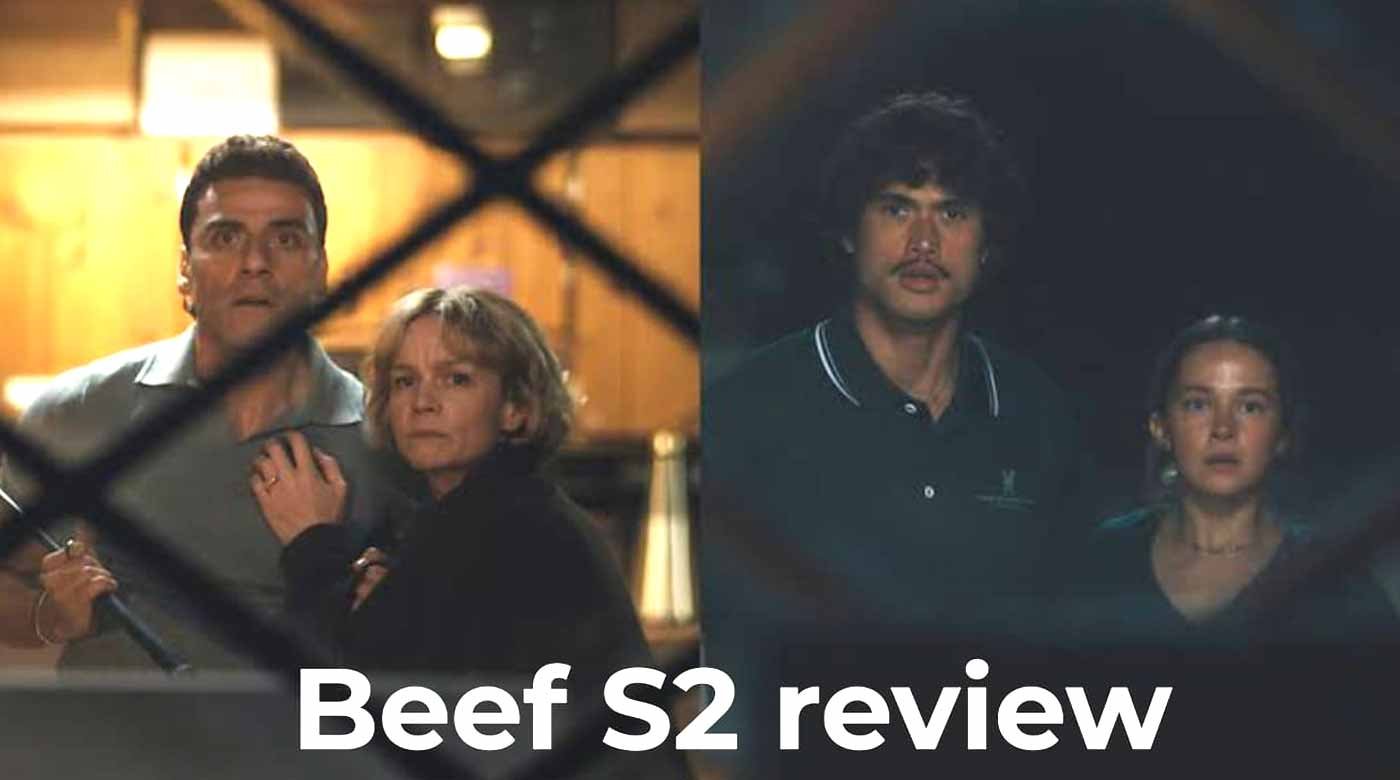
Beef Season 2 Review – The narrative of Beef season 2 does not offer easy answers, but instead invites viewers to sit with its complexities
Beef Season 2 review by Kausalya Rachavelpula
Beef Season 2 arrives with a sharper sense of purpose and a deeper emotional reach, setting itself apart from its already acclaimed first instalment. This latest chapter leans heavily into the realities of relationships—romantic, familial, and generational—while subtly raising questions about ambition, wealth, and what it truly means to “make it” in modern life. The narrative does not offer easy answers, but instead invites viewers to sit with its complexities.
At its core, the series explores the fragile nature of human connections. The dynamic between the older couple, played by Oscar Isaac and Carey Mulligan, is layered with experience, compromise, and unspoken tensions. Their portrayal captures the weight of long-term relationships, where love often coexists with frustration and emotional distance. In contrast, the younger pairing of Charles Melton and Cailee Spaeny offers a glimpse into Gen Z romance—slightly satirical at times, yet grounded enough to feel authentic. The series gently pokes fun at the fleeting intensity and confusion of younger relationships without dismissing their emotional validity. It also explores the older generation relationship (Youn Yuh-jung and Song Kang-ho), the ending of it may shock.
What stands out most is how convincingly the cast inhabits their roles. The performances are so immersive that the actors themselves seem to disappear, leaving only the characters and their emotional journeys in focus. This level of authenticity strengthens the show’s ability to resonate across different age groups, making its themes widely relatable.
Narratively, the season is unpredictable and often surprising. It shifts between moments of quiet introspection and sudden emotional intensity, keeping viewers engaged throughout. The writing is thoughtful and nuanced, reflecting the signature style associated with A24 productions. Known for prioritising character depth and meaningful storytelling, the studio once again delivers a series that feels both grounded and artistically ambitious. Every conversation, conflict, and resolution carries weight, often leading to a sense of closure that feels earned rather than forced.
Visually, the series is equally compelling. The camera work deserves particular praise, especially the deliberate use of zoom-ins and zoom-outs. These techniques are employed most effectively during emotionally charged scenes, drawing attention to subtle expressions and internal struggles. Rather than feeling intrusive, these movements enhance the impact of key moments, allowing the audience to connect more deeply with the characters’ experiences.
Beyond this, the camera often drifts and shifts in unexpected ways, creating a sense of fluidity that mirrors the characters’ emotional states. In certain scenes, the movement becomes irregular, almost as if the camera itself is reacting to the tension unfolding on screen. This approach adds a layer of immersion that elevates the viewing experience, making it feel more dynamic and alive. It is a style that may not suit every production, but here it is executed with precision and intent, contributing to the show’s distinct identity.
There is also a noticeable cinematic quality throughout the series, reminiscent of traditional filmmaking techniques that feel increasingly rare in the age of digital production. This aesthetic choice reinforces the emotional depth of the story and aligns well with the creative sensibilities often seen in A24 projects.
However, the season is not without its minor flaws. There are moments where the pacing slows noticeably, creating a brief sense of lag. While these instances are limited, they may test the patience of some viewers. That said, these slower segments often serve a purpose, allowing the narrative to breathe and the characters to develop more fully.
In comparison to its predecessor, season two distinguishes itself by placing greater emphasis on family, love, and the intricacies of relationships. While these themes were present in the first season, they take centre stage here, offering a more intimate and emotionally driven experience.
Overall, season two of Beef stands as a compelling and thoughtfully crafted continuation. With its strong performances, distinctive visual style, and deeply human storytelling, it manages to feel both unique and profoundly relatable, leaving a lasting impression long after the final episode.