

Thickening traffic, thinning canopies
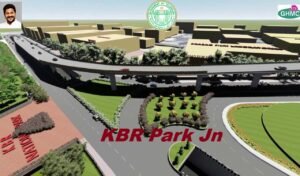
Construction cranes and concrete barriers now dominate stretches around KBR National Park, where the Hyderabad City Innovative and Transformative Infrastructure (H‑CITI) project is erecting seven flyovers and seven underpasses to ease longstanding bottlenecks near Banjara Hills Road No. 2 and adjoining corridors. Over the past weeks, deep excavation and barricading have blocked more than 60 percent of the KBR Junction–Mugdha (Lotus Pond) stretch in both directions, turning morning and evening commutes into slow‑moving snarls and forcing police‑driven diversions at key junctions.
GHMC officials, under the supervision of Municipal Administration Special Chief Secretary Jayesh Ranjan, have pushed for “faster progress,” directing additional machinery and manpower and weekly progress reviews to compress timelines. The civic argument is straightforward: the area is one of the city’s most notorious choke‑points, and a permanent flyover–underpass grid is sold as a long‑term solution to decades of traffic misery.
“Before concrete, consent” – activists’ stand
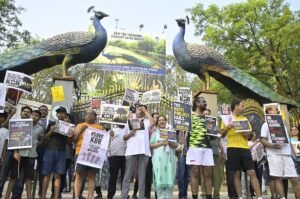
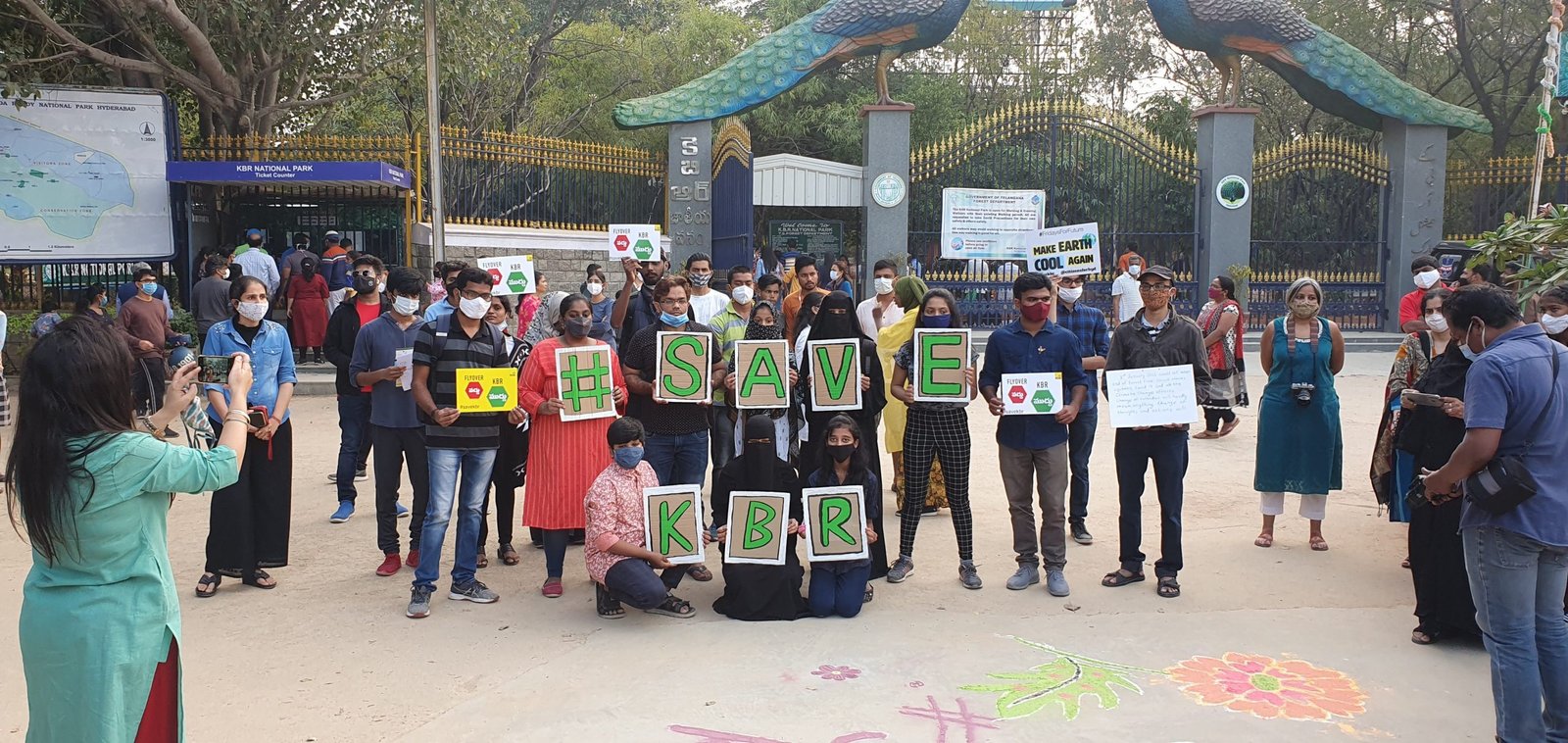
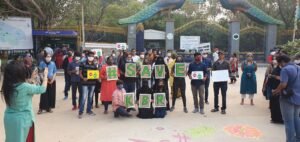
On the other side of the barricades, environmental activists and citizen groups are demanding not just slower digging but a genuine public reckoning. In a recent protest outside KBR Park, residents held placards reading “Save KBR” and “No trees, no future,” decrying the felling of mature trees for the flyovers and underpasses as a violation of ecological norms and prior public sentiment.
Philip Joshua, a member of the Save KBR Park Group, told reporters
“The felling of trees for the proposed flyover and underpass projects around KBR National Park has commenced despite years of persistent citizen opposition and ongoing Public Interest Litigation (PIL) to protect the park. As activists, we seek a stay on the construction, fearing that the ecosystem would suffer irreparable damage due to the construction of flyovers and underpasses.” (Telangana Today)
Activists argue that the city already has a network of expressways and IT corridors, and that further concrete over the lungs of the city should be preceded by comprehensive environmental studies, authentic public consultations and a transparent cost–benefit analysis. They also point to the irony of branding Hyderabad as a “green” city while approving large‑scale infrastructure that cleaves through its last significant green pockets.
Authority vs. accountability
GHMC and transport officials counter that the H‑CITI‑linked flyover works are part of a broader smart‑city and traffic‑decongestion package, with the state government framing the KBR package as a “prestigious initiative” to permanently resolve gridlock. Officials speaking off the record have acknowledged the temporary hardship but insist that the disruption is being “compressed and monitored,” with the project targeted for completion within scheduled timelines.
Yet civic watchdogs question whether those timelines were ever calibrated with residents’ lived experience. Locals near KBR Park report that school routes, emergency access and daily commutes have become unpredictable, with diversions and one‑way trials often announced with little notice. A resident of Banjara Hills told this reporter that “the traffic police are doing their best, but it feels like the city is building a solution for the next decade while ignoring the pain of today.”
Voices of Resistance share their views with Fridaywall
Ambica Srimal, creative director and long-time campaigner:
“This is not just about trees. This is about governance. When decisions are made without transparency, without consultation, and without accountability, citizens are left with no choice but to resist.”
Vijay Mallangi, passionate advocate for KBR:
“What is happening here is not development, it is destruction disguised as progress. When work continues despite legal questions and without public disclosure, it sends a dangerous message that rules can be bent at will.”
Dr. Srinivas Reddy:
“KBR is one of the last remaining urban forests we have. Every year we lose more shade, protection, and balance. If this continues, we are not just losing trees; we are losing the ability to live disease-free in this city.”
What’s at stake beneath the steel
Beneath the engineering jargon, pier foundations, PCC beds, excavation percentages, what is really at stake is the city’s social contract with its green spaces. KBR National Park, once a royal hunting ground, has become one of Hyderabad’s most prized urban forests, hosting endemic flora, migratory birds and a daily rhythm of morning walkers and evening joggers. Turning its perimeter into a construction ring risks fracturing that rhythm and, activists warn, locking the city into a future of “park‑bound highways instead of people‑friendly parks.”
For now, the track record is mixed: on one side, towering steel structures and a promise of smoother traffic; on the other, freshly felled trees, a PIL file, and a growing chorus asking not just “who will benefit?” but “who will pay?”
As the cranes inch higher, the real test for Hyderabad may be whether it can build faster, smarter flyovers without sacrificing the very ecology it claims to protect.
By Vaishnavi DR