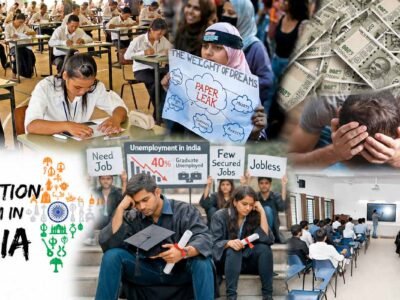

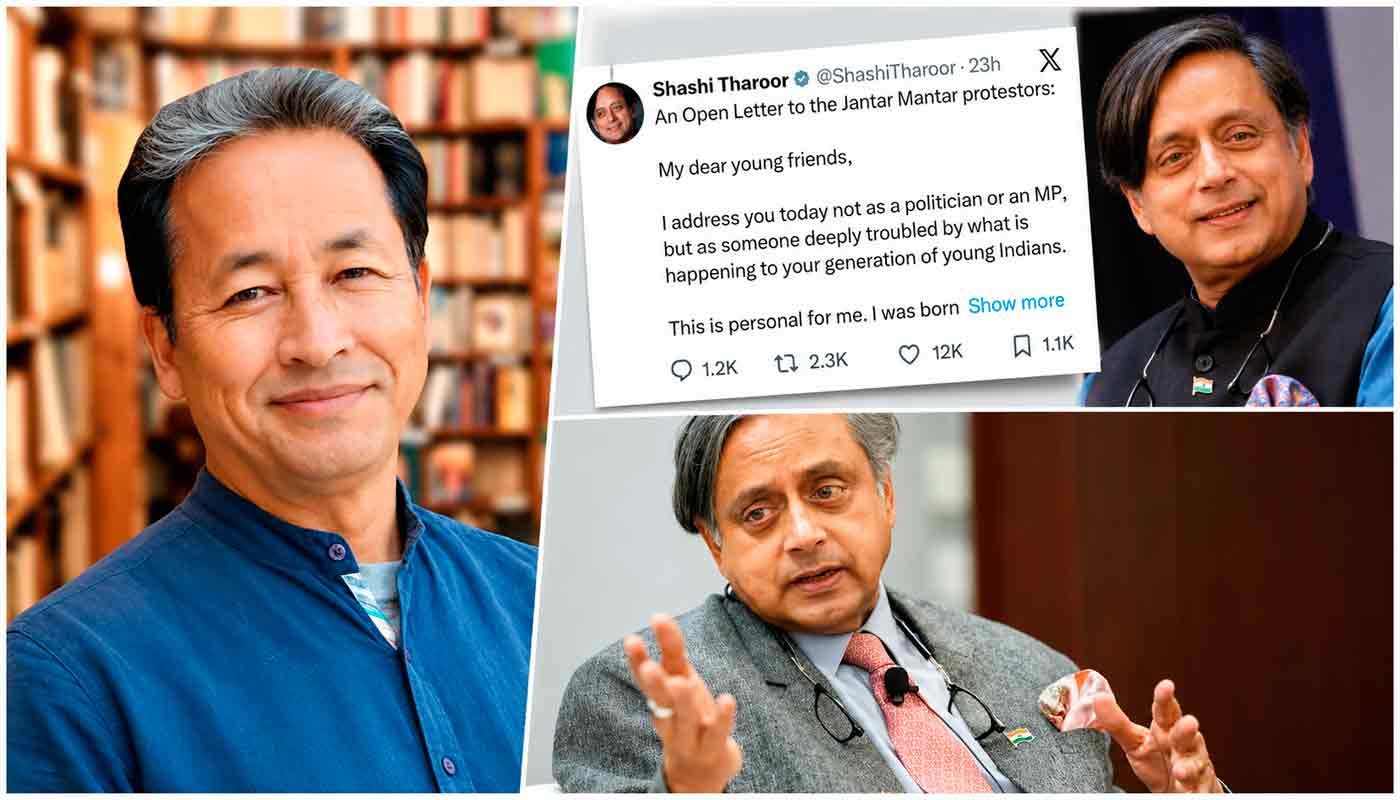
The ongoing protest at Delhi’s Jantar Mantar over alleged irregularities in the NEET examination has found support from yet another prominent voice.
Congress MP Shashi Tharoor has written an open letter to activist and education reformer Sonam Wangchuk, urging him to end his indefinite fast while simultaneously calling upon the Union government to engage with protesting students through dialogue rather than indifference.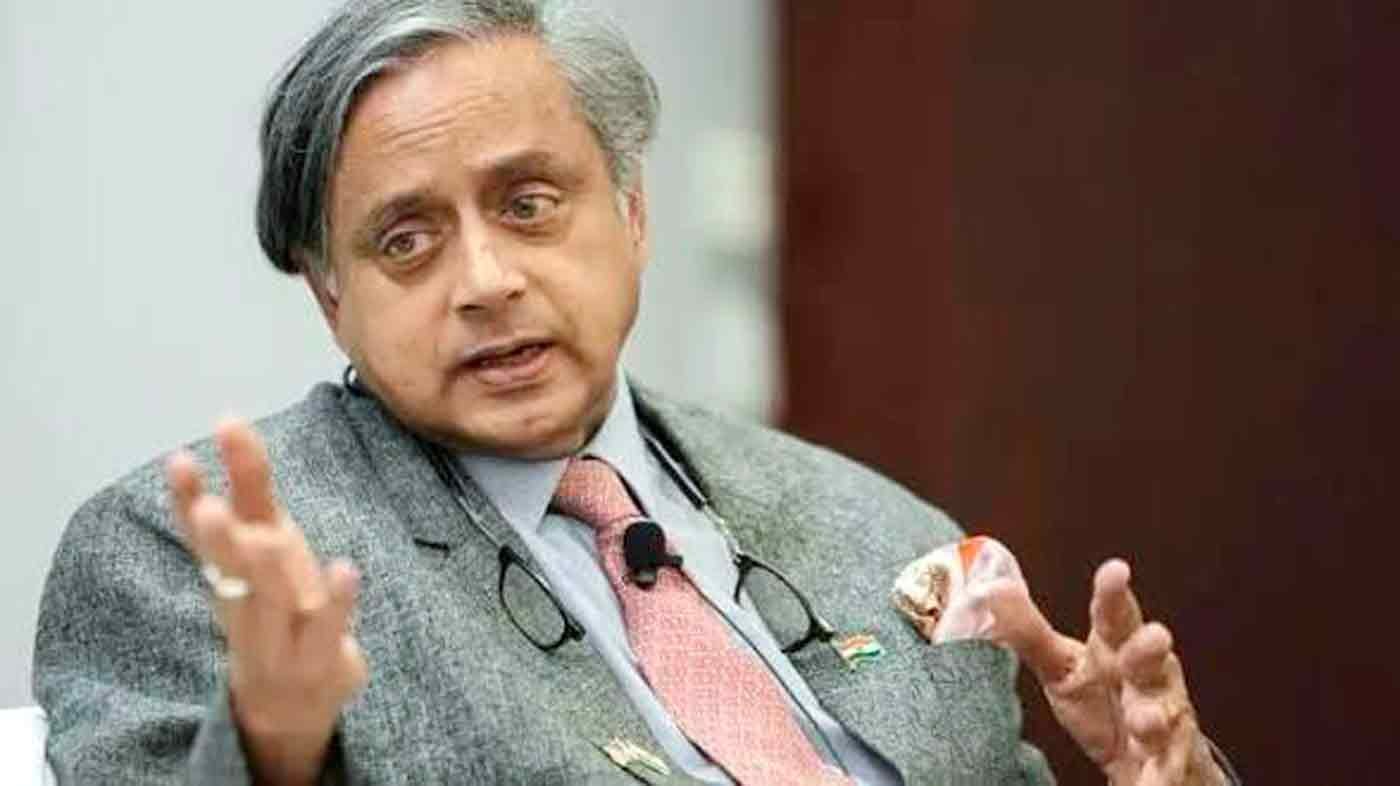
His appeal comes at a time when Wangchuk’s fast has entered yet another week, drawing increasing public attention to concerns surrounding examination integrity, accountability, and the future of India’s education system.
“This Is Personal for Me”
Unlike a conventional political statement, Tharoor’s letter began with something deeply personal.
“I address you today not as a politician or an MP, but as someone deeply troubled by what is happening to your generation of young Indians. This is personal for me.”
Reflecting on his own upbringing in a middle-class household, Tharoor recalled how education was the only path available to families without privilege.
He wrote about growing up with a salaried father, a homemaker mother, and three children whose futures depended entirely on merit.
“Scholarships, fair examinations, honest results—these were the only way one could carry three children’s dreams.”
He described topping university, earning admission to IIM, choosing instead to pursue international affairs abroad on scholarship, and emphasized that nothing in his life had been inherited.
“Nothing was inherited. Everything was earned by hard work and, yes, exams.”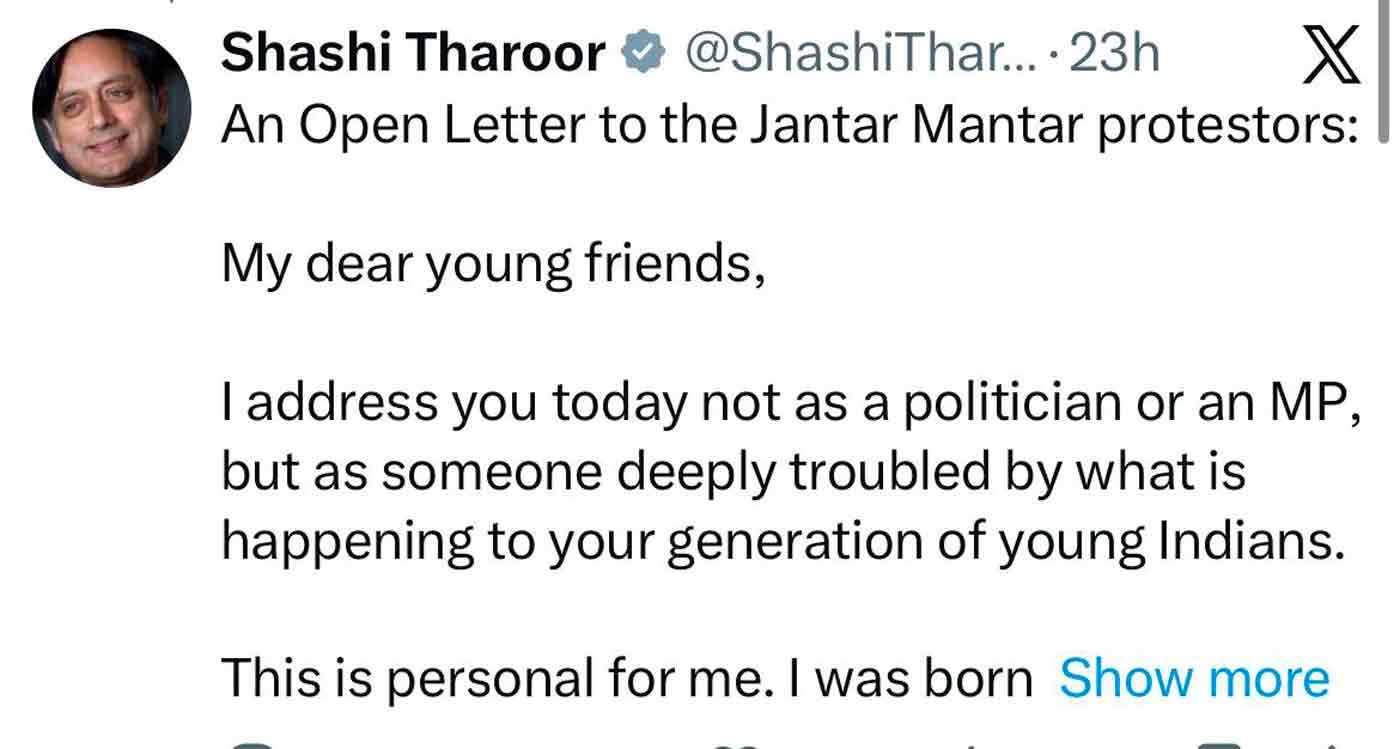
When Merit Stops Meaning Merit
One of the strongest portions of Tharoor’s letter centered on what happens when trust in examinations begins to collapse.
“When that ladder is broken—papers leaked, examinations cancelled, trust destroyed—the children of the rich and powerful do not suffer. They have other ladders.”
Instead, he argued, it is students from ordinary families who pay the highest price.
Their parents make sacrifices.
Their aspirations are delayed.
And in some heartbreaking instances, young lives are lost under the crushing weight of uncertainty and despair.
A Message to India’s Students
Addressing those gathered at Jantar Mantar and students protesting across the country, Tharoor offered words of reassurance.
“Your anger is not indiscipline. It is the anguish of a generation that did everything right and was still betrayed.”
He reminded students that they were not alone.
“You are not a problem to be managed. You are the answer to India’s future.”
Perhaps the most powerful line of his letter was his assertion that:
“This ladder will be rebuilt—by you and by every Indian who stands with you.”
An Appeal to Sonam Wangchuk
While expressing solidarity with the movement, Tharoor also appealed directly to Sonam Wangchuk to call off his hunger strike.
“You have awakened the conscience of the nation. That is what a fast is meant to do.”
He argued that with Parliament reconvening, the issue should now be fought institutionally.
“India needs your voice for the long road ahead.”
“With Parliament in session again, we will have an opportunity to raise the students’ issue in the highest forum of our democracy. That’s where the problem should be addressed—not by fasting unto death. Please heed my plea.”
“Dialogue Is Not Weakness”
Tharoor reserved his final appeal for the Union government.
Rather than escalating confrontation, he urged those in power to begin conversations with students and protesters.
“I respectfully urge you to reach out and engage in the dialogue our democracy owes its young citizens.”
He concluded with a line that has since resonated widely online:
“That is not weakness. That is statesmanship.”
The Larger Conversation
The NEET controversy has evolved far beyond a debate about a single examination. It has become a conversation about trust. Trust in public institutions. Trust in meritocracy. Trust that years of relentless preparation will not be undermined by alleged irregularities.
Whether one agrees with indefinite hunger strikes or believes Parliament is the right platform for reform, Tharoor’s letter attempts to bridge both worlds. It acknowledges students’ pain without dismissing democratic institutions, and it urges the government to respond not with silence, but with accountability.
At a time when India’s youth are asking difficult questions about fairness and opportunity, perhaps the greatest test is no longer the examination itself. It is whether those in power are willing to listen.