
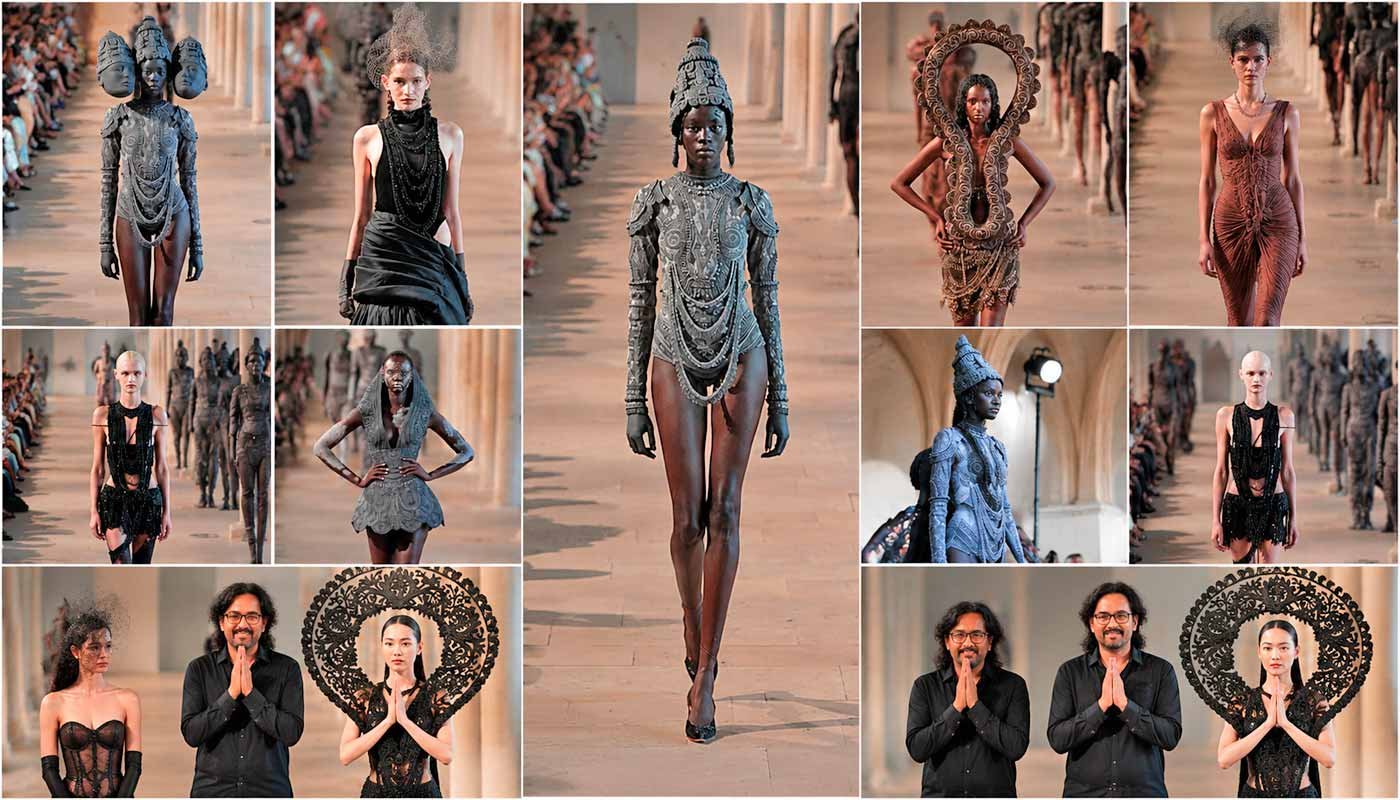
For nearly two decades, Rahul Mishra has quietly transformed Indian craftsmanship into one of haute couture’s most respected languages. But with Devi, unveiled during Paris Haute Couture Week Fall/Winter 2026, the designer did something far more ambitious than presenting another couture collection. He turned the runway into a spiritual experience, drawing from Indian mythology, temple iconography, and the enduring idea of Shakti, the feminine force believed to sustain the universe.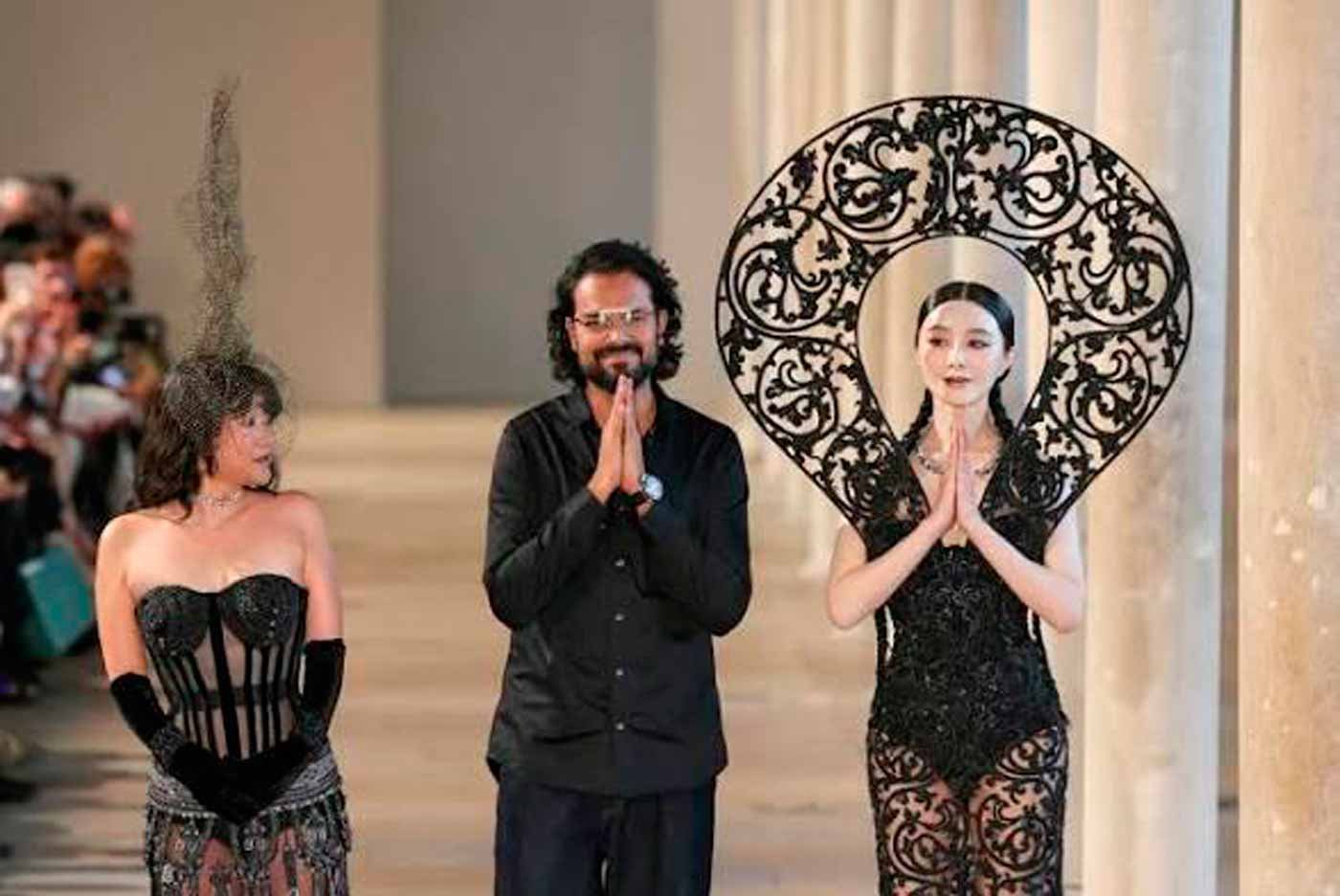
The collection was inspired by Devi, the Hindu embodiment of divine feminine energy. Rather than interpreting the goddess literally, Mishra explored her many forms through silhouettes, embroidery, sculpture, and movement. The result was a runway where fashion blurred into performance art. Models did not simply wear garments. They appeared as living sculptures carrying centuries of mythology on their shoulders.
The opening looks immediately established the collection’s tone. One model emerged with three sculptural heads surrounding her own, an unmistakable reference to the many manifestations of the goddess. Another appeared with an ornate temple-like halo framing her body, while others wore elaborate carved structures resembling ancient shrines and sanctuaries. These were not accessories designed merely for spectacle. They echoed the architectural language of Indian temples, where every carving tells a story and every ornament carries symbolism.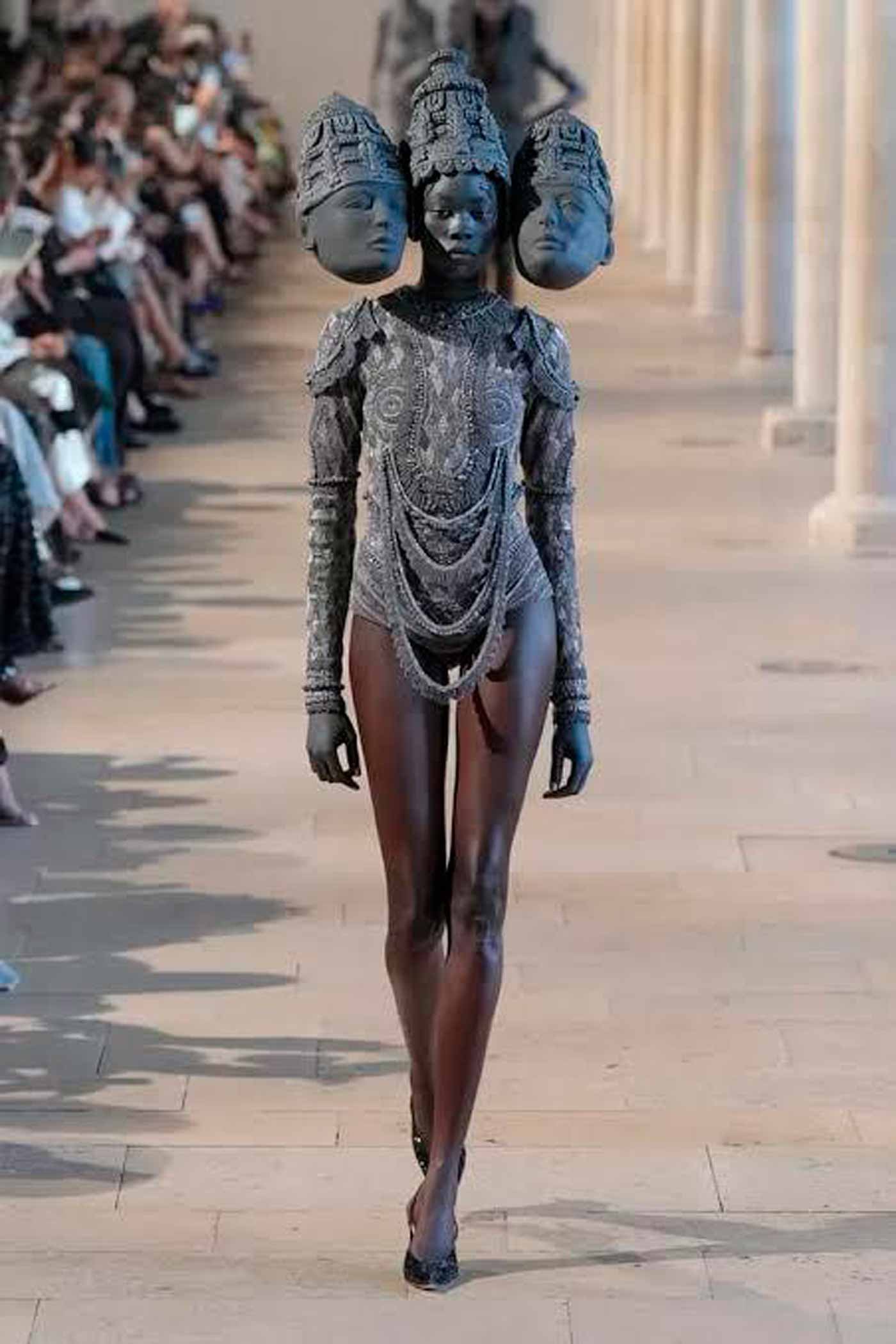
The garments themselves reflected Rahul Mishra’s unmistakable design language. Shades of charcoal, black, bronze, antique gold, ash grey, ivory, and muted earth tones dominated the runway, replacing bright festive colours with an almost sacred solemnity. Heavy hand embroidery, intricate beadwork, metallic threadwork, sequins, and sculpted textures transformed fabric into surfaces that looked as though they had been carved from stone rather than stitched by hand.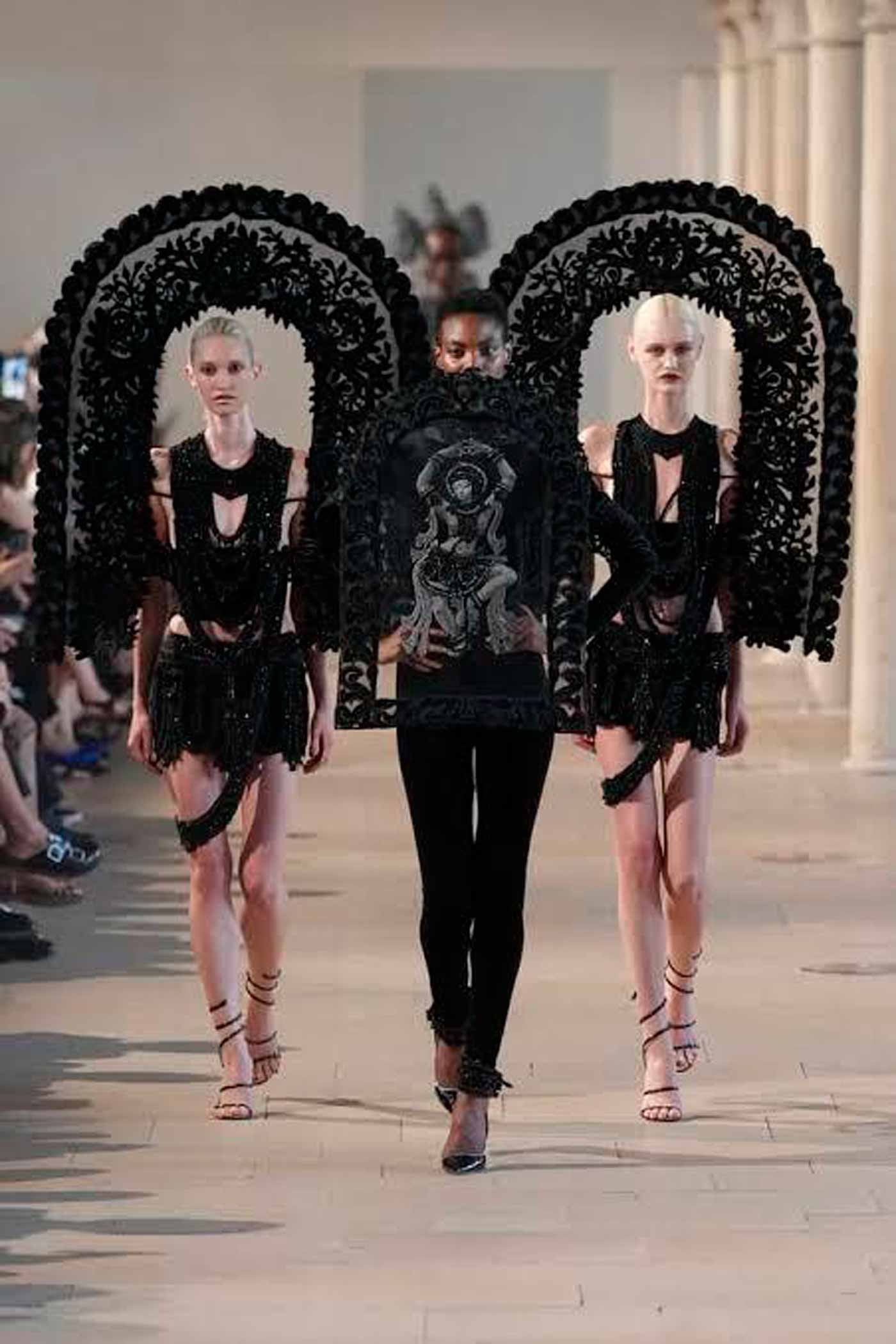
One of the most striking visual motifs was the interplay between stone and flesh. Several models appeared with body paint and embellishments that made them resemble weathered temple idols stepping down from their pedestals. Others wore garments whose embroidery mimicked centuries-old carvings found in Indian temples. The illusion suggested that these sculptures had awakened, reminding audiences that mythology continues to live through people rather than monuments.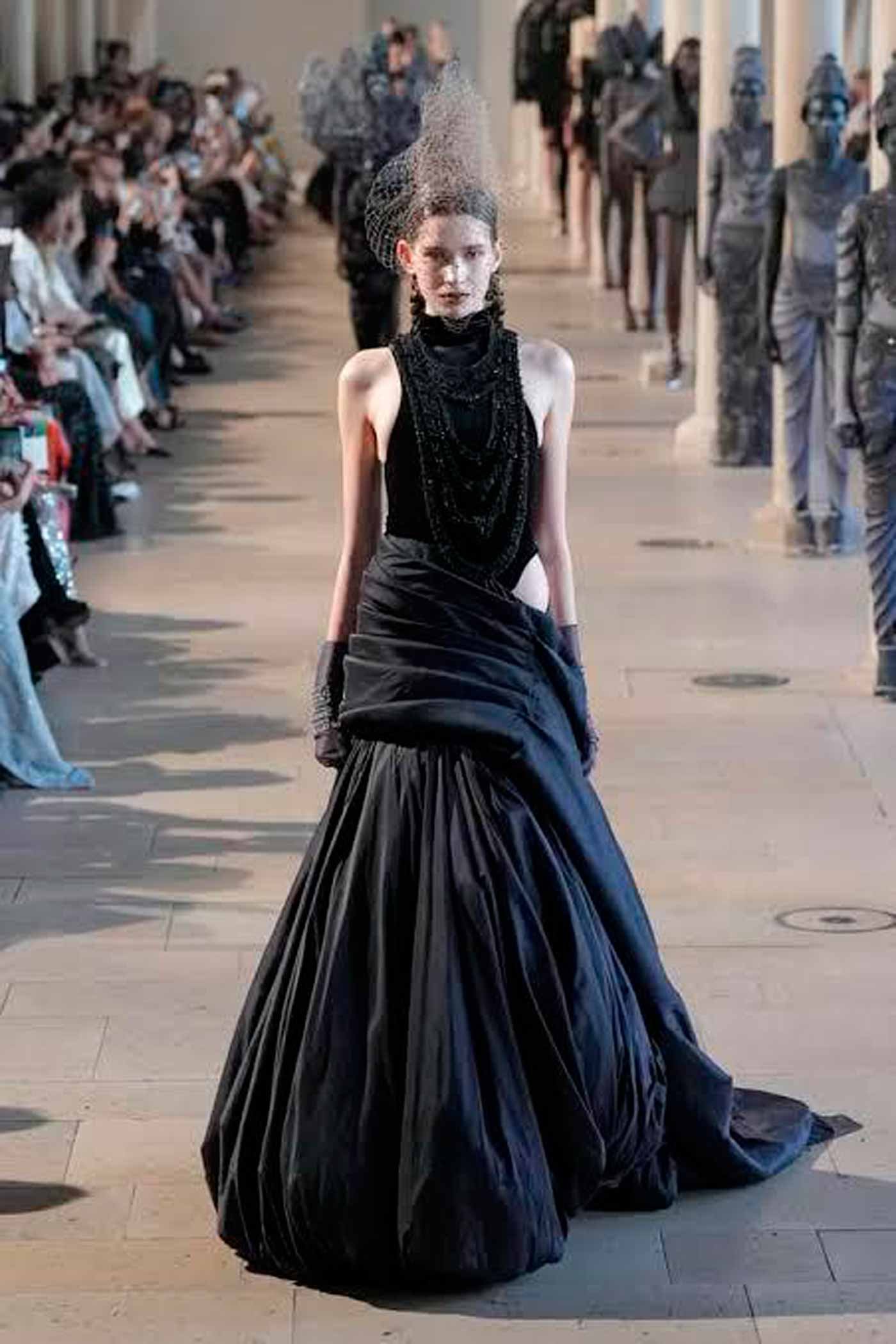
The collection also highlighted Rahul Mishra’s long-standing commitment to Indian artisanship. Every embroidered panel, every sculptural embellishment, and every beaded motif reflected countless hours of handwork completed by artisans across India. Mishra has consistently championed what he calls “As Slow As Possible,” arguing that luxury should celebrate craftsmanship rather than mass production. Devi became another testament to that philosophy, proving that couture can preserve traditional knowledge while pushing artistic boundaries.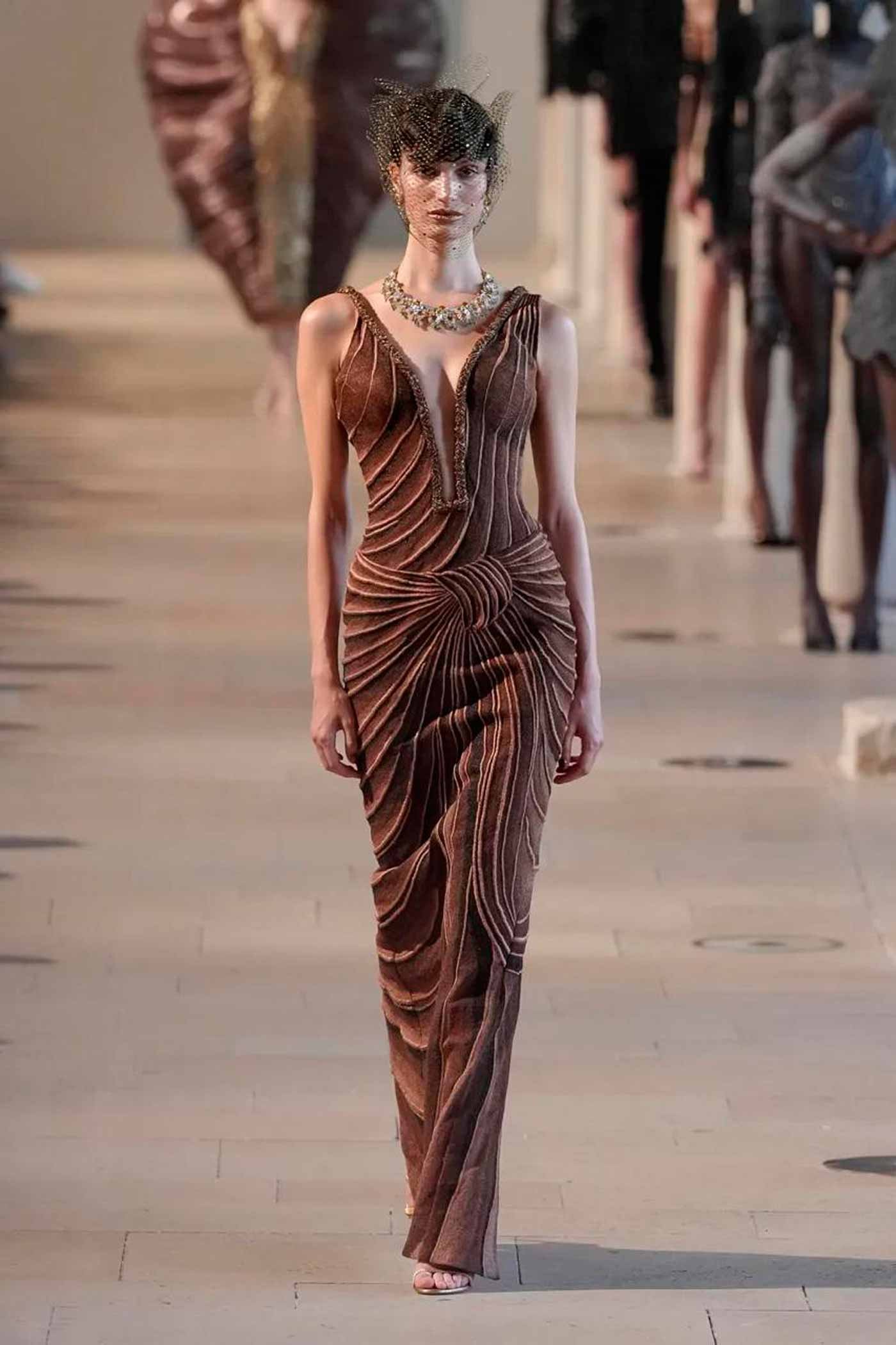
Several looks balanced theatricality with wearability. Draped gowns in bronze and earthy tones featured fluid pleating that resembled temple drapery frozen in motion. Others incorporated dramatic neckpieces, oversized halos, intricate veils, and sculptural headpieces that referenced crowns seen on Hindu deities. Despite their complexity, the garments retained remarkable elegance, allowing craftsmanship rather than excess to command attention.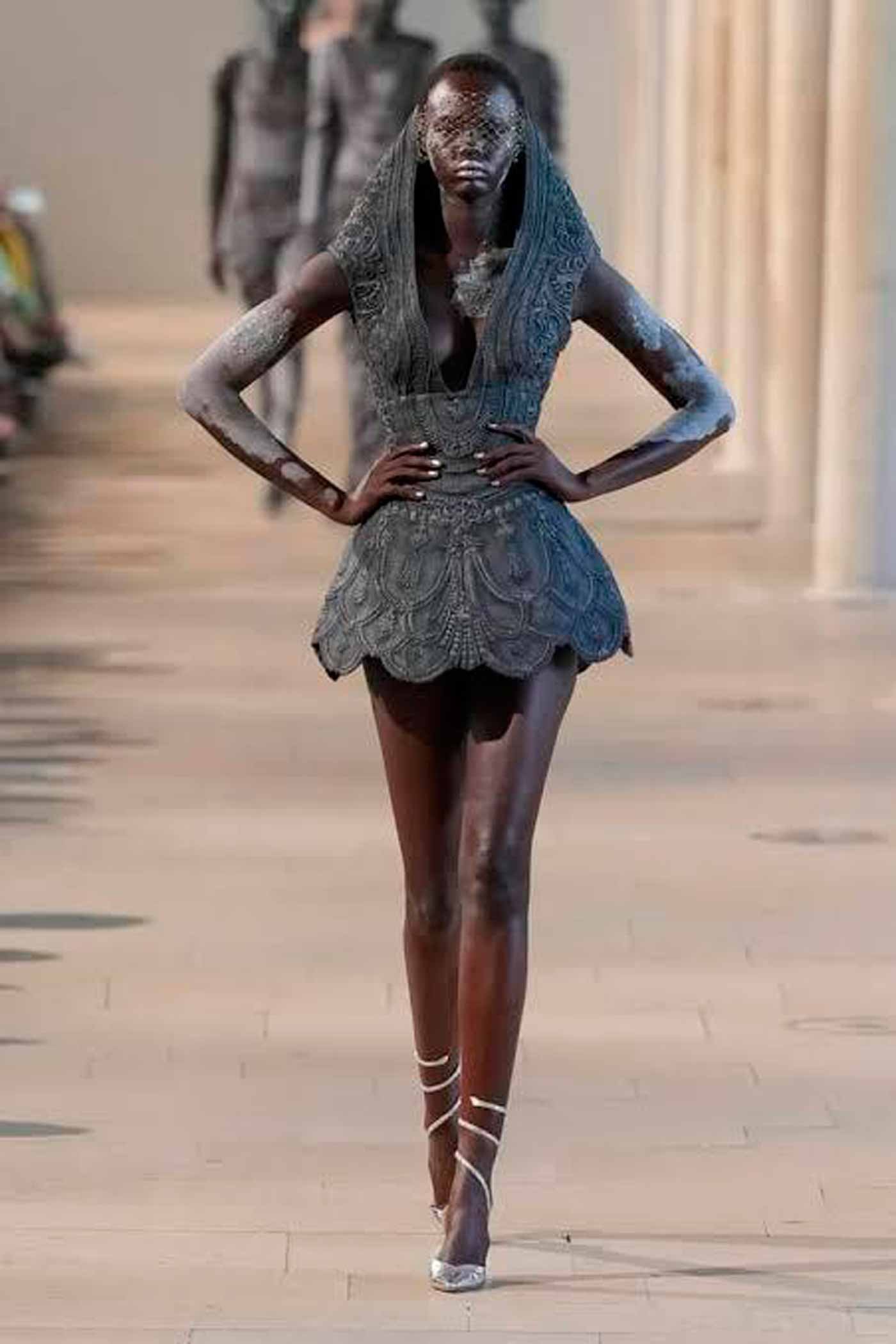
Jewellery also played a significant role throughout the presentation. The collection featured an exclusive collaboration with Tanishq, whose natural diamond creations complemented the garments without overshadowing them. The jewels echoed the collection’s earthy palette while reinforcing its themes of timelessness, divinity, and Indian heritage.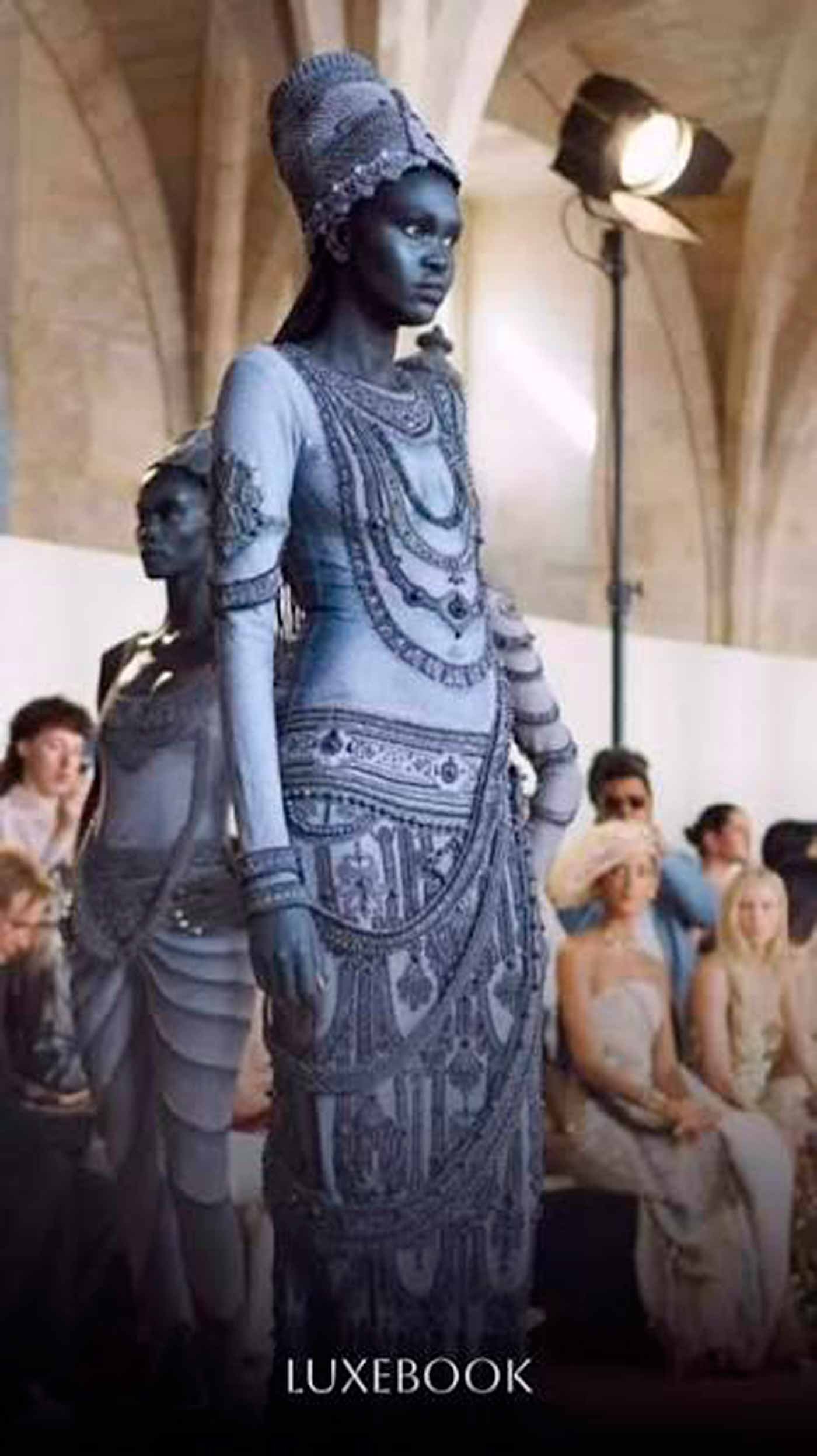
Beyond aesthetics, Devi carried a deeper philosophical message. Across Indian traditions, the goddess represents creation, protection, destruction, wisdom, compassion, rage, resilience, and renewal. Mishra translated these ideas into couture, presenting femininity not as fragility but as power. Every silhouette celebrated women as creators, protectors, warriors, and visionaries.
International audiences responded with admiration, praising the collection’s originality and its refusal to imitate Western couture traditions. Fashion critics noted how Mishra continues to build an authentically Indian visual vocabulary on one of fashion’s biggest stages. Rather than borrowing from Europe, he brought India’s mythology, embroidery, and artistic heritage directly to Paris.
What makes Devi particularly significant is its timing. Indian designers are increasingly gaining recognition at Paris Haute Couture Week, but Rahul Mishra remains one of the pioneers who demonstrated that Indian craftsmanship deserves a place not behind European luxury houses, but at the forefront of global couture. With Devi, he reaffirmed that haute couture can be more than beautiful clothing. It can become storytelling, philosophy, history, and devotion stitched together by thousands of human hands.
Some collections are remembered for a single dress. Others are remembered for a trend.
Devi will be remembered because it reminded the fashion world that couture, at its finest, can feel sacred.