

Indian cinema is one of the world’s most influential film industries, producing filmmakers whose stories have transcended languages, cultures, and borders. From intimate human dramas to epic historical spectacles, Indian directors have consistently pushed cinematic boundaries while inspiring generations of storytellers across the globe.
The industry’s global recognition has only grown stronger over the years. Satyajit Ray remains the only Indian filmmaker to receive both the Bharat Ratna and an Honorary Academy Award. In 2024, Payal Kapadia became the first Indian director to win the Grand Prix at the Cannes Film Festival, with All We Imagine as Light marking India’s first film in Cannes’ main competition in three decades. Meanwhile, S.S. Rajamouli introduced millions of international audiences to Indian cinema through the monumental success of Baahubali and RRR.
If you’re looking to explore Indian cinema beyond the mainstream, these are eight directors whose filmographies deserve a place on every watchlist.
1. Satyajit Ray
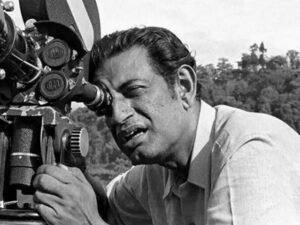
No conversation about Indian cinema begins without Satyajit Ray. Often regarded as one of the greatest filmmakers in world cinema, Ray combined realism, empathy, and literary depth in a body of work that continues to influence filmmakers worldwide.
- Pather Panchali (1955)

The first installment of the celebrated Apu Trilogy follows a young boy growing up in rural Bengal. With its poetic realism and deeply human storytelling, it introduced Indian cinema to the global stage and remains one of the greatest debut films ever made.
- Apur Sansar (1959)

The concluding chapter of the Apu Trilogy explores adulthood, marriage, grief, and fatherhood. It is an emotionally profound meditation on resilience and human connection.
- Charulata (1964)

Based on Rabindranath Tagore’s novella, Charulata tells the story of a lonely, intelligent woman trapped within the confines of an upper-class Bengali household. Widely regarded as Ray’s masterpiece, it delicately explores emotional longing, loneliness, and self-discovery.
2. Mira Nair

Known for blending Indian narratives with international storytelling, Mira Nair’s films often explore migration, identity, family, and social realities. She became the first Indian filmmaker to win the Camera d’Or at Cannes and was later awarded the Padma Bhushan.
- Salaam Bombay! (1988)

A heartbreaking portrayal of Mumbai’s street children, the film follows a young boy struggling to survive after being abandoned. Shot with remarkable realism, it earned an Academy Award nomination for Best International Feature.
- Monsoon Wedding (2001)

Set against the backdrop of a lavish Punjabi wedding, the film beautifully weaves together romance, family drama, generational conflict, and hidden secrets, celebrating the joyful chaos of Indian families.
- The Namesake (2006)

Adapted from Jhumpa Lahiri’s novel, The Namesake explores immigration, identity, belonging, and the cultural conflict experienced by second-generation Indian Americans.
3. M. Night Shyamalan

Born in Puducherry and raised in Pennsylvania, M. Night Shyamalan is one of Hollywood’s most recognizable Indian-origin filmmakers, celebrated for his suspenseful storytelling and unforgettable plot twists.
- The Sixth Sense (1999)

One of cinema’s greatest psychological thrillers, the film follows a child who claims to see ghosts and the psychologist trying to help him. Its iconic ending changed thriller filmmaking forever.
- Unbreakable (2000)

Long before superhero films became dominant, Shyamalan crafted a grounded exploration of destiny, trauma, and extraordinary abilities through the story of an ordinary man discovering his hidden powers.
- Split (2016)

James McAvoy delivers a remarkable performance portraying multiple personalities in this psychological thriller that examines identity, trauma, and survival.
4. Zoya Akhtar

Known for nuanced ensemble storytelling, Zoya Akhtar creates films that balance entertainment with emotional honesty and social commentary. She remains the only woman to have won the Filmfare Award for Best Director twice.
- Luck By Chance (2009)

A behind-the-scenes look at Bollywood, examining ambition, privilege, nepotism, and the unpredictable nature of success within the film industry.
- Zindagi Na Milegi Dobara (2011)

A life-affirming road-trip drama about friendship, healing, vulnerability, and embracing life’s uncertainties. It remains one of contemporary Hindi cinema’s most beloved coming-of-age films.
* Gully Boy (2019)

Inspired by Mumbai’s underground rap movement, the film follows an aspiring rapper chasing his dreams despite social and economic barriers. It became India’s official entry to the Academy Awards.
5. Rajkumar Hirani

Rajkumar Hirani has mastered the rare ability to blend comedy, emotion, and powerful social commentary into blockbuster entertainment. Every one of his six films has been commercially successful, making him one of Hindi cinema’s most celebrated filmmakers.
- Munna Bhai M.B.B.S. (2003)

A heartwarming comedy that questions the healthcare system while promoting empathy, kindness, and humanity through the unforgettable character of Munna Bhai.
- 3 Idiots (2009)

One of India’s most iconic films, 3 Idiots critiques the education system, celebrates curiosity, and reminds audiences that success follows passion—not societal expectations.
- PK (2014)

Using satire and science fiction, Hirani examines organized religion, blind faith, and human hypocrisy through the eyes of an innocent extraterrestrial.
6. S.S. Rajamouli

Few filmmakers have transformed Indian cinema’s global image like S.S. Rajamouli. Recipient of the Padma Shri and multiple National Film Awards, Rajamouli has become synonymous with cinematic spectacle.
- Baahubali: The Beginning (2015)

A grand fantasy epic introducing the kingdom of Mahishmati, combining mythology, political intrigue, breathtaking visuals, and unforgettable action
- Baahubali 2: The Conclusion (2017)

The sequel delivered one of Indian cinema’s most anticipated answers, “Why did Kattappa kill Baahubali?”, while becoming one of the highest-grossing Indian films ever made.
- RRR (2022)

An exhilarating fictional tale inspired by two Indian freedom fighters, RRR captivated audiences worldwide with its spectacular action, emotional storytelling, and the Oscar-winning song Naatu Naatu.
7. Meghna Gulzar

Meghna Gulzar has carved a niche through restrained, research-driven dramas rooted in true events and complex human emotions.
- Talvar (2015)

Inspired by the infamous Noida double murder case, the film presents conflicting investigations and challenges audiences to question truth, bias, and justice.
- Raazi (2018)

Based on true events, the film follows a young Indian woman who marries into a Pakistani military family to serve as an undercover spy during the 1971 Indo-Pak war.
- Sam Bahadur (2023)

A biographical drama chronicling the life of Field Marshal Sam Manekshaw, celebrating leadership, courage, and one of India’s greatest military figures.
8. Payal Kapadia

Payal Kapadia represents a new generation of Indian filmmakers redefining independent cinema on the global stage. Her historic Grand Prix win at Cannes established her as one of the country’s most exciting contemporary voices.
- Afternoon Clouds (2017)

A tender short film exploring loneliness, caregiving, and quiet emotional connections between two women across generations.
- A Night of Knowing Nothing (2021)

Blending documentary and fiction, the film reflects on student activism, political unrest, memory, and love through poetic visual storytelling.
- All We Imagine as Light (2024)

Set in Mumbai, the Cannes-winning drama follows two nurses navigating friendship, migration, loneliness, and hope in an ever-changing city. Quiet yet deeply affecting, it has become one of the most internationally celebrated Indian films of recent years.
Indian cinema cannot be defined by a single language, genre, or style. It spans intimate arthouse dramas, socially conscious storytelling, psychological thrillers, and larger-than-life epics. What unites these filmmakers is their ability to tell deeply human stories that resonate far beyond India’s borders.
Whether you’re beginning with the lyrical realism of Satyajit Ray, the global narratives of Mira Nair, the emotional journeys of Zoya Akhtar, or the cinematic spectacle of S.S. Rajamouli, each of these directors offers a unique doorway into the remarkable diversity of Indian cinema.