
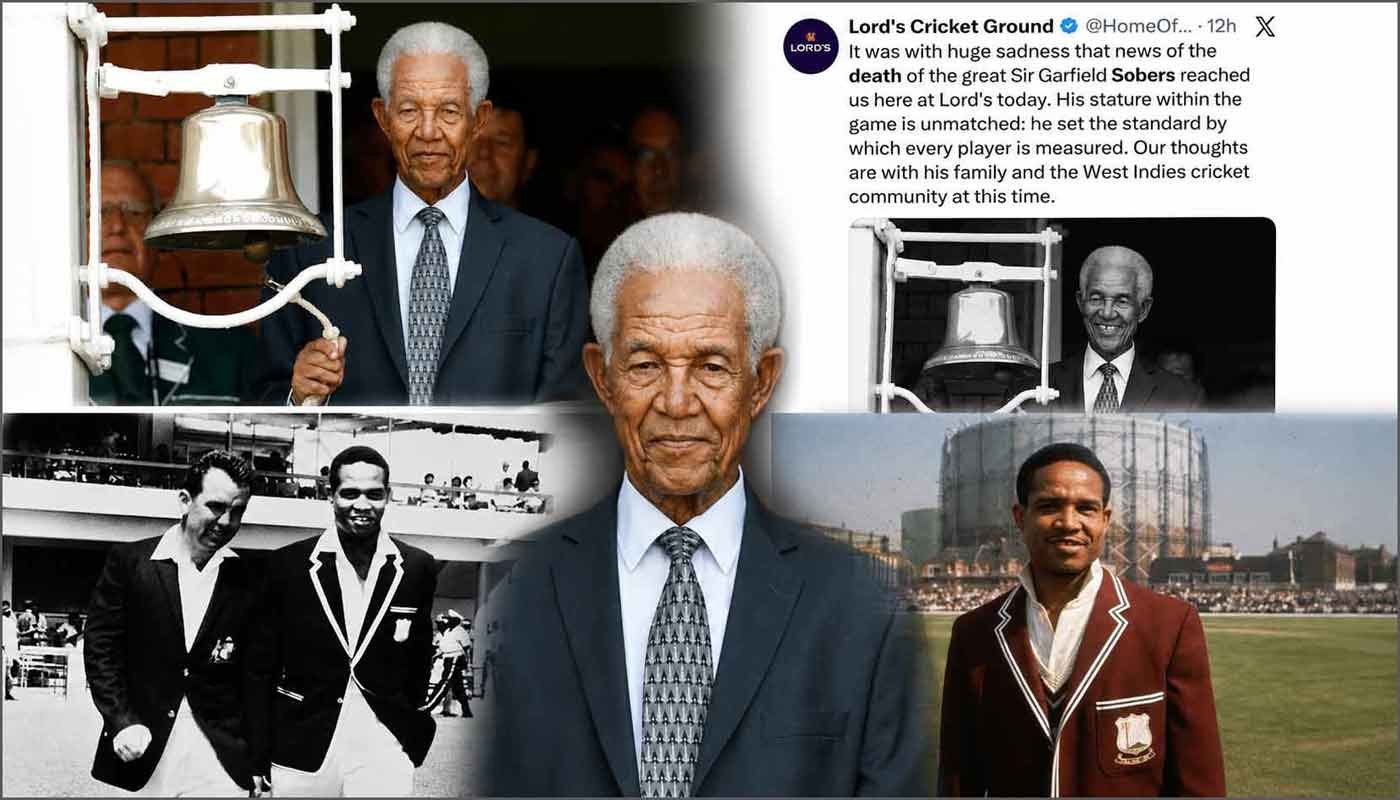
The cricketing world is mourning the loss of one of its greatest-ever players. Sir Garfield Sobers, widely regarded as the finest all-rounder the sport has ever produced, has passed away at the age of 89, bringing an end to one of the most extraordinary chapters in cricket history.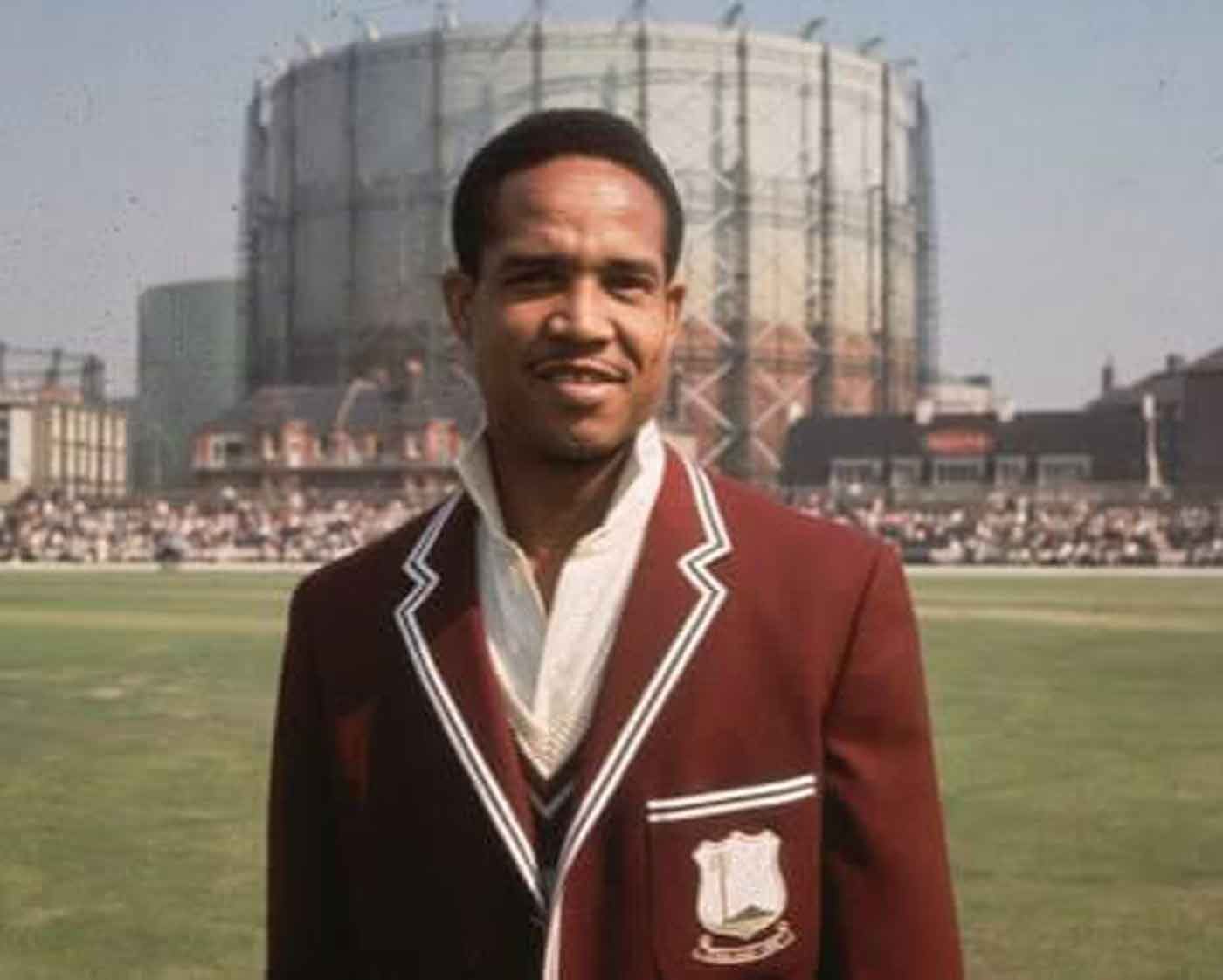
Joining the tributes was Lord’s Cricket Ground, which posted:
“It was with huge sadness that news of the death of the great Sir Garfield Sobers reached us here at Lord’s today. His stature within the game is unmatched. He set the standard by which every player is measured. Our thoughts are with the family and West Indies cricket community at this time.”
It is difficult to describe Sir Garfield Sobers using a single label because he mastered every facet of cricket. He was an elegant yet destructive left-handed batter, a left-arm bowler capable of delivering fast-medium pace as well as orthodox and wrist spin, and an exceptional fielder in virtually every position. Few cricketers have ever possessed such complete versatility.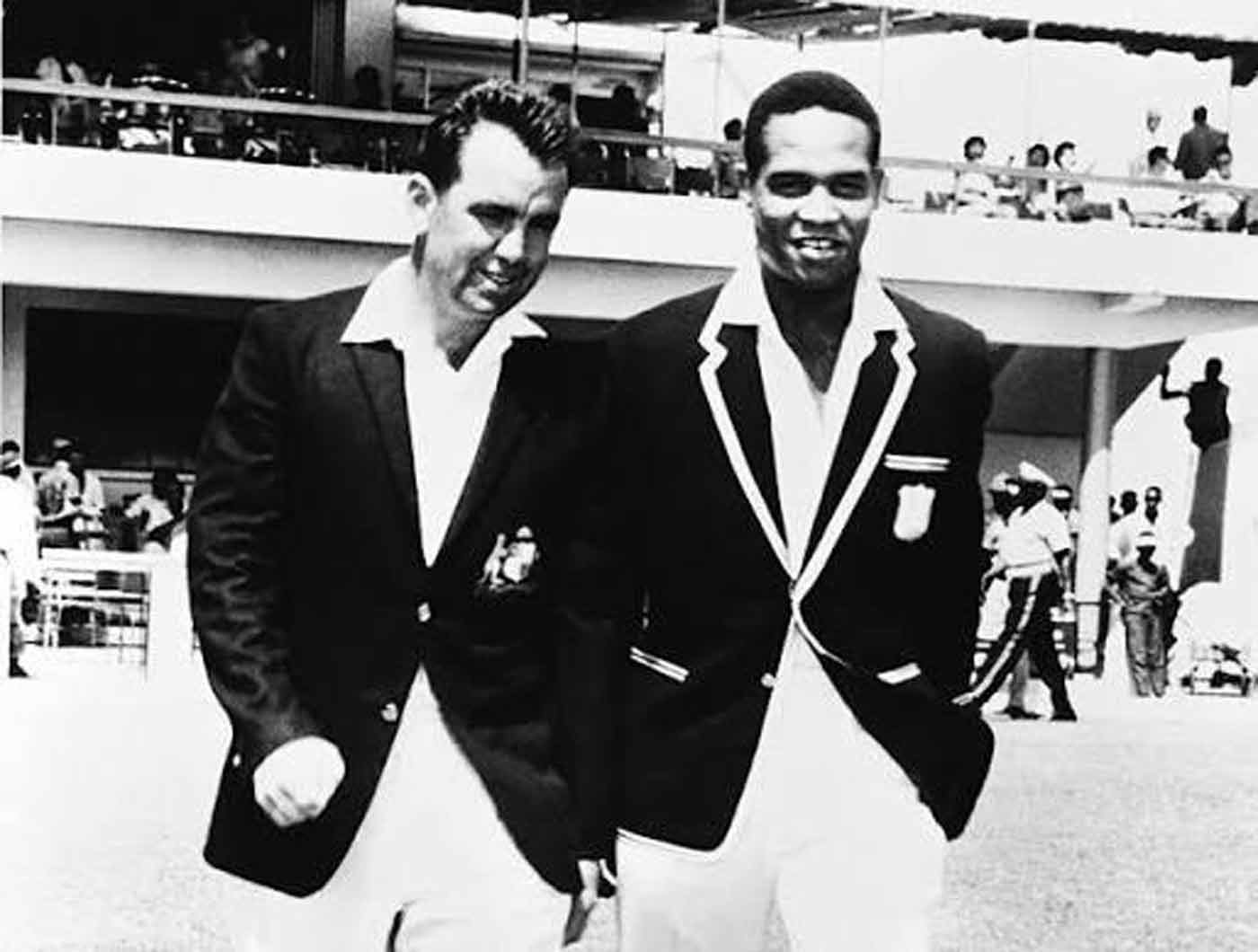
Born on July 28, 1936, in St. Michael, Barbados, Sobers represented the West Indies from 1954 to 1974, playing 93 Test matches, scoring over 8,000 Test runs, and taking 235 wickets. During his remarkable career, he registered 26 Test centuries, but perhaps no innings remains more iconic than his unbeaten 365 against Pakistan in 1958. The knock stood as the highest individual Test score in history for 36 years before Brian Lara surpassed it with 375 against England in Antigua in 1994. In one of cricket’s most memorable moments, Sobers walked onto the field to personally congratulate Lara after the record was broken—a symbolic passing of the torch between two West Indian greats.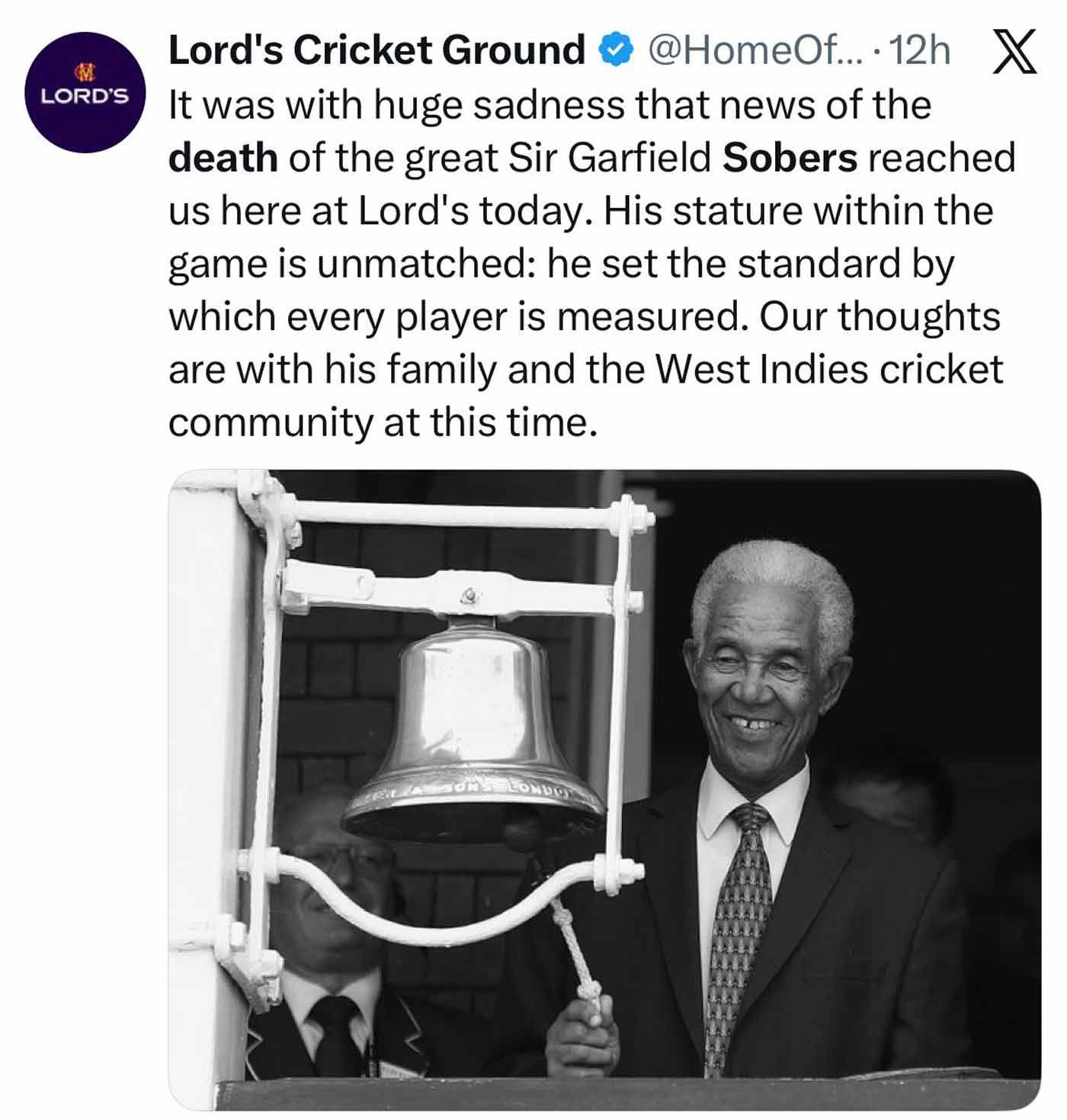
Former England captain Geoffrey Boycott summed up the feelings of many fans:
“Anyone who saw him in his pomp will have wonderful memories of a great batter, the greatest all-rounder, an icon, and once-in-your-lifetime exceptional cricketer. And even more important, a lovely man.”
His greatness transcended statistics. In 1999, Wisden named him one of the Five Cricketers of the 20th Century. Among a panel of 100 cricket experts, only the legendary Sir Donald Bradman received more votes than Sobers. Yet perhaps the greatest compliment came from Bradman himself, who famously said:
“He is, in my opinion, the greatest cricketer of all time.”
Sobers’ influence extended beyond his personal achievements. As captain, he led an adventurous, attacking West Indies side whose fearless brand of cricket laid the foundations for Clive Lloyd’s all-conquering teams of the late 1970s and 1980s. The dominance that would later define West Indies cricket owed much to the standards and confidence established during Sobers’ era.
His journey was remarkable from the very beginning. Born with an extra finger on each hand, Sobers reportedly removed them as a young boy. What followed was a career shaped not merely by extraordinary talent but relentless dedication. Speaking later in life, he dismissed the idea that greatness came naturally:
“People call me a genius. I don’t know much about geniuses. But I do believe that what I achieved was not just because of the ability that I was born with, but because I worked hard.”
That philosophy perhaps explains why generations of cricketers continue to idolize him. He wasn’t simply a gifted athlete, he was the benchmark by which greatness came to be measured.
As tributes pour in from across the cricketing world, one thing remains undeniable: records will continue to be broken, statistics will continue to evolve, but the legend of Sir Garfield Sobers will forever remain timeless.
A great innings has indeed come to an end, but his legacy will continue to inspire every generation that picks up a bat and ball.