

Why Janhvi Kapoor’s Role in Peddi Is Wrong on So Many Levels
Janhvi Kapoor‘s portrayal in Peddi has sparked criticism over objectification, lack of agency and outdated romance tropes. Here’s why.
The conversation around Peddi refuses to die down.
Much of it has centred on Ram Charan‘s performance, the film’s emotional core, its cricket backdrop and its box-office prospects. But another discussion has steadily gathered momentum online — one that has little to do with the film’s sporting ambitions and everything to do with how it treats its leading woman.
Janhvi Kapoor’s Achiyamma has become one of the most debated aspects of the film.
The criticism is not about screen time. Telugu cinema has produced memorable female characters with limited screen presence. Nor is it about Janhvi Kapoor‘s performance itself.
The issue is far more fundamental.
What exactly is Achiyamma supposed to be?
A character? A love interest? A symbol? Or simply an attractive presence inserted into the narrative whenever the story feels the need for a romantic diversion?
That question sits at the heart of the Peddi controversy.
FridayWall’s review of the film pointed out this contradiction. While the film invests considerable energy in building Peddi’s world, dreams, conflicts and emotional journey, Achiyamma often feels like an afterthought. She exists in the story, but rarely appears to shape it.
And that is where the problem begins.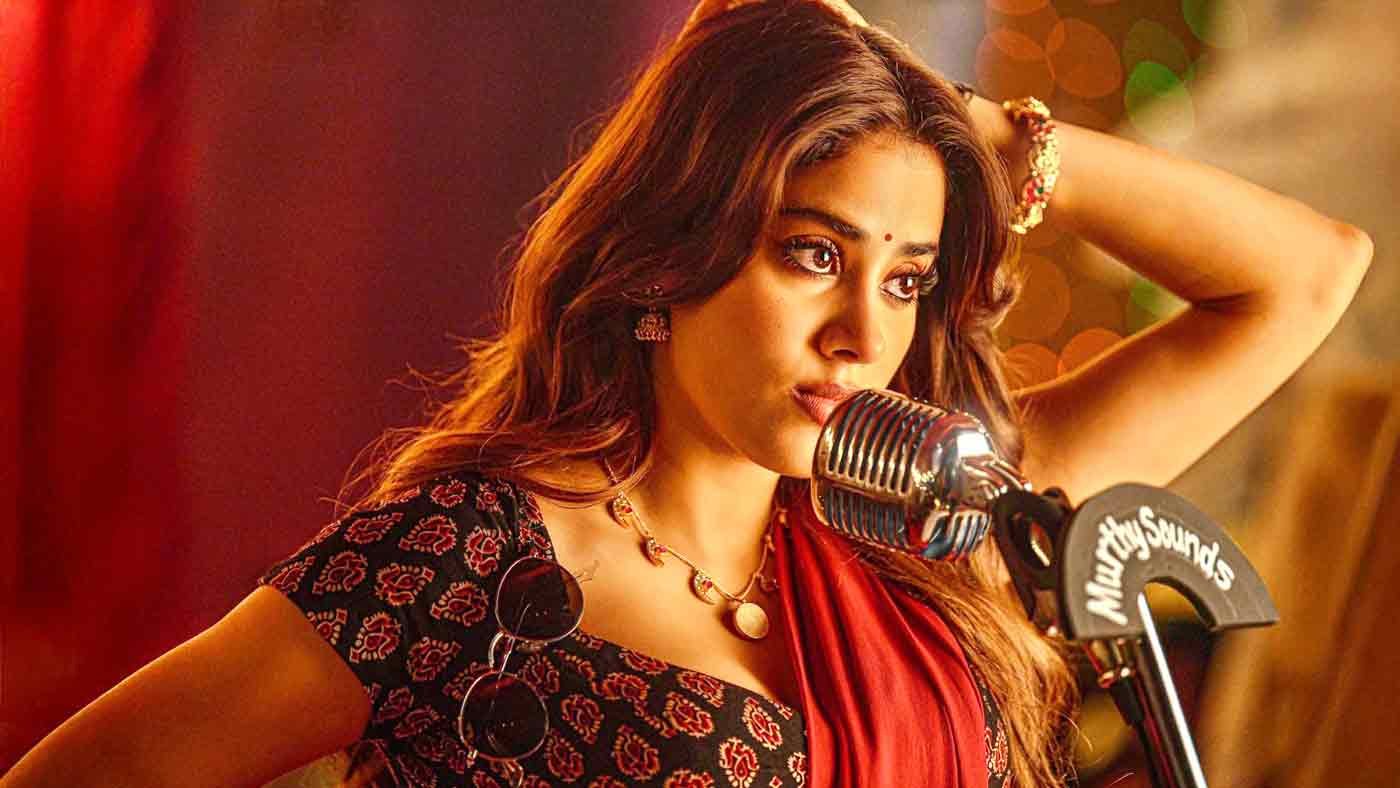
Janhvi’s Character in Peddi is Without Agency
Good characters do not require equal screen time.
They require purpose.
When audiences walk out of a film and can clearly explain what the hero wanted, what obstacles he faced and how he changed, the writing has done its job.
Can the same be said for Achiyamma?
What does she want?
What drives her?
What difficult choices does she make?
How does she influence the outcome of the story?
For many viewers, the answer to those questions remains frustratingly unclear.
The result is a character who feels less like a participant in the narrative and more like someone orbiting around the hero’s journey.
That may have passed unnoticed years ago.
It doesn’t anymore.
The Male Gaze Problem
One of the most frequent complaints emerging from audiences concerns the way Achiyamma is filmed.
There is a noticeable difference between portraying beauty and reducing a character to it.
Cinema has always celebrated beauty. There is nothing inherently wrong with that.
But when a film repeatedly returns to body-focused shots, glamour-driven framing and visual choices that emphasise physicality over personality, audiences inevitably begin to question the filmmaker’s priorities.
This criticism becomes even sharper because Peddi positions itself as a grounded emotional sports drama.
The film asks viewers to invest in struggle, ambition, identity and resilience.
Yet whenever Achiyamma enters the frame, the visual language often shifts in ways that feel disconnected from the emotional world the film is trying to build.
The result is not romance.
It is distraction.
A Romance That Feels Outdated
Cinema evolves.
Audiences evolve with it.
What was once accepted as cinematic romance is increasingly being questioned by younger viewers who have grown up with different conversations around consent, respect and relationships.
Several viewers have pointed to moments in Peddi that appear to romanticise behaviour that feels uncomfortable rather than endearing. A hero like Ram Charan gets to say dialogues that are sexual and voyeuristic makes this even more cringy, no less.
The issue is not whether these scenes were intended as harmless commercial cinema.
The issue is whether filmmakers are paying attention to how audiences now interpret them.
Increasingly, the answer appears to be no.
The Devara Question Returns
The criticism surrounding Peddi has also reopened a conversation that surfaced during Janhvi Kapoor’s earlier Telugu outing.
Many viewers have begun asking whether Telugu cinema is genuinely interested in creating memorable female characters for its imported Bollywood stars or simply interested in the glamour value they bring.
It is a harsh question.
But it is not an unfair one.
When actresses with talent, visibility and audience goodwill repeatedly end up in roles remembered more for songs, costumes and visual appeal than for narrative importance, the problem can no longer be dismissed as coincidence.
The pattern itself becomes the story.
The Accountability Question Nobody Wants to Ask
Whenever criticism like this emerges, the easiest response is to blame the writer.
Sometimes the director.
Occasionally the editor.
Then the conversation ends.
But should it?
Every major film is the result of hundreds of decisions approved by multiple stakeholders.
If audiences find a character regressive, objectified or underwritten, responsibility cannot rest solely with the screenplay.
The director visualises it.
The producer backs it.
The cinematographer frames it.
The editor retains it.
The hero performs it.
And the heroine agrees to portray it.
In recent years, film stars across industries have increasingly spoken about representation, equality and progressive storytelling. Audiences have welcomed those conversations.
But those conversations mean little if they exist only in interviews and promotional campaigns.
They must also be reflected in the roles stars choose.
Actors cannot claim ownership of a film’s success while distancing themselves from its shortcomings.
When a film works, the star receives the applause.
When a character resonates, the actor accepts the praise.
The same principle should apply when audiences identify problems.
This is where both Ram Charan and Janhvi Kapoor inevitably become part of the discussion.
Not because they wrote Peddi.
Not because they directed it.
But because stars are no longer passive participants in modern filmmaking.
Their influence matters.
Their approval matters.
Their choices matter.
If actors can suggest changes, improve scenes, modify dialogues and shape narratives, audiences are entitled to ask why similar effort was not invested in strengthening a female character who appears central to the film’s emotional world.
The question is not whether Janhvi Kapoor performed the role well.
The question is whether a performer of her stature should still be accepting roles that offer so little room for growth, complexity or agency.
Likewise, the question is not whether Ram Charan delivers a powerful performance.
FridayWall’s review clearly acknowledged that he does.
The larger question is whether a hero-centric film in 2026 still believes its hero shines brighter when the heroine shines less.
That assumption feels increasingly out of step with audience expectations.
The Industry Has Changed. Some Habits Haven’t.
The irony is that Telugu cinema has transformed dramatically over the past decade.
Its films travel globally.
Its stars command pan-Indian fan bases.
Its storytelling ambitions have expanded beyond imagination.
Audiences today are more aware, more vocal and more willing to challenge what appears on screen.
They are not asking filmmakers to stop making commercial cinema.
They are simply asking for female characters who feel like human beings rather than decorative interruptions.
That should not be an unreasonable expectation.
FridayWall’s review praised many aspects of Peddi — the conviction of Ram Charan’s performance, the emotional ambition of the story and the film’s larger vision.
But it also exposed a flaw that is becoming increasingly difficult for audiences to ignore.
For all its scale, emotion and technical accomplishment, Peddi struggles to imagine a meaningful place for its leading woman.
That disappointment is bigger than one character.
It reflects a mindset that parts of the industry still seem unwilling to abandon.
The hero receives a journey.
The village receives a conflict.
The sport receives a purpose.
The heroine receives a camera angle.
And that, more than anything else, explains why the debate around Achiyamma continues long after the end credits roll.