
A birthday message from Prime Minister Narendra Modi has become the latest flashpoint in India’s increasingly heated debate over education, accountability, and political responsibility.
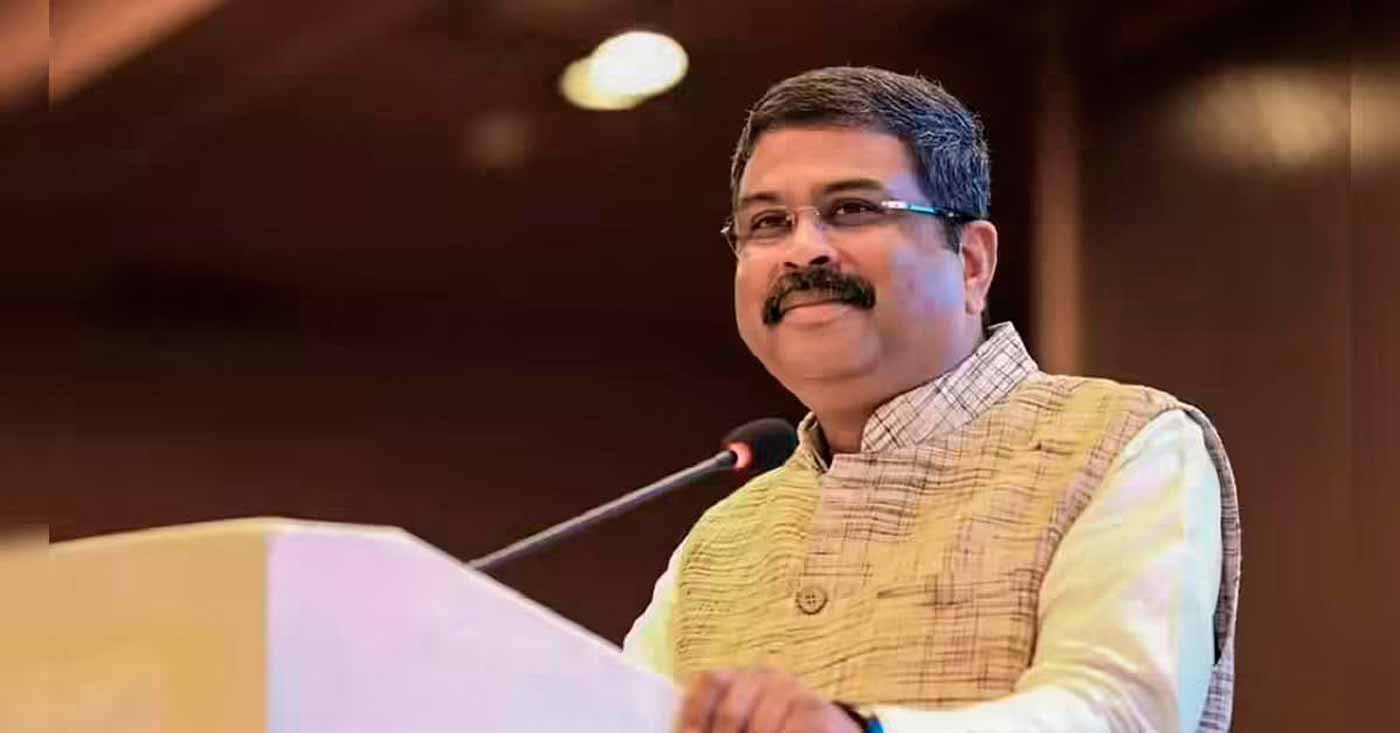
On the occasion of Union Education Minister Dharmendra Pradhan’s birthday, Prime Minister Modi took to social media to congratulate his Cabinet colleague, writing: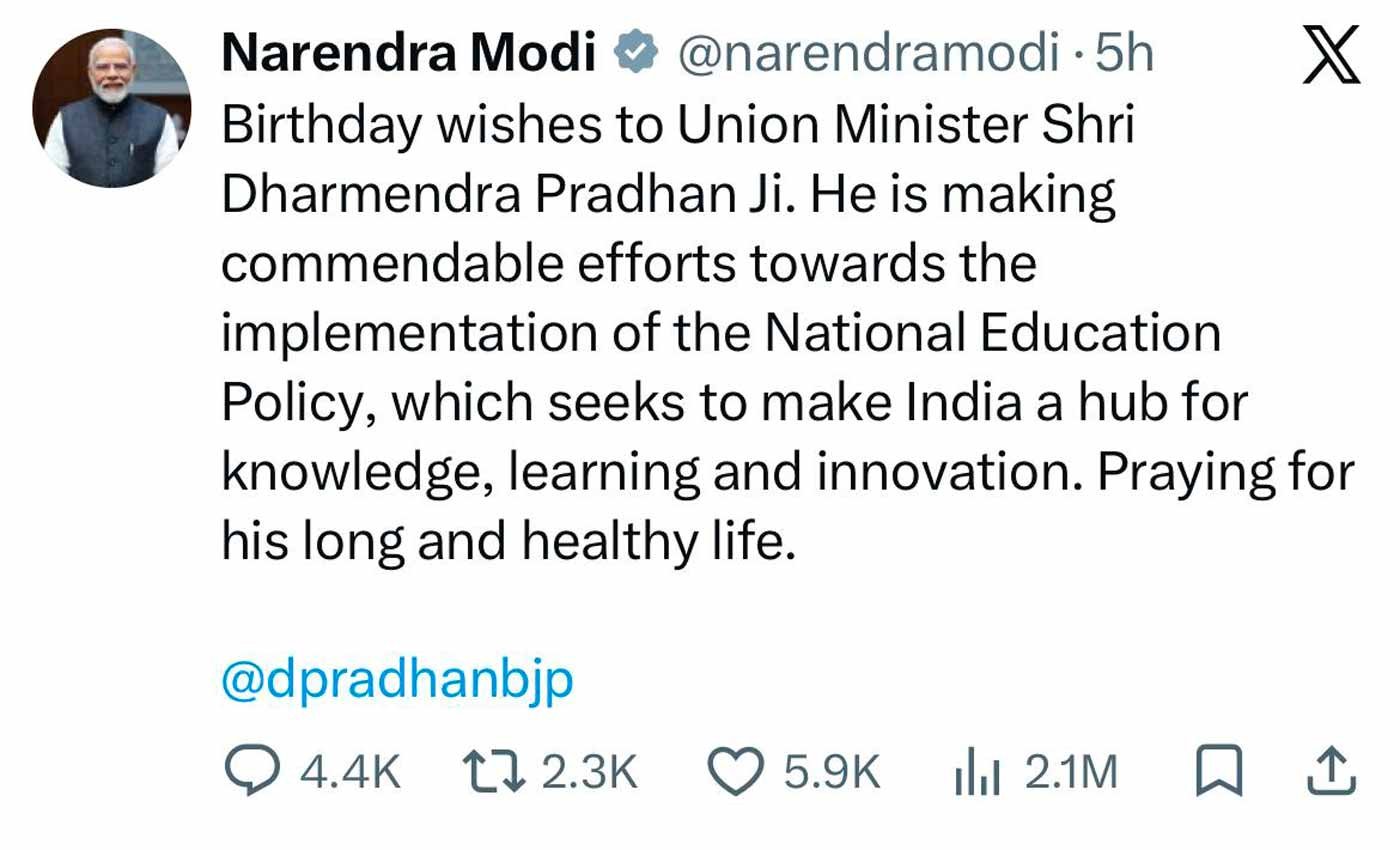
“Birthday wishes to Union Minister Shri Dharmendra Pradhan Ji. He is making commendable efforts towards the implementation of the National Education Policy, which seeks to make India a hub for knowledge, learning and innovation. Praying for his long and healthy life.”
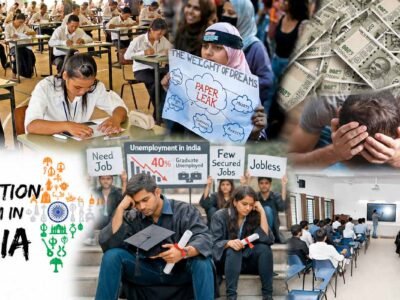
Ordinarily, such greetings would have passed without much attention. This time, however, they arrived against the backdrop of mounting protests over examination controversies, alleged paper leaks, and sustained demands from opposition parties and student groups for Pradhan’s resignation.
The Congress party was quick to respond. Through its social media platforms, party leaders questioned the Prime Minister’s decision to publicly praise the Education Minister while protests continued across the country. They argued that, rather than extending birthday wishes, the government should be addressing concerns surrounding examination irregularities and accepting political responsibility for the crisis.
For weeks, the opposition has accused the Centre of failing to restore public confidence in India’s examination system. Student organisations, parents, and the Cockroach Janata Party have held demonstrations demanding greater accountability and calling for Pradhan’s resignation.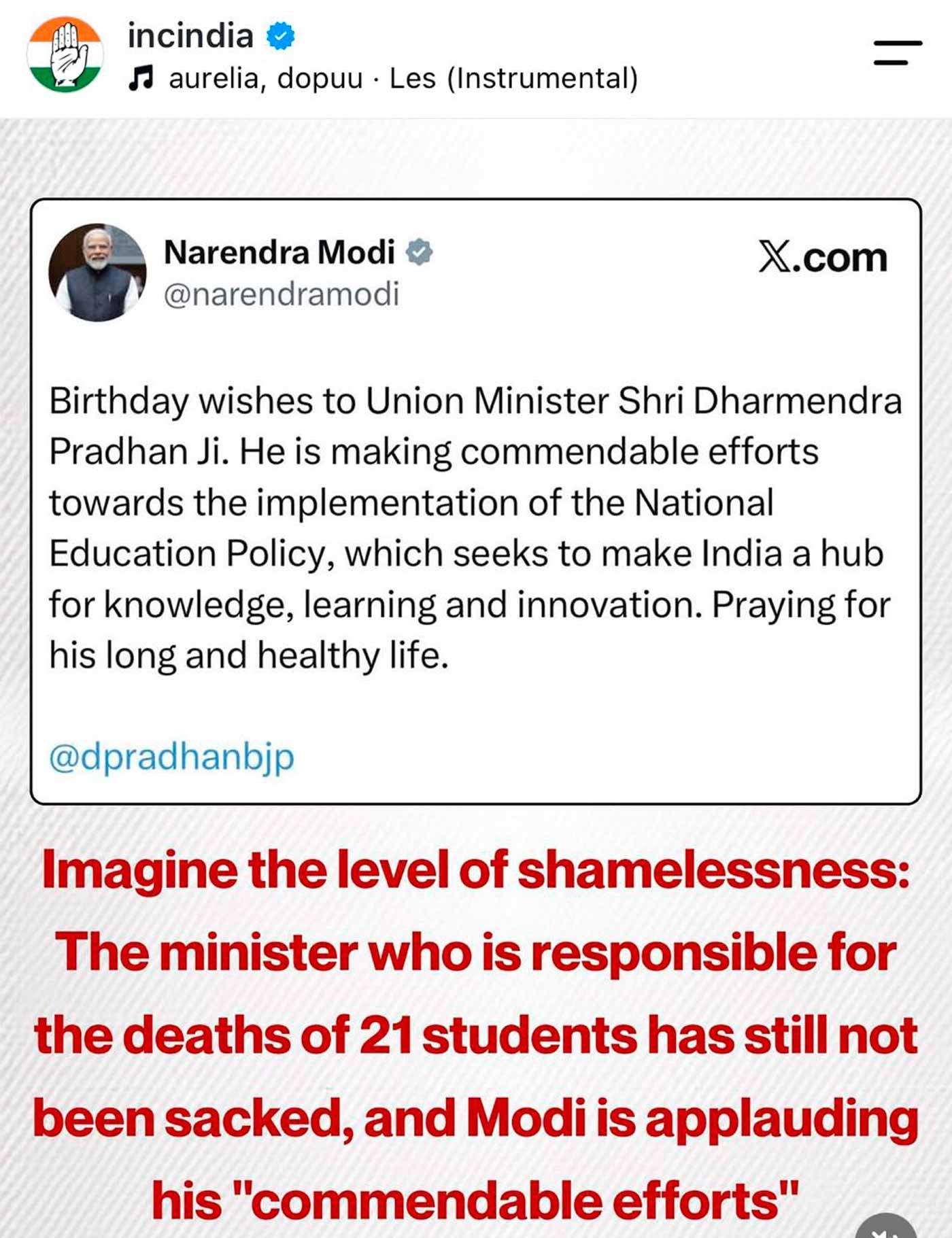
The controversy raises a broader political question.
At what point does solidarity within a government begin to conflict with public expectations of accountability?
Supporters of the government argue that the implementation of the National Education Policy, expansion of educational infrastructure, and ongoing investigations into examination-related issues demonstrate that the Centre is actively addressing concerns. They maintain that birthday wishes are a routine gesture and should not be interpreted as an endorsement of every controversy surrounding a minister. Critics, however, see the optics differently.
For them, the timing of the Prime Minister’s message symbolised unwavering political backing for a minister who continues to face intense criticism over the handling of examination-related issues. They argue that gestures of appreciation, however customary, inevitably carry political significance during periods of public discontent.
The episode also reflects a familiar feature of democratic politics. Moments that might otherwise remain ceremonial often become symbols of larger ideological battles. A birthday greeting becomes a debate about governance. A congratulatory message becomes a referendum on accountability.
Whether the controversy will translate into political consequences remains uncertain.
What is certain, however, is that education has emerged as one of the defining political issues of the year. As students continue to demand transparency, fairness, and institutional accountability, the public conversation is no longer confined to examination halls—it has reached Parliament, political campaigns, and the highest offices of government.
Sometimes, even a birthday wish can become a political statement.